Kirjojen hintavertailu. Mukana 11 244 527 kirjaa ja 12 kauppaa.

Kirjahaku

Etsi kirjoja tekijän nimen, kirjan nimen tai ISBN:n perusteella.

1000 tulosta hakusanalla Gerald M. Carbone

Topobiology

Topobiology

Gerald M. Edelman

Basic Books
1993
pokkari
If you had a complete copy of a dinosaur's DNA and the genetic code, you still would not be able to make a dinosaur,or even determine what one looked like. Why? How do animals get their shape and how does shape evolve? In this important book, Nobel laureate Gerald M. Edelman challenges the notion that an understanding of the genetic code and of cell differentiation is sufficient to answer these questions. Rather, he argues, a trio of related issues must also be investigated,the development of form, the evolution of form, and the morphological and functional bases of behaviour. Topobiology presents an introduction to molecular embryology and describes a comprehensive hypothesis to account for the evolution and development of animal form.
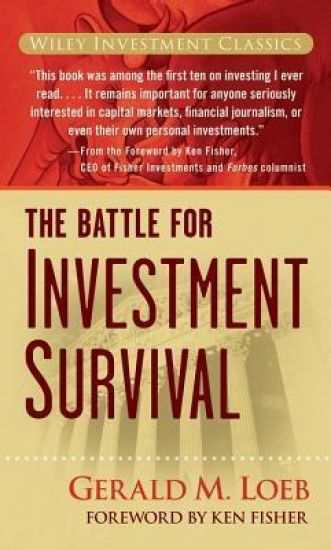
Battle for Investment Survival

Battle for Investment Survival

Gerald M. Loeb; Kenneth L. Fisher

John Wiley Sons Inc
2007
sidottu
"This book was among the first ten on investing I ever read. . . . It remains important for anyone seriously interested in capital markets, financial journalism, or even their own personal investments."—From the Foreword by Ken Fisher, CEO of Fisher Investments and Forbes columnist "Loeb tells us to put all our eggs in one basket, and watch the basket."—John Rothchild, Financial Columnist, Time magazine "This book is very special in my life. It is the very first Wall Street book I ever read. After reading 1,200 additional finance books, The Battle for Investment Survival's principles and concepts are still valid for consistent success."—Victor Sperandeo, Author of Trader Vic on Commodities In The Battle for Investment Survival, the turf is Wall Street, the goal is to preserve your capital at all costs, and to win is to "make a killing without being killed." This memorable classic, originally written in 1935, offers a fresh perspective on investing from times past. The Battle for Investment Survival treats investors to a straightforward account of how to profit—and how to avoid profit loss—in what Loeb would describe as the constant tug-of-war between rising and falling markets.
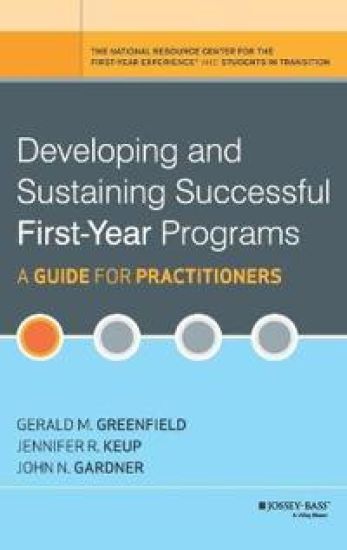
Developing and Sustaining Successful First-Year Programs

Developing and Sustaining Successful First-Year Programs

Gerald M. Greenfield; Jennifer R. Keup; John N. Gardner

John Wiley Sons Inc
2013
sidottu
Developing and Sustaining Successful First -Year Programs First-year programs and interventions have become critical launching pads for student success and retention in higher education. However, these programs often flounder not because of what they are trying to do, but because of the ways in which they are implemented. Developing and Sustaining Successful First-Year Programs offers faculty, academic administrators, and student affairs professionals a comprehensive and practical resource that includes step-by-step guidance for developing new first-year programs and enhancing existing programs. The book explores the key elements that contribute to sustained student success and the programs that have the capacity to continue to meet student needs while making the most of scarce resources. The authors show how to create and sustain critical partnerships, put in place the needed organizational structures, and include strategies for developing effective assessments and evaluations. Developing and Sustaining Successful First-Year Programs is filled with illustrative examples and profiles of successful programs from a range of institutions that vary in size, type, selectivity, and culture. Examples of common programs and interventions include summer bridge programs, student orientation, first-year seminars, learning communities, residential programs, developmental education, and many more. Based in scholarly literature, theory, and practice, the book highlights the initiatives that facilitate the transition, learning, development, and success of new college students.
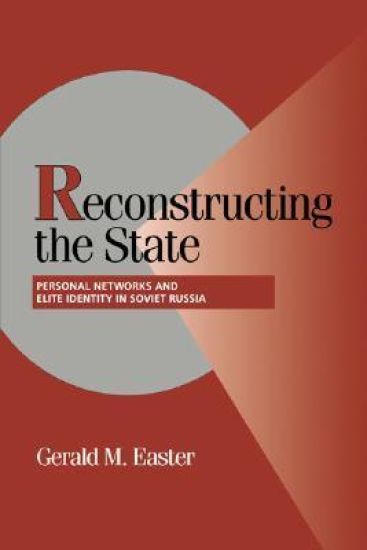
Reconstructing the State

Reconstructing the State

Gerald M. Easter

Cambridge University Press
2007
pokkari
Why do some state-building efforts succeed when others fail? Using formerly unavailable archival sources, this book presents an explanation for the rise and subsequent collapse of the Soviet state. The study explains how personal networks and elite identity served as informal sources of power that influenced state strength. Reconstructing the State also offers alternative interpretations of how the weak Bolshevik state extended its reach to a vast rural and multi-ethnic periphery as well as the dynamics of the center-regional conflict in the 1930s that culminated in the Great Terror.
Reconstructing the State

Reconstructing the State

Gerald M. Easter

Cambridge University Press
2000
sidottu
Why do some state-building efforts succeed when others fail? Using formerly unavailable archival sources, this book presents an explanation for the rise and subsequent collapse of the Soviet state. The study explains how personal networks and elite identity served as informal sources of power that influenced state strength. Reconstructing the State also offers alternative interpretations of how the weak Bolshevik state extended its reach to a vast rural and multi-ethnic periphery as well as the dynamics of the center-regional conflict in the 1930s that culminated in the Great Terror.
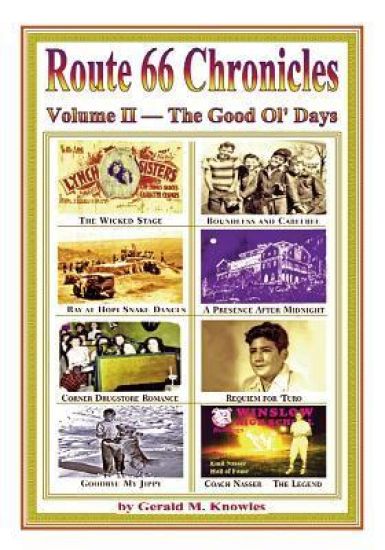
Down the Road Less Traveled: Alcoholism to Shangri-La

Down the Road Less Traveled: Alcoholism to Shangri-La

Gerald M. Knowles Ed D.

Gerald Knowles
2018
nidottu
Thrust into the great American Southwest life faced me with a road fraught between the challenges created by emergent social expectations on the one hand and the successive phases of my personal development on the other hand. My path was marked with breathtaking natural wonders, astonishing friends and inspiring experience and rich opportunity. The cumulative deficits of failures to obtain necessary shares of such virtues at each successsive stage made it tough to adequately perform at common standards of success. Alcohol became the substitute to provide escape and a sense of "feel good." At the brink of my dark abyss of self-destruction and despair groups of sober allies lifted me up. From whence unknown my tiny being alighted aside Cleopatra Hill in the United Verde Hospital amid the raucous and roaring copper mining souls of Jerome, Arizona. Doting females infused deep trust and hope that was essential later to sail through dark clouds of anger and abuse. Independence, wealth, romance and determination were discovered in Albuquerque. Fidelity and competence were captured on the football fields of the Winslow Bulldogs. Leadership and sportsmanship were bestowed by long time Flagstaff buddies. Strong identification with the life of Father Damien of the leper colony of Molokai flowered which led to the quest to become a Catholic priest. Leaving a religious vocation positioned me as ripe for romance and commitment. I suffered a Gatsby romance and ultimately partnered with an idyllic movie star look-alike, married her and fathered four children. I committed to become a teacher instructing elementary children, administering a large school and attaining advanced professional status as a university lab school demonstration teacher. I was catapulted out of Arizona to the University of Illinois doctorate program, a Rubicon crossing and total change of life-exhilarating, prolific, yet leading ultimately to disaster and demoralization. Tours of duty at three major universities afforded the opportunity to share and implement long held skills and values about education-good motives but faulted delivery. Finding 'no home' again in native Arizona State pushed me to Purdue, the streets of Gary, Indiana and my commitment to social change and civil rights. The wide-open opportunities and pressures accelerated to such a degree that alcohol was required as a substitute for feeling and action. Life became a downward spiral into a black abyss of 'pitiful and unbelievable demoralization.' The flight back to Arizona ended in a crash dive into another jail cell. Angels of sobriety appeared and pulled me back from the edge of catastrophe. Cleared of paralyzing dysfunction I pledged service to Navajo Nation. I witnessed the creation of hundreds of Navajo teachers and a group of school administrators. I played the unwanted role as prosecutor to remove the president of Navajo Community College. Refugee from a cancelled election I assisted the administrative capture of the first Apache controlled school. Then, I worked as a sheep dog for Kayenta in the establishment of the first autonomous Township within a Native American community- awarded high honors by Harvard. The magic carpet of 'Dances with Wolves' days lifted me up and through major challenges. Time came for contemplating my accomplishments and developing a sense of integrity for having a successful life. Noting my gifts of achievements has led to the acquisition of the virtue of wisdom. Onset of wisdom enables me to look back on my life with a sense of closure and completeness, and acceptance death without fear. It is a time of releasing the loss of existing relationships and reuniting with former acquaintances. The demons of terror, shame, rage and loneliness that had chased my spirit down roads and over passages had vanished. Joy, peace and freedom became irreplaceably bound to my being. Happiness of the soul was lifted above all circumstances and remains inside my personal Shangri-La.
A Sixth–Century Monastery at Beth–Shan (Scythopolis)

A Sixth–Century Monastery at Beth–Shan (Scythopolis)

Gerald M. Fitzgerald

University of Pennsylvania Press
1940
sidottu
The book examines the building, mosaics, objects, and mosaic inscriptions found at the site of a sixth-century monastery at Beth-Shan. The mosaic floors are described in particular detail, with reference to comparable mosaics elsewhere in Palestine. Translations are given of the inscriptions within the mosaics. Publications of the Palestine Section of the University Museum, University of Pennsylvania Vol. IV
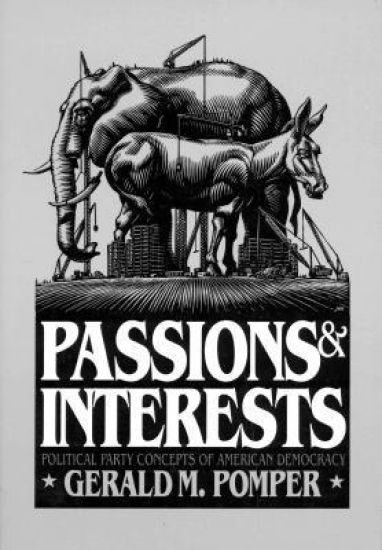
Passions and Interests

Passions and Interests

Gerald M. Pomper

University Press of Kansas
1992
nidottu
As the troubled 20th century nears its end, democracy and competitive political parties are receiving renewed attention. Bridging analysis of political parties and political philosophy, ""Passions and Interests"" presents eight conceptual models of political parties with particular relevance to American democracy. Gerald Pomper asks three questions: what meanings are attributed to parties; empirically, to what extent do American parties fit these concepts; and, how well do these different models serve democratic interests? The analysis encompasses a broad range of individuals, including party theorists from Michels to Downs, practitioners such as Martin Van Buren and Woodrow Wilson, and political philosophers from Burke to Lenin. Beginning with Madison's definition, Pomper views parties as varying combinations of passions and interests. He examines, both empirically and normatively, models of party as bureaucratic organisation, governing caucus, cause advocate, ideological community, social movement, urban machine, rational office-seeking team, and personal faction. In further explorations, he analyses these party models in the light of the historical record and empirical data on American voting behaviour, then compares them to proposals for party reform in the United States. In conclusion, Pomper evaluates the contributions of US political parties to democratic values and presents a suggested program to strengthen the parties as institutions on American democracy. ""The growth of political parties and the extension of democracy proceed along parallel tracks"", Pomper contends. ""Competitive political parties facilitate, although they do not guarantee, a considerable measure of popular involvement, control, and policy determination. Without them, government is more likely to evidence authoritarianism, violence, and repression"".
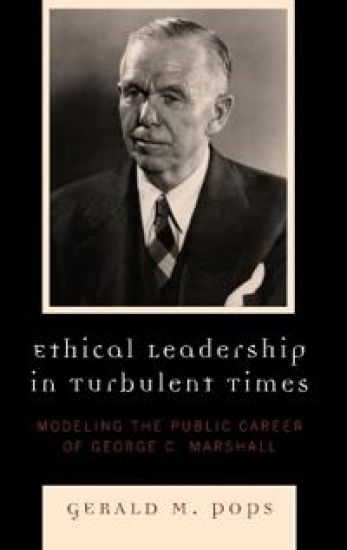
Ethical Leadership in Turbulent Times

Ethical Leadership in Turbulent Times

Gerald M. Pops

Lexington Books
2009
sidottu
In Ethical Leadership in Turbulent Times, leadership and organizational theory are blended with early 20th Century history to model public leadership that is both monumentally effective and classically ethical. What is leadership? What makes leadership good or bad? To answer these questions, Gerald M. Pops draws on the multi-faceted career of George C. Marshall as an extended case study, focusing on the timely subject of leadership in public service. The dominating traits of Marshall's career were his character, virtues, and ethical practices in two world wars, his efforts to keep the peace and promote economic recovery following World War II, his style of management, and his approach to international diplomacy and nation-building. Pops shows how Marshall's leadership was unique, given the ethical qualities displayed in his character and instilled in the organizations he led. All of these are examined in the context of his long career, and related to an abundant body of leadership theory, in order to successfully present Marshall as an effective public leader not only of the military and political realms, but of business and society as well. This makes the book ideal for students and scholars in the fields of political science, public administration, and the burgeoning field of leadership studies. It is also a fascinating read for all those with a love of twentieth century and military history.
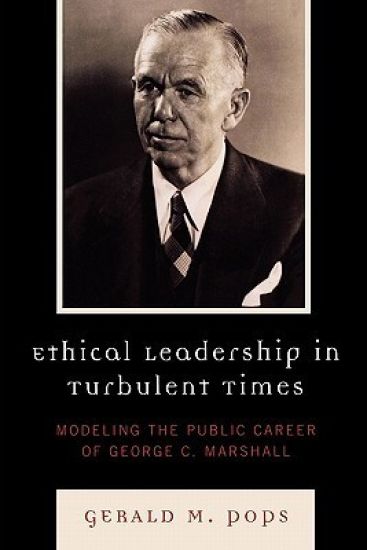
Ethical Leadership in Turbulent Times

Ethical Leadership in Turbulent Times

Gerald M. Pops

Lexington Books
2009
nidottu
In Ethical Leadership in Turbulent Times, leadership and organizational theory are blended with early 20th Century history to model public leadership that is both monumentally effective and classically ethical. What is leadership? What makes leadership good or bad? To answer these questions, Gerald M. Pops draws on the multi-faceted career of George C. Marshall as an extended case study, focusing on the timely subject of leadership in public service. The dominating traits of Marshall's career were his character, virtues, and ethical practices in two world wars, his efforts to keep the peace and promote economic recovery following World War II, his style of management, and his approach to international diplomacy and nation-building. Pops shows how Marshall's leadership was unique, given the ethical qualities displayed in his character and instilled in the organizations he led. All of these are examined in the context of his long career, and related to an abundant body of leadership theory, in order to successfully present Marshall as an effective public leader not only of the military and political realms, but of business and society as well. This makes the book ideal for students and scholars in the fields of political science, public administration, and the burgeoning field of leadership studies. It is also a fascinating read for all those with a love of twentieth century and military history.
Lord Durham's Report

Lord Durham's Report

Gerald M. Craig; Janet Ajzenstat; Guy Laforest

McGill-Queen's University Press
2006
sidottu
In his famous 1839 call to reform, John George Lambton, Earl of Durham, recommended that Upper and Lower Canada be accorded responsible government by uniting the two provinces under a single legislative assembly - a union which would also bring about the assimilation of the French-Canadians. The Report has been criticized ever since - from British imperialists who found it dangerously liberal to French Canadians who despised Durham for his presumed racism. This new edition of Gerald Craig's abridgement retains his 1963 introduction and adds essays that debate Durham's political assumptions and goals, re-examine the philosophical and historical context in which the Report was created, and review the Report's reception and influence. Janet Ajzenstat reconsiders the report in the context of nineteenth-century debates about the relation between culture and political institutions, arguing that Durham should be seen as a progressive universalist opposed to the divisions of race and creed who wanted to give more freedom to French- and English-Canadians alike. Guy Laforest re-examines the report in terms of British liberal imperialism and twentieth-century English-Canadian perspectives to argue that Durham was a one-sided sociologist and the first in long line who used liberalism for imperialist purposes.
Lord Durham's Report

Lord Durham's Report

Gerald M. Craig; Janet Ajzenstat; Guy Laforest

McGill-Queen's University Press
2006
nidottu
In his famous 1839 call to reform, John George Lambton, Earl of Durham, recommended that Upper and Lower Canada be accorded responsible government by uniting the two provinces under a single legislative assembly - a union which would also bring about the assimilation of the French-Canadians. The Report has been criticized ever since - from British imperialists who found it dangerously liberal to French Canadians who despised Durham for his presumed racism. This new edition of Gerald Craig's abridgement retains his 1963 introduction and adds essays that debate Durham's political assumptions and goals, re-examine the philosophical and historical context in which the Report was created, and review the Report's reception and influence. Janet Ajzenstat reconsiders the report in the context of nineteenth-century debates about the relation between culture and political institutions, arguing that Durham should be seen as a progressive universalist opposed to the divisions of race and creed who wanted to give more freedom to French- and English-Canadians alike. Guy Laforest re-examines the report in terms of British liberal imperialism and twentieth-century English-Canadian perspectives to argue that Durham was a one-sided sociologist and the first in long line who used liberalism for imperialist purposes.
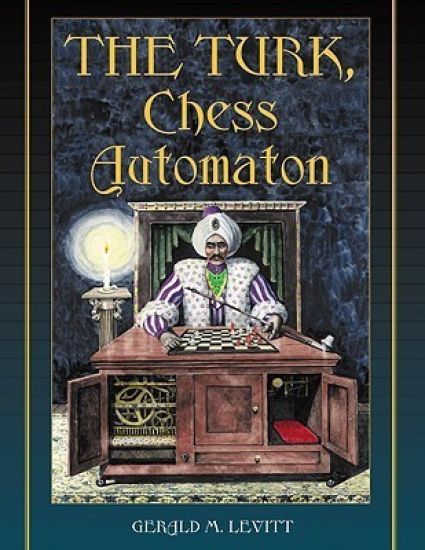
The Turk, Chess Automaton

The Turk, Chess Automaton

Gerald M. Levitt

McFarland Co Inc
2006
pokkari
With all-new research and facts unknown for two centuries, this is a richly detailed and comprehensive account of "The Turk," Baron Wolfgang von Kempelen's amazing but fraudulent Chess Automaton that held the world spellbound for 85 years beginning in 1770. In actuality, the Turk was manipulated by a man housed in a hot box, working by candlelight--but the secret was kept for decades. Besides playing a good game of chess within an hour's time, the manipulator had to keep track of the moves, work the pantograph arm apparatus, nod the head, roll the eyes, cover up sneezes and coughs, and work the sound mechanism. This work contains a detailed discussion of the literature surrounding the Turk along with an analysis of its hidden operation. The complete collection of published games played by the Turk, many, again, unknown for 200 years, is also included.
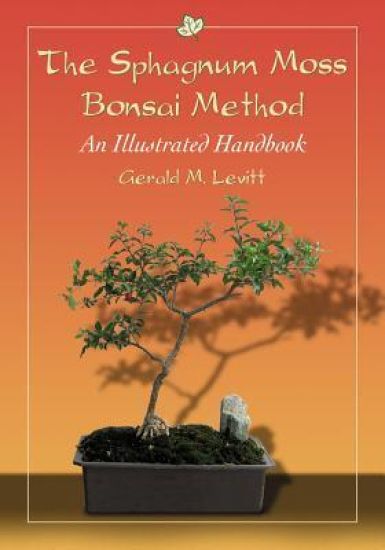
The Sphagnum Moss Bonsai Method

The Sphagnum Moss Bonsai Method

Gerald M. Levitt

McFarland Co Inc
2011
pokkari
Most bonsai enthusiasts are familiar with the process of growing these miniature trees in soil, a method that dates back 2000 years. This instructional book explains a new method of growing bonsai trees in sphagnum moss, producing beautiful results with far less work than the traditional method.All topics pertinent to the growing of bonsai trees in sphagnum moss are covered, including watering, fertilizing, trimming and pruning, anti-fungicides and insecticides, bonsai styles and diagnosing problems. A huge improvement over traditional practices, the sphagnum moss method makes the growing of miniature trees much quicker and easier and opens the hobby to a wider range of enthusiasts. This handbook is appropriate for both horticulturalists and amateurs.
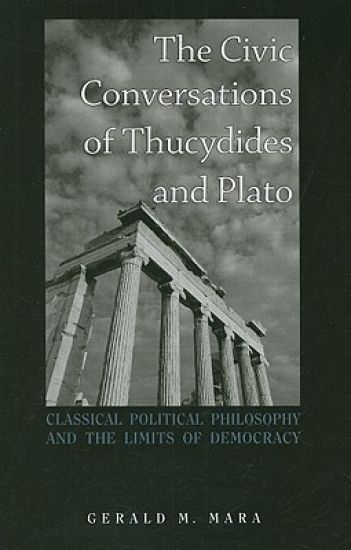
The Civic Conversations of Thucydides and Plato

The Civic Conversations of Thucydides and Plato

Gerald M. Mara

State University of New York Press
2009
pokkari
Argues for the contemporary importance of Thucydides and Plato for both democratic political theory and democratic citizens.This book argues that classical political philosophy, represented in the works of Thucydides and Plato, is an important resource for both contemporary democratic political theory and democratic citizens. By placing the Platonic dialogues and Thucydides' History in conversation with four significant forms of modern democratic theory-the rational choice perspective, deliberative democratic theory, the interpretation of democratic culture, and postmodernism-Gerald M. Mara contends that these classical authors are not enemies of democracy. Rather than arguing for the creation of a more encompassing theoretical framework guided by classical concerns, Mara offers readings that emphasize the need to focus critically on the purposes of politics, and therefore of democracy, as controversial yet unavoidable questions for political theory.