Kirjojen hintavertailu. Mukana 11 627 373 kirjaa ja 12 kauppaa.

Kirjahaku

Etsi kirjoja tekijän nimen, kirjan nimen tai ISBN:n perusteella.

1000 tulosta hakusanalla Gerard Whelan

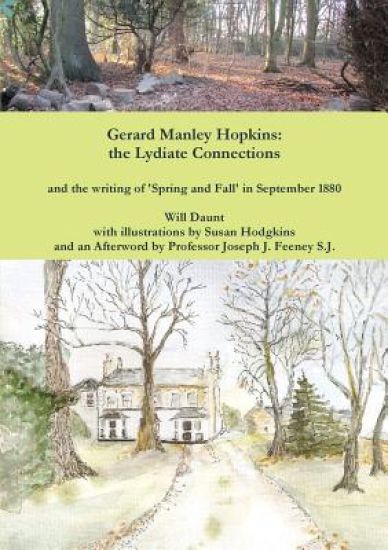
Gerard Manley Hopkins: the Lydiate Connections
Gerard Manley Hopkins' poetry had an enormous influence on the evolution of twentieth century poetry in English, and two of his most distinctive poems were written while he was posted to the Jesuit church of St. Francis Xavier, in Liverpool.'Felix Randal' tells of the life and death of a parishioner that the poet had ministered to. 'Spring and Fall' was composed during one of Hopkins' frequent visits to the village of Lydiate, where he was sent to say Mass at Rose Hill House.This local guide reflects particularly on what might have inspired the poem: the countryside, the people and Hopkins' own life.It includes specially-commissioned artwork by Susan Hodgkins, and concludes with a local guided walk and an Afterword by the renowned Hopkins scholar, Professor Joseph Feeney S.J.Proceeds from the sale of this book will be given to the charity, Hospice Africa.
Gerard Manley Hopkins

Gerard Manley Hopkins

Gerald Roberts

Palgrave Macmillan
1994
nidottu
A concise study of the life and poetry of the Victorian priest-poet. Gerald Roberts gives a chronological description and analysis of Hopkins's career and writing, and pays due attention to the Victorian and Jesuit background. The resulting picture is of a man divided between the religious and the aesthetic life, a story of apparent failure and real achievement.
Gerard Manley Hopkins and Tractarian Poetry
Gerard Manley Hopkins and Tractarian Poetry for the first time locates Hopkins and his work within the vital aesthetic and religious cultures of his youth. It introduces some of the most powerful cultural influences on his poetry as well as some of the most influential poets, from the well-known fellow convert John Henry Newman to the almost forgotten historian and poet Richard Dixon. From within the context of Hopkins' developing catholic sensibilities it assesses the impact of and his responses to issues of the time which related to his own religious and aesthetic perceptions, and provides a rich and intricate background against which to view both his early, often neglected poetry and the justly famous, idiosyncratic and deeply moving verse of his mature years. By detailing the influences Tractarian poetry had upon Hopkins' early work, and applying these to the productions of his later years, Gerard Manley Hopkins and Tractarian Poetry demonstrates how Hopkins' best known, mature works evolved from his upbringing in the Church of England and remained always indebted to this early culture. It offers readings of his works in light of a new appraisal of the contexts from which Hopkins himself grew, providing a fresh approach to this most challenging and rewarding of poets.
Gerard Manley Hopkins
The Critical Heritage gathers together a large body of critical sources on major figures in literature. Each volume presents contemporary responses to a writer's work, enabling students and researchers to read for themselves, for example, comments on early performances of Shakespeare's plays, or reactions to the first publication of Jane Austen's novels. The carefully selected sources range from landmark essays in the history of criticism to journalism and contemporary opinion, and little published documentary material such as letters and diaries. Significant pieces of criticism from later periods are also included, in order to demonstrate the fluctuations in an author's reputation. Each volume contains an introduction to the writer's published works, a selected bibliography, and an index of works, authors and subjects. The Collected Critical Heritage set will be available as a set of 68 volumes and the series will also be available in mini sets selected by period (in slipcase boxes) and as individual volumes.
Gerard Manley Hopkins

Gerard Manley Hopkins

Angus Easson

Routledge
2010
sidottu
Gerard Manley Hopkins was among the most innovative writers of the Victorian period. Experimental and idiosyncratic, his work remains important for any student of nineteenth-century literature and culture.This guide to Hopkins’ life and work offers: a detailed account of Hopkins life and creative developmentan extensive introduction to Hopkins’ poems, their critical history and the many interpretations of his workcross-references between documents and sections of the guide, in order to suggest links between texts, contexts and criticism suggestions for further reading.Part of the Routledge Guides to Literature series, this volume is essential reading for all those beginning detailed study of Hopkins’ work and seeking not only a guide to the poems, but a way through the wealth of contextual and critical material that surrounds them.
Gerard Manley Hopkins

Gerard Manley Hopkins

Angus Easson

Routledge
2010
nidottu
Gerard Manley Hopkins was among the most innovative writers of the Victorian period. Experimental and idiosyncratic, his work remains important for any student of nineteenth-century literature and culture.This guide to Hopkins’ life and work offers: a detailed account of Hopkins life and creative developmentan extensive introduction to Hopkins’ poems, their critical history and the many interpretations of his workcross-references between documents and sections of the guide, in order to suggest links between texts, contexts and criticism suggestions for further reading.Part of the Routledge Guides to Literature series, this volume is essential reading for all those beginning detailed study of Hopkins’ work and seeking not only a guide to the poems, but a way through the wealth of contextual and critical material that surrounds them.
Gerard Manley Hopkins
The Critical Heritage gathers together a large body of critical sources on major figures in literature. Each volume presents contemporary responses to a writer's work, enabling students and researchers to read for themselves, for example, comments on early performances of Shakespeare's plays, or reactions to the first publication of Jane Austen's novels. The carefully selected sources range from landmark essays in the history of criticism to journalism and contemporary opinion, and little published documentary material such as letters and diaries. Significant pieces of criticism from later periods are also included, in order to demonstrate the fluctuations in an author's reputation. Each volume contains an introduction to the writer's published works, a selected bibliography, and an index of works, authors and subjects. The Collected Critical Heritage set will be available as a set of 68 volumes and the series will also be available in mini sets selected by period (in slipcase boxes) and as individual volumes.
Gerard Manley Hopkins

Gerard Manley Hopkins

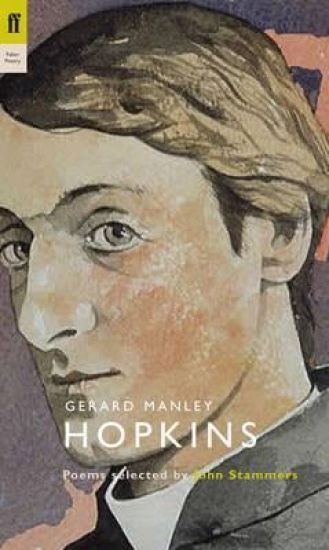
Gerard Manley Hopkins

Faber Faber
2012
nidottu
In this series, a contemporary poet selects and introduces a poet of the past. By their choice of poems and by the personal and critical reactions they express in their prefaces, the editors offer insights into their own work as well as providing an accessible and passionate introduction to some of the greatest poets of our literature.Gerard Manley Hopkins (1844-1889) was born in Stratford. He attended Balliol College, Oxford where he befriended the future Poet Laureate Robert Bridges. While at Balliol he converted to Catholicism and after graduating he entered the Society of Jesus and was ordained in 1877. Having burned his early poems on entering the Church, Hopkins eventually took up writing again but apart from a few poems that appeared in periodicals he was not published during his own lifetime. Since the publication of his poems in 1918 he has become one of the best known poets of the Victorian age and his are among the greatest poems written on the subject of faith and doubt.
Gerard Manley Hopkins

Gerard Manley Hopkins

Robert Bernard Martin

Faber Faber
2011
nidottu
'Will surely rank as one of the foremost literary biographies of our time.'John Carey, Sunday Times In his lifetime Gerard Manley Hopkins (1844-1889) published just a single poem - only a few close friends were aware he wrote. Much of his work was burnt by fellow Jesuits on his death. And yet Hopkins is today a huge figure in English literature. Homosexual but terribly repressed, he channeled his emotions toward nature and God, with profound results. Princeton emeritus professor Martin, the only biographer to have unrestricted use of Hopkins' private papers, tells this extraordinary story from Hopkins' early life and studies at Oxford, through his tortuous conversion from Anglicanism to Catholicism, to his struggle in later years to retain his very sanity. 'In Martin, the unhappy and tormented genius has found the most sympathetic and intelligent interpreter... [The book] goes to the heart of Hopkins, and plants him firmly before us as a Victorian, and a great one.' Allan Massie, Sunday Telegraph 'Martin follows Hopkins through his toils with sympathy and a great unshowy command of the facts. In this magnificently solicitous biography he has re-established the contours of the story definitively and made the homosexual drama integral to the better-known drama of conversion and poetics.' Seamus Heaney, Independent on Sunday 'The triumph of this learned, scrupulously detailed and persuasive biography is that it brings the reader as near as it is perhaps possible to come to living Hopkins' life, to sensing the mysterious crushing pressures that were for him intimately bound up with the richness and complexity of his writing.'Hilary Spurling, Daily Telegraph
Gerard Hardy's Misfortune

Gerard Hardy's Misfortune

Dorothy Johnston

For Pity Sake Publishing
2019
nidottu
Gerard Hardy's Misfortune is the third and most intriguing installment in Dorothy Johnston's sea-change mystery series. A bizarre murder in the basement of Queenscliff's historic Royal hotel pits local police officers Chris Blackie and Anthea Merritt against the CIU's bull-necked DI Masterson.
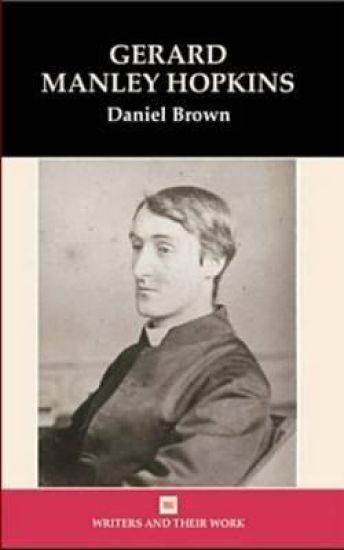
Gerard Manley Hopkins

Gerard Manley Hopkins

Daniel Brown

Liverpool University Press
2004
pokkari
This book introduces Hopkins' poetry and prose through its wide-ranging engagements with nature, language, science, philosophy, theology, prosody and social issues. Gerard Manley Hopkins did not write his poetry for his fellow Victorians nor indeed for the huge readership it has acquired since it was first published in 1918, almost forty years after his death. The present study argues that Hopkins' fascinatingly original poetry is the most complete expression of his life's work and that it becomes accessible when it is read with his prose writings as a passionate exploration of nature, language, philosophy, contemporary science, theology, and prosody, all of which are also drawn together in his central ideas of inscape and Sprung Rhythm. These contexts yield compelling new readings of the full range of his work, including his early poetry and his neglected poetic fragments, as well as those poems, such as The Windhover, by which he is best known. A final chapter steps back from the intensely private contexts in which the poetry was produced to examine its interactions with social issues of class and gender.
Gerard Manley Hopkins

Gerard Manley Hopkins

Daniel Brown

Liverpool University Press
2004
sidottu
This book introduces Hopkins' poetry and prose through its wide-ranging engagements with nature, language, science, philosophy, theology, prosody and social issues. Gerard Manley Hopkins did not write his poetry for his fellow Victorians nor indeed for the huge readership it has acquired since it was first published in 1918, almost forty years after his death. The present study argues that Hopkins' fascinatingly original poetry is the most complete expression of his life's work and that it becomes accessible when it is read with his prose writings as a passionate exploration of nature, language, philosophy, contemporary science, theology, and prosody, all of which are also drawn together in his central ideas of inscape and Sprung Rhythm. These contexts yield compelling new readings of the full range of his work, including his early poetry and his neglected poetic fragments, as well as those poems, such as The Windhover, by which he is best known. A final chapter steps back from the intensely private contexts in which the poetry was produced to examine its interactions with social issues of class and gender.