Kirjojen hintavertailu. Mukana 11 244 527 kirjaa ja 12 kauppaa.

Kirjahaku

Etsi kirjoja tekijän nimen, kirjan nimen tai ISBN:n perusteella.

1000 tulosta hakusanalla Gerhard Freitag

Gerhard Richter and the Technological Condition of Painting

Gerhard Richter and the Technological Condition of Painting

Aline Guillermet

EDINBURGH UNIVERSITY PRESS
2024
sidottu
Aline Guillermet uncovers Gerhard Richter's appropriation of science and technology from 1960 to the present and shows how this has shaped the artist's well-documented engagement with the canon of Western painting. Through a study of Richter's portraits, history paintings, landscapes and ornamental abstractions, Guillermet reveals the artist's role in affirming the technological condition of painting in the second half of the twentieth century: a historical situation in which the medium and its conventions have become shaped, and to some extent transformed, by technological innovations.
Gerhard Richter

Gerhard Richter

Sheena Wagstaff; Benjamin H. D. Buchloh

Metropolitan Museum of Art
2020
sidottu
A lavishly illustrated monograph that spans the entire career of Gerhard Richter, one of the most celebrated contemporary artists "Spans the contemporary German artist's six-decade career. . . . [A] stirring exhibition in [its] own right."—New York Times"[A] weighty catalogue... illuminat[es] some less-visited corners of Richter's oeuvre."—New York Review of Books Over the course of his acclaimed 60-year career, Gerhard Richter (b. 1932) has employed both representation and abstraction as a means of reckoning with the legacy, collective memory, and national sensibility of post–Second World War Germany, in both broad and very personal terms. This handsomely designed book features approximately 100 of his key canvases, from photo paintings created in the early 1960s to portraits and later large-scale abstract series, as well as select works in glass. New essays by eminent scholars address a variety of themes: Sheena Wagstaff evaluates the conceptual import of the artist’s technique; Benjamin H. D. Buchloh discusses the poignant Birkenau paintings (2014); Peter Geimer explores the artist’s enduring interest in photographic imagery; Briony Fer looks at Richter’s family pictures against traditional painting genres and conventions; Brinda Kumar investigates the artist’s engagement with landscape as a site of memory; André Rottmann considers the impact of randomization and chance on Richter’s abstract works; and Hal Foster examines the glass and mirror works. As this book demonstrates, Richter’s rich and varied oeuvre is a testament to the continued relevance of painting in contemporary art.Published by The Metropolitan Museum of Art/Distributed by Yale University PressExhibition Schedule:The Met Breuer, New York (March 4–July 5, 2020)Museum of Contemporary Art, Los Angeles (August 14, 2020–January 19, 2021)
Gerhard Richter – Early Work, 1951–1972
This title takes an illuminating look at the unique work and artistic vision of Gerhard Richter. Born in Dresden in 1932, Gerhard Richter was first educated under the prevailing doctrine of Socialist Realism, but retrained after emigrating to West Germany, thus uniquely embodying the division of Germany during the Cold War. This volume brings together new studies of his early career by an international group of scholars. The authors approach the context from a variety of angles including the social and political histories of a divided Germany, the conflicted development of Soviet Socialist Realism in East Germany, a Cold War visuality integrating pre- and post- resettlement works, the archival dimension of the artist's output in relation to "Richter's Atlas", and the artist's involvement in the representation of his work in archives, exhibitions, and catalogues.
Gerhard Lenski's Sociological Theories

Gerhard Lenski's Sociological Theories

Bernice McNair Barnett

Paradigm
2024
sidottu
Bringing together some of sociology's most distinguished scholars, Gerhard Lenski's Sociological Theories: Assessments, Extensions, New Directions critically assesses the influential social theories and monumental intellectual contributions of Gerhard Lenski in and beyond the discipline of sociology. For more than six decades, Lenski has been one of the most prominent and significant theorists of religion, social stratification, and ecological-evolutionary sociology. This is the first book to provide a systematic evaluation of Lenski's career and body of work, the ways in which his theories have been applied and extended in multiple disciplines, and his most recent work in the study of social change, inequality, and human evolution. Whether the focus is on religious, economic, racial, gender, or other social groups over the past 10,000 to 12,000 years, Gerhard Lenski and the distinguished scholars in this book have produced theories and research of great insight.
Gerhard von Rad and the Study of Wisdom Literature
Gerhard von Rad's study of biblical wisdom literature in Weisheit in Israel (1970) is widely regarded as one of the most significant studies in the field of ancient Israelite wisdom literature. More than fifty years later, contributors to Gerhard von Rad and the Study of Wisdom Literature reevaluate von Rad's most significant contributions and engage new methods and directions to wisdom studies today. This collection of essays is essential reading not only for specialists in wisdom studies but also for scholars and advanced students of the Hebrew Bible in general.
Gerhard von Rad and the Study of Wisdom Literature
Gerhard von Rad's study of biblical wisdom literature in Weisheit in Israel (1970) is widely regarded as one of the most significant studies in the field of ancient Israelite wisdom literature. More than fifty years later, contributors to Gerhard von Rad and the Study of Wisdom Literature reevaluate von Rad's most significant contributions and engage new methods and directions to wisdom studies today. This collection of essays is essential reading not only for specialists in wisdom studies but also for scholars and advanced students of the Hebrew Bible in general.
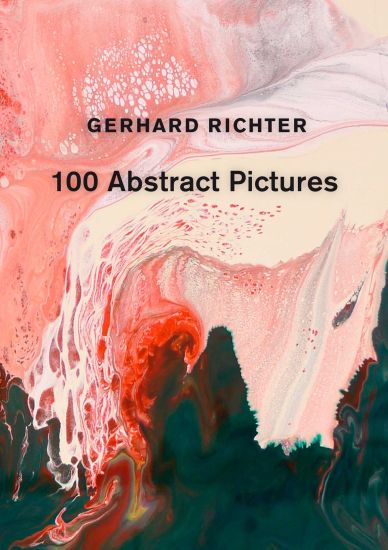
Gerhard Richter: 100 Abstract Pictures

Gerhard Richter: 100 Abstract Pictures

Gerhard Richter

David Zwirner
2023
sidottu
With a career spanning more than sixty years, the renowned painter Gerhard Richter is one of the greatest artists of the twentieth and twenty-first centuries. This book celebrates the artist’s continued dedication to experimentation and innovation.The Abstract Pictures were created when Richter, a few years ago, poured colored enamel paints onto a glass plate and allowed them to flow into one another in order to take shapes. He then captured these ephemeral moments with his camera and selected 100 of these “pictures” for inclusion in the book alongside equally abstract texts formed by randomly generated letter combinations.An artwork of its own, this intimate volume inspires both close looking and a beautiful interpretation of abstraction.
Gerhard Richter: New York 2023

Gerhard Richter: New York 2023

David Zwirner

David Zwirner
2023
sidottu
This highly anticipated catalogue, accompanying Gerhard Richter’s first exhibition with David Zwirner, presents Richter’s last paintings along with his recent explorations in drawing, printing, and sculpture. ---------- “[His last paintings] can feel almost like exquisite texts to be read. . . . Their freshness and spontaneity feels like a new beginning.” — Roberta Smith, The New York Times ----------- Known for his abstract and realist paintings, Gerhard Richter has pursued a diverse and influential practice characterized by a decades-long commitment to the medium and its formal and conceptual possibilities. This remarkable book celebrates the breadth of Richter’s newest bodies of work and archives a historical moment in the artist’s career. Full-color plates and installation views showcase a selection of the artist’s final works on canvas—made just before he announced his retirement from oil painting in 2017—alongside an expansive suite of new drawings made with ink, graphite, and colored pencil on paper, a remarkable series of chromatic inkjet prints titled mood, and a stunning glass sculpture that debuted at the exhibition in New York. A newly commissioned essay by Dieter Schwarz, one of the foremost experts on Richter’s oeuvre, illustrates the artist’s path toward his newest bodies of work, revealing the creative process behind his iconic practice.
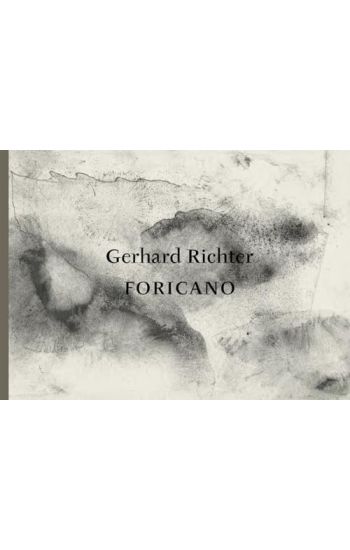
Gerhard Richter: FORICANO, 26 Drawings

Gerhard Richter: FORICANO, 26 Drawings

Gerhard Richter

David Zwirner
2024
sidottu
Gerhard Richter’s newest facsimile-like artist’s book is focused on a single work comprising twenty-six drawings in pencil and ink.“[Richter’s drawings] are of stringent individuality and recognizably by Richter’s hand, not based on their signature style but rather because they make their theme the act of drawing itself, gauging the conditions of drawing.” —Dieter SchwarzIn this new body of work, Richter combines various elements from a limited set of forms and techniques—including meandering lines, broad tonal planes applied with angled strokes of graphite, and passages of smudging, hatching, and erasure—thereby uniting choice and chance through this infinitely generative process. The resulting works on paper serve as condensed expressions, encapsulating and refining the fundamental principles that have consistently defined Richter's artistic journey. Reproduced at actual size, the drawings encourage in-depth observation as well as inspire compelling reimagining of abstraction.
Gerhard Veer Der Scheinheilige: Der Scheinheilige?

Gerhard Veer Der Scheinheilige: Der Scheinheilige?

Johann Schumacher

Createspace Independent Publishing Platform
2018
nidottu
In diesem Buch geht es darum aufzuzeigen wie hemmungslos Facebook Nutzer die Plattform benutzen um ber andere Menschen herzuziehen, mit Verleumdungen, Spekulationen, Verdrehungen und Vieles mehr herzuziehen. Ich bin jedoch nicht das einzige "Opfer" von ihm, da gibt es sehr viele, nur fehlt denen der Mut dagegen vorzugehen, obwohl sich der Ein oder andere als Trittbrettfahrer in den Kommentaren versucht. Es k nnen nat rlich auch Fake Profile von Gerhard Veer sein, denn er hat viele davon die er benutzt. Trittbrettfahrer mag ich nicht Fake auch nicht Facebook ist kein Rechtsfreier Raum und man kann dagegen etwas unternehmen. Den Anlass zu diesem Buch gab diese Mitteilung von ihm ber Messenger an eine meiner T chter: "Guten Morgen, Simone Du hattest mich gebeten, Dich ber Deinen Vater zu informieren..... Inzwischen dreht dieses hasserf llte alte und kranke Wrack komplett durch - er schreibt ein "Buch" ber mich. Und DAS, nachdem er meiner Hilfe letztes Jahr vermutlich sein Leben* zu verdanken hat. Ich habe noch selten einen Menschen so verachtet wie diesen Versager...schade, dass ich ihm geholfen habe - ohne das w re die Welt heute ein wenig besser...allerdings st rt mich sein Machwerk nicht, es ist die Sau, die sich an der Eiche schabt... Liebe Gr e Gerhard" Alle mit * gekennzeichneten Aussagen sind falsch, gelogen oder von ihm mit Absicht verdreht Dieses Buch bitte nicht falsch verstehen, es soll keine Rache sein, sondern nur Warnung an andere. ffentlichkeit ist der gr te Feind solcher Menschen
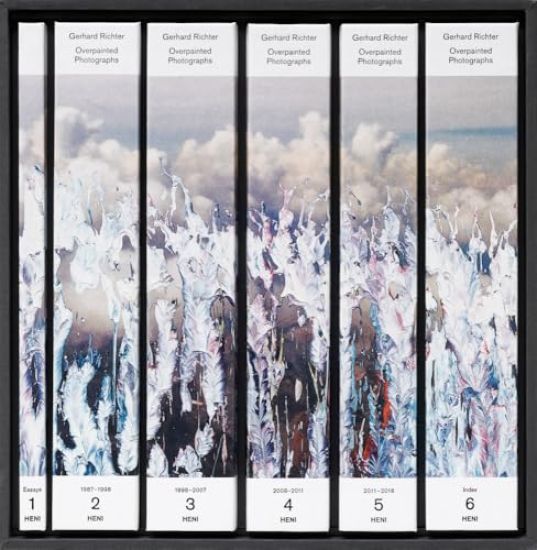
Gerhard Richter: The Overpainted Photographs
Edited by Joe Hage and Hans Ulrich Obrist, this landmark publication offers the most comprehensive account of Gerhard Richter’s Overpainted Photographs, a body of work he began creating in the mid-1980s and developed over the following decades. The illustrated six-volume edition, housed in an elegant slipcase, features contributions from esteemed cultural voices, including world-renowned curator of contemporary art Hans Ulrich Obrist; distinguished art critics Robert Storr and the late Achim Borchardt-Hume; literary giants Siri Hustvedt and Botho Strauss; as well as prominent art historians Dorothée Brill, Stefan Gronert, Aline Guillermet, Christine Mehring, Paul Moorhouse and Uwe M. Schneede. The Overpainted Photographs, drawn mostly from the artist’s personal snapshots, depict landscapes, cityscapes, family moments and travels. Using oil paint or lacquer, Richter employs techniques such as pressing photos onto paint, flicking droplets and applying paint with squeegees or spatulas. The dialogue between the smooth photographic surface and the tactile texture of the paint - marked by gaps and ripples - invites associations with patterns, shapes and colours, ultimately challenging our perception of the captured reality.