
Kirjahaku
Etsi kirjoja tekijän nimen, kirjan nimen tai ISBN:n perusteella.
1000 tulosta hakusanalla Giovanni Giolitti
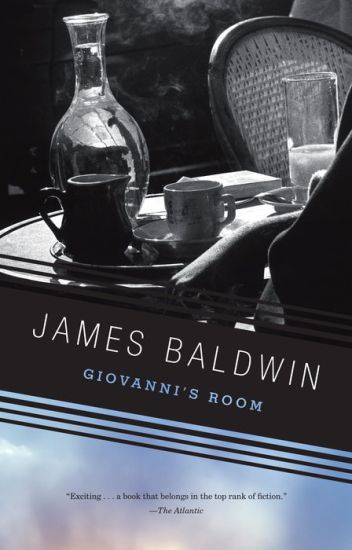
From one of the most brilliant and provocative literary figures of the past century comes a groundbreaking novel set among the bohemian bars and nightclubs of 1950s Paris, about love and the fear of love--"a book that belongs in the top rank of fiction" (The Atlantic).One of The Atlantic's Great American Novels of the Past 100 Years In the 1950s Paris of American expatriates, liaisons, and violence, a young man finds himself caught between desire and conventional morality. David is a young American expatriate who has just proposed marriage to his girlfriend, Hella. While she is away on a trip, David meets a bartender named Giovanni to whom he is drawn in spite of himself. Soon the two are spending the night in Giovanni's curtainless room, which he keeps dark to protect their privacy. But Hella's return to Paris brings the affair to a crisis, one that rapidly spirals into tragedy. David struggles for self-knowledge during one long, dark night--"the night which is leading me to the most terrible morning of my life." With a sharp, probing imagination, James Baldwin's now-classic narrative delves into the mystery of loving and creates a deeply moving story of death and passion that reveals the unspoken complexities of the human heart.
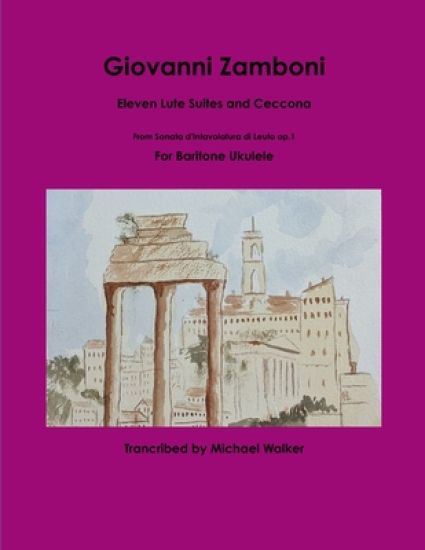
Giovanni Zamboni: Eleven Lute Suites and Ceccona From Sonata d'Intavolatura di Leuto op.1 For Baritone Ukulele
Michael Walker
Lulu.com
2019
nidottu
Here are 48 early Baroque Lute compositions by Giovanni Zamboni who was a master of the theorbo, lute, guitar, mandola, mandoline, and harpsichord and was also skilled in counterpoint. These pieces have been transcribed for the baritone ukulele, Renaissance guitar, low G ukelele, and many other four course instruments. Of course, they may all be played on the guitar.
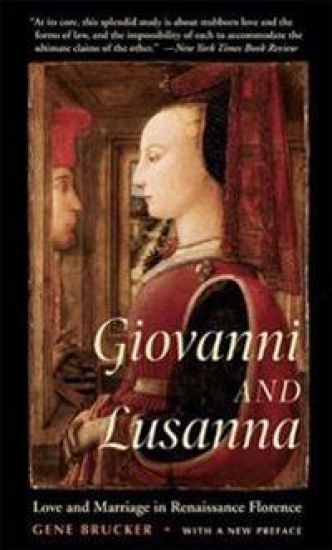
This compelling account of a wronged woman in Renaissance Florence, first published in 1986, is a fascinating view of Florentine society and its attitudes on love, marriage, class, and gender. Lusanna was a beautiful woman from a middle-class background who, in 1455, brought suit against Giovanni, her aristocratic lover, when she learned he had contracted to marry a woman of his own class. Blending scholarship with insightful narrative, the book portrays an extraordinary woman who challenged the unwritten codes and barriers of the social hierarchy and dared to seek a measure of personal independence in a male-dominated world.

Giovanni and Lusanna: Love and Marriage in Renaissance Florence
Gene Brucker; Margaret Meserve
University of California Press
2014
nidottu
Updated with a new foreword by Margaret Meserve, Giovanni and Lusanna provides a fascinating view of Renaissance Florentine society and its attitudes on love, marriage, class, and gender. Lusanna was a beautiful woman from a middle-class background who, in 1455, brought suit against Giovanni, her aristocratic lover, when she learned he had contracted to marry a woman of his own class. Blending scholarship with insightful narrative, the book portrays an extraordinary woman who challenged the unwritten codes and barriers of the social hierarchy and dared to seek a measure of personal independence in a male-dominated world.




Giovanni, Street Urchin of Naples: Giovanni 'O Scugnizzo
Joseph C. Polacco
Joseph C Polacco
2020
nidottu
The slums of early 20th century Naples are threatened by violence and disease. Thirteen-year-old scugnizzo- street urchin-Giovanni survives by his wits and by alliances with the few he can trust. He and beautiful Filomena eventually fly off to Brooklyn, founding their own business and setting up their American home. Their Brooklyn family sends offshoots to LA, Las Vegas and the Ivy League. Family members serve America in both World Wars and in Korea. As Giovanni integrates into American life, he maintains his good humor and finds family among Americans of all origins. But creeping racist attitudes threaten that broader family. Giovanni's scugnizzo experiences sharpen his own eye for underhanded and illegal activities by American authorities. Some of them question Giovanni's loyalty and whether he fully washed himself free of the filth of Naples' harbor.

A deluxe edition of James Baldwin's groundbreaking novel, with a new introduction by Kevin Young and special cover art designed by Baldwin's friend and contemporary Beauford Delaney Giovanni's Room is set in the Paris of the 1950s, where a young American expatriate finds himself caught between his repressed desires and conventional morality. David has just proposed marriage to his American girlfriend, but while she is away on a trip he becomes involved in a doomed affair with a bartender named Giovanni. With sharp, probing insight, James Baldwin's classic narrative delves into the mystery of love and tells a deeply moving story that reveals the unspoken complexities of the human heart.

The most comprehensive collection in English of the founder of modern Italian poetryGiovanni Pascoli (1855–1912)—the founder of modern Italian poetry and one of Italy's most beloved poets—has been compared to Robert Frost for his evocation of natural speech, his bucolic settings, and the way he bridges poetic tradition and the beginnings of modernism. Featuring verse from throughout his career, and with the original Italian on facing pages, Selected Poems of Giovanni Pascoli is a comprehensive and authoritative collection of a fascinating and major literary figure.Reading this poet of nature, grief, and small-town life is like traveling through Italy's landscapes in his footsteps—from Romagna and Bologna to Rome, Sicily, and Tuscany—as the country transformed from an agrarian society into an industrial one. Mixing the elevated diction of Virgil with local slang and the sounds of the natural world, these poems capture sense-laden moments: a train's departure, a wren's winter foraging, and the lit windows of a town at dusk. Incorporating revolutionary language into classical scenes, Pascoli's poems describe ancient rural dramas—both large and small—that remain contemporary.Framed by an introduction, annotations, and a substantial chronology, Taije Silverman and Marina Della Putta Johnston's translations render the variety, precision, and beauty of Pascoli's poetry with a profoundly current vision.
The most comprehensive collection in English of the founder of modern Italian poetryGiovanni Pascoli (1855–1912)—the founder of modern Italian poetry and one of Italy's most beloved poets—has been compared to Robert Frost for his evocation of natural speech, his bucolic settings, and the way he bridges poetic tradition and the beginnings of modernism. Featuring verse from throughout his career, and with the original Italian on facing pages, Selected Poems of Giovanni Pascoli is a comprehensive and authoritative collection of a fascinating and major literary figure.Reading this poet of nature, grief, and small-town life is like traveling through Italy's landscapes in his footsteps—from Romagna and Bologna to Rome, Sicily, and Tuscany—as the country transformed from an agrarian society into an industrial one. Mixing the elevated diction of Virgil with local slang and the sounds of the natural world, these poems capture sense-laden moments: a train's departure, a wren's winter foraging, and the lit windows of a town at dusk. Incorporating revolutionary language into classical scenes, Pascoli's poems describe ancient rural dramas—both large and small—that remain contemporary.Framed by an introduction, annotations, and a substantial chronology, Taije Silverman and Marina Della Putta Johnston's translations render the variety, precision, and beauty of Pascoli's poetry with a profoundly current vision.
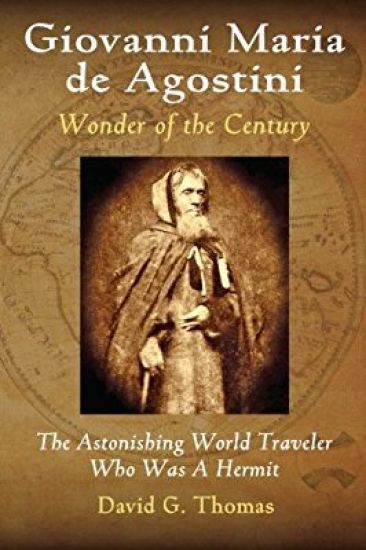
Giovanni Maria de Agostini, Wonder of the Century: The Astonishing World Traveler Who Was a Hermit
David G. Thomas
Doc 45 Publishing
2014
nidottu
This book is about a remarkable man, Giovanni Maria de Agostini, born in Italy in 1801, who combined two seemingly contradictory aspirations: a fervent desire to devote his whole life to "perfect solitude" and an astonishing urge to travel incessantly. As his decisions and actions emerge from the lightless silence - the time-covered past - a unifying purpose becomes evident. Following extensive travel in Europe, Agostini takes vows revocable only by formal dispensation from the Pope. He immediately leaves forever his "beloved Italy" for South America. Twenty-one years he spends traversing that, at the time, greatly unexplored continent, visiting Venezuela, Colombia, Ecuador, Bolivia, Peru, Brazil, Argentina, Paraguay, and Chile - and so doing multiple times. During this spectacular solo Odyssey, he survives a trip down the Amazon River by canoe, crosses the Andes by foot several times, walks vast distances, and endures living alone in scalding deserts and subzero mountains. In spite of oppressive and infuriating obstacles, including death threats, unjust arrest, deportation, jail, and forced confinement in a mental asylum, Agostini persists undeterred in the solemn goal he set for himself when he left Europe. Seeking change and another continent, Agostini leaves South America for Mexico, passing through Panama and Guatemala, and then Mexico for North America, passing through Cuba. In Cuba, he is hailed as an extraordinary adventurer, his photograph is taken, and he is proclaimed "The Wonder of Our Century." After arrival in New York, he walks to Canada, where he spends almost a year, then "goes west," eventually reaching, in the midst of the American Civil War, the Territory of New Mexico, where he meets his merciless fate. Agostini is remembered in many places -- in South America as Monge Jo o Maria, in North America as Ermita o Don Juan Agostini; however his life story is encrusted with myth and false fact. As the veritable events of his life are unveiled, a man of fascinating originality, prodigious endurance, intelligence, self-discipline, and self-sufficiency, infused with an indomitable spirit of adventure, emerges. Today in Argentina, as many as 15,000 people participate in a yearly festival initiated by Agostini at Cerro Monje, "Monk's Hill." In Brazil, at Cerro Campestre, "Campestre Hill," and Santo Cerro do Botucara , "Holy Hill of Botucara ," over 10,000 people celebrate annual events founded by Agostini. In Lapa, Brazil, a national park protects the pilgrimage route to Gruta do Monge, "Monk's Grotto." At Ara oiaba Hill, near Sorocaba, Brazil, the Trilha da Pedra Santa, "Trail of the Holy Rock," is climbed annually by thousands of people desiring to pay respect to the memory of the Monge do Ipanema, the "Monk of Ipanema." These are just a few examples of Agostini's cultural legacy, 145 years after his death. 20 maps and 65 photos, including 2 rare photos of Agostini, one taken in 1857 and one taken in 1861.

The recent rise in Europe of extreme right-wing political parties along with outbreaks of violent nationalist fervor in the former communist bloc has occasioned much speculation on a possible resurgence of fascism. At the polemical level, fascism has become a generic term applied to virtually any form of real or potential violence, while among Marxist and left-wing scholars discredited interpretations of fascism as a "product of late capitalism" are revived. Empty of cognitive significance, these formulas disregard the historical and philosophical roots of fascism as it arose in Italy and spread throughout Europe. In Giovanni Gentile: Philosopher of Fascism, A. James Gregor returns to those roots by examining the thought of Italian Fascism's major theorist.In Gregor's reading of Gentile, fascism was-and remains-an anti-democratic reaction to what were seen to be the domination by advanced industrial democracies of less-developed or status-deprived communities and nations languishing on the margins of the "Great Powers." Sketching in the political background of late nineteenth-century Italy, industrially backward and only recently unified, Gregor shows how Gentile supplied fascism its justificatory rationale as a developmental dictatorship. Gentile's Actualism (as his philosophy came to be identified) absorbed many intellectual currents of the early twentieth century including nationalism, syndicalism, and futurism and united them in a dynamic rebellion against new perceived hegemonic impostures of imperialism. The individual was called to an idealistic ethic of obedience, work, self-sacrifice, and national community. As Gregor demonstrates, it was a paradigm of what we can expect in the twenty-first century's response, on the part of marginal nations, to the globalization of the industrialized democracies. Gregor cites post-Maoist China, nationalist Russia, Africa, and the Balkans at the development stage from which fascism could grow.The first book-length analysis in English of Gentile's thought in over thirty years, this volume is valuable not only as a work of historical scholarship but as a timely warning. While Marxism-Leninism has passed into history, fascism may yet reemerge as an external threat to democratic nations.