From Morris Award finalist Sonia Patel comes a sharply written YA about a girl grappling with a dark, painful secret from her past, perfect for fans of All My Rage and The Way I Used to Be.It’s eighteen-year-old Gita Desai’s first year at Stanford, and the fact that she’s here and not already married off by her traditional Gujarati parents is a miracle. She’s determined to death-grip her good-girl, model student rep all the way to med school, which means no social life or standing out in any way. Should be easy: If there’s one thing she’s learned from her family, it’s how to chup-re—to “shut up,” fade into the background. But when childhood memories of her aunt’s desertion and her then-uncle’s best friend resurface, Gita ends up ditching the books night after night in favor of partying and hooking up with strangers. Still, nothing can stop the little voice growing louder and louder inside her that says something is wrong. . . . And the only way she can burst forward is to stop shutting up about the past.“Funny, messy, gut-wrenching.”—Kirkus Reviews
From Morris Award finalist Sonia Patel comes a sharply written YA about a girl grappling with a dark, painful secret from her past, perfect for fans of All My Rage and The Way I Used to Be.It’s eighteen-year-old Gita Desai’s first year at Stanford, and the fact that she’s here and not already married off by her traditional Gujarati parents is a miracle. She’s determined to death-grip her good-girl, model student rep all the way to med school, which means no social life or standing out in any way. Should be easy: If there’s one thing she’s learned from her family, it’s how to chup-re—to “shut up,” fade into the background. But when childhood memories of her aunt’s desertion and her then-uncle’s best friend resurface, Gita ends up ditching the books night after night in favor of partying and hooking up with strangers. Still, nothing can stop the little voice growing louder and louder inside her that says something is wrong. . . . And the only way she can burst forward is to stop shutting up about the past.“Funny, messy, gut-wrenching.”—Kirkus Reviews
Jayadeva's Gitagovínda is a lyrical account of the illicit springtime love affair of Krishna and Radha, a god and goddess manifesting on earth as a cowherd and milkmaid for the sake of relishing the sweet miseries and rapturous delights of erotic love. The narrative framing their bucolic songs was composed under royal patronage in northeastern India in the twelfth century. It was to be performed for connoisseurs of poetry and the erotic arts, for aesthetes and voluptuaries who, while sensually engaged, were at the same time devoted to Krishna as Lord of the Universe. The text at once celebrates the vicissitudes of carnal love and the transports of religious devotion, merging and reconciling those realms of emotion and experience. Erotic and religious sensibilities serve, and are served by, the pleasures of poetry. In the centuries following its composition, the courtly text became a vastly popular inspirational hymnal. Jayadeva's songs continue to be sung throughout India in fervent devotional adoration of Krishna.
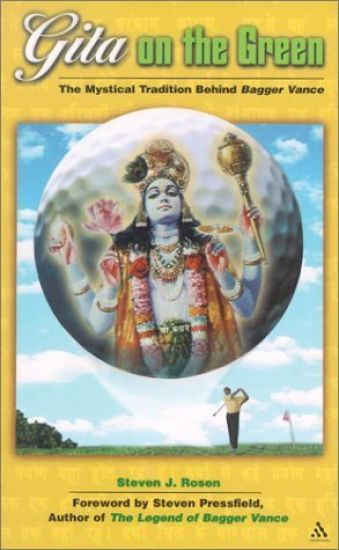
In 1995, Steven Pressfield decided to introduce the Bhagavad-Gita to a contemporary audience, so he restructured the Gita in terms of a golf novel, The Legend of Bagger Vance. Now a major motion picture directed by Robert Redford and starring Matt Damon and Will Smith, The Legend of Bagger Vance is loosely based on the ancient Hindu epic, The Bhagavad-gita. Steven Rosen, in Gita on the Green: The Mystical Tradition Behind Bagger Vance, draws the story out further using some thirty years of Gita scholarship and a writing style that is both eloquent and thorough.
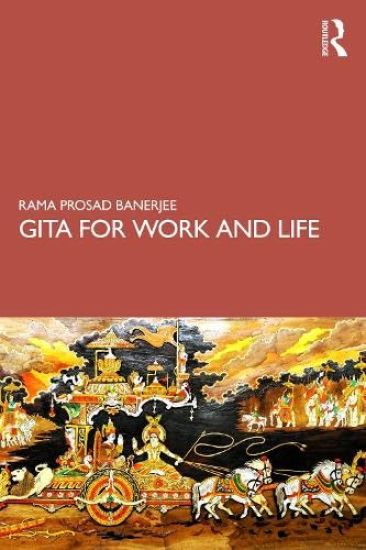
The Bhagavad Gita is a philosophical and spiritual poem about truth, duty, good actions and the purpose of life. This book collates the wisdom it offers and applies it to contemporary life and work offering lessons on how to foster excellence and fulfilment in today’s competitive world. The corporate world and the contemporary society focus on winning, performing, and developing a competitive edge. Gita for Work and Life offers readers a deeper philosophical understanding of the interconnectedness of all beings, the importance of self-reflection and improvement, purpose, duty, morality, equanimity and peace. These guiding principles provided by Krishna to Arjuna in the Bhagavad Gita are meant to rekindle the dormant human spirit and inspire the reader to elevate their understanding of the mind and soul and how these relate to their work. The book explores themes such as depression management, realised action, knowing oneself, work and fulfilment, balance and discipline, material and spiritual knowledge and raja yoga among others. A unique work, this will be a valuable resource for corporate leaders, middle and senior managers, and those interested in leadership, management and organisational studies. Leadership practitioners will also benefit from the accessible and practical lessons this book has to offer.
The Bhagavad Gita is a philosophical and spiritual poem about truth, duty, good actions and the purpose of life. This book collates the wisdom it offers and applies it to contemporary life and work offering lessons on how to foster excellence and fulfilment in today’s competitive world. The corporate world and the contemporary society focus on winning, performing, and developing a competitive edge. Gita for Work and Life offers readers a deeper philosophical understanding of the interconnectedness of all beings, the importance of self-reflection and improvement, purpose, duty, morality, equanimity and peace. These guiding principles provided by Krishna to Arjuna in the Bhagavad Gita are meant to rekindle the dormant human spirit and inspire the reader to elevate their understanding of the mind and soul and how these relate to their work. The book explores themes such as depression management, realised action, knowing oneself, work and fulfilment, balance and discipline, material and spiritual knowledge and raja yoga among others. A unique work, this will be a valuable resource for corporate leaders, middle and senior managers, and those interested in leadership, management and organisational studies. Leadership practitioners will also benefit from the accessible and practical lessons this book has to offer.
Title: Gita al Gran Sasso d'Italia. Luglio 1871. With photographs.]Publisher: British Library, Historical Print EditionsThe British Library is the national library of the United Kingdom. It is one of the world's largest research libraries holding over 150 million items in all known languages and formats: books, journals, newspapers, sound recordings, patents, maps, stamps, prints and much more. Its collections include around 14 million books, along with substantial additional collections of manuscripts and historical items dating back as far as 300 BC.The GENERAL HISTORICAL collection includes books from the British Library digitised by Microsoft. This varied collection includes material that gives readers a 19th century view of the world. Topics include health, education, economics, agriculture, environment, technology, culture, politics, labour and industry, mining, penal policy, and social order. ++++The below data was compiled from various identification fields in the bibliographic record of this title. This data is provided as an additional tool in helping to insure edition identification: ++++ British Library San roberto, Paolo di Count.; 1871. 32 p.; 4 . 10130.i.20.














![Gita Al Gran Sasso D'Italia. Luglio 1871. [With Photographs.]](/covers/9781241350987.jpg)