Kirjojen hintavertailu. Mukana 11 699 587 kirjaa ja 12 kauppaa.

Kirjahaku

Etsi kirjoja tekijän nimen, kirjan nimen tai ISBN:n perusteella.

1000 tulosta hakusanalla Glenn a Repple

Leibniz's Final System

Leibniz's Final System

Glenn A. Hartz

Routledge
2006
sidottu
Gottfried Wilhelm Leibniz was one of the central figures of seventeenth-century philosophy, and a huge intellectual figure in his age. This book from Glenn A. Hartz (editor of the influential Leibniz Review) is an advanced study of Leibniz's metaphysics. Hartz analyzes a very complicated topic, widely discussed in contemporary commentaries on Leibniz, namely the question of whether Leibniz was a metaphysical idealist, realist, or whether he tried to reconcile both trends in his mature philosophy. Because Leibniz is notoriously unclear about this, much has been written on the subject. In recent years, the debate has centered on whether it is possible to maintain compatibility between the two trends. In this controversial book, Hartz demonstrates that it is not possible to maintain compatibility of idealist and realist views - they must be understood as completely separate theories. As the first major work on realism in Leibniz's metaphysics, this key text will interest international Leibniz scholars, as well as students at the graduate level.

Little Big House

Little Big House

Glenn A Ridler

Little Big House Gallery
2017
pokkari
Glenn A. Ridler started physically erecting Little Big House in 1972. In 2005, he declared it complete. The first edition of this book, published in 2009, coincided with the exhibition, A Chronicle: Laying The Foundation of The House, The Erection at the Little Big House Gallery. It celebrated the contributions of the many friends and the family of Glenn Ridler, who made the construction of the Little Big House possible. This edition includes Ridler's story, photographs of the construction, reconstructed model, and finished building as well as an essay by Morgan Ridler, Ph.D., and a recent interview between Dr. Ridler and Glenn Ridler on his development, working process, and newest work. With the ongoing success of the Little Big House Gallery, we are thrilled to present the second edition of Little Big House: Why, How, Who.
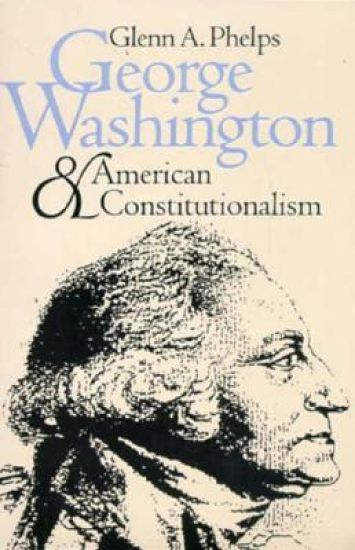
George Washington and American Constitutionalism

George Washington and American Constitutionalism

Glenn A. Phelps

University Press of Kansas
1993
nidottu
This text offers an understanding of George Washington and the history and government he helped to make. Phelps makes the case for the President's decisive importance to the development of American constitutional republicanism with emphasis on the strength and coherence of Washington's political philosophy.
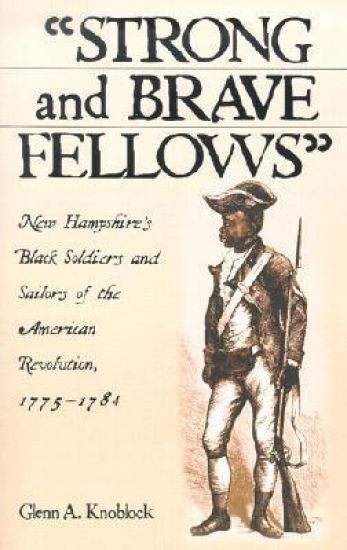
"Strong and Brave Fellows"

"Strong and Brave Fellows"

Glenn A. Knoblock

McFarland Co Inc
2003
pokkari
New Hampshire, despite its small size, played a significant role in the American Revolution. The deeds of the state's soldiers and other notable citizenry have been well documented but the contributions of the black population have never been fully explored until now. The largest part of this book consists of the service records of all known black soldiers with ties to New Hampshire: 139 who served in New Hampshire's forces, 34 who served in New Hampshire and another colony's forces, and 51 who served in another colony's forces but lived in New Hampshire at some point in their lives. The work also provides information on life for blacks in New Hampshire before, during and after the American Revolution, and information on campaigns and engagements that blacks from New Hampshire were known to have taken part in.
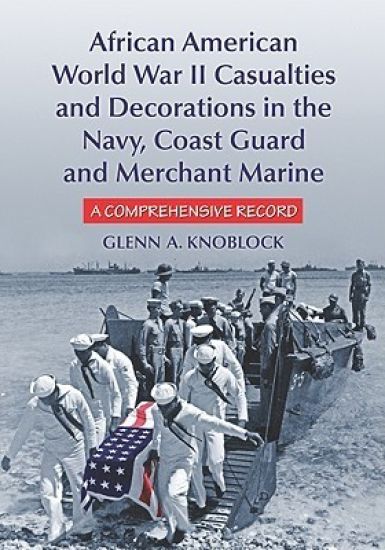
African American World War II Casualties and Decorations in the Navy, Coast Guard and Merchant Marine
This book is an account of the 2,445 African American men who were killed or wounded or decorated during World War II in the Navy, Coast Guard, and Merchant Marine. Because of the nature of the military's racial policies, most of these men served either in the Steward's Branch or in subordinate positions. As a result, the role of these fighting men has largely been ignored. This book attempts to rectify this oversight, documenting each man lost with groupings primarily by ship and by shore service, as well as separate chapters for those lost at Pearl Harbor and those who died in the explosion at Port Chicago, an incident which accounted for about 20 percent of all deaths among African American seamen during the war. Information of a more personal nature about each man is often included, highlighted by input from surviving black veterans as well as recollections from several families whose sons, fathers, and brothers were lost in the war. Also featured are several African Americans who were decorated posthumously for acts of bravery and heroism during their service, including Navy Cross winners Dorie Miller, William Pinckney and Leonard Roy Harmon.
Historic Iron and Steel Bridges in Maine, New Hampshire and Vermont
This book chronicles the development of metal truss and related bridges in Maine, New Hampshire and Vermont from the 1860s to 1940: the various types and their inventors, historical changes in the highway and railroad networks that caused these bridges to be built, the rise of state bridge-building agencies, developments in the field of civil engineering, and preservation trends. While many notable metal bridges of the past are discussed in the context of these topics, the book's main focus is a detailed account of the remaining historic bridges.
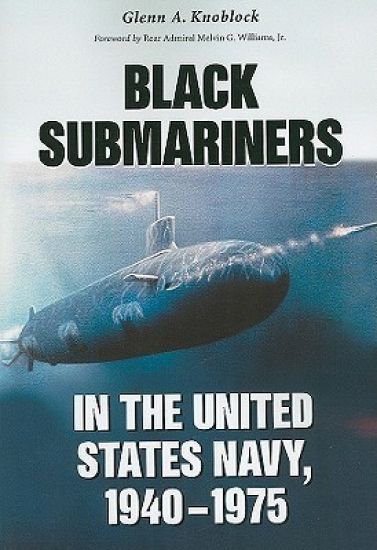
Black Submariners in the United States Navy, 1940-1975
For as long as an American naval force has existed, black sailors have served it with bravery, distinction, and little or no recognition. They have since earned praise for service in the American Revolution, the War of 1812, and the Civil War, and more recently, they were integral to the development of the U.S. Submarine Service. Their roles limited by segregation, black submariners nonetheless were a key element of the "Silent Service" throughout World War II. With desegregation came expanded opportunities, and black submariners witnessed the birth and evolution of the nuclear-powered submarine, and some of the tensest moments of the Cold War. These men paved the way for those who followed--their contributions deserve recognition, and their stories deserve to be told. This exploration of the role of African American submariners chronicles their service from World War II through the Cold War era. An historical overview of black sailors and the evolution of the Steward's Branch, to which black sailors were eventually restricted, precede descriptions of becoming a steward and a submariner, and of life as a submariner during World War II. An account of black submariners in post-war service during desegregation, the development of the nuclear submarine, and throughout the Cold War follows. Oral histories of more than fifty black submariners who served in World War II and post-war form the heart of the book. Photographs of the men profiled, including wartime photographs, complement the text. Appendices outline the naval steward rating system, list all black submarine stewards serving in World War II, top stewards by number of war patrols, and those lost or killed during wartime service. Rear Admiral Melvin G. Williams, Jr., submarine fleet commander and son of one of the men profiled, provides a foreword.
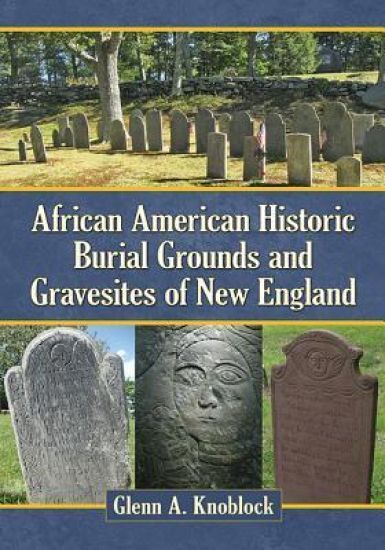
African American Historic Burial Grounds and Gravesites of New England
Evidence of the early history of African Americans in New England is found in the many old cemeteries and burial grounds in the region, often in hidden or largely forgotten locations. This unique work covers the burial sites of African Americans--both enslaved and free--in each of the New England states, and uncovers how they came to their final resting places. The lives of well known early African Americans are discussed, including Venture Smith and Elizabeth Freeman, as well as the lives of many ordinary individuals--military veterans, business men and women, common laborers and children. The author's examination of burial sites and grave markers reveals clues that help document the lives of black New Englanders from the 1640s to the early 1900s.
Race, Nation, and West Indian Immigration to Honduras, 1890-1940

Race, Nation, and West Indian Immigration to Honduras, 1890-1940

Glenn A. Chambers

Louisiana State University Press
2010
sidottu
At the turn of the twentieth century, Honduras witnessed the expansion of its banana industry and the development of the United Fruit Company and Standard Fruit into multinational corporations with significant political and economic influence in Latin America and the Caribbean. These companies relied heavily on an imported labor force, thousands of West Indian workers, whose arrival in Honduras immediately sparked anti-black and anti-immigrant sentiment throughout the country. Glenn A. Chambers examines the West Indian immigrant community in Honduras through the development of the country's fruit industry, revealing that West Indians fought to maintain their identities as workers, Protestants, blacks, and English speakers in the midst of popular Latin American nationalistic notions of mestizaje, or mixed-race identity. West Indians lived as outsiders in Honduran society owing to the many racially motivated initiatives of the Honduran government that defined acceptable immigration as ""white only."" As Chambers shows, one unintended, though perhaps predictable, consequence of this political stance was the emergence of a clearly defined and separate West Indian enclave that proved to be antagonistic toward native Hondurans. This conflict ultimately led to animosity between English-speaking and Spanish-speaking Hondurans, as well as between West Indians and non--West Indian peoples of African descent. An all-inclusive Afro-Honduran identity never emerged in Honduras, Chambers reveals. Rather, black identity developed through West Indians' culture, language, and history.Chambers moves beyond treatments of West Indian labor as an accessory to U.S. capitalist interests to explore the ethnic and racial dynamic of the interactions of the West Indian community with locals. In Race, Nation, and West Indian Immigration to Honduras, 1890--1940, Chambers demonstrates the importance of racial identity in Honduran society as a whole and reveals the roles that culture, language, ethnicity, and history played in the establishment of regional identities within the broader African diaspora.
From the Banana Zones to the Big Easy

From the Banana Zones to the Big Easy

Glenn A. Chambers

Louisiana State University Press
2019
sidottu
From the Banana Zones to the Big Easy focuses on the immigration of West Indians and Central Americans- particularly those of British West Indian descent from the Caribbean coastal areas- to New Orleans from the turn of the twentieth century to the start of World War II. Glenn A. Chambers discerns the methods by which these individuals of diverse racial and ethnic backgrounds integrated into New Orleans society and negotiated their distinct historical and ethnoracial identities in the Jim Crow South. Throughout this study, Chambers explores two central questions: What did it mean to be ""West Indian"" within a context in which the persons migrating- or their parents, in some cases- were not born in the West Indies? And how did Central Americans grapple with this ""West Indian"" cultural identity when their political identity (citizenship) was Honduran, Costa Rican, or Panamanian? Chambers maintains that a distinct West Indian culture did not emerge in New Orleans. Rather, newly arrived West Indian practices intertwined with existing African American traditions, a process intensified in New Orleans's established climate of incorporating, and often absorbing, new peoples and cultures. The West Indian population in early twentieth-century New Orleans was truly transnational, multinational, multilingual, diasporic, and constantly evolving. These newcomers to New Orleans remained conscious of their West Indian roots but were not bound by them. Their experiences spanned nations but were not politically internationalist, as was the case with the larger West Indian communities in the northeastern United States. The ways in which individuals and families transitioned into U.S. constructions of race were at times the result of conscious decisions. In other instances, race was determined by the realities of everyday life in the Jim Crow South, in which whiteness translated into access and opportunity and all other ethnicities were relegated to a subordinate position. Many West Indians and Central Americans impacted by this system learned to navigate it in such a way that their ethnic and national identity all but disappeared from the historical record. Through an analysis of arrest records, ships' passenger records, foreign consulate reports, draft registrations, declarations of intent to apply for citizenship, naturalization applications, and city directories, Chambers recovers the lives of a small but significant population of immigrants who challenged the racial status quo.
Watchdogs

Watchdogs

Glenn A. Fine

UNIVERSITY OF VIRGINIA PRESS
2024
sidottu
The last line of defense for our institutions, and our democracy Inspectors general may be the most important public servants you’ve never heard of. In Watchdogs, Glenn Fine—who served as the inspector general of the Department of Justice from 2000 to 2011 and the acting inspector general of the Department of Defense from 2016 to 2020—explains why all Americans should be familiar with this critical pillar of our democracy. Drawing on his own experiences in numerous high-profile investigations over two decades, from 9/11 to the wars in Iraq and Afghanistan, Fine provides a fascinating insider’s view of government at the highest levels, illuminating how federal officials spend our tax dollars and how inspector general oversight seeks to make government more honest and accountable. Full of revealing stories—from the FBI’s handling of evidence in the Timothy McVeigh trial to the treatment of post-9/11 detainees to investigating the US Navy’s most infamous corruption scandal—Watchdogs illustrates the mission of inspectors general in improving government operations, deterring wasteful spending, and curtailing corruption, and the ways they work every day in America’s unique system of oversight.
Mexican Americans and Language

Mexican Americans and Language

Glenn A. Martinez

University of Arizona Press
2006
nidottu
When political activists rallied for the abolition of bilingual education and even called for the declaration of English as an official language, Mexican Americans and other immigrant groups saw this as an assault on their heritage and civil rights. Because language is such a defining characteristic of Mexican American ethnicity, nearly every policy issue that touches their lives involves language in one way or another. This book offers an overview of some of the central issues in the Mexican American language experience, describing it in terms of both bilingualism and minority status. It is the first book to focus on the historical, social, political, and structural aspects of multiple languages in the Mexican American experience and to address the principles and methods of applied sociolinguistic research in the Mexican American community. Spanish and non-Spanish speakers in the Mexican American community share a common set of social and ethnic bonds. They also share a common experience of bilingualism. As Martinez observes, the ideas that have been constructed around bilingualism are as important to understanding the Mexican American language experience as bilingualism itself. Mexican Americans and Language gives students the background they need to respond to the multiple social problems that can result from the language differences that exist in the Mexican American community. By showing students how to go from word to deed (del dicho al hecho), it reinforces the importance of language for their community, and for their own lives and futures.
Politics Reformed

Politics Reformed

Glenn A. Moots

UNIVERSITY OF MISSOURI PRESS
2022
nidottu
Many studies have considered the Bible’s relationship to politics, but almost all have ignored the heart of its narrative and theology: the covenant. In this book, Glenn Moots explores the political meaning of covenants past and present by focusing on the theory and application of covenantal politics from the sixteenth through the eighteenth centuries. Moots demands that we revisit political theology because it served as the most important school of politics in early modern Europe and America. He describes the strengths of the covenant tradition while also presenting its limitations and dangers. Contemporary political scientists such as Eric Voegelin, Daniel Elazar, and David Novak are called on to provide insight into both the covenant’s history and its relevance today.Moots’s work chronicles and critiques the covenant tradition while warning against both political ideology and religious enthusiasm. It provides an inclusive and objective outline of covenantal politics by considering the variations of Reformed theology and their respective consequences for political practice. This includes a careful account of how covenant theology took root on the European continent in the sixteenth century and then inspired ecclesiastical and civil politics in England, Scotland, and America. Moots goes beyond the usual categories of Calvinism or Puritanism to consider the larger movement of which both were a part. By integrating philosophy, theology, and history, Moots also invites investigation of broader political traditions such as natural law and natural right.Politics Reformed demonstrates how the application of political theology over three centuries has important lessons for our own dilemmas about church and state. It makes a provocative contribution to understanding foundational questions in an era of rising fundamentalism and emboldened secularism, inspiring readers to rethink the importance of religion in political theory and practice, and the role of the covenant tradition in particular.
Defining the Role of Airpower in Joint Missions

Defining the Role of Airpower in Joint Missions

Glenn A. Kent; David A. Ochmanek

RAND
1998
pokkari
The stage is set for the emergence of a "new American way of war," in which U.S. forces are able to bring military power to bear against an enemy state quickly, comprehensively, decisively, and with minimal risk of heavy casualties. But some obstacles remain. These obstacles seem more budgetary and political than technical or operational. Some key programs are being abandoned or delayed because of the press of limited resources and competing demands. In this environment, it is imperative that the Air Force articulate in clear and compelling terms the potential contributions of airpower to joint operations. This is distinct from claiming "Air Force roles and missions." The approach offered here begins with a consideration of the basic characteristics of air forces and space forces, identifies the operational capabilities of these forces, and lists the missions and operational objectives to which these forces can contribute. By insisting that these missions and objectives be defined from the perspective of joint operations, this approach to doctrine positions the Air Force favorably to advance the role of its forces in the competition for roles within missions.
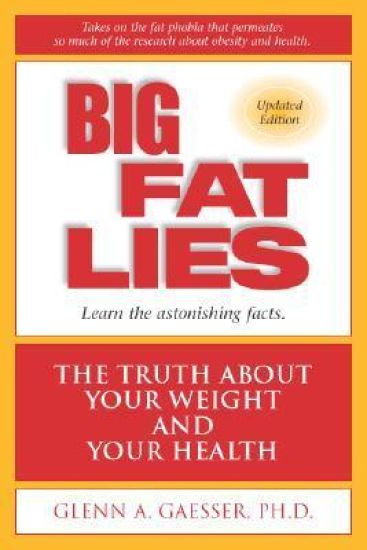
Big Fat Lies

Big Fat Lies

Glenn A. Gaesser; Steven N. Blair

Gurze Books
2002
pokkari
"Obesity kills 300,000 people per year" IS A BIG FAT LIE!Glenn Gaesser, an exercise physiologist, challenges the conventional wisdom that being "overweight" is dangerous. This is a meticulously-researched, clearly-written book and is crucial reading for anyone who wants to take concrete steps towards improving their health—no matter what their size.Here are well-document facts that:People can be fit and fat.Thinner is not necessarily healthier.Some body fat protects you from heart disease.Dieting can cause weight gain."Finally, truth and justice for the fat person. People...cannot all fit some insurance chart. This book should be required reading before going on a diet." —Charles Van Dyke, Chairman of the Board, National Association to Advance Fat Acceptance"A fascinating, witty, informative collage on one of the most bewildering contemporary controversies in the health field." —Rubin Andres, M.D., Clinical Director, National Institute on Aging
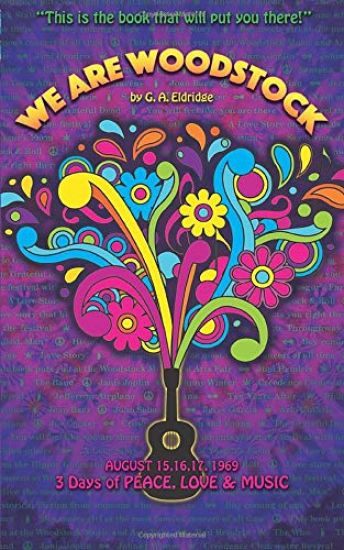
We Are Woodstock

We Are Woodstock

Glenn A. Eldridge

Chelsea Decorative Metal Company
2016
nidottu
The 50th anniversary of the Woodstock Festival is approaching in August of this year, 2019, and there is no better way to learn about that incredible weekend then to go back there. In this new novel by Glenn Eldridge, that's exactly what he does; he takes you back. We are Woodstock is as much a coming of age story as it is the telling of a generation that is preparing to leave the 60s. It's the summer of '69 in up-state New York, Glenn has quit his job and his girlfriend just dumped him, but nothing is going to stop him from going to the Woodstock Festival. Glenn travels with two friends to Yasgur's Farm in Bethel, New York, on the eve of the event. They have no idea that a half-million people will attend or that Governor Rockefeller will declare the farm a disaster area. The weather will also not co-operate, but one of the thing that will shine this weekend, besides meeting a couple of musical artists, is the appearance of Gail, a free-spirited flower child, who will become Glenn's new love interest. The concert, held at an Aquarian Exposition, is filled with a who's who of artists that represent the music of this hippie generation. You will learn about the performances, some behind the scene shenanigans, and the future of some of the stars. From Richie Havens to Jimi Hendrix, you will even be there, to hear Arlo Guthrie's famous announcement. Through the pages of this historical fiction novel, you will be at the Woodstock Festival: 3 Days of Peace & Music. Did I mention there is also sex, drugs and rock & roll? Only one thing is sure . . . you will be on the grounds of the greatest concert ever.
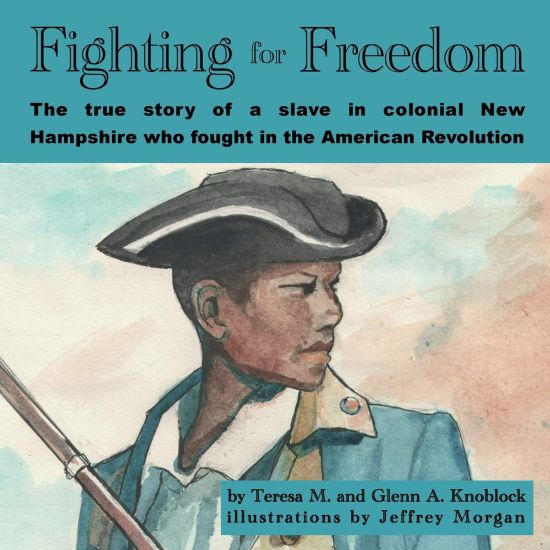
Fighting for Freedom

Fighting for Freedom

Glenn a Knoblock; Teresa M Knoblock

Free People Publishing
2022
pokkari
Peter's life as a slave never really changes. He works hard every day, from morning till night. But when the American colonies decide to fight in a war to gain their independence from Britain and become a new nation, Peter bravely decides to question his master. "When will I have my freedom?" The deal Peter makes leads to an exciting journey as a Revolutionary War soldier and changes his life forever. Compassion, determination, patriotism, and strong bonds of friendship are all on display in Fighting for Freedom. There is injustice too, as the book makes clear that slavery was widespread in early America. But this story of a boy's journey to manhood and to liberation from slavery, alongside the bonds he builds with family members who start out as slave owners but undergo a change of heart, shows that noble aspects of human nature can triumph. Showing events and circumstances that led to the American Revolution, and depicting early stages of the war, the story provides educational background about the founding of the United States. The book is based on the true history of Peter Freeman, an African American who is described on his gravestone in Massachusetts as "Freed Slave" and "Revolutionary Soldier."
An Analytical Investigation of the Ducted Propeller for Hydrodynamic Propulsion.
This work has been selected by scholars as being culturally important and is part of the knowledge base of civilization as we know it.This work is in the public domain in the United States of America, and possibly other nations. Within the United States, you may freely copy and distribute this work, as no entity (individual or corporate) has a copyright on the body of the work.Scholars believe, and we concur, that this work is important enough to be preserved, reproduced, and made generally available to the public. To ensure a quality reading experience, this work has been proofread and republished using a format that seamlessly blends the original graphical elements with text in an easy-to-read typeface.We appreciate your support of the preservation process, and thank you for being an important part of keeping this knowledge alive and relevant.