Kirjojen hintavertailu. Mukana 12 473 375 kirjaa ja 12 kauppaa.

Kirjahaku

Etsi kirjoja tekijän nimen, kirjan nimen tai ISBN:n perusteella.

1000 tulosta hakusanalla Godard

Late Godard and the Possibilities of Cinema

Late Godard and the Possibilities of Cinema

Daniel Morgan

University of California Press
2012
pokkari
With "Late Godard and the Possibilities of Cinema", Daniel Morgan makes a significant contribution to scholarship on Jean-Luc Godard, especially his films and videos since the late 1980s, some of the most notoriously difficult works in contemporary cinema. Through detailed analyses of extended sequences, technical innovations, and formal experiments, Morgan provides an original interpretation of a series of several internally related films - "Soigne ta droite" ("Keep Your Right Up", 1987), "Nouvelle vague" ("New Wave", 1990), and "Allemagne 90 neuf zero" ("Germany 90 Nine Zero", 1991) - and the monumental late video work, "Histoire(s) du cinema" (1988-1998). Taking up a range of topics, including the role of nature and natural beauty, the relation between history and cinema, and the interactions between film and video, the book provides a distinctive account of the cinematic and intellectual ambitions of Godard's late work. At the same time, "Late Godard and the Possibilities of Cinema" provides a new direction for the fields of film and philosophy by drawing on the idealist and romantic tradition of philosophical aesthetics, which rarely finds an articulation within film studies. In using the tradition of aesthetics to illuminate Godard's late films and videos, Morgan shows that these works transform the basic terms and categories of aesthetics in and for the cinema.
Jean-Luc Godard, Cinema Historian

Jean-Luc Godard, Cinema Historian

Indiana University Press
2013
pokkari
Originally released as a videographic experiment in film history, Jean-Luc Godard's Histoire(s) du cinéma has pioneered how we think about and narrate cinema history, and in how history is taught through cinema. In this stunningly illustrated volume, Michael Witt explores Godard's landmark work as both a specimen of an artist's vision and a philosophical statement on the history of film. Witt contextualizes Godard's theories and approaches to historiography and provides a guide to the wide-ranging cinematic, aesthetic, and cultural forces that shaped Godard's groundbreaking ideas on the history of cinema.
Jean-Luc Godard

Jean-Luc Godard

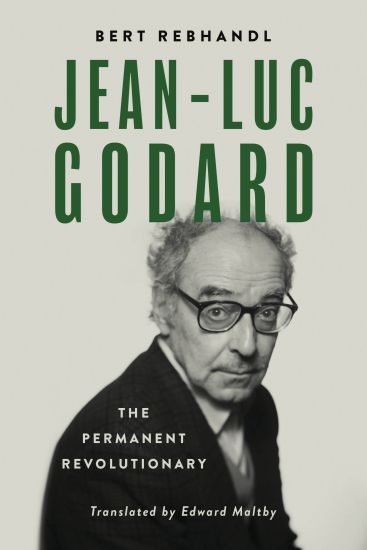
Bert Rebhandl

UNIVERSITY OF WISCONSIN PRESS
2023
sidottu
In this biography, now translated into English for the first time, Bert Rebhandl provides a balanced evaluation of the work of one of the most original and influential film directors of all time: Jean-Luc Godard (1930–2022). In this sympathetic yet critical overview, he argues that Godard's work captured the revolutionary spirit of Paris in the late 1960s as no other filmmaker has dared, and in fact reinvented the medium. Rebhandl skillfully weaves together biographical details; information about the cultural, intellectual, and cinematic milieu over the decades; and descriptions of Godard’s most significant films to support his assertion that the director was a permanent revolutionary—always seeking new ways to create, understand, and comment on film within a larger context. He views Godard as an artist consistently true to himself while never ceasing to change and evolve, often in unexpected, radical, and controversial ways. Rebhandl is known as a journalist with deep insights and lucid prose. Despite the wealth of material to analyze, he neither gets lost in the details nor offers a superficial gloss, even while directly tackling such topics as the long-standing charges of antisemitism against Godard and his oeuvre. This volume will be welcome to both casual fans and dedicated devotees.
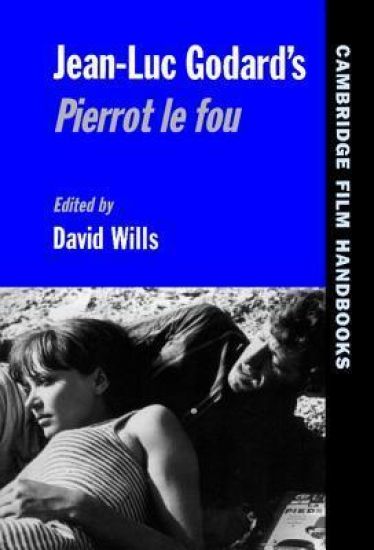
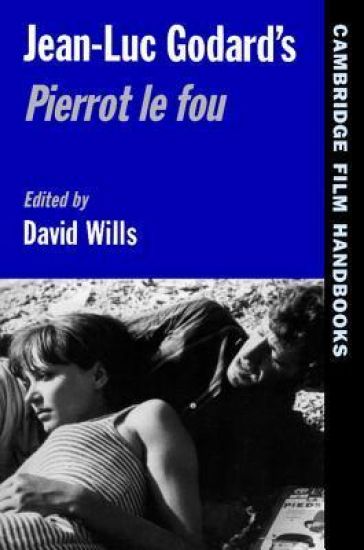
Jean-Luc Godard's Pierrot le Fou

Jean-Luc Godard's Pierrot le Fou

Cambridge University Press
2000
sidottu
Jean-Luc Godard's Pierrot le fou, made at the height of the French New Wave, remains a milestone in French cinema. More accessible than his later films, it represents the diverse facets of Godard's concerns and themes: a bittersweet analysis of male-female relations; an interrogation of the image; personal and international politics; the existential dilemmas of consumer society. This volume, first published in 2000, brings together essays by five prominent scholars of French film. They approach Pierrot le fou from the perspectives of image-and-word-play, aesthetics and politics, history, and high and popular culture, offering thought-provoking insights into the film, while demonstrating its relevance for a new generation of students of film. Also included are a selection of reviews of the film, as well as a complete filmography of Godard's work.
Jean-Luc Godard's Pierrot le Fou

Jean-Luc Godard's Pierrot le Fou

Cambridge University Press
2000
pokkari
Jean-Luc Godard’s Pierrot le fou, made at the height of the French New Wave, remains a milestone in French cinema. More accessible than his later films, it represents the diverse facets of Godard’s concerns and themes: a bittersweet analysis of male-female relations; an interrogation of the image; personal and international politics; the existential dilemmas of consumer society. This volume brings together essays by five prominent scholars of French film. They approach Pierrot le fou from the perspectives of image-and-word-play, aesthetics and politics, history, and high and popular culture, offering thought-provoking insights into the film, while demonstrating its relevance for a new generation of students of film. Also included are a selection of reviews of the film, as well as a complete filmography of Godard’s work.
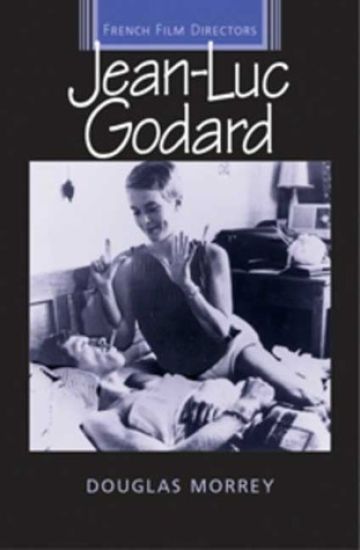
Jean-Luc Godard

Jean-Luc Godard

Douglas Morrey

Manchester University Press
2005
nidottu
This volume offers a new interpretation of one of the most innovative directors in the history of cinema. It is the first book to cover the whole of Godard's career, from the French New Wave to the recent triumphs of Histoire(s) du cinéma and Eloge de l’amour. Drawing on a wide range of literary, filmic and philiosophical texts, the book places Godard's work within its intellectual context, examining how developments in French culture and thought since 1950 have been mirrored in - and sometimes anticipated by - Godard's films.Numerous sequences from Godard's films are singled out for close analysis, demonstrating how the director's radical approaches to narrative, editing, sound and shot composition have made the cinema into an analytical tool in its own right.The book will be essential to all students of Godard's films, and of interest to scholars of modern and contemporary French cinema, culture and thought.
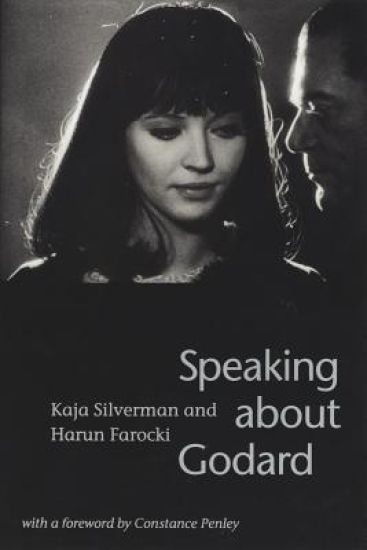
Speaking about Godard

Speaking about Godard

Silverman Kaja; Farocki Harun

New York University Press
1998
sidottu
Probably the most prominent living filmmaker, and one of the foremost directors of the postwar era, Jean Luc-Godard has received astonishingly little critical attention in the United States. With Speaking about Godard, leading film theorist Kaja Silverman and filmmaker Harun Farocki have made one of the most significant contributions to film studies in recent memory: a lively set of conversations about Godard and his major films, from Contempt to Passion. Combining the insights of a feminist film theorist with those of an avant-garde filmmaker, these eight dialogues–each representing a different period of Godard's film production, and together spanning his entire career–get at the very heart of his formal and theoretical innovations, teasing out, with probity and grace, the ways in which image and text inform one another throughout Godard's oeuvre. Indeed, the dialogic format here serves as the perfect means of capturing the rhythm of Godard's ongoing conversation with his own medium, in addition to shedding light on how a critic and a director of films respectively interpret his work. As it takes us through Godard's films in real time, Speaking about Godard conveys the sense that we are at the movies with Silverman and Farocki, and that we, as both student and participant, are the ultimate beneficiaries of the performance of this critique. Accessible, informative, witty, and, most of all, entertaining, the conversations assembled here form a testament to the continuing power of Godard's work to spark intense debate, and reinvigorate the study of one of the great artists of our time.
Speaking About Godard

Speaking About Godard

Kaja Silverman; Harun Farocki

New York University Press
1998
pokkari
A leading film theorist and a filmmaker discuss the lasting contributions of the most prominent living filmmaker, Jean Luc-Godard Probably the most prominent living filmmaker, and one of the foremost directors of the postwar era, Jean Luc-Godard has received astonishingly little critical attention in the United States. With Speaking about Godard, leading film theorist Kaja Silverman and filmmaker Harun Farocki have made one of the most significant contributions to film studies in recent memory: a lively set of conversations about Godard and his major films, from Contempt to Passion. Combining the insights of a feminist film theorist with those of an avant-garde filmmaker, these eight dialogues–each representing a different period of Godard's film production, and together spanning his entire career–get at the very heart of his formal and theoretical innovations, teasing out, with probity and grace, the ways in which image and text inform one another throughout Godard's oeuvre. Indeed, the dialogic format here serves as the perfect means of capturing the rhythm of Godard's ongoing conversation with his own medium, in addition to shedding light on how a critic and a director of films respectively interpret his work. As it takes us through Godard's films in real time, Speaking about Godard conveys the sense that we are at the movies with Silverman and Farocki, and that we, as both student and participant, are the ultimate beneficiaries of the performance of this critique. Accessible, informative, witty, and, most of all, entertaining, the conversations assembled here form a testament to the continuing power of Godard's work to spark intense debate, and reinvigorate the study of one of the great artists of our time.
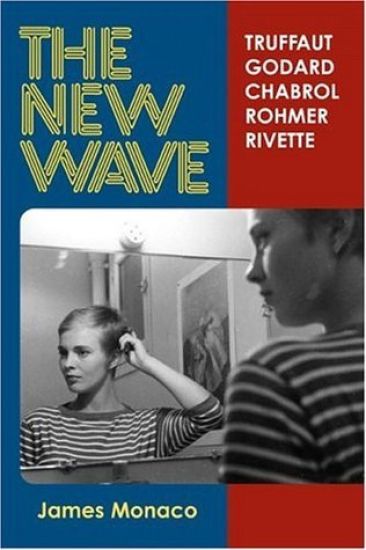
The New Wave: Truffaut Godard Chabrol Rohmer Rivette

The New Wave: Truffaut Godard Chabrol Rohmer Rivette

James Monaco

Harbor Electronic Publishing
2004
nidottu
Three decades after its first publication, The New Wave is still considered one of the fundamental texts on the French film movement of the same name. Led by filmmakers as influential as Truffaut and Godard, the New Wave was a seminal moment in cinematic history, and The New Wave has been hailed as the most complete book ever written about it.The New Wave tells the story of the New Wave through examinations of five of the most important directors of the era: Truffaut, Godard, Chabrol, Rohmer, and Rivette. With detailed notes and over fifty breathtaking stills, the book has appealed both to academics and interested novices alike.The thirtieth anniversary edition includes a new afterword by the author.Praise for the first edition of The New Wave: "The most complete book I know on the five most important directors of the New Wave."-Costa-Gavras"At last a book that intelligently and critically examines that remarkable phenomenon known as the New Wave. Not just a book for film buffs, it is essential reading for anyone interested in the interrelations between art, politics, and life in the second half of the twentieth century. A remarkable achievement." -Richard Roud, Founder, New York Film Festival"There is a genuine kind of honesty at work in the writing: a sense that the author wishes to describe the subject more clearly, help the reader, and not 'explain' (in the pompous sense of the word) or criticize for the sake of being superior. It's refreshing."-Ted Perry, Museum of Modern ArtAbout the author: James Monaco is author or editor of more than a dozen books on film and media, published in more than 35 editions, including American Film Now, The New Wave, The Connoisseurs' Guide to the Movies, The Film Encyclopedia, Media Culture, and Celebrity. He is president of UNET 2 Corporation, a developer of Internet software, and publisher of websites and DVD-Videos. He is also the founder of Baseline, the worldwide information source for the entertainment business. An experienced TV talk show guest and radio commentator, Monaco is also well-known as a pioneer of the electronic publishing industry.
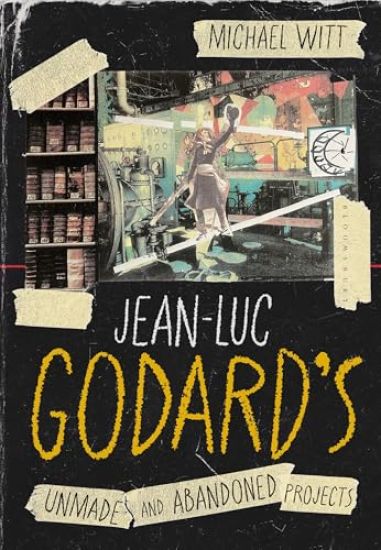
Jean-Luc Godard’s Unmade and Abandoned Projects

Jean-Luc Godard’s Unmade and Abandoned Projects

Michael Witt

BLOOMSBURY PUBLISHING PLC
2025
sidottu
This book offers the first study of the French-Swiss filmmaker Jean-Luc Godard's vast body of over 380 unmade, unfinished and abandoned projects over the course of his career from the late 1940s to the 2020s. While Godard is widely recognised as one of the most important and influential filmmakers of the post-war period, extremely little has been written about his largely invisible and unknown corpus of unrealised works. This includes many unmade films, videos and television programmes alongside a wide range of unfinished non-audiovisual ventures such as plays, books, exhibitions, a CD, a camera, a film journal, and even an architectural maquette. Drawing on extensive research on the surviving traces of these projects in archives and private collections, Michael Witt's comprehensive survey establishes the extent and constitution of the Godardian corpus of unrealised and abandoned works for the first time and examines them in detail in six key perspectives: literature, cinema, theatre, television, politics and history. The volume includes in-depth case studies of numerous major unfinished initiatives by Godard and his collaborators in locations around the globe (France, the Middle East, the USA, Quebec, the People's Republic of Mozambique), charts the extensive connections between his abandoned projects and his completed works, casts in relief his creative process, and offers a fresh way of thinking about and approaching his practice and oeuvre as a whole. A full annotated list of his unrealised and abandoned projects is included as an appendix.
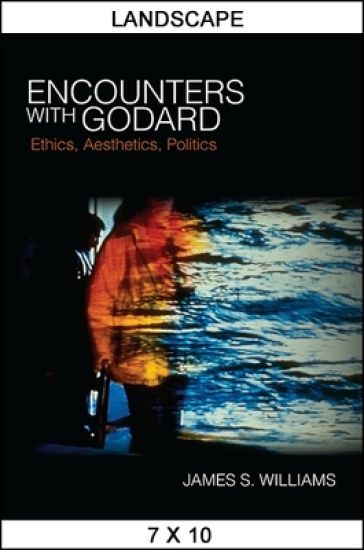
Encounters with Godard

Encounters with Godard

James S. Williams

State University of New York Press
2017
pokkari
A wide-ranging and accessible approach to Godard's later work, and a major intervention in the study of film and ethics.Encounters with Godard takes the reader on a personal voyage into the sensory pleasures and polyphonic rhythms of Jean-Luc Godard's multimedia work since the late 1970s, from his feature films and video essays to his published writings, art books, and media performances. Godard, suggests James S. Williams, lays ethical claim to the cinematic, defined in the broadest terms as relationality and artistic resistance. An introductory chapter on the extended history of La Chinoise (1967), a film explicitly of montage, is followed by seven different types of critical encounters with Godard, encompassing the fields of art and photography, music and literature, and foregrounding themes of gender and sexuality, race and violence, mystery and emotion. The Godard who emerges here is a restless and radical experimenter who establishes new cinematic thresholds through new technology and expands the creative potential and free exchange of the archives. Williams examines works including Nouvelle vague (1990), Film socialisme (2010), Hélas pour moi (1993), and the magnum opus Histoire(s) du cinéma (1988–98). Wide-ranging and accessible, Encounters with Godard marks a major intervention in the study of film aesthetics and ethics while forging a vital dialogue with literature, history and politics, art and art history, music and musicology, philosophy, and aesthetics.
Encounters with Godard

Encounters with Godard

James S. Williams

State University of New York Press
2016
sidottu
A wide-ranging and accessible approach to Godard's later work, and a major intervention in the study of film and ethics.Encounters with Godard takes the reader on a personal voyage into the sensory pleasures and polyphonic rhythms of Jean-Luc Godard's multimedia work since the late 1970s, from his feature films and video essays to his published writings, art books, and media performances. Godard, suggests James S. Williams, lays ethical claim to the cinematic, defined in the broadest terms as relationality and artistic resistance. An introductory chapter on the extended history of La Chinoise (1967), a film explicitly of montage, is followed by seven different types of critical encounters with Godard, encompassing the fields of art and photography, music and literature, and foregrounding themes of gender and sexuality, race and violence, mystery and emotion. The Godard who emerges here is a restless and radical experimenter who establishes new cinematic thresholds through new technology and expands the creative potential and free exchange of the archives. Williams examines works including Nouvelle vague (1990), Film socialisme (2010), Hélas pour moi (1993), and the magnum opus Histoire(s) du cinéma (1988–98). Wide-ranging and accessible, Encounters with Godard marks a major intervention in the study of film aesthetics and ethics while forging a vital dialogue with literature, history and politics, art and art history, music and musicology, philosophy, and aesthetics.
Jean-Luc Godard

Jean-Luc Godard

University Press of Mississippi
1998
nidottu
Some thirty years ago filmmaker Jean-Luc Godard told critic Gene Youngblood, I am trying to change the world. He has pursued his revolution in works ranging from the explosive Breathless to the eloquent Contempt to the controversial Hail Mary and the postmodern Histoire(s) du cinéma, shaking up conventional formulas with boldly innovative ap-proaches to every aspect of cinema and video-including film criticism via provocative essays in Cahiers du Cinéma and interviews dating to the early years of his career. This book presents a varied selection of his conversations with critics, scholars, and journalists, spanning the 1960s to the 1990s and illuminating key facets of his life, work, and ideas. Topics include the seductiveness of cinema (Films are the only things by which to look inside of people, and that's why people are so fond of movies and why they'll never die); film as a blend of truth and beauty (I mix images and sounds like a scientist, I hope. The mystery of the scientific is the same as the mystery of the artist. So is the misery); and the personal realities of aging (Maybe it's that when you get old, in one way you feel younger and younger but still being old-young oldness, if I may say so, which is very. . .comforting). As challenging and evocative as they are quirky and unpredictable, these interviews cast light on Godard's lifelong position as a proudly unclassifiable thinker who feels, as he said in 1980, that a language is obviously made to cross borders. I'm someone whose real country is language, and whose territory is movies. David Sterritt is an associate professor of film at Long Island University and film critic of The Christian Science Monitor.