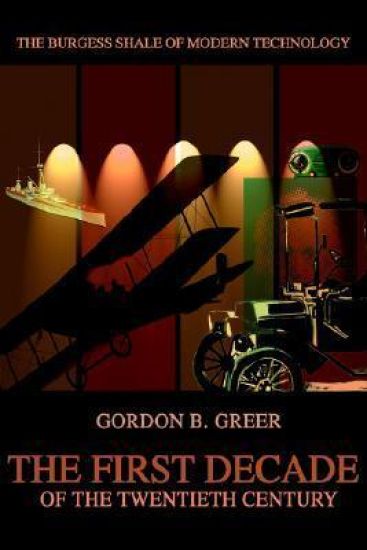
The author compares five primitive life forms from the Burgess Shale of over 500,000,000 years ago to five new technologies invented or developed in the first decade of the twentieth century in terms of their development and importance both in the past and for the future. He speculates on some possible alternative courses of history if different events had occurred during the first decade and what effect those alternative courses might have had on our lives today.
In this national bestseller, the president of The Church of Jesus Christ of Latter-day Saints, Gordon B. Hinckley, has created a classic look at the values that can change our world--and how to stand up for them. Drawing on anecdotes from his much-admired life of faith and service, as well as examples from American culture today, he examines ten virtues that have always illuminated the path to a better world: love, honesty, morality, civility, learning, forgiveness and mercy, thrift and industry, gratitude, optimism, and faith. He then shows how the two guardians of virtue--marriage and the family--can keep us on that path, even in difficult times. Standing for Something is an inspiring blueprint for what we all can do--as individuals, as a nation, and as a world community--to rediscover the values and virtues that have historically made us strong and that will lead us to a brighter future.
"As both an academic instructor in questionnaire design and a research design methodologist for the federal government, I feel this book is very timely, useful for students and practitioners, and unique in its use of real world practical examples that most everyone can relate."—Terry Richardson, General Accounting Office "The combination of theory and practical application will make this a useful book for students as well as professionals who want to learn how to incorporate cognitive interviewing into the questionnaire design process."—Rachel Caspar, RTI International The design and evaluation of questionnaires—and of other written and oral materials—is a challenging endeavor, fraught with potential pitfalls. Cognitive Interviewing: A Tool for Improving Questionnaire Design describes a means of systematically developing survey questions through investigations that intensively probe the thought processes of individuals who are presented with those inquiries. The work provides general guidance about questionnaire design, development, and pre-testing sequence, with an emphasis on the cognitive interview. In particular, the book gives detailed instructions about the use of verbal probing techniques, and how one can elicit additional information from subjects about their thinking and about the manner in which they react to tested questions. These tools help researchers discover how well their questions are working, where they are failing, and determine what they can do to rectify the wide variety of problems that may surface while working with questionnaires. Cognitive Interviewing is ideally suited as a course text for advanced undergraduate and graduate research courses across the social sciences. Professional researchers and faculty in the social sciences, as well as practice fields such as medicine, business, and education, will also find this an invaluable reference for survey research. There is no other book on the market that covers cognitive interviewing as applied to questionnaire design.
"As both an academic instructor in questionnaire design and a research design methodologist for the federal government, I feel this book is very timely, useful for students and practitioners, and unique in its use of real world practical examples that most everyone can relate."—Terry Richardson, General Accounting Office "The combination of theory and practical application will make this a useful book for students as well as professionals who want to learn how to incorporate cognitive interviewing into the questionnaire design process."—Rachel Caspar, RTI International The design and evaluation of questionnaires—and of other written and oral materials—is a challenging endeavor, fraught with potential pitfalls. Cognitive Interviewing: A Tool for Improving Questionnaire Design describes a means of systematically developing survey questions through investigations that intensively probe the thought processes of individuals who are presented with those inquiries. The work provides general guidance about questionnaire design, development, and pre-testing sequence, with an emphasis on the cognitive interview. In particular, the book gives detailed instructions about the use of verbal probing techniques, and how one can elicit additional information from subjects about their thinking and about the manner in which they react to tested questions. These tools help researchers discover how well their questions are working, where they are failing, and determine what they can do to rectify the wide variety of problems that may surface while working with questionnaires. Cognitive Interviewing is ideally suited as a course text for advanced undergraduate and graduate research courses across the social sciences. Professional researchers and faculty in the social sciences, as well as practice fields such as medicine, business, and education, will also find this an invaluable reference for survey research. There is no other book on the market that covers cognitive interviewing as applied to questionnaire design.
In the mountains of western North Carolina, the Civil War was fought on different terms than those found throughout most of the South. Though relatively minor strategically, incursions by both Confederate and Union troops disrupted life and threatened the social stability of many communities. Even more disruptive were the internal divisions among western Carolinians themselves. Differing ideologies turned into opposing loyalties, and the resulting strife proved as traumatic as anything imposed by outside armies. As the mountains became hiding places for deserters, draft dodgers, fugitive slaves, and escaped prisoners of war, the conflict became a more localized and internalized guerrilla war, less rational and more brutal, mean-spirited, and personal--and ultimately more demoralizing and destructive. From the valleys of the French Broad and Catawba Rivers to the peaks of the Blue Ridge and Great Smoky Mountains, the people of western North Carolina responded to the war in dramatically different ways. Men and women, masters and slaves, planters and yeomen, soldiers and civilians, Confederates and Unionists, bushwhackers and home guardsmen, Democrats and Whigs--all their stories are told here. |A comprehensive history of a non-combat region of the Confederacy, the 17 mountain counties of western North Carolina where loyalties were divided. This area suffered incursions by troops from both sides; attracted draft dodgers, deserters, fugitive slaves, and escaped prisoners; and experienced brutal and demoralizing internal conflicts.
Walters provides commentary on Diderot's translation of Shaftesbury's An Inquiry Concerning Virtue or Merit. By comparing the translation and notes, Walters demonstrates the evolution of Diderot's thought and artistic skill. Walters discusses the difference between theism and deism, the question of universal order, and compares atheism with free thought. After an analysis of religious fanaticism and social and political abuses, he turns his attention to virtue, as it relates to happiness, objective values, the moral sense, the passions, and self-interest. A final chapter deals with the style of the Essai.
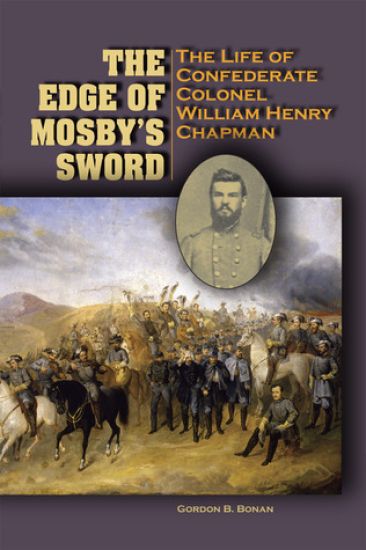
This title unveils an enigmatic hero of the Civil War. ""The Edge of Mosby's Sword"" is the first scholarly volume to delve into the story of one of John Singleton Mosby's most trusted and respected officers, Colonel William Henry Chapman. Using incisive research and previously unpublished material to present both military and personal perspectives of Chapman's life, Gordon B. Bonan offers an in-depth understanding of a man transformed by the shattering of his nation. This painstakingly researched account exposes a soldier and patriot whose convictions compelled him to battle fiercely for Southern independence; whose quest for greatness soured when faced with the brutal realities of warfare; and who sought diligently to heal his wounded nation when the guns of war were silenced. Born into a wealthy slave-owning family, Chapman was a student of the fiery secessionist rhetoric of antebellum Virginia who eagerly sought glory and adventure on the battlefields of the Civil War. Bonan traces Chapman's evolution from an impassioned student at the University of Virginia to an experienced warrior and leader, providing new insight into the officer's numerous military accomplishments. Explored here are Chapman's previously overlooked endeavors as a student warrior, leader of the Dixie Artillery, and as second-in-command to Mosby, including his participation in the capture of Harpers Ferry, the battering of Union forces at Second Manassas, and his ferocious raids during the 1864 Shenandoah Valley campaign. Bonan reveals fresh perspectives on the intrepid maneuvers of Mosby's Rangers, the hardships of war, and Chapman's crucial role as the right hand of the 'Gray Ghost'. But while Mosby recognized him for his bravery and daring, the fame Chapman sought always eluded him. Instead, with his honors and successes came disillusionment and sorrow, as he watched comrades and civilians alike succumb to the terrible toll of the war. The end of the struggle between North and South saw Chapman accept defeat with dignity, leading the Rangers to their official surrender and parole at Winchester. With the horrors of the war behind him, he quickly moved to embrace the rebuilding of his country. Bonan's investigation of Chapman's life after the South's surrender - when, like Mosby, he joined the Republican party - reveals a man who, above all, desired reconciliation. For more than thirty years, Chapman enjoyed a postwar career as an IRS agent. During that time, it became his personal mission to battle corruption and violence in the South, including the terrorism of the Ku Klux Klan. ""The Edge of Mosby's Sword"" is a multifaceted portrait of a dynamic yet neglected figure of America's past. Richly detailed and engagingly written, Bonan's book on the life of William Henry Chapman adds a fascinating and much-needed new chapter to the saga of Civil War history.
Faculty unions are an important part of the current higher education landscape, particularly in the public sector. Yet, the rise of unionism among university faculties during the 1960's and 1970's was an unexpected development that clashed with many assumptions about academic life. Amid campus tensions, economic crisis and state political controversies, the faculties of the Universities of Connecticut, Massachusetts, and Rhode Island were among those joining ranks of organized labor during that era. This book follows the documentary record of faculty unionization at these New England universities to explore how and why unionization came about.As the book reveals, faculty unionization can be much more than the simple result of local controversies. When examined in light of the surrounding political and economic environment, a complex picture emerges. On these New England campuses, the process invoked the participation of many actors. Faculties, administrations, boards, state political leaders, and national associations all played a part in shaping the course of events, sometimes in unexpected and unintended ways. Gordon B. Arnold places these events in context, providing a 35-year overview of faculty unionism, and locating faculty unionization within the broader realm of organized labor and the rise of public sector collective bargaining.
This work has been selected by scholars as being culturally important and is part of the knowledge base of civilization as we know it.This work is in the public domain in the United States of America, and possibly other nations. Within the United States, you may freely copy and distribute this work, as no entity (individual or corporate) has a copyright on the body of the work.Scholars believe, and we concur, that this work is important enough to be preserved, reproduced, and made generally available to the public. To ensure a quality reading experience, this work has been proofread and republished using a format that seamlessly blends the original graphical elements with text in an easy-to-read typeface.We appreciate your support of the preservation process, and thank you for being an important part of keeping this knowledge alive and relevant.
This work has been selected by scholars as being culturally important and is part of the knowledge base of civilization as we know it.This work is in the public domain in the United States of America, and possibly other nations. Within the United States, you may freely copy and distribute this work, as no entity (individual or corporate) has a copyright on the body of the work.Scholars believe, and we concur, that this work is important enough to be preserved, reproduced, and made generally available to the public. To ensure a quality reading experience, this work has been proofread and republished using a format that seamlessly blends the original graphical elements with text in an easy-to-read typeface.We appreciate your support of the preservation process, and thank you for being an important part of keeping this knowledge alive and relevant.
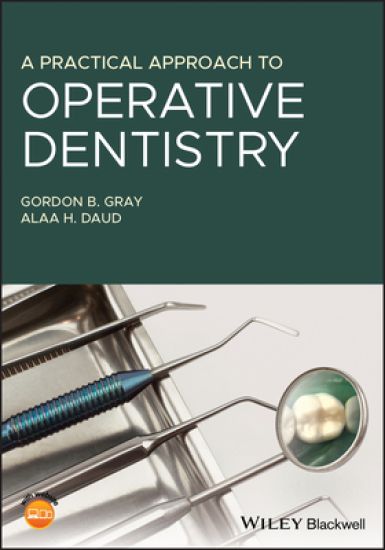
Perfect your transferable dental clinical skills with this new and highly practical reference A Practical Approach to Operative Dentistry delivers a thorough exploration of the theoretical and practical aspects of operative dentistry, followed by an illustrated step-by-step guide of common clinical procedures. Designed to remind students of the key steps of a variety of operative procedures, it is heavily illustrated with over 400 images of clinical procedures and covers core topics such as: Instruments and matrices, isolation, dental charting, and the use of minimally invasive dentistryTreatment of intracoronal restorations, including pit and fissure caries, posterior approximal restorations, anterior restorations and restorations in the cervical thirdExploration of extracoronal restorations, including gold restorations, porcelain fused to metal and ceramic crowns A Practical Approach to Operative Dentistry is the perfect textbook for undergraduate dental students. It is also useful to dentistry graduates undertaking clinical rotations during their Dental Foundation Training, and overseas graduates preparing to take the Overseas Registration Examination (ORE) held by the General Dental Council, or the License in Dental Surgery (LDS) exam of the Royal College of Surgeons.
""Plastics Molds: Design, Construction, Use"" by Gordon B. Thayer is a comprehensive guide that provides an in-depth look at the process of designing, constructing, and using molds for plastic products. The book covers a wide range of topics, including the properties of different plastics, the various types of molds, and the design principles that are necessary to create high-quality molds. It also includes detailed information on the construction and maintenance of molds, as well as the various techniques used to manufacture plastic products. The book is written in a clear and concise style, making it accessible to both beginners and experienced professionals in the field of plastic molding. Whether you are a designer, engineer, or production manager, ""Plastics Molds: Design, Construction, Use"" is an invaluable resource that will help you to create top-quality plastic products efficiently and effectively.Additional Contributors Include F. G. Woodiwiss, Thomas J. Lester, C. Huber Whitlock, Don F. Hoffman, And William J. Dewar.This scarce antiquarian book is a facsimile reprint of the old original and may contain some imperfections such as library marks and notations. Because we believe this work is culturally important, we have made it available as part of our commitment for protecting, preserving, and promoting the world's literature in affordable, high quality, modern editions, that are true to their original work.