What is the good work to which I am called? Gordon T. Smith acknowledges that this is not a simple question to answer in the midst of our very complicated lives. That's why he has written this brief and accessible book - to help us explore six core questions we need to ask in order to discover our calling, in community with God and others.
How might our worship recapture and reflect the enchanted world of God's nearness in Jesus Christ? In this first volume in IVP Academic's Dynamics of Christian Worship series, John D. Rempel offers a vision for this kind of transformative worship. A theologian and minister in the Mennonite Church, Rempel considers the role of the sacraments and ritual within the Free Church tradition. While the Free Churches rightly sought to cleanse the church of the abuses of sacramentalism, in that process they also set aside some of the church's historic practices and the theology behind them, which ultimately impoverished their worship. In response to this liturgically thin space, Rempel appeals to the incarnation of Christ, whose taking on of flesh can help us perceive the sacramental nature of our faith and worship. By embracing life-giving and peacemaking practices, the worship of not only the Free Church tradition but of the whole body of Christ might be transformed and become enchanted once again. The Dynamics of Christian Worship series draws from a wide range of worshiping contexts and denominational backgrounds to unpack the many dynamics of Christian worship—including prayer, reading the Bible, preaching, baptism, the Lord’s Supper, music, visual art, architecture, and more—to deepen both the theology and practice of Christian worship for the life of the church.
The process of making decisions is integral to life. We make decisions every day, from what to have for breakfast to critical issues of life and business. When two or more people are involved in making those decisions, the process often involves "compromise" and can be complicated by the basic give-and-take and trade-offs that are associated with this approach. Webster's New Twentieth Century Dictionary of the English Language defines compromise in this way: A settlement in which each side gives up some demands or makes concessions An adjustment of opposing principles, systems, etc., in which part of each is given up The result of such an adjustment or settlement Something midway between different things A laying open to danger, suspicion, or disrepute, as a compromise of one's good name, or; to surrender or give up (one's interest, principles, etc.) Compromise necessarily, then, leads to a result that has the great risk of being suboptimal because the concessions made can easily preclude consideration of alternatives and important viewpoints. One of the factors that those who promote compromise as a means of making decisions use as justification is that each side gives up something they want, and thus each side can "live with" the result. In reality, neither side will give up something critically important to them while expecting the other to do just that. The end result is often that either no decision or agreement can be reached or one or both of the parties is unhappy with the result. Too frequently, the ultimate result is failure because one or both parties do not fully support the agreement, which becomes more likely if one party feels it gave more than the other or had to give up something related to its principles or best interest. In an increasingly complex world, compromise is not the best way to reach decisions. An approach that fully and objectively examines all points of view and ideas is needed to arrive at workable solutions to problems and issues as diverse as those we see in the world today. Anyone who has worked inside any company, large or small, knows that it is often very challenging to make decisions. Different personalities, diverse interactions, company politics, and even social, political, and economic philosophies present barriers to agreement. Add to that the basic competitive nature of human beings and the result can be a bubbling stewpot of rancor, foxhole-digging, foot-dragging, backbiting, criticism, individual conflict, and an attitude of an "I win, you lose" zero-sum game that leads to, at best, nonoptimal decisions and at worst, paralysis and no decisions at all. This description applies to virtually any type of organization, not just the corporate setting. It can be seen in organizations, nonprofits, politics, families, churches, schools, and any other setting in which a group of people, whether it be two or many, must meet and make decisions on any topic. All of us have seen the results of committee deliberations aimed at making decisions in a number of these seemingly different settings. Quite often, when we watch the process, we understand the saying that "A committee is a cul-de-sac down which ideas are lured and then quietly strangled." The three authors have worked in a variety of different companies and noncorporate settings, including small local companies (fewer than 10 employees) to very large multinational corporations; they have been a part of boards of directors and trustees of nonprofits, school and church groups, neighborhood organizations, and others. They have all had the (mis)fortune of serving on committees charged with making decisions ranging from purchasing equipment to basic corporate strategy for international product development.
Observera att förlaget som ger ut denna produkt baserar innehållet i sina produkter på fria källor som Wikipedia. Boken är med stor sannolikhet endast ett utdrag ur dessa informationskällor, alltså inte en vanlig bok i den bemärkelsen.
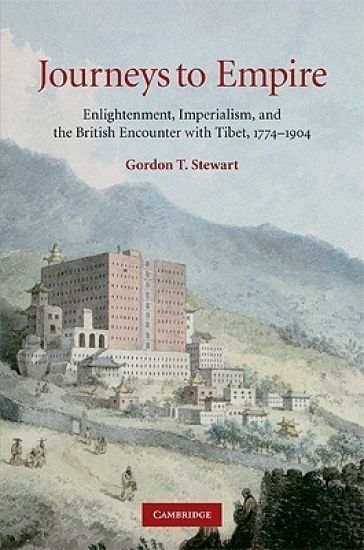
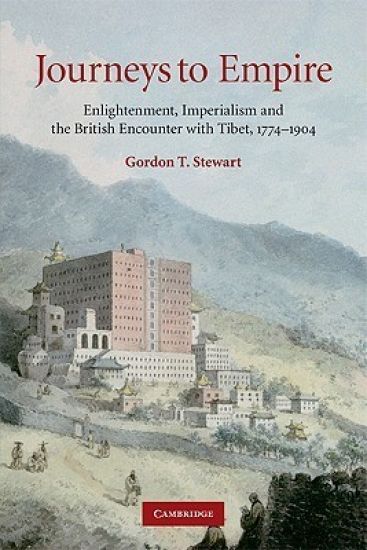
This fascinating study of two British missions to Tibet in 1774 and 1904 provides a unique perspective on the relationship between the Enlightenment and European colonialism. Gordon Stewart compares and contrasts the Enlightenment era mission led by George Bogle and the Edwardian mission of Francis Younghusband as they crossed the Himalayas into Tibet. Through the British agents' diaries, reports, and letters and by exploring their relationships with Indians, Bhutanese and Tibetans, Stewart is able to trace the shifting ideologies, economic interests and political agendas that lay behind British empire-building from the late eighteenth century to the early twentieth century. This compelling account sheds new light on the changing nature of British imperialism, on power and intimacy in the encounter between East and West, and on the relationship of history and memory.
This fascinating study of two British missions to Tibet in 1774 and 1904 provides a unique perspective on the relationship between the Enlightenment and European colonialism. Gordon Stewart compares and contrasts the Enlightenment era mission led by George Bogle and the Edwardian mission of Francis Younghusband as they crossed the Himalayas into Tibet. Through the British agents' diaries, reports, and letters and by exploring their relationships with Indians, Bhutanese and Tibetans, Stewart is able to trace the shifting ideologies, economic interests and political agendas that lay behind British empire-building from the late eighteenth century to the early twentieth century. This compelling account sheds new light on the changing nature of British imperialism, on power and intimacy in the encounter between East and West, and on the relationship of history and memory.
Spell It Yourself! is a consistently-bestselling title for upper primary school pupils that is now being published by Chambers. It lists over 7,500 words that children might use, and alongside each word is straightforward guidance on how to spell derived forms and compounds of the word, for example running, runner, runway. Therefore the book not only makes it quick and easy for a child to find the spellings they need, but it also reinforces knowledge of word families and of how to spell words from their root forms. Homophones of the words are indicated, both to help children find the right word and to encourage them to learn the correct spellings. Useful additional sections give the spellings of first names, countries, contractions such as mustn't, and all the different forms of numbers.
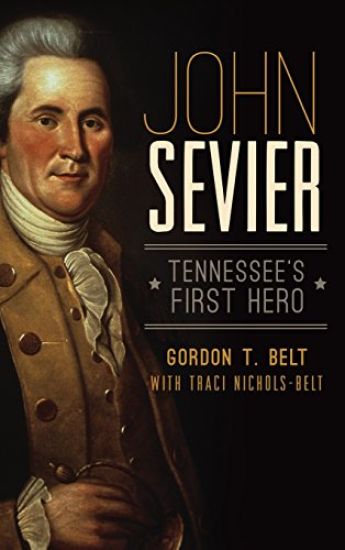
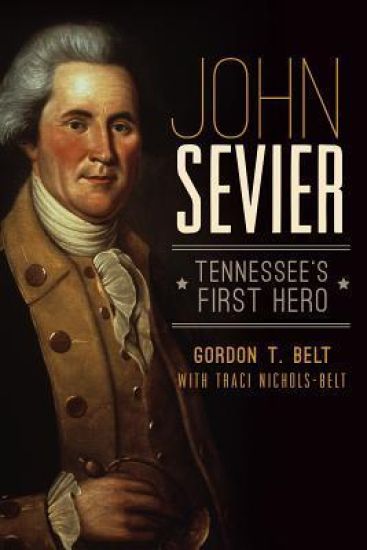
A celebrated soldier, admired politician and founding father of the state of Tennessee, John Sevier led an adventurous life. He commanded a frontier militia into battle against British Loyalists at Kings Mountain. He waged a relentless war against the Cherokees in his effort to claim America's first frontier. He forged the state of Franklin from the western lands of North Carolina and later became Tennessee's first governor. Following his death, Sevier's accomplishments faded from public memory, but years later, writers resurrected his image through romanticized accounts of his exploits, relying heavily on folk tales and recollections from aging pioneers. Thus, life and legend intertwined. Join authors Gordon T. Belt and Traci Nichols-Belt as they examine John Sevier's extraordinary life through the lens of history and memory, shedding new light on this remarkable Tennessee figure.
Fashion Brand Merchandising introduces the concepts and practices that will help students build, develop, and work with fashion brands, Beginning with an overview of the branding concept and a description of those professionals and processes that develop the brand image and the actual products identified with that image, this text covers how branding and merchandising activities are interrelated and interdependent with respect to marketing fashion-related products. In whatever capacity, you work with fashion brands - marketer, merchandiser, retailer, or designer - this text includes information you will need to work meaningfully with fashion brands. Features -- Focus on Fashion Brands feature an article or case study relevant to the topics of the specific chapters -- Brand Managers Notebook - exercises designed to assist development of your career -- BRANDLAB provides an opportunity to create a fashion brand -- Instructor's Guide provides suggestions for planning the course and using the text -- Powerpoint presentation
Although reluctant, descended from two spiritually powerful families, William "Pop" Fisher was destined to become protractor of Marcus Elston (The protagonist from Metamorefose) and the other "Door Knock" children. Follow "Pop Fisher and the Shamans" as it winds through multiple time periods and generations to tell the story of William Fisher and his ancestors, and the trials and tribulations they confronted and endured so that Pop Fisher would fulfill his destiny.
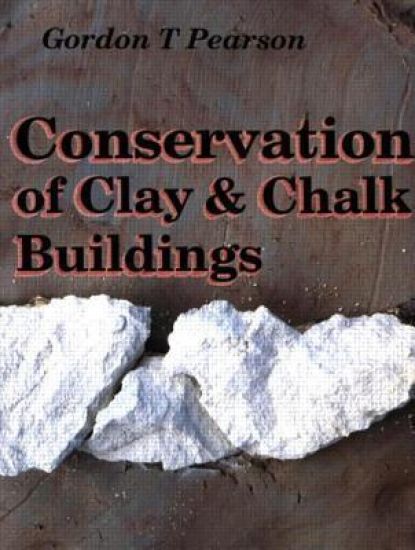
This publication provides practical guidance on appropriate methods of conservation and repair of earth buildings using traditional building materials. It is the first major work on the subject since Clough Williams-Ellis and the Eastwick-Fields published "Building in Cob, Pise and Stabilized Earth" in 1947. The book deals with the nature of clay and chalk, their qualities and characteristics, and the way in which they have been used to construct buildings. Advice is given on soils analysis, the philosophy of repair techniques and the factors to be considered before altering, converting or extending an earth building. The author primarily advocates repair techniques using traditional materials, but he also considers the role played by certain modern materials, and assesses their suitability.
Designing Your Business, 2nd Edition, transforms aspiring interior designers into savvy business people as well as creative interior designers by offering strategies for working effectively with colleagues, clients, and resources. The text explores business organization, legal and ethical issues, and business finance and accounting practices common to the profession. The practical approach and engaging interactive pedagogy make it easy and interesting to learn the intricacies of the business, law, and practice.
This book sheds new light on John Sevier, founding father of the state of Tennessee. A celebrated soldier, admired politician and founding father of the state of Tennessee, John Sevier led an adventurous life. He commanded a frontier militia into battle against British Loyalists at Kings Mountain. He waged a relentless war against the Cherokees in his effort to claim America's first frontier. He forged the state of Franklin from the western lands of North Carolina and later became Tennessee's first governor. Following his death, Sevier's accomplishments faded from public memory, but years later, writers resurrected his image through romanticized accounts of his exploits, relying heavily on folk tales and recollections from aging pioneers. Thus, life and legend intertwined. Join authors Gordon T. Belt and Traci Nichols-Belt as they examine John Sevier's extraordinary life through the lens of history and memory, shedding new light on this remarkable Tennessee figure.
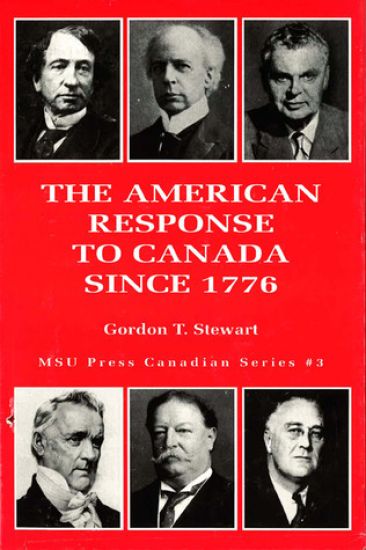
anadians long have engaged in in-depth, wide-ranging discussions about their nation's relations with the United States. On the other hand, American citizens usually have been satisfied to accept a series of unexamined myths about their country's unchanging, benign partnership with the "neighbor to the north". Although such perceptions of uninterrupted, friendly relations with Canada may dominate American popular opinion, not to mention discussions in many American scholarly and political circles, they should not, according to Stewart, form the bases for long-term U.S. international economic, political, and cultural relations with Canada.Stewart describes and analyzes the evolution of U.S. policymaking and U.S. policy thinking toward Canada, from the tense and confrontational post-Revolutionary years to the signing of the Free Trade Agreement in 1988, to discover if there are any permanent characteristics of American policies and attitudes with respect to Canada. American policymakers were concerned for much of the period before World War II with Canada's role in the British empire, often regarded as threatening, or at least troubling, to developing U.S. hegemony in North America and even, in the late nineteenth century, to U.S. trade across the Pacific. A permanent goal of U.S. policymakers was to disengage Canada from that empire. They also thought that Canada's natural geographic and economic orientation was southward to the U.S., and policymakers were critical of Canadian efforts to construct an east- west economy.The Free Trade Agreement of 1988 which prepared the way for north-south lines of economic force, in this context, had been an objective of U.S. foreign policy since the founding of the republic in 1776. At the same time, however, these deep-seated U.S. goals were often undermined by domestic lobbies and political factors within the U.S., most evidently during the era of high tariffs from the 1860s to the 1930s when U.S. tariff policies actually encouraged a separate, imperially-backed economic and cultural direction in Canada.When the dramatic shift toward integration in trade, investment, defense and even popular culture began to take hold in the 1930s, 1940s and 1950s in the wake of the Depression and World War II, American policymakers viewed themselves as working in harmony with underlying, "natural" converging economic, political and cultural trends recognized and accepted by their Canadian counterparts.