

Kirjahaku
Etsi kirjoja tekijän nimen, kirjan nimen tai ISBN:n perusteella.
1000 tulosta hakusanalla Gordon X. Graham


The gripping inside story of Gordon Brown’s rise to become Prime Minister. Gordon Brown’s arrival at the Treasury in May 1997 was greeted with great excitement – not to mention anticipation. Officials of every rank looked on expectantly to see what miracles the chancellor would work. And so, as Master of the New Era, Brown created relationships across every Whitehall department and extended his influence to every aspect of government. He brought into effect the most important budgetary changes of the past decade: the commitment to Private Finance Initiative, which altered infrastructure from the London Underground to the NHS and state schools; the management of the Inland Revenue; the increase in taxes; and the demise of Britain’s pension funds. In this gripping and fully updated biography, reissued to coincide with Brown’s assumption of Tony Blair’s mantle, best-selling author Tom Bower documents the rise to power of a driven and complex politician, and exposes how the ambitions of the Labour Party’s leader-in-waiting will affect the country for decades to come.

The bestselling follow-up to Humble Pie, now in paperback. When he was struggling to get his first restaurant in the black, Gordon Ramsay never imagined he'd be famous for a TV show about how to run profitable eateries, or that he'd be head of a business empire. But he is and he did. Here's how.

A unique and hilarious redemption story, with one mean goose realizing that sometimes saying sorry is the bravest thing you can do.

The Meanest Goose on Earth is back! Honkingly funny storytelling from bestselling author Alex Latimer-highly illustrated and full of laughs, this is the perfect series for emerging readers. Gordon is THE MEANEST GOOSE ON EARTH. Well . . . he used to be, but now, he's trying to change his ways and be a GOOD GOOSE. The trouble is, it's really tricky to be kind and patient and good, especially when you've always been mean. In Gordon in the City, Gordon is invited to a fancy award ceremony in the big city. He's been asked to present this year's award for The Meanest Goose on Earth, a prize he's won the previous eight years in a row! But now that he's a good(ish) goose he's nervous to be in the presence of such mean geese . . . one in particular-Mother Goose! That's right, this year Gordon's mum is up for the award, and she's got something really mean planned . . . For more mean goose antics read, Gordon Wins it All.

The Meanest Goose on Earth is back! Honkingly funny storytelling from bestselling author Alex Latimer-highly illustrated and full of laughs, this is the perfect series for emerging readers Gordon is THE MEANEST GOOSE ON EARTH. Well . . . he used to be, but now, he's trying to change his ways and be a GOOD GOOSE. The trouble is, it's really tricky to be kind and patient and good, especially when you've always been mean. In Gordon Starts a Band, Gordon is in a very bad mood. An annoying whistling noise has kept him awake ALL NIGHT and he's determined to find out what's causing it. His journey will lead him on a mission to try and help a rock 'n' roll moose, a singing crocodile, and a handy hammerhead shark . . . but can he help them without falling back into his mean ways? For more mean goose antics with Gordon, read The Meanest Goose on Earth.

A unique and hilarious series-the road to redemption has never been so silly! Join THE MEANEST GOOSE ON EARTH as he tries to change his ways. In this story, Gordon is determined to be the best at everything, even if it means cheating!
This book celebrates photographer, filmmaker, composer, and author Gordon Parks, drawing on photographs and archival material held at Wichita State University. Parks's legacy involves a delicate confluence of artistic traditions and the vernacular creative forces in modern American experience. John Wright explores the forms of vision Parks employed across artistic media to grapple with the culture of contradictions he observed in 20th-century America.
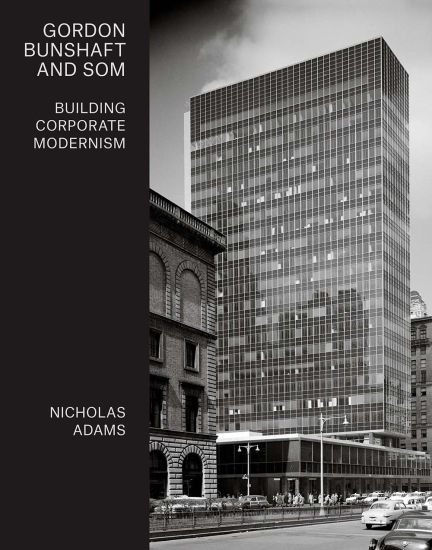
A nuanced portrait of the 20th-century architect whose work defined the built aesthetic of corporate America Gordon Bunshaft’s (1909–1990) landmark 1952 design for Lever House reshaped the Manhattan skyline and elevated the reputation of Skidmore, Owings & Merrill (SOM), the firm where he would spend more than 40 years as a partner. Although this enigmatic architect left behind few records, his legacy endures in the corporate headquarters, museums, and libraries that were built in his distinctive modernist style. Bunshaft’s career was marked by shifts in material. Glass and steel structures of the 1950s, such as New York’s Chase Manhattan Bank, gave way to revolutionary designs in concrete, such as the Beinecke Rare Book and Manuscript Library at Yale University and the doughnut-shaped Hirshhorn Museum in Washington, DC. Bunshaft’s collaborations with artists, including Isamu Noguchi, Jean Dubuffet, and Henry Moore, were of paramount importance throughout his career. Nicholas Adams explores the contested line between Bunshaft’s ambition for acclaim as a singular artistic genius and the collaborative structure of SOM’s architectural partnership. Bunshaft received the Pritzker Architecture Prize in 1988 and remains the only SOM partner to have achieved this distinction. Adams counters Bunshaft’s maxim that “the building speaks for itself” with necessary critical context about this modernist moment at a time when the future of Bunshaft’s iconic works is very much in question.
"Undoing is just as much a democratic right as doing."---Gordon Matta-Clark This revealing book looks at the groundbreaking work of Gordon Matta-Clark (1943–1978), whose socially conscious practice blurred the boundaries between contemporary art and architecture. After completing a degree in architecture at Cornell University, Matta-Clark returned to his home city of New York. There he employed the term “anarchitecture,” combining “anarchy” and “architecture,” to describe the site-specific works he initially realized in the South Bronx. The borough’s many abandoned buildings, the result of economic decline and middle-class flight, served as Matta-Clark’s raw material. His series Cuts dissected these structures, performing an anatomical study of the ravaged urban landscape. Moving from New York to Paris with Conical Intersect, a piece that became emblematic of artistic protest, Matta-Clark applied this same method to a pair of 17th-century row houses slated for demolition as a result of the Centre Pompidou’s construction. This compelling volume grounds Matta-Clark’s practice against the framework of architectural and urban history, stressing his pioneering activist-inspired approach, as well as his contribution to the nascent fields of social practice and relational aesthetics.Published in association with The Bronx Museum of the ArtsExhibition Schedule:Bronx Museum of the Arts (11/08/17-04/08/18)Jeu de Paume, Paris (06/04/18-09/23/18)Kumu Kunstimuuseum, Tallinn, Estonia (03/01/19-08/04/19)Rose Art Museum, Waltham, MA (09/12/19-12/15/2019)

This first and only in-depth directory to the life and career of Gordon MacRae pays tribute to a truly versatile entertainer. In an industry where success is rare and fleeting, MacRae achieved stardom in six show business arenas: film, theater, radio, nightclubs and concerts, television, and records. Insights and quotes from celebrities close to MacRae highlight Bruce R. Leiby's reference to MacRae's professional accomplishments and honors, his political and charitable involvements, and his personal struggles and triumphs. The biography section traces Gordon MacRae's rise from child performer to award-winning star whose honors include Emmy nominations, gold and charted records, and a star on the Walk of Fame. On the personal side, Leiby writes about MacRae's triumph over alcoholism, his stroke, and the battle with cancer that claimed his life in 1986. Following the biography is a separate section on each of MacRae's media credits, listing his achievements in film, records, Broadway and stock theater, television, nightclubs and concerts, and radio--including a complete Railroad Hour radio log. Where applicable, Leiby includes dates, places, production details, critical reviews, and information on where to find copies of MacRae's work today. Ending with an annotated bibliography, a song index, a title index, and a general index, this is an indispensible reference for libraries and researchers, as well as fans and students of film, television, radio, theater, and music.

Students and others interested in radio history will be intrigued by this fast-paced biography of Gordon McLendon's career in the radio industry, touching also on his work in motion pictures and involvement in Texas politics.Following a glimpse into his childhood, education, and military career, Ronald Garay describes McLendon's station ownership and management in Palestine, Texas; the development of a major network, the Liberty Broadcasting System; his live and recreated baseball and football programs; and his skirmishes with the major league baseball establishment. Much attention is given to how McLendon re-invented radio and competed with television and print media through his Top 40 music hits, disc jockey programming, and the use of local news. Important concerns regarding station trafficking, editorializing, and public interests are considered as well in this extraordinary book.

The complete collection of short fiction from a literary stylist who captured the nuances of life in the American South of the early twentieth century, "The Collected Stories of Caroline Gordon" is firmly rooted in the traditions, the social habits, and the land itself. As Robert Penn Warren writes in his introduction, 'Caroline Gordon's world lies in southeast Kentucky...[She displays] a disciplined style as unpretentious and clear as running water, but shot through with glints of wit, humor, pity, and poetry. [She had] the rare gift of the teller of the tale.'

One of four titles in the new re-vamped Thomas the Tank Engine The Railway Series also published this month.

Gordon Parks
Thames Hudson Ltd
2013
nidottu
Gordon Parks (1912–2006) was a pioneering figure in 20th-century photography. As well as being the first African-American photographer to join the Farm Security Administration (FSA) and to become a staff photographer for Life magazine, he was also a writer, film director and composer. Although best known for documenting issues such as poverty, race relations and civil rights, he was remarkably versatile, turning his gift for visual narrative to subjects as diverse as news coverage, fashion, art and sport. He also captured prominent figures of his era, from Malcolm X to Marilyn Monroe, in a series of memorable portraits. Working in the US and around the world, he was driven by a commitment to social justice: ‘The common search for a better life and a better world is deeper than colour or blood.'

An essential reference that provides new understanding of the thought processes of one of the most radical artists of the late twentieth century. Gordon Matta-Clark (1943–1978) has never been an easy artist to categorize or to explain. Although trained as an architect, he has been described as a sculptor, a photographer, an organizer of performances, and a writer of manifestos, but he is best known for un-building abandoned structures. In the brief span of his career, from 1968 to his early death in 1978, he created an oeuvre that has made him an enduring cult figure. In 2002, when Gordon Matta-Clark’s widow, Jane Crawford, put his archive on deposit at the Canadian Centre for Architecture in Montreal, it revealed a new voice in the ongoing discussion of artist/architect Matta-Clark’s work: his own. Gwendolyn Owens and Philip Ursprung’s careful selection and ordering of letters, interviews, statements, and the now-famous art cards from the CCA as well as other sources deepens our understanding of one of the most original thinkers of his generation. Gordon Matta-Clark: An Archival Sourcebook creates a multidimensional portrait that provides an opportunity for readers to explore and enjoy the complexity and contradiction that was Gordon Matta-Clark.

An essential reference that provides new understanding of the thought processes of one of the most radical artists of the late twentieth century. Gordon Matta-Clark (1943–1978) has never been an easy artist to categorize or to explain. Although trained as an architect, he has been described as a sculptor, a photographer, an organizer of performances, and a writer of manifestos, but he is best known for un-building abandoned structures. In the brief span of his career, from 1968 to his early death in 1978, he created an oeuvre that has made him an enduring cult figure. In 2002, when Gordon Matta-Clark’s widow, Jane Crawford, put his archive on deposit at the Canadian Centre for Architecture in Montreal, it revealed a new voice in the ongoing discussion of artist/architect Matta-Clark’s work: his own. Gwendolyn Owens and Philip Ursprung’s careful selection and ordering of letters, interviews, statements, and the now-famous art cards from the CCA as well as other sources deepens our understanding of one of the most original thinkers of his generation. Gordon Matta-Clark: An Archival Sourcebook creates a multidimensional portrait that provides an opportunity for readers to explore and enjoy the complexity and contradiction that was Gordon Matta-Clark.

Bringing a poet’s perspective to an artist’s archive, this highly original book examines wordplay in the art and thought of American artist Gordon Matta-Clark (1943–1978). A pivotal figure in the postminimalist generation who was also the son of a prominent Surrealist, Matta-Clark was a leader in the downtown artists' community in New York in the 1970s, and is widely seen as a pioneer of what has come to be known as social practice art. He is celebrated for his “anarchitectural” environments and performances, and the films, photographs, drawings, and sculptural fragments with which his site-specific work was documented. In studies of his career, the artist’s provocative and vivid language is referenced constantly. Yet the verbal aspect of his practice has not previously been examined in its own right. Blending close readings of Matta-Clark’s visual and verbal creations with reception history and critical biography, this extensively researched study engages with the linguistic and semiotic forms in Matta-Clark’s art, forms that activate what he called the “poetics of psycho-locus” and “total (semiotic) system.” Examining notes, statements, titles, letters, and interviews in light of what they reveal about his work at large, Frances Richard unearths archival, biographical, and historical information, linking Matta-Clark to Conceptualist peers and Surrealist and Dada forebears. Gordon Matta-Clark: Physical Poetics explores the paradoxical durability of Matta-Clark’s language, and its role in an aggressively physical oeuvre whose major works have been destroyed.