Kirjojen hintavertailu. Mukana 11 627 064 kirjaa ja 12 kauppaa.

Kirjahaku

Etsi kirjoja tekijän nimen, kirjan nimen tai ISBN:n perusteella.

1000 tulosta hakusanalla Grace L. Caughlin

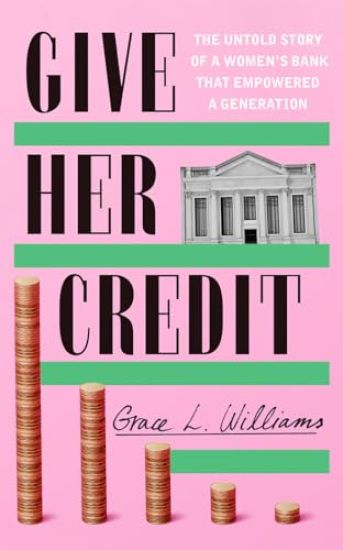
Give Her Credit

Give Her Credit

Grace L. Williams

Amazon Publishing
2025
sidottu
The galvanizing true story of a group of remarkable women in the 1970s male-run world of business, banking, and finance. They didn’t play by the rules. They changed them and made history.In the 1970s, a new wave of feminism was sweeping America. But in the boys’ club of banking and finance, women were still infantilized—no credit without a male cosigner, and their income was dismissed as unreliable. If bankers weren’t going to accommodate women, then women had to take control of their own futures. In 1978 in Denver, Colorado, the opening of the Women’s Bank changed everything.It was helmed by bank officer B. LaRae Orullian and the brainchild of whip-smart entrepreneur Carol Green, who forged a groundbreaking path with their headstrong colleagues, among them: Judi Foster, investment research whiz; Edna Mosley, unyielding civil rights advocate with the NAACP; Mary Roebling, renowned financial executive; Betty Freedman, a socialite and fundraiser; and Gail Schoettler, a formidable Denver mover and shaker for social justice. Coming together and facing their own unique road to revolution, they built the most successful female-run bank in the nation. It wasn’t easy.Give Her Credit follows the challenges, uphill battles, and achievements of some of the enterprising women of Denver who broke boundaries, inspired millions, and afforded opportunities for every marginalized citizen in the country. It’s about time their untold story was told.
Give Her Credit

Give Her Credit

Grace L. Williams

Amazon Publishing
2025
pokkari
The galvanizing true story of a group of remarkable women in the 1970s male-run world of business, banking, and finance. They didn’t play by the rules. They changed them and made history.In the 1970s, a new wave of feminism was sweeping America. But in the boys’ club of banking and finance, women were still infantilized—no credit without a male cosigner, and their income was dismissed as unreliable. If bankers weren’t going to accommodate women, then women had to take control of their own futures. In 1978 in Denver, Colorado, the opening of the Women’s Bank changed everything.It was helmed by bank officer B. LaRae Orullian and the brainchild of whip-smart entrepreneur Carol Green, who forged a groundbreaking path with their headstrong colleagues, among them: Judi Foster, investment research whiz; Edna Mosley, unyielding civil rights advocate with the NAACP; Mary Roebling, renowned financial executive; Betty Freedman, a socialite and fundraiser; and Gail Schoettler, a formidable Denver mover and shaker for social justice. Coming together and facing their own unique road to revolution, they built the most successful female-run bank in the nation. It wasn’t easy.Give Her Credit follows the challenges, uphill battles, and achievements of some of the enterprising women of Denver who broke boundaries, inspired millions, and afforded opportunities for every marginalized citizen in the country. It’s about time their untold story was told.

The ASQ Quality Improvement Pocket Guide

The ASQ Quality Improvement Pocket Guide

Grace L Duffy

ASQ Quality Press
2013
pokkari
Basic quality at a size and price that are easy on your pocket This pocket guide is designed to be a quick, on-the-job reference for anyone interested in making their workplace more effective and efficient. It will provide a solid initial overview of what "quality" is and how it could impact you and your organization. Use it to compare how you and your organization are doing things, and to see whether what's described in the guide might be useful. The tools of quality described herein are universal. People across the world need to find better, more effective ways to improve the creation and performance of products and services. Since organizational and process improvement is increasingly integrated into all areas of an organization, everyone must understand the basic principles of process control and process improvement. This succinct and concentrated guide can help. Unlike any other pocket guide on the market, included throughout are direct links to numerous free online resources that not only go deeper but also show these concepts and tools in action: case studies, articles, webcasts, templates, tutorials, examples from the ASQ Service Division's Service Quality Body of Knowledge (SQBOK), and much more. This pocket guide serves as a gateway into the wealth of peerless content that ASQ offers.
Modular Kaizen

Modular Kaizen

Grace L Duffy

ASQ Quality Press
2013
pokkari
Modular kaizen is a development of necessity in our rapidly changing world where improvement has to happen "on the fly". Modular kaizen is the counter point to kaizen blitz, where team members are locked in a room to hammer out a solution to some problem or opportunity. In the hectic, interrupt driven environment of many organizations, it is simply not possible to remove critical players from normal operations for any length of time. Modular kaizen is an improvement approach that integrates quality techniques into the busy schedule of everyday activities. All of the components of an effective kaizen event are planned; however, the activities are scheduled in small segments, or "modules" that fit the rapidly changing time demands of team members and subject matter experts. This approach is complementary to the Plan-Do-Check-Act (PDCA) and Define, Measure, Analyze, Improve, Control (DMAIC) models of quality improvement. The author of this book calls upon a 40 year career to incorporate techniques, innovations and lessons learned in the pursuit of effective continuous and breakthrough improvement and use the resources, people, and schedules already in place to get things done. If you are looking for proven approaches to integrating quality improvement into daily work, this is your book.
Poverty Is a Man

Poverty Is a Man

Grace L Samson

Lulu.com
2021
pokkari
A person who is living wretched can never be said to have A BIG GOD. If a man/woman is wretched and is wallowing in abject penury, what will he/she show as a proof or benefit of godliness. And if a man/woman is wallowing in chronic immorality, what will he/she show as a proof his/her love for God. ******************** "POVERTY IS A MAN: PERHAPS A WOMAN", treats POVERTY as a man or even a woman because they are the only creatures of God with an ordination. If you wish to know more about the ordination, then read on
How I Got Over-Applying -The Word of God

How I Got Over-Applying -The Word of God

Grace L. Davis

Createspace Independent Publishing Platform
2017
nidottu
This book was borne out of the inspiration of the Holy Spirit as a testimony of God's Goodness and faithfulness in Grace's Life. Becoming a widow during her second marriage she had to learn to live by faith and not by sight, realizing that God was and is in total control of her life. Grace's journey began as a journal of testimonies that was penned in the form this book.
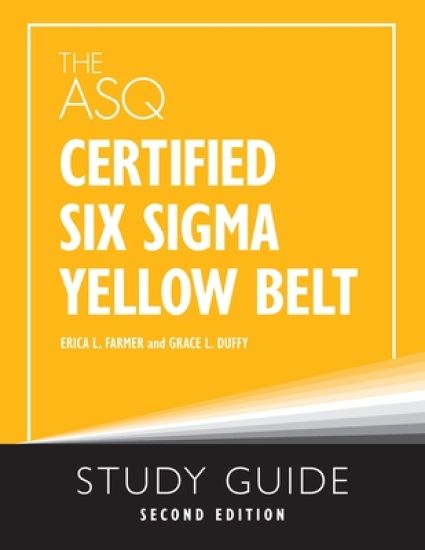
The ASQ Certified Six Sigma Yellow Belt Study Guide

The ASQ Certified Six Sigma Yellow Belt Study Guide

Erica L Farmer; Grace L Duffy

ASQ Quality Press
2022
pokkari
As a companion to The ASQ Certified Six Sigma Yellow Belt Handbook, this study guide offers helpful exercises for anyone planning to take the ASQ Certified Six Sigma Yellow Belt (CSSYB) exam. Unlike other resources, this book has been developed specifically to address the 2022 CSSYB Body of Knowledge (BoK), considering the proper depth of knowledge and required levels of cognition. Every practice question in both sections details solutions that explain the correct answer and the corresponding section of the BoK to the question to facilitate further study as needed.Inside, you will find: - SECTION 1, which offers 161 practice questions organized by the five parts of the BoK- SECTION 2, which offers 139 additional practice questions from each of the five parts- Updates to the 2022 CSSYB BoK, including new supply chain management, corrective action, preventive action, and work instructions sections- A list of additional references used by the teams that create the test items for the CSSYB examination.
Validating a Best Practice

Validating a Best Practice

Yves Van Nuland; Grace L. Duffy

CRC Press
2020
nidottu
Sharing Best Practices across industries and functions is an accepted approach to continuous improvement. The Benchmarking trend of the 1990s has evolved with the help of competitive analysis, performance excellence awards, and other corporate recognition programs into an ongoing documentation of what works. Bob Camp introduced benchmarking against a Best Practice based on his work at Xerox in the 1980s. Case studies abound documenting Best Practice functions and processes. Some case studies use the words “Best Practice” without evidence that the process, results, or methods are, indeed, superior. What is missing is a comprehensive model for assessing and writing a Best Practice that provides sufficient information to use as an effective benchmark. This book provides that comprehensive model.Today’s consumers expect products and services to be of high quality, reliable, and user-friendly. This is the result of years of continuous improvement and innovation by producers. Although many organizations strive for excellent results, there is still room for improvement. Unfortunately, leaders don’t always have methods and tools to measure or assess that degree of excellence. If leaders could use a tool to discover how good their approaches and methods are, and how excellent their achieved results are, they could plan further improvements. The goal is to achieve excellent results. The tool described in this book guides leaders to achieve that excellence.
Validating a Best Practice

Validating a Best Practice

Yves Van Nuland; Grace L. Duffy

CRC Press
2020
sidottu
Sharing Best Practices across industries and functions is an accepted approach to continuous improvement. The Benchmarking trend of the 1990s has evolved with the help of competitive analysis, performance excellence awards, and other corporate recognition programs into an ongoing documentation of what works. Bob Camp introduced benchmarking against a Best Practice based on his work at Xerox in the 1980s. Case studies abound documenting Best Practice functions and processes. Some case studies use the words “Best Practice” without evidence that the process, results, or methods are, indeed, superior. What is missing is a comprehensive model for assessing and writing a Best Practice that provides sufficient information to use as an effective benchmark. This book provides that comprehensive model.Today’s consumers expect products and services to be of high quality, reliable, and user-friendly. This is the result of years of continuous improvement and innovation by producers. Although many organizations strive for excellent results, there is still room for improvement. Unfortunately, leaders don’t always have methods and tools to measure or assess that degree of excellence. If leaders could use a tool to discover how good their approaches and methods are, and how excellent their achieved results are, they could plan further improvements. The goal is to achieve excellent results. The tool described in this book guides leaders to achieve that excellence.
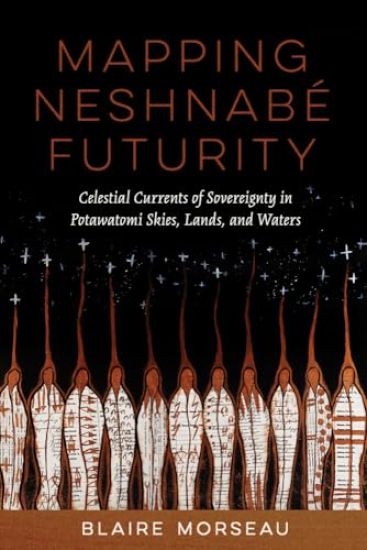
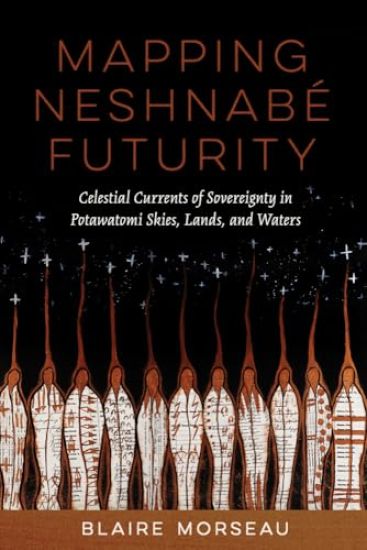
Mapping Neshnabé Futurity

Mapping Neshnabé Futurity

Blaire Morseau; Grace L. Dillon

University of Arizona Press
2025
nidottu
In Mapping Neshnabé Futurity Blaire Morseau weaves together on-the-ground insights and Indigenous speculative fiction to illustrate the profound ways in which Anishinaabé /Neshnabé (Potawatomi, Odawa, and Ojibwe) communities are reclaiming their sovereignty and crafting vibrant futures. Morseau lays out how Neshnabé k have marshaled dissent to hydrologic fracturing, oil pipelines, and other damaging infrastructures of capitalist settler futurity. The book positions these efforts as vital acts of nation building and visionary reclamation of space, both terrestrial and celestial. Morseau also challenges the hegemonic narratives of settler futurism found in mainstream science fiction, which often perpetuate colonial fantasies and exclude marginalized voices. By fusing ethnography of tribal nation-building projects and analysis of Indigenous speculative fiction, Morseau provides a path to Indigenous futurisms and its role in imagining decolonization. Morseau's analysis underscores the potency of Indigenous knowledge systems and ceremonial practices in imagining and actualizing alternative futures. Mapping Neshnabé Futurity is an essential read for scholars and activists alike, urging a rethinking of how we conceive of futurity and sovereignty. This work shows how counter-mapping projects both on the ground and in the skies reclaim space in the Great Lakes region— Neshnabé homelands— and are part of larger constellations of Indigenous futurities and stories of survivance.
Mapping Neshnabé Futurity

Mapping Neshnabé Futurity

Blaire Morseau; Grace L. Dillon

University of Arizona Press
2025
sidottu
In Mapping Neshnabé Futurity Blaire Morseau weaves together on-the-ground insights and Indigenous speculative fiction to illustrate the profound ways in which Anishinaabé /Neshnabé (Potawatomi, Odawa, and Ojibwe) communities are reclaiming their sovereignty and crafting vibrant futures. Morseau lays out how Neshnabé k have marshaled dissent to hydrologic fracturing, oil pipelines, and other damaging infrastructures of capitalist settler futurity. The book positions these efforts as vital acts of nation building and visionary reclamation of space, both terrestrial and celestial. Morseau also challenges the hegemonic narratives of settler futurism found in mainstream science fiction, which often perpetuate colonial fantasies and exclude marginalized voices. By fusing ethnography of tribal nation-building projects and analysis of Indigenous speculative fiction, Morseau provides a path to Indigenous futurisms and its role in imagining decolonization. Morseau’ s analysis underscores the potency of Indigenous knowledge systems and ceremonial practices in imagining and actualizing alternative futures. Mapping Neshnabé Futurity is an essential read for scholars and activists alike, urging a rethinking of how we conceive of futurity and sovereignty. This work shows how counter-mapping projects both on the ground and in the skies reclaim space in the Great Lakes region - Neshnabé homelands - and are part of larger constellations of Indigenous futurities and stories of survivance.