Kirjojen hintavertailu. Mukana 11 244 527 kirjaa ja 12 kauppaa.

Kirjahaku

Etsi kirjoja tekijän nimen, kirjan nimen tai ISBN:n perusteella.

210 tulosta hakusanalla Graffeg

Françoise de Graffigny

Françoise de Graffigny

English Showalter

Voltaire Foundation
2004
nidottu
The story of Françoise de Graffigny’s life reads like a novel. Following a disastrous marriage, she was forced by political upheavals to leave her native Lorraine and move to Paris, where she struggled to survive against poverty and persecution. Here she made her way into the heart of literary society in the heyday of the Enlightenment, wrote a novel – the Lettres d’une Péruvienne (1747) – that made her an international celebrity, wrote a play – Cénie (1750) – that ranked among the ten most successful new plays of the century, and became a noted salon hostess. Yet fifty years after her death she was almost forgotten, and has been rediscovered only in the last few decades. Now her novel is widely read once more, and studied as a masterpiece. At the same time, a vast collection of her letters and papers emerged, and scholars have used the ongoing edition of her Correspondance to shed important light on a long list of noted figures, such as Choiseul, Crébillon fils, Duclos, Helvétius, Palissot, Prévost, Rousseau, and Voltaire.This biography draws on those letters, including the hundreds not yet published, and on the editorial team’s highly praised research, to provide the first biography in ninety years of this phenomenal woman. It provides new material on all aspects of her life, from her intimate feelings to the composition and publication of her literary works. It is by far the most complete and accurate account of Mme de Graffigny’s life and times.
Françoise de Graffigny, femme de lettres
Françoise de Graffigny est une femme de lettres paradoxale; elle avoue craindre ‘le nom d’auteur’, mais ses écrits font preuve d’une originalité hardie. Pour la première fois la grande diversité de son œuvre fait ici l’objet d’un examen: sa correspondance, qui mêle des observations pénétrantes sur son époque à des réflexions franches sur les diverses facettes de sa vie de provinciale dépaysée, de salonnière célèbre, d’écrivain novateur, et de femme – en toutes lettres; son drame sentimental, Cénie, et autres pièces morales ou philosophiques; ses premiers contes; et ses Lettres d’une Péruvienne, que l’on s’arrache au dix-huitième siècle, devenu roman iconique des dernières décennies. La femme et l’oeuvre déroutent, pourtant, comme elles fascinent. Françoise de Graffigny inspire le respect, l’amour aussi parfois, chez ses amis et les habitués de son salon; les Lettres d’une Péruvienne et Cénie sont lus, commentés et maintes fois traduits partout en Europe. Mais au moyen de réécritures, de traductions ou de comptes rendus, on tente néanmoins de récupérer une oeuvre qui, s’attaquant aux conventions, déstabilise, pour la reporter dans des catégories familières. A travers une panoplie de réactions, nous découvrons l’image que l’on s’est faite de cette femme écrivain, domestiquée en fonction des goûts de son époque.L’image de l’écrivain qui émerge de ce volume n’est pas unifiée; elle ne se cantonne pas à celle, métaphorique, de l’auteur sentimental, ou féministe. Diverses approches critiques – comparatistes et narratologiques, biographiques et bibliographiques – nous font voir la richesse d’une oeuvre polyvalente située aux frontières du vécu et de l’imaginaire, du public et du privé, du traditionnel et de l’expérimental. Françoise de Graffigny résiste à toute interprétation réductrice, idéologique, au vingt-et-unième siècle comme au dix-huitième. Elle est une femme de lettres exceptionnelle, insaisissable, soit irrésistible.
The De Graffenried Family Scrap Book, 1191-1956, Seven Hundred and Sixty Five Years.

The De Graffenried Family Scrap Book, 1191-1956, Seven Hundred and Sixty Five Years.

Thomas Pritchett de 1881- Graffenried

Hassell Street Press
2021
nidottu
This work has been selected by scholars as being culturally important and is part of the knowledge base of civilization as we know it.This work is in the public domain in the United States of America, and possibly other nations. Within the United States, you may freely copy and distribute this work, as no entity (individual or corporate) has a copyright on the body of the work.Scholars believe, and we concur, that this work is important enough to be preserved, reproduced, and made generally available to the public. To ensure a quality reading experience, this work has been proofread and republished using a format that seamlessly blends the original graphical elements with text in an easy-to-read typeface.We appreciate your support of the preservation process, and thank you for being an important part of keeping this knowledge alive and relevant.
The De Graffenried Family Scrap Book, 1191-1956, Seven Hundred and Sixty Five Years.

The De Graffenried Family Scrap Book, 1191-1956, Seven Hundred and Sixty Five Years.

Thomas Pritchett de 1881- Graffenried

Hassell Street Press
2023
sidottu
This historical document is a scrapbook of the De Graffenried family history dating back to the 12th century. It includes information on family origins and migrations, notable individuals, and family artifacts. The information contained in the scrapbook is a valuable resource for anyone interested in De Graffenried family history as well as European history.This work has been selected by scholars as being culturally important, and is part of the knowledge base of civilization as we know it.This work is in the "public domain in the United States of America, and possibly other nations. Within the United States, you may freely copy and distribute this work, as no entity (individual or corporate) has a copyright on the body of the work.Scholars believe, and we concur, that this work is important enough to be preserved, reproduced, and made generally available to the public. We appreciate your support of the preservation process, and thank you for being an important part of keeping this knowledge alive and relevant.
Mme de Graffigny Lettres d'une Péruvienne

Mme de Graffigny Lettres d'une Péruvienne

Sara Claire Kerschbaumer

Grin Publishing
2009
pokkari
Seminar paper de l'ann e 2009 dans le domaine Etudes des langues romanes - Fran ais - Litt rature, note: Gut, Universit t Wien (Romanistik), cours: Seminar zum franz sichen Briefroman, langue: Fran ais, r sum Le XVIII me si cle entra ne tous ceux qui partent sa d couverte dans un tourbillon de philosophie, de litt rature, d'art et dans un mouvement d' me sentimentale . Difficile d' chapper la fascination de l'Orientalisme et d'Exotisme qui se d veloppe peu peu ou aux nouvelles Philosophies qui secouent les tats plus que les guerres ne l'ont jamais fait. Chaque poque a son propre langage, et c'est surtout dans le roman pistolaire que l'on per oit comme l'expression du nouveau sentiment, qui envahira toute l'Europe et qui sera consomm avec avarice puisque la philosophie de la Raison et des Lumi res ne peut (plus) satisfaire enti rement les besoins d'une soci t en mouvement en route vers un tout nouveau monde. Dans la production litt raire la voix des femmes, assez faible jusque-l s' l ve et devient m me plus puissante qu'elle ne le sera au si cle suivant o elle retombera dans le silence et l'oubli. C'est seulement au XXI me si cle, que l'on retrouvera ces tr sors perdus au cours de l'histoire, et que Mme de Graffigny fera son retour parmi les v n rables noms de Rousseau, Montesquieu ou encore Voltaire, m me si ces derniers ne font pas partie de cette g n ration de Sentimentale dont Diderot et Grimm se moqueront d'ailleurs largement dans leurs publications. Malgr la critique, les r sultats de vantes montrent le succ s vident du sentimental aussi bien que du roman pistolaire. D s lors, pour r ussir, un ou une auteur de l' poque devait suivre la recette du succ s: prendre le langage des lettres qui s' pouse au sentiment, tout en y m lant un brin d'exotisme, une cuill r e de critique sociale, politique et eccl siastique et un soup on de philosophie, faire revenir dans l'Histoire et servir tout chaud au public affam ...
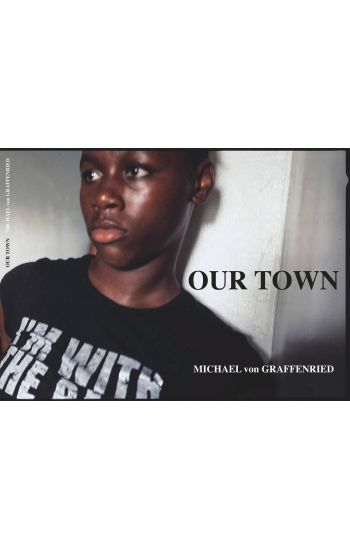
Michael von Graffenried: Our Town

Michael von Graffenried: Our Town

Michael von Graffenried

Steidl Verlag
2021
sidottu
A proud document of a North Carolina community and an empathetic call for increased integration and understanding at a decisive moment in American historyNew Bern is a small city in North Carolina with a population of 30,000, conspicuously composed of 55% white and 33% Black citizens. It was here in 1710 that Christoph von Graffenried of Bern, Switzerland, first began building houses; the fledgling town took on the name of his native city. Taken over a period of 15 years, von Graffenried's photos are patient images of everyday life: a Black church congregation, young white girls at rifle practice; Black men exchanging cash on the street, a white couple displaying their collection of firearms; a Black female stripper performing for a white man. In June 2020, following the killing of George Floyd, the largest demonstration New Bern had ever seen took place, parallel to many Black Lives Matter protests throughout the country and marking the first time the issue of race relations had been thus proclaimed in the city. This volume maps the contradictions embodied by New Bern.
Lettere d'una Peruviana pubblicate dalla nobil donna la Sig.ra D'Happoncourt de Graffigni. Traduzione dal francese; ... Dal Sig.re G. L. Deodati. Edizione nouissima, corretta, e ricorretta, dal dott. Antonio Montucci, ...
The 18th century was a wealth of knowledge, exploration and rapidly growing technology and expanding record-keeping made possible by advances in the printing press. In its determination to preserve the century of revolution, Gale initiated a revolution of its own: digitization of epic proportions to preserve these invaluable works in the largest archive of its kind. Now for the first time these high-quality digital copies of original 18th century manuscripts are available in print, making them highly accessible to libraries, undergraduate students, and independent scholars.Western literary study flows out of eighteenth-century works by Alexander Pope, Daniel Defoe, Henry Fielding, Frances Burney, Denis Diderot, Johann Gottfried Herder, Johann Wolfgang von Goethe, and others. Experience the birth of the modern novel, or compare the development of language using dictionaries and grammar discourses. ++++The below data was compiled from various identification fields in the bibliographic record of this title. This data is provided as an additional tool in helping to insure edition identification: ++++British LibraryT130078A translation of Mme de Grafigny's 'Lettres d'une P ruvienne'. Parallel French and Italian texts. Verso of the half-title bears the French titlepage.Londra: da' torchi del Baylis, e trovasi appresso Boosey. Dulau. Vernor e Hood, 1798. 371, 1]p.; 12