

Kirjahaku
Etsi kirjoja tekijän nimen, kirjan nimen tai ISBN:n perusteella.
1000 tulosta hakusanalla Graham Greene

Graham Greene's Journeys in Spain and Portugal
Carlos Villar Flor
Oxford University Press
2023
sidottu
In the 1970s and 1980s, Graham Greene adopted the yearly habit of touring Spain and Portugal in the company of his Spanish friend, the priest and university professor Leopoldo Durán. The most outstanding fruit of these trips, almost always in summer, was the inspiration for his major Hispanic novel, Monsignor Quixote (1982), a celebration of friendship above ideological, political, or religious differences, incorporating allusions to Cervantes' famous comic novel within a critical vision of post-Franco Spain. Graham Greene's Journeys in Spain and Portugal: Travels with My Priest reconstructs each of Greene's trips through the Iberian Peninsula between 1976 and 1989, detailing their preparations, itineraries, anecdotes, companions, topics of conversation, and often surprising repercussions. Carlos Villar Flor outlines the trips' biographical importance and fills numerous gaps of documented information on this final phase of Greene's life. His detailed inquiry into Greene's Iberian adventures with Durán also helps us better to understand the genesis and resonances of Monsignor Quixote, which over time became Greene's favourite of his own novels, and the subsequent television adaptation. The book also addresses incidents and aspects that, for one reason or another, never emerged in Durán's own account of their travels together, Graham Greene: Friend and Brother (1994). These include the possible motivations for Greene's first visit to Spain, related to his role as an informant for MI6; the mysterious visits to an old English lady located in Sintra; the writer's attempts in the early 1980s to establish links with Spanish socialists; or the fascinating story of a Spanish nobleman's suspicious proposal to create a Greene Foundation. Ultimately, Greene's trips to Spain and Portugal appear as more layered and intriguing than Durán's account suggests, whilst Durán himself emerges aptly as a complex and quixotic figure--as much the protagonist of this book as Greene.

Much has been written about Graham Greene's relationship to his Catholic faith and its privileged place within his texts. His early books are usually described as 'Catholic Novels' - understood as a genre that not only uses Catholic belief to frame the issues of modernity, but also offers Catholicism's vision and doctrine as a remedy to the present crisis in Western civilization. Greene's later work, by contrast, is generally regarded as falling into political and detective genres. In this book, Mark Bosco argues that this is a false dichotomy created by a narrowly prescriptive understanding of the Catholic genre and obscures the impact of Greene's developing religious imagination on his literary art.
In Narrative Strategies Roston focuses upon the Greene's texts themselves and their manipulation of reader response, highlighting the innovative strategies that Greene developed to cope with the mid-century invalidation of the traditional hero. The result is a stimulating new reading of the major novels.
Graham Greene and the Politics of Popular Fiction and Film
B. Thomson
Palgrave Macmillan
2009
sidottu
One of the most popular, respected and controversial writers of the twentieth century, Greene's work has still attracted relatively little scholarly comment. Thomson charts the intricate dance between his novels and screenplays, his many audiences, and an intellectual establishment reluctant to identify the work of a popular writer as 'literature'.
Since the war Graham Greene has travelled habitually to the world's trouble-spots and has provided leading newspapers and journals with articles about what he saw. While contending that a writer must be free of political affiliations he has commmitted himself to many countries and causes, and while insisting that literature must never be used for political ends he has written novels informed by a political urgency. The Dangerous Edge is about his political reportage and how the observations that formed it were transformed into literature. It is about how a novelist who struggled to record public issues dispassionately became in the process an important political conscience.

One of the undisputed masters of English prose in the twentieth century, Graham Greene (1904-91) wrote tens of thousands of personal letters. This substantial volume presents a new and engrossing account of his life constructed out of his own words. Meticulously chosen and engagingly annotated, this selection of Greene's letters - including many to his family and close friends that were unavailable even to his official biographer - gives an entirely new perspective on a life that combined literary achievement, political action, espionage, travel, and romantic entanglement. The letters describe his travels in Mexico, Africa, Malaya, Vietnam, Haiti, Cuba and other trouble spots, where he observed the struggles of victims and victors with a compassionate and truthful eye. The book includes a vast number of unpublished letters to Evelyn Waugh, Auberon Waugh, Anthony Powell, Edith Sitwell, R. K. Narayan, Muriel Spark and other leading writers of the time. Some letters reveal the agonies of his romantic life, especially his relations with his wife, Vivien Greene, and with his mistress Catherine Walston. The sheer range of experience contained in Greene's correspondence defies comparison.

Examines the first and most prolific phase of Graham Greene's career, demonstrating the relationship between his fiction and the political, economic, social and literary contexts of the period. This volume examines some of Greene's best-known works including "Brighton Rock".

Graham Greene; The Entertainer
Southern Illinois Univ Pr
1972
sidottu
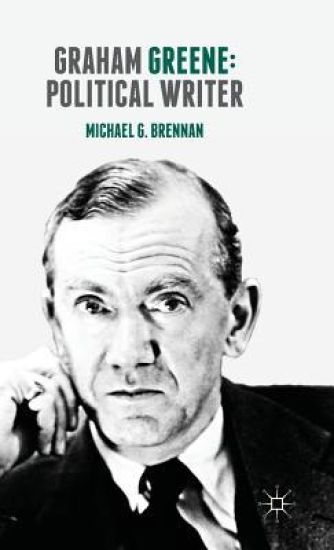
Graham Greene remarked that 'politics are in the air we breathe, like the presence or absence of a God' (The Other Man). This study is the first to provide a detailed consideration of the impact of his political thought and involvements on his writings both fictional and factual. It also offers the first detailed consideration of Greene's involvements in espionage and British intelligence from the 1920s until the late-1980s. It incorporates material not only from his major fictions but also from his prolific journalism, letters to the press, private correspondence, diaries and working manuscripts and typescripts, as well as consideration of the diverse political involvements and writings of his extended family network. It shows how the full range of Greene's writings was inspired and underpinned by his fascination with the essential human duality of political action and religious belief, coupled with an insistent need as a writer to keep the political personal.

Since the war Graham Greene has travelled habitually to the world's trouble-spots and has provided leading newspapers and journals with articles about what he saw. While contending that a writer must be free of political affiliations he has commmitted himself to many countries and causes, and while insisting that literature must never be used for political ends he has written novels informed by a political urgency. The Dangerous Edge is about his political reportage and how the observations that formed it were transformed into literature. It is about how a novelist who struggled to record public issues dispassionately became in the process an important political conscience.
From The Man Within (1929) to The Captain and the Enemy (1988), Graham Greene engaged in a lifelong dialogue with Joseph Conrad's political, psychological and melodramatic fictions. Repressing Conrad's political anxieties, his early work displaces the protagonist's existential dilemma into the form of the thriller or - alternatively -the 'Catholic' novel. After The Quiet American (1955), however, Greene's novels return to politics, introducing comic variations which transform Conrad's 'masterplot' into a mixed genre uniquely his own, a process charted in this book, the first full-length study of the subject.
Graham Greene remarked that 'politics are in the air we breathe, like the presence or absence of a God' (The Other Man). This study is the first to provide a detailed consideration of the impact of his political thought and involvements on his writings both fictional and factual. It also offers the first detailed consideration of Greene's involvements in espionage and British intelligence from the 1920s until the late-1980s. It incorporates material not only from his major fictions but also from his prolific journalism, letters to the press, private correspondence, diaries and working manuscripts and typescripts, as well as consideration of the diverse political involvements and writings of his extended family network. It shows how the full range of Greene's writings was inspired and underpinned by his fascination with the essential human duality of political action and religious belief, coupled with an insistent need as a writer to keep the political personal.
Graham Greene And The Question of Faith
Elizabeth T. Ayukako
Createspace Independent Publishing Platform
2015
nidottu
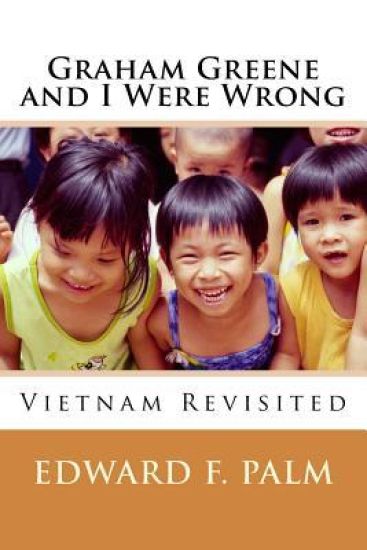
Graham Greene and I Were Wrong: Vietnam Revisited
Edward F. Palm
Createspace Independent Publishing Platform
2017
nidottu
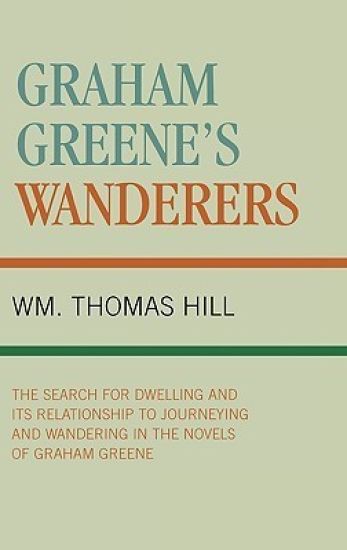
The key characters in Graham Greene's fiction are often footloose wanderers and his work is replete with journeys and searches. Professor Hill seeks to crystallize current research and develops a theory of dwelling and loss in this modern master's work.
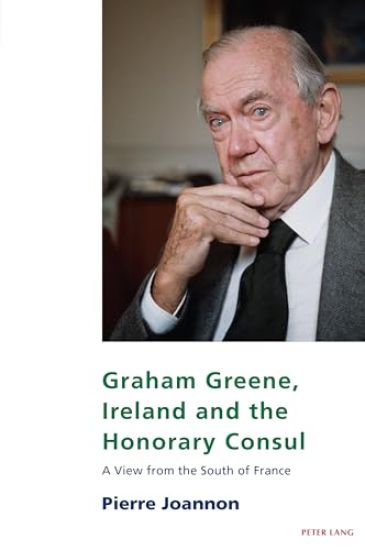
Graham Greene, Ireland and the Honorary Consul
Pierre Joannon
Peter Lang International Academic Publishers
2024
nidottu
These reminiscences of a friendship between Graham Greene and the author over two decades offer several original and significant additions to the knowledge of Greene's beliefs, experiences and involvements throughout his long and turbulent life. It is a brilliant illustration of the multiple connections of Graham Greene with Ireland, many of which would not be known to historians, literary critics or the general public. The relationship of Greene with Irish soldiers, writers and politicians as different as Ernie O'Malley, Seán O'Faoláin, Conor Cruise O'Brien and Gerry Fitt throw light on his deep interest in Irish history, literature and politics.
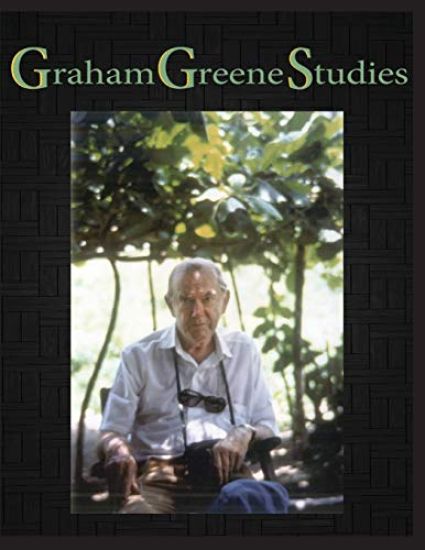
Graham Greene Studies
University of North Georgia
2017
pokkari
In this first volume, the reader will find a collection of articles written by scholars who have read, studied, and analyzed the work of Graham Greene. This volume includes the following articles: "Reflections" byJudith Adamson"Shades of Greene in Catholic Literary Modernism" by Mark Bosco"Figures in Greene's Carpet: The Power & the Glory to Monsignor Quixote" by Robert M. Davis"Graham Greene's Books for Children" by Fran ois Gallix"Graham Greene & the Congo, 1959: Personal Memories and Background of A Burnt-Out Case" by Michel Lechat"The Furthest Escape Of All: Darkness And Refuge In The Belgian Congo" by Michael Meeuwis"'Memory Cheats' Deception, Recollection and the Problem of Reading in The Captain and the Enemy" by Frances McCormack"Graham Greene in Love and War: French Indochina and the Making of The Quiet American" by Kevin Ruane"'The Invisible Japanese Gentleman' Graham Greene's Literary Influence in Japan" by Motonori Sato"'All Writers are Equal but Some Writers are More Equal than Others' Some Reflections on Links and Contrasts Between Graham Greene and George Orwell" by Neil Sinyard"Darkest Greeneland: Brighton Rock" by Cedric Watts"Travels with Graham Greene" by Bernard Diederich"Traveling in Greeneland" by Quentin Falk"Dr. Fischer of Geneva or There's so Much More to Christmas Crackers" by David Pearce"REVIEW--Jon Wise and Mike Hill: The Works of Graham Greene Volume 2: The Graham Greene Archives" by Judith Adamson"The Ritz" by Graham Greene
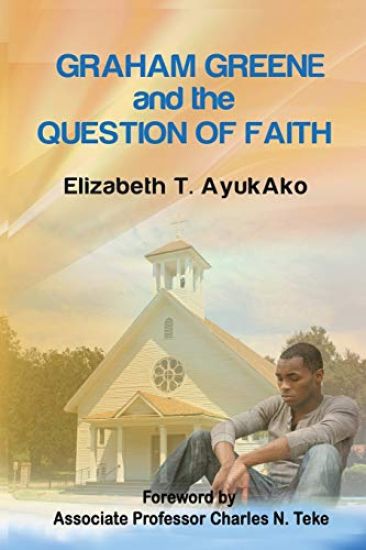
Graham Greene and The Question of Faith
Elizabeth Ayukako; Charles Teke
Dignity Publishing
2015
pokkari