Kirjojen hintavertailu. Mukana 11 244 527 kirjaa ja 12 kauppaa.

Kirjahaku

Etsi kirjoja tekijän nimen, kirjan nimen tai ISBN:n perusteella.

1000 tulosta hakusanalla Gregory

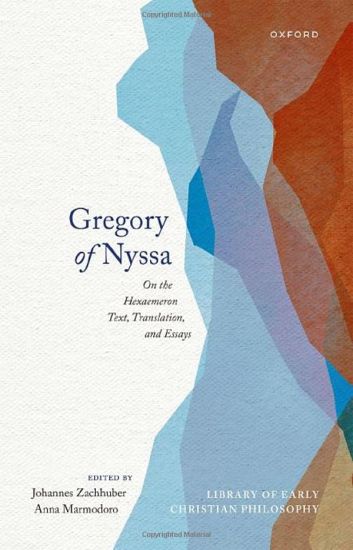
Gregory of Nyssa: On the Hexaemeron
This book presents Gregory of Nyssa's On the Six Days of Creation (In Hexaemeron) as a specimen of Early Christian philosophy. It comprises Gregory of Nyssa's text in its Greek original accompanied by a new English translation, and seven accompanying essays by international specialists from diverse backgrounds. Each essay focuses on a section of the text and the arising philosophical issues. The essays complement each other in offering multiple perspectives on how Gregory's text may be approached philosophically and positioned in relation to other, more or less contiguous, philosophical theories, including the early Greeks Anaxagoras and Empedocles, Aristotle, and the Stoics. Rather than presenting a definite and exhaustive state of the art study of Gregory's text, this volume aims to open new pathways for research into In Hexaemeron.
Gregory of Nyssa and the Grasp of Faith

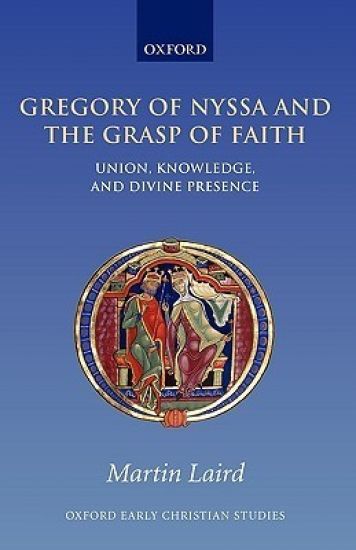
Gregory of Nyssa and the Grasp of Faith

Martin Laird

Oxford University Press
2007
nidottu
The first in-depth study of Gregory of Nyssa, this book shows how for Gregory the darkness of faith is what unites the believer with God. Through this union by faith alone, God yet speaks through the deeds and discourse of the believer. While the believer is immersed in the darkness of unknowing, they are also transformed in light. Laird alters the way in which we understand Gregory's mystical theology.
Gregory of Nyssa and the Grasp of Faith

Gregory of Nyssa and the Grasp of Faith

Martin Laird

Oxford University Press
2004
sidottu
Scholars of Gregory of Nyssa have long acknowledged the centrality of faith in his theory of divine union. To date, however, there has been no sustained examination of this key topic. The present study fills this gap and elucidates important auxiliary themes that accrue to Gregory's notion of faith as a faculty of apophatic union with God. The result adjusts how we understand the Cappadocian's apophaticism in general and his so-called mysticism of darkness in particular. After a general discussion of the increasing value of faith in late Neoplatonism and an overview of important work done on Gregorian faith, this study moves on to sketch a portrait of the mind and its dynamic, varying cognitive states and how these respond to the divine pedagogy of scripture, baptism, and the presence of God. With this portrait of the mind as a backdrop we see how Gregory values faith for its ability to unite with God, who remains beyond the comprehending grasp of mind. A close examination of the relationship between faith and mind shows Gregory bestowing on faith qualities which Plotinus would have granted only to the `crest of the wave of intellect'. While Gregorian faith serves as the faculty of apophatic union with God, faith yet gives something to mind. This dimension of Gregory's apophaticism has gone largely unnoticed by scholars. At the apex of an apophatic ascent faith unites with God the Word; by virtue of this union the believer takes on the qualities of the Word, who speaks (logophasis) in the deeds and discourse of the believer. Finally this study redresses how Gregory has been identified with a `mysticism of darkness' and argues that he proposes no less a `mysticism of light'.
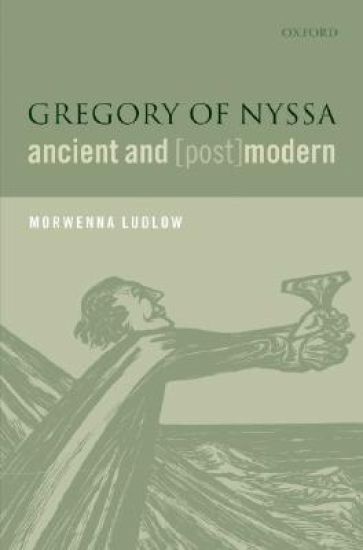
Gregory of Nyssa, Ancient and (Post)modern

Gregory of Nyssa, Ancient and (Post)modern

Morwenna Ludlow

Oxford University Press
2007
sidottu
The fourth-century Christian thinker, Gregory of Nyssa, has been the subject of a huge variety of interpretations over the past fifty years, from historians, theologians, philosophers, and others. In this highly original study, Morwenna Ludlow analyses these recent readings of Gregory of Nyssa and asks: What do they reveal about modern and postmodern interpretations of the Christian past? What do they say about the nature of Gregory's writing? Working thematically through studies of recent Trinitarian theology, Christology, spirituality, feminism, and postmodern hermeneutics, Ludlow develops an approach to reading the Church Fathers which combines the benefits of traditional scholarship on the early Church with reception-history and theology.
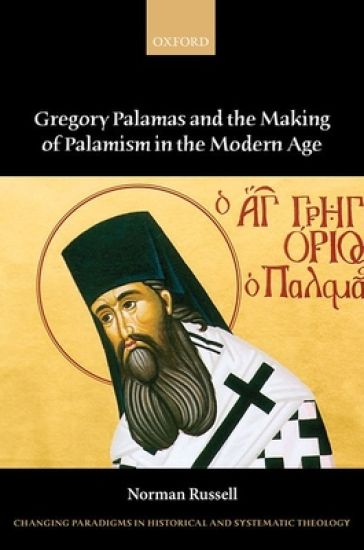
Gregory Palamas and the Making of Palamism in the Modern Age
The fourteenth-century Greek hesychast and controversialist, Gregory Palamas, has been so successfully cast as 'the other' in Western theological discourse that it can be difficult to gain a sympathetic hearing for him. In the first part of this book, Norman Russell traces the historical reception of Palamite thought in Orthodoxy and in the West, and investigates how 'Palamism' was constructed in the early twentieth century by both Western and Eastern theologians (principally Martin Jugie and John Meyendorff) for polemical or apologetic purposes. Russell argues that we need to go behind these ideological constructions in order to gain a true perception of the teaching of Gregory Palamas. In his recent survey of Palamite scholarship, Robert Sinkewicz noted that it is now time to raise the larger questions. The second part of the book attempts to do this, following the contours of Palamas' thinking in three areas: his relationship to tradition, his philosophy, and his theology. Russell shows that Palamite thought, when freed of misunderstanding and misrepresentation, has the potential to enrich our understanding of divine-human communion. This study contributes to the changing paradigm of scholarship on Palamas, nudging it towards the point at which Palamite thought can be used fruitfully by contemporary Western and Eastern theologians without the need to subscribe to what has been regarded as 'Palamism'.
Gregory of Nyssa's Doctrinal Works

Gregory of Nyssa's Doctrinal Works

Andrew Radde-Gallwitz

Oxford University Press
2018
sidottu
Gregory of Nyssa is firmly established in today's theological curriculum and is a major figure in the study of late antiquity. Students encounter him in anthologies of primary sources, in surveys of Christian history and perhaps in specialized courses on the doctrine of the Trinity, eschatology, asceticism, or the like. Gregory of Nyssa's Doctrinal Works presents a reading of the works in Gregory's corpus devoted to the dogmatic controversies of his day. Andrew Radde-Gallwitz focuses as much on Gregory the writer as on Gregory the dogmatic theologian. He sets both elements not only within the context of imperial legislation and church councils of Gregory's day, but also within their proper religious context-that is, within the temporal rhythms of ritual and sacramental practice. Gregory himself roots what we call Trinitarian theology within the church's practice of baptism. In his dogmatic treatises, where textbook accounts might lead one to expect much more on the metaphysics of substance or relation, one finds a great deal on baptismal grace; in his sermons, reflecting on the occasion of baptism tends to prompt Trinitarian questions.
Gregory of Nyssa, Ancient and (Post)modern

Gregory of Nyssa, Ancient and (Post)modern

Morwenna Ludlow

Oxford University Press
2013
nidottu
The fourth-century Christian thinker, Gregory of Nyssa, has been the subject of a huge variety of interpretations over the past fifty years, from historians, theologians, philosophers, and others. In this highly original study, Morwenna Ludlow analyses these recent readings of Gregory of Nyssa and asks: What do they reveal about modern and postmodern interpretations of the Christian past? What do they say about the nature of Gregory's writing? Working thematically through studies of recent Trinitarian theology, Christology, spirituality, feminism, and postmodern hermeneutics, Ludlow develops an approach to reading the Church Fathers which combines the benefits of traditional scholarship on the early Church with reception-history and theology.
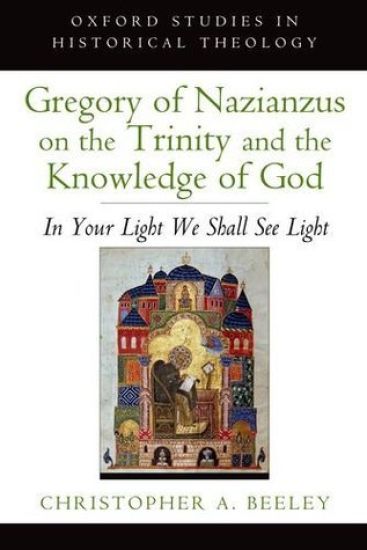
Gregory of Nazianzus on the Trinity and the Knowledge of God

Gregory of Nazianzus on the Trinity and the Knowledge of God

Christopher A. Beeley

Oxford University Press Inc
2013
nidottu
Gregory of Nazianzus (329-390 CE), "the Theologian," is the premier teacher on the Holy Trinity in Eastern Christian tradition, yet for over a century historians and theologians have largely neglected his work. Christopher Beeley's groundbreaking study -- the first comprehensive treatment in modern scholarship -- examines Gregory's doctrine of the Trinity within the full range of his theological and practical vision. Following an overview of Gregory's life and major works, Beeley traces the central soteriological meaning of Gregory's doctrine in the spiritual dialectic of purification and illumination; the dynamic process of divinization (theosis); the singular identity of Jesus Christ as the eternal Son of God; the divinity and essential presence of the Holy Spirit; and the interpretation of Scripture "according to the Spirit." The book culminates in Gregory's understanding of the Trinity as a whole -- which is "theology" in the fullest sense -- rooted in the monarchy of God the Father and uniquely known in the divine economy of salvation. Finally, Beeley identifies the Trinitarian shape of pastoral ministry, on which Gregory is also the foundational teacher for later Christian tradition. Beeley offers new insights in several key areas, reinterpreting the famous Theological Orations and Christological epistles within the full corpus of Gregory's orations, poems, and letters. Gregory stands out as the leading ecclesiastical figure in the Eastern Roman Empire and the most powerful theologian of his age, who produced the definitive expression of Trinitarian orthodoxy from a characteristically Eastern tradition of Origenist theology, independent of the work of Athanasius and in several respects more insightful than his Cappadocian contemporaries. Long eclipsed in modern scholarship, Gregory Nazianzen is now brought into full view as the major witness to the Trinity among the Greek fathers of the Church.
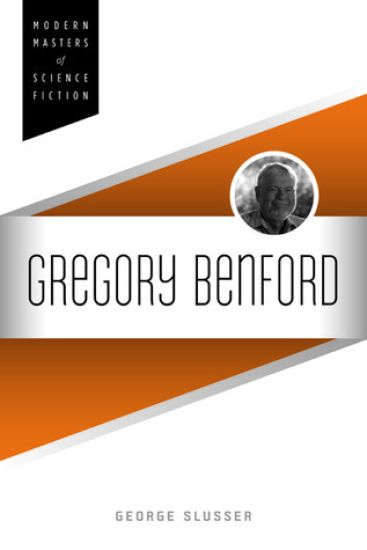
Gregory Benford

Gregory Benford

George Slusser

University of Illinois Press
2014
sidottu
Gregory Benford is perhaps best known as the author of Benford's law of controversy: "Passion is inversely proportional to the amount of real information available." That maxim is a quotation from Timescape, Benford's Nebula and Campbell Award-winning 1980 novel, which established his work as an exemplar of "hard science fiction," dedicated to working out the consequences of modern science rather than substituting pseudoscience for fantasy. Like many other current science fiction writers, Benford has tackled the major genres: space travel, time travel, technology running amok, prolonged longevity, searing apocalyptic cosmic events, and alien life, which he theorizes to be more likely viral than intelligent. An astrophysicist by training and profession, Benford has published more than twenty novels, over one hundred short stories, some fifty essays, and myriad articles that display both his scientific rigor as well as a recognition of literary traditions.In this study, George Slusser explores the extraordinary, seemingly inexhaustible display of creative energy in Gregory Benford's life and work. Presenting Benford's ideas on science and the writing of science fiction, the volume addresses the writer's literary production and his place in contemporary science fiction. By identifying direct sources and making parallels with other works and writers, Slusser reveals the vast scope of Benford's knowledge, both of literature and of the major scientific and philosophical issues of our time. Slusser also discusses Benford's numerous scientific articles and nonfiction books and includes a new interview with Benford.
Gregory Benford

Gregory Benford

George Slusser

University of Illinois Press
2014
nidottu
Gregory Benford is perhaps best known as the author of Benford's law of controversy: "Passion is inversely proportional to the amount of real information available." That maxim is a quotation from Timescape, Benford's Nebula and Campbell Award-winning 1980 novel, which established his work as an exemplar of "hard science fiction," dedicated to working out the consequences of modern science rather than substituting pseudoscience for fantasy. Like many other current science fiction writers, Benford has tackled the major genres: space travel, time travel, technology running amok, prolonged longevity, searing apocalyptic cosmic events, and alien life, which he theorizes to be more likely viral than intelligent. An astrophysicist by training and profession, Benford has published more than twenty novels, over one hundred short stories, some fifty essays, and myriad articles that display both his scientific rigor as well as a recognition of literary traditions.In this study, George Slusser explores the extraordinary, seemingly inexhaustible display of creative energy in Gregory Benford's life and work. Presenting Benford's ideas on science and the writing of science fiction, the volume addresses the writer's literary production and his place in contemporary science fiction. By identifying direct sources and making parallels with other works and writers, Slusser reveals the vast scope of Benford's knowledge, both of literature and of the major scientific and philosophical issues of our time. Slusser also discusses Benford's numerous scientific articles and nonfiction books and includes a new interview with Benford.
Gregory the Great

Gregory the Great

University of Notre Dame Press
2001
nidottu
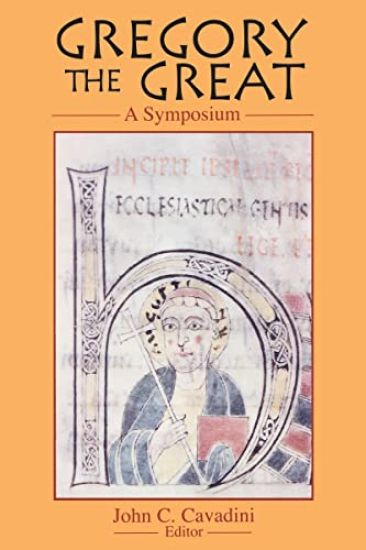
A group of renowned North American scholars gathered at the University of Notre Dame in 1993 for a symposium on Pope Gregory the Great (550-604). The essays collected in this volume are arranged in the order in which they were delivered, and several additional contributions are included as well. In these essays Gregory emerges as a figure both interpreting and interpreted: interpreting the past, receiving, synthesizing, and developing the teachings of earlier writers, and, by this very process, presenting a persuasive theological and pastoral agenda which itself inspires ongoing projects of interpretation and development in later periods up to and including our own.
Gregory the Great

Gregory the Great

George E. Demacopoulos

University of Notre Dame Press
2015
nidottu
Gregory the Great (bishop of Rome from 590 to 604) is one of the most significant figures in the history of Christianity. His theological works framed medieval Christian attitudes toward mysticism, exegesis, and the role of the saints in the life of the church. The scale of Gregory's administrative activity in both the ecclesial and civic affairs of Rome also helped to make possible the formation of the medieval papacy. Gregory disciplined malcontent clerics, negotiated with barbarian rulers, and oversaw the administration of massive estates that employed thousands of workers. Scholars have often been perplexed by the two sides of Gregory—the monkish theologian and the calculating administrator. George E. Demacopoulos's study is the first to advance the argument that there is a clear connection between the pontiff's thought and his actions. By exploring unique aspects of Gregory's ascetic theology, wherein the summit of Christian perfection is viewed in terms of service to others, Demacopoulos argues that the very aspects of Gregory's theology that made him distinctive were precisely the factors that structured his responses to the practical crises of his day. With a comprehensive understanding of Christian history that resists the customary bifurcation between Christian East and Christian West, Demacopoulos situates Gregory within the broader movements of Christianity and the Roman world that characterize the shift from late antiquity to the early Middle Ages. This fresh reading of Gregory's extensive theological and practical works underscores the novelty and nuance of Gregory as thinker and bishop.
Gregory the Great

Gregory the Great

George E. Demacopoulos

UNIVERSITY OF NOTRE DAME PRESS
2022
sidottu
Gregory the Great (bishop of Rome from 590 to 604) is one of the most significant figures in the history of Christianity. His theological works framed medieval Christian attitudes toward mysticism, exegesis, and the role of the saints in the life of the church. The scale of Gregory's administrative activity in both the ecclesial and civic affairs of Rome also helped to make possible the formation of the medieval papacy. Gregory disciplined malcontent clerics, negotiated with barbarian rulers, and oversaw the administration of massive estates that employed thousands of workers. Scholars have often been perplexed by the two sides of Gregory—the monkish theologian and the calculating administrator. George E. Demacopoulos's study is the first to advance the argument that there is a clear connection between the pontiff's thought and his actions. By exploring unique aspects of Gregory's ascetic theology, wherein the summit of Christian perfection is viewed in terms of service to others, Demacopoulos argues that the very aspects of Gregory's theology that made him distinctive were precisely the factors that structured his responses to the practical crises of his day. With a comprehensive understanding of Christian history that resists the customary bifurcation between Christian East and Christian West, Demacopoulos situates Gregory within the broader movements of Christianity and the Roman world that characterize the shift from late antiquity to the early Middle Ages. This fresh reading of Gregory's extensive theological and practical works underscores the novelty and nuance of Gregory as thinker and bishop.
Gregory Peck

Gregory Peck

Gerard Molyneaux

Greenwood Press
1995
sidottu
Born in 1916 in La Jolla, California, Gregory Peck took up acting in college on a lark that would lead to a career. In his early years, he appeared in a series of summer stock engagements and Broadway shows. He became a star within a year after arriving in Hollywood during World War II, and he won an Academy Award nomination for his second film. From the 1940s to the present, he has played some of film's most memorable and admired characters.This volume provides complete information about Gregory Peck's work in film, television, radio, and the stage. Entries are included for all of his performances, with each entry providing cast and credit information, a plot summary, excerpts from reviews, and critical commentary. A biography and chronology highlight significant events in his life, while a listing of his honors and awards summarizes the recognition he has received over the years. For researchers seeking additional information, the book includes descriptions of special collections holding material related to Peck's work, along with an extensive bibliography of books and articles.
Gregory of Nyssa

Gregory of Nyssa

Michael Glerup

Readhowyouwant
2012
pokkari
As part of the Classics in Spiritual Formation, the sermons of Gregory of Nyssa offer a contemporary rendering of ancient spiritual wisdom for today's readers. Includes an introduction, paraphrase by Michael Glerup of the text from the original languages, and helpful callouts that show how the work relates to your personal spiritual formation.
Gregory of Nyssa

Gregory of Nyssa

Anthony Meredith

Routledge
1999
sidottu
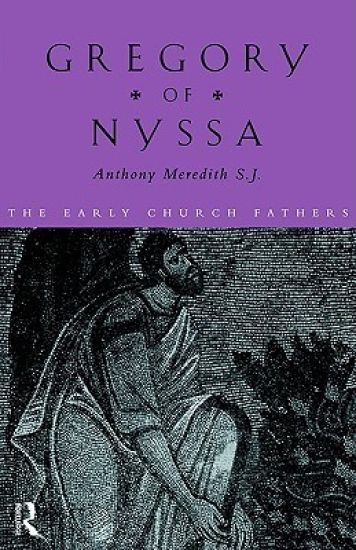
Gregory of Nyssa provides a concise and accessible introduction to the thought of this early church father with new translations of key selections of his writings. Anthony Meredith presents a diverse range of Gregory's writings:his contribution to the debates of the period about the nature of God in argument with a form of extreme Arianismhis discussion of the nature and work of the Holy Ghost, against the so-called 'Spirit fighters'his defence of the humanity of Christ against those who denied it (notably Apollinarius)the nature of fate and other philosophical issues.
Gregory of Nyssa

Gregory of Nyssa

Anthony Meredith

Routledge
1999
nidottu
Gregory of Nyssa provides a concise and accessible introduction to the thought of this early church father with new translations of key selections of his writings. Anthony Meredith presents a diverse range of Gregory's writings:his contribution to the debates of the period about the nature of God in argument with a form of extreme Arianismhis discussion of the nature and work of the Holy Ghost, against the so-called 'Spirit fighters'his defence of the humanity of Christ against those who denied it (notably Apollinarius)the nature of fate and other philosophical issues.
Gregory of Nazianzus

Gregory of Nazianzus

Brian Daley

Routledge
2006
sidottu
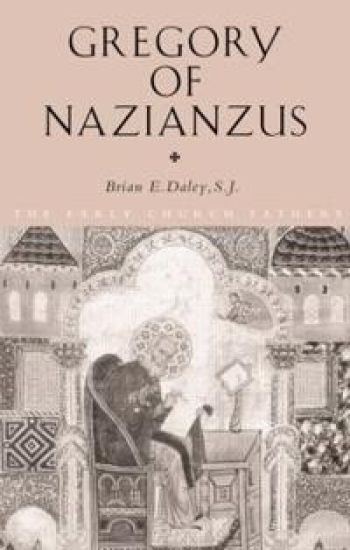
This book brings together a new, original survey of the significance of Gregory's life and work with translations of eight beautiful and profound orations. Gregory of Nazianzus portrays a vivid picture of a fascinating character of vital importance who deserves to be regarded as the first true Christian humanist. The eight orations, each representing a different aspect of his writing, are examined alongside a selection of his shorter poems in verse translation, letters, and a translation of Gregory's own will. Author Brian Daley offers extensive commentary on the works translated and an ample bibliography.With an extensive introduction to Gregory's life, thought and writings, and including detailed notes, this study places Gregory in his correct historical context, and gives students access to a deeper understanding of this fascinating figure from the past.
Gregory of Nazianzus

Gregory of Nazianzus

Brian Daley

Routledge
2006
nidottu
This book brings together a new, original survey of the significance of Gregory's life and work with translations of eight beautiful and profound orations. Gregory of Nazianzus portrays a vivid picture of a fascinating character of vital importance who deserves to be regarded as the first true Christian humanist. The eight orations, each representing a different aspect of his writing, are examined alongside a selection of his shorter poems in verse translation, letters, and a translation of Gregory's own will. Author Brian Daley offers extensive commentary on the works translated and an ample bibliography.With an extensive introduction to Gregory's life, thought and writings, and including detailed notes, this study places Gregory in his correct historical context, and gives students access to a deeper understanding of this fascinating figure from the past.