

Kirjahaku
Etsi kirjoja tekijän nimen, kirjan nimen tai ISBN:n perusteella.
1000 tulosta hakusanalla Gregory Brad Cutler

"All groundhogs want to be weathermen."Or at least that's what Gregory's father says. He's been predicting the weather for years and wants Gregory to do the same. Gregory has dreams that don't include the family business. But when his father becomes ill on Groundhog Day, Gregory must step up and take over. If you've ever had a tough decision to make, then you will fall in love with this story. Join Gregory as he learns he can fulfill his responsibilities and still be true to himself.

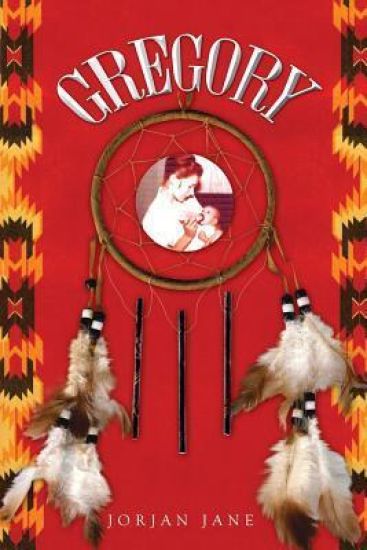
Gregory, a deeply personal and poignant memoir, is a candid account of Gregory's early years that weaves by his mother with unwavering love and honesty. The story begins on the day Gregory's father disappears, leaving his mother to navigate the challenges of single parenthood and the complexities of growing up without a father figure. Through a series of heartfelt vignettes, she shares the intimate struggles and triumphs of raising a boy in a world that often feels incomplete.As Gregory navigates his childhood, he grapples with feelings of abandonment, identity, and belonging. The narrative captures the complexities of love, longing, and resilience, offering a raw and authentic glimpse into a life shaped by absence. Through his mother's eyes, we see Gregory's struggles and triumphs, as well as the ways in which his mother's love and determination shape his young life. "Gregory" is more than just a story of absence; it is a celebration of perseverance and the indomitable spirit of a mother and son finding their way together.

Gregory, a deeply personal and poignant memoir, is a candid account of Gregory's early years that weaves by his mother with unwavering love and honesty. The story begins on the day Gregory's father disappears, leaving his mother to navigate the challenges of single parenthood and the complexities of growing up without a father figure. Through a series of heartfelt vignettes, she shares the intimate struggles and triumphs of raising a boy in a world that often feels incomplete.As Gregory navigates his childhood, he grapples with feelings of abandonment, identity, and belonging. The narrative captures the complexities of love, longing, and resilience, offering a raw and authentic glimpse into a life shaped by absence. Through his mother's eyes, we see Gregory's struggles and triumphs, as well as the ways in which his mother's love and determination shape his young life. "Gregory" is more than just a story of absence; it is a celebration of perseverance and the indomitable spirit of a mother and son finding their way together.
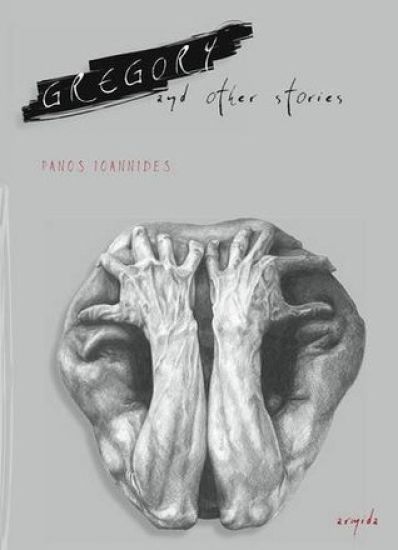
A translation of twelve award winning short stories and novellas. Gregory, The Bath, Uniforms, The Suitcase and The Escape have been adapted for the theater by the author and staged in theaters in Cyprus and abroad (such as Greece, England, USA and Germany) whereas all the short stories have been included in prestigious anthologies such as Short Story International, Sudden Fiction and others.

Gregory, the Terrible Eater, wants orange juice and eggs for breakfast. His parents are terribly upset Why can't Gregory eat striped ties and violins, like the rest of the goats? Jose Aruego and Ariane Dewey have entered into the spirit of Mitchell Sharmat's upside-down, turned-around world with bold, wacky, expressive illustrations. The trio's exuberant collaboration provokes healthy laughter and even includes a colorful chart which gives fresh meaning to the concept of "junk food."
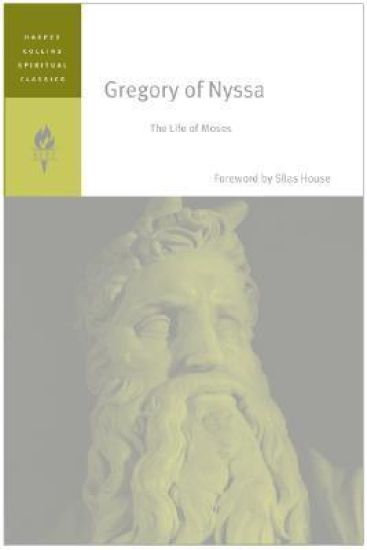
The fourth-century bishop and saint chronicles the events of Moses's life based on the Old Testament stories in Exodus and Numbers, using the scriptures as the foundation for a series of spiritual teachings, and reflects on the topics of the solitary life, asceticism, control of the passion, right conduct, knowledge of God, and the spiritual quest. Original. 15,000 first printing.

Gregory is a shy groundhog, and having his friend Shadow close by makes him feel brave. But one day Gregory and Shadow go outside to look for food, and they get separated. Scared and lonely, they search and search for one another. To make matters worse, tomorrow is Groundhog Day, and everyone will be waiting to see if Gregory and his shadow leave their home together. Will the two friends find each other in time for Groundhog Day? Freeman's adorable, loosely sketched illustrations are colored in a palette of blues for the snowscapes and earth tones for the underground scenes. The simple story line is just right for preschoolers. (Booklist)

Gregory of Nyssa: On the Human Image of God
Oxford University Press
2023
sidottu
This book presents the first modern critical edition of the work of Gregory of Nyssa, On the Human Image of God (formerly known as On the Making of Man, De hominis opificio) and the first English translation since the nineteenth century. This treatise is one of the most important of Gregory's texts. Paralleling the structure of Plato's Timaeus, Gregory's work begins by offering two analyses of the human being. The first presents the human being as the culmination of the ascent made by nature through the various levels of life, and as made, body and soul, in the image of God. The second considers why this is not immediately apparent, the need for time to be able to grow, individually and collectively, to this status, as the body of Christ, the image of God, and the role of sexuality within this growth. The third part of the work brings both analyses together, to see the same movement in the life-span of each person. The extensive introduction provided in this volume examines the philosophical and theological background of Gregory's text, beginning with Anaxagoras, Plato (the Timaeus), Philo, and Origen, and also compares aspects of Gregory's work with that of Irenaeus of Lyons and Maximos the Confessor.

Gregory of Nyssa and the Concept of Divine Persons
Lucian Turcescu
Oxford University Press Inc
2005
sidottu
The concept of personhood is central to a wide range of contemporary issues, ranging from reproductive rights to the death penalty and euthanasia. We may think that the concept of person is a modern discovery. In fact, however, this idea does not originate with our discovery of human rights, consciousness, and individuality. As this study shows, for example, the fourth-century theologian Gregory of Nyssa developed a very sophisticated concept of the person in the context of his attempts to clarify the paradox of the Trinity - a single God comprising three distinct persons. Turcescu offers the first in-depth analysis of Gregory's writings about the divine persons. Turcescu's work not only contributes to our knowledge of the history of Trinitarian theology but can be helpful to theologians who are dealing with issues in contemporary ethics.

Gregory of Nazianzus on the Trinity and the Knowledge of God
Christopher A. Beeley
Oxford University Press Inc
2008
sidottu
Gregory of Nazianzus, a 4th-century bishop of Constantinople, receives relatively little attention from modern Western scholars, yet he is one of the most influential theologians in the history of Christian doctrine. Many modern Christians understand their religious beliefs through ideas originally expounded by Gregory, yet probably would not recognize his name. As an advocate for the conceptual understanding of the Trinity, Gregory set precedents for the way his fellow and future Christians would perceive and worship God. Holding that Jesus was both fully divine and fully human, Gregory added new complexity to Christianitys grasp of the mysterious relationship between the Son and the Father. He also explored the nature of the Holy Spirit by means of scriptural analysis, both in the Hebrew Scriptures and the New Testament. Gregorys enlightening revelations resonate throughout the varied religious landscape of Christian creed, cult, and code. Christopher A. Beeley examines Gregorys doctrine of the Trinity in the full range of his theological and practical vision of the Christian life. Beeley examines and analyzes Gregorys teachings on the purification, illumination, and limitations of the theologian; the saving work of Christ within the context of Gregorys understanding of salvation; the place of the Holy Spirit in the work of the Trinity; and the Trinitarian purpose of pastoral ministry. This book combines expansive coverage of Gregorys works with meticulous close-readings and analyses to impart new interpretations in the areas of Christology, Pneumatology, and Christian ministry.
Known as "the Theologian", St Gregory of Nazianzus (in the eastern part of Turkey) is, with St Basil and St Gregory of Nyssa, one of the celebrated Cappadocian Fathers of the fourth-century Christian Church. Highly educated in both Christian theology and classical Greek literature, he found himself torn between a solitary, contemplative life and the reluctantly accepted, though in actuality relished, public figure of bishop, vigorous in defence of orthodoxy against the attacks of the Arians. He was even, briefly, Bishop of Constantinople and chairman of the Council in 381 which produced what we now know as the Nicene Creed. This edition of his poems brings together his theological acumen in a formative period and shows his ability to operate in the genre of didactic verse going back to the eighth century BC. The poems cover a range of topics, from the strictly theological to others dealing more broadly with the creation of the world, providence, the world of spiritual beings, and the human soul. They give a unique new insight both on the theological ideas of the period and on the uneasy emergence of Christian culture from the pagan past.

Gregory of Nyssa's Treatise on the Inscriptions of the Psalms
Gregory of Nyssa
Clarendon Press
1995
sidottu
Gregory of Nyssa (c.330-395) made important contributions to both theological thought and the understanding of the spiritual life. He was especially significant in adapting the thought of Origen to fourth century orthodoxy. The early treatise on the inscriptions of the Psalms shows the early stages of the development of Gregory's thought. This book presents the first translation of the treatise in a modern language. The annotations show Gregory's indebtedness to the thought of classical antiquity as well as to the Bible. The Introduction sets forth the structure of Gregory's treatise, and places it in the context of earlier Christian commentaries on the Psalms. It shows how his hermeneutical approach was influenced by both Iamblichus the Neo-Platonist and Origen. Finally, Dr Heine compares Gregory's understanding of the stages of the spiritual life in the treatise with that in his later and more widely known writings on the life of Moses and the Song of Songs.
Gregory of Nyssa's Tabernacle Imagery in Its Jewish and Christian Contexts
Ann Conway-Jones
Oxford University Press
2014
sidottu
Integrating patristics and early Jewish mysticism, this book examines Gregory of Nyssa's tabernacle imagery, as found in Life of Moses 2. 170-201. Previous scholarship has often focused on Gregory's interpretation of the darkness on Mount Sinai as divine incomprehensibility. However, true to Exodus, Gregory continues with Moses's vision of the tabernacle 'not made with hands' received within that darkness. This innovative methodology of heuristic comparison doesn't strive to prove influence, but to use heavenly ascent texts as a foil, in order to shed new light on Gregory's imagery. Ann Conway-Jones presents a well-rounded, nuanced understanding of Gregory's exegesis, in which mysticism, theology, and politics are intertwined. Heavenly ascent texts use descriptions of religious experience to claim authoritative knowledge. For Gregory, the high point of Moses's ascent into the darkness of Mount Sinai is the mystery of Christian doctrine. The heavenly tabernacle is a type of the heavenly Christ. This mystery is beyond intellectual comprehension, it can only be grasped by faith; and only the select few, destined for positions of responsibility, should even attempt to do so.
Gregory of Nyssa: On the Hexaemeron
Oxford University Press
2025
sidottu
This book presents Gregory of Nyssa's On the Six Days of Creation (In Hexaemeron) as a specimen of Early Christian philosophy. It comprises Gregory of Nyssa's text in its Greek original accompanied by a new English translation, and seven accompanying essays by international specialists from diverse backgrounds. Each essay focuses on a section of the text and the arising philosophical issues. The essays complement each other in offering multiple perspectives on how Gregory's text may be approached philosophically and positioned in relation to other, more or less contiguous, philosophical theories, including the early Greeks Anaxagoras and Empedocles, Aristotle, and the Stoics. Rather than presenting a definite and exhaustive state of the art study of Gregory's text, this volume aims to open new pathways for research into In Hexaemeron.
The first in-depth study of Gregory of Nyssa, this book shows how for Gregory the darkness of faith is what unites the believer with God. Through this union by faith alone, God yet speaks through the deeds and discourse of the believer. While the believer is immersed in the darkness of unknowing, they are also transformed in light. Laird alters the way in which we understand Gregory's mystical theology.

Scholars of Gregory of Nyssa have long acknowledged the centrality of faith in his theory of divine union. To date, however, there has been no sustained examination of this key topic. The present study fills this gap and elucidates important auxiliary themes that accrue to Gregory's notion of faith as a faculty of apophatic union with God. The result adjusts how we understand the Cappadocian's apophaticism in general and his so-called mysticism of darkness in particular. After a general discussion of the increasing value of faith in late Neoplatonism and an overview of important work done on Gregorian faith, this study moves on to sketch a portrait of the mind and its dynamic, varying cognitive states and how these respond to the divine pedagogy of scripture, baptism, and the presence of God. With this portrait of the mind as a backdrop we see how Gregory values faith for its ability to unite with God, who remains beyond the comprehending grasp of mind. A close examination of the relationship between faith and mind shows Gregory bestowing on faith qualities which Plotinus would have granted only to the `crest of the wave of intellect'. While Gregorian faith serves as the faculty of apophatic union with God, faith yet gives something to mind. This dimension of Gregory's apophaticism has gone largely unnoticed by scholars. At the apex of an apophatic ascent faith unites with God the Word; by virtue of this union the believer takes on the qualities of the Word, who speaks (logophasis) in the deeds and discourse of the believer. Finally this study redresses how Gregory has been identified with a `mysticism of darkness' and argues that he proposes no less a `mysticism of light'.
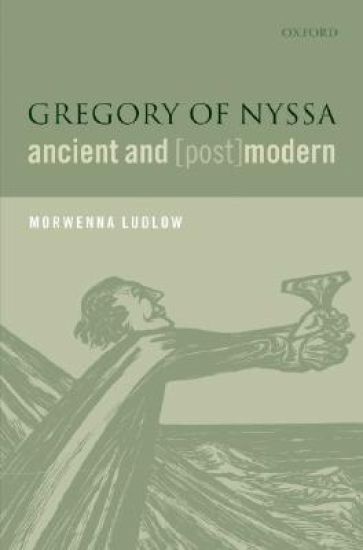
The fourth-century Christian thinker, Gregory of Nyssa, has been the subject of a huge variety of interpretations over the past fifty years, from historians, theologians, philosophers, and others. In this highly original study, Morwenna Ludlow analyses these recent readings of Gregory of Nyssa and asks: What do they reveal about modern and postmodern interpretations of the Christian past? What do they say about the nature of Gregory's writing? Working thematically through studies of recent Trinitarian theology, Christology, spirituality, feminism, and postmodern hermeneutics, Ludlow develops an approach to reading the Church Fathers which combines the benefits of traditional scholarship on the early Church with reception-history and theology.