A little closer look and what the Bible really teaches about sin, salvation, the Old and New Testaments, and what it truly means to be born again. I pray that your walk with God, or to Him, will be enhanced.
Many faiths and philosophies share common values. We have created a coloring book of Celtic Knot versions of some of the symbolism associated with various religions, and included quotes supporting their inclusion
Because we live in an imperfect world, being a disciple of Jesus isn't always easy. We are recovering the ancient art of making disciples who are prepared to mix it up with a broken world and offer it Christ. You will learn how to provide the holy knowledge and holy know-how needed to help God make the world a better place as the Kingdom of God grows in around us.
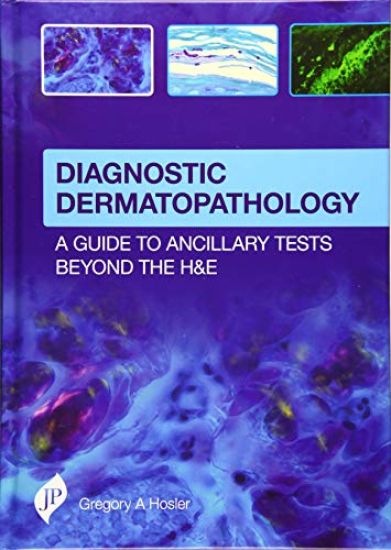
The practice of dermatopathology has evolved from viewing predominantly haematoxylin and eosin (H&E)-stained sections through the microscope to include an array of more specialized tests. These are used as stand-alone tests or in addition to the H&E. Diagnostic Dermatopathology: A Guide to Ancillary Tests Beyond the H&E is a practical guide to the most important of these new diagnostic techniques. Aside from a brief review of H&E in the Introduction, the focus of the book is on the wide range of more recent ancillary tests commonly used by clinicians, including sections on special stains, immunohistochemistry, immunofluorescence, electron microscopy and molecular testing. Each section describes why each of these tests is performed, how to use them and how to interpret the results they provide. Abundantly illustrated with colour photographs, diagrams and algorithms Diagnostic Dermatopathology: A Guide to Ancillary Tests Beyond the H&E is packed with practical guidance on commonly-faced diagnostic dilemmas, how the tests described can be used to resolve them and how to avoid pitfalls in the diagnostic process. The book is an essential resource for trainee and practicing dermatopathologists, dermatologists and pathologists seeking an accessible guide to the diagnostic methods which are increasingly important in dermatopathology and which go beyond the H&E. Key features Covers the full range of diagnostic tests in dermatopathology, aside from H&E, with a focus on practical clinical information such as how to run the test, when to use it and how to interpret the resultsIncludes special stains, immunohistochemistry, immunofluorescence, electron microscopy, molecular testing and point of care tests including potassium hydroxide preparations, mineral oil preparations, and Tzanck smearsSingle author with hand-picked specialist contributors provide a consistent approach to the subject, replete with diagnostic tips and clinical advice based on extensive personal experience
Written by Gregory A. Barker and Richard Gray, this innovative Revision Guide provides students with an effective way to recall and revise the comprehensive content of their Religious Studies A Level Year 1 and AS course. / It reinforces the knowledge and skills provided by the officially endorsed and popular Student Book, and takes students to the next level in preparation for their exams. / Successful revision through an innovative and proven 'Trigger' approach / Essential AO1 information is provided in easy to understand bullet points, and key AO2 issues are clearly and fully explained / Students will develop the skills required to manage the essential information from the course, and transfer everything they have learned into the exam / Revision activities help students unpack their knowledge and prepare for the exam / Sample answers for AO1 and AO2 exam-style questions, with expert insight and advice on creating an effective answer / Synoptic Links show how other areas of the specification can enhance or support answers.
Written by Gregory A. Barker and Peter Cole, this innovative Revision Guide provides students with an effective way to recall and revise the comprehensive content of their Religious Studies A Level Year 2 and A2 course. / It reinforces the knowledge and skills provided by the officially endorsed and popular Student Book, and takes students to the next level in preparation for their exams. / Successful revision through an innovative and proven ‘Trigger’ approach / Essential AO1 information is provided in easy to understand bullet points, and key AO2 issues are clearly and fully explained / Students will develop the skills required to manage the essential information from the course, and transfer everything they have learned into the exam / Revision activities help students unpack their knowledge and prepare for the exam / Sample answers for AO1 and AO2 exam-style questions, with expert insight and advice on creating an effective answer / Synoptic Links show how other areas of the specification can enhance or support answers.
Reading the entire Bible for the first time on your own can be challenging, but you don't have to travel alone. Gas up the old station wagon and join us for a coast to coast, cover to cover road trip through the entire Bible in one year. The daily schedule of readings has rearranged the contents of the Bible chronologically to help understand how it all fits together into one great story. Begin each week with a Travel Guide to prepare you for the ground you will cover during the next seven days of daily readings. End the week with a Study Guide to reflect on God's unfolding story and what it means for your own life. Keep a journal with your questions, insights and discoveries along the way and grow closer to God in the year to come. This study is great for personal devotions, Bible Study groups, or even entire congregations that wish to devote a year's worth of worship to a unifying trip through the Bible together.
Christianity Today 2008 Book Award (Biblical Studies)Even mature Christians have trouble defending the person and divinity of Christ. The Jesus Legend builds a convincing interdisciplinary case for the unique and plausible position of Jesus in human history. He was real and his presence on the planet has been well-documented.The authors of the New Testament didn't plant evidence, though each writer did tell the truth from a unique perspective. This book carefully investigates the Gospel portraits of Jesus--particularly the Synoptic Gospels--assessing what is reliable history and fictional legend. The authors contend that a cumulative case for the general reliability of the Synoptic Gospels can be made and boldly challenge those who question the veracity of the Jesus found there.
This book intends to introduce readers to the work of Charles E. Butterworth, and thereby to introduce students to Medieval islamic political philosophy, of which Butterworth is one of the world’s most prominent scholars. In a wider sense, the Festschrift introduces its readers to the current debates on Medieval islamic political philosophy, related as they are to the questions of the relationship between islam and Christianity, the Medieval to the Modern world, and reason and revelation. Butterworth’s scholarship spans six decades, primarily translating, editing, and interpreting the works of the Muslim political philosopher Alfarabi (d. 950) and Averroes (Ibn Rushd, d. 1198). He began his studies of Muslim political philosophy at a time when the Middle East and islam did not have the political salience they have acquired in more recent years. instead, Butterworth’s reason for engaging with islam was rooted in the question of the relationship between reason and revelation. While one possible answer was pursued in the Christian, latin West, the islamic borderlands of Greek, Roman, and Muslim civilization offered another. By exploring Averroes, who provides the possibility of an Aristotelian-Islamic political philosophy, and Alfarabi, who pursues a Platonic-islamic political philosophy, Butterworth showed how islamic civilization provided a viable alternative to the theologico-political question reason v revelation, as well as serving as an inspiration to the latin West.
This essential methods manual for immunohematologists (or hematologists and immunohematologists) provides information on genes that encode antigens on red blood cells, platelets and neutrophils. The book begins by covering general concepts in molecular biology and specific protocols such as DNA preparation, PCR-RFLP and allele-specific PCR. Information on the erythrocyte, platelet and neutrophil antigen systems and the molecular basis of polymorphisms are presented clearly in a gene facts sheet format. Database accession numbers and useful adjuncts such as Request forms, worksheets for PCR/enzyme digests also serve to benefit the user. The information is clearly presented and easily accessible and is complemented by the excellent diagrams and tabular material. This book is invaluable for both new and experienced researchers in the field and other related disciplines.
General William C. Westmoreland has long been derided for his failed strategy of "attrition" in the Vietnam War. Historians have argued that Westmoreland's strategy placed a premium on high "body counts" through a "big unit war" that relied almost solely on search and destroy missions. Many believe the U.S. Army failed in Vietnam because of Westmoreland's misguided and narrow strategy In a groundbreaking reassessment of American military strategy in Vietnam, Gregory Daddis overturns conventional wisdom and shows how Westmoreland did indeed develop a comprehensive campaign which included counterinsurgency, civic action, and the importance of gaining political support from the South Vietnamese population. Exploring the realities of a large, yet not wholly unconventional environment, Daddis reinterprets the complex political and military battlefields of Vietnam. Without searching for blame, he analyzes how American civil and military leaders developed strategy and how Westmoreland attempted to implement a sweeping strategic vision. Westmoreland's War is a landmark reinterpretation of one of America's most divisive wars, outlining the multiple, interconnected aspects of American military strategy in Vietnam-combat operations, pacification, nation building, and the training of the South Vietnamese armed forces. Daddis offers a critical reassessment of one of the defining moments in American history.
The thirteenth century mystic Ibn `Arabi was the foremost Sufi theorist of the premodern era. For more than a century, Western scholars and esotericists have heralded his universalism, arguing that he saw all contemporaneous religions as equally valid. In Rethinking Ibn `Arabi, Gregory Lipton calls this image into question and throws into relief how Ibn `Arabi's discourse is inseparably intertwined with the absolutist vision of his own religious milieuthat is, the triumphant claim that Islam fulfilled, superseded, and therefore abrogated all previous revealed religions. Lipton juxtaposes Ibn `Arabi's absolutist conception with the later reception of his ideas, exploring how they have been read, appropriated, and universalized within the reigning interpretive field of Perennial Philosophy in the study of Sufism. The contours that surface through this comparative analysis trace the discursive practices that inform Ibn `Arabi's Western reception back to the eighteenth and nineteenth century study of "authentic" religion, where European ethno-racial superiority was wielded against the Semitic Otherboth Jewish and Muslim. Lipton argues that supersessionist models of exclusivism are buried under contemporary Western constructions of religious authenticity in ways that ironically mirror Ibn `Arabi's medieval absolutism.
A "better war." Over the last two decades, this term has become synonymous with US strategy during the Vietnam War's final years. The narrative is enticingly simple, appealing to many audiences. After the disastrous results of the 1968 Tet offensive, in which Hanoi's forces demonstrated the failures of American strategy, popular history tells of a new American military commander who emerged in South Vietnam and with inspired leadership and a new approach turned around a long stalemated conflict. In fact, so successful was General Creighton Abrams in commanding US forces that, according to the "better war" myth, the United States had actually achieved victory by mid-1970. A new general with a new strategy had delivered, only to see his victory abandoned by weak-kneed politicians in Washington, DC who turned their backs on the US armed forces and their South Vietnamese allies. In a bold new interpretation of America's final years in Vietnam, acclaimed historian Gregory A. Daddis disproves these longstanding myths. Withdrawal is a groundbreaking reassessment that tells a far different story of the Vietnam War. Daddis convincingly argues that the entire US effort in South Vietnam was incapable of reversing the downward trends of a complicated Vietnamese conflict that by 1968 had turned into a political-military stalemate. Despite a new articulation of strategy, Abrams's approach could not materially alter a war no longer vital to US national security or global dominance. Once the Nixon White House made the political decision to withdraw from Southeast Asia, Abrams's military strategy was unable to change either the course or outcome of a decades' long Vietnamese civil war. In a riveting sequel to his celebrated Westmoreland's War, Daddis demonstrates he is one of the nation's leading scholars on the Vietnam War. Withdrawal will be a standard work for years to come.