Reprint of the original, first published in 1873. The publishing house Anatiposi publishes historical books as reprints. Due to their age, these books may have missing pages or inferior quality. Our aim is to preserve these books and make them available to the public so that they do not get lost.
This book provides an in-depth look at the work of British writer Trevor Griffiths, who has been a powerful and unique presence in British theater, television, and film for the past thirty years. Griffiths's theatrical works, including Occupations (1970), The Party (1973), Comedians (1975), Oi for England (1982) and Real Dreams (1984) have been highly acclaimed by critics such as Benedict Nightingale, who called Griffiths "as articulate and eloquent a thinker as the British stage possesses." Griffiths has also written successfully for British television, and collaborated with Warren Beatty on the Academy-award winning film Reds (1981).Garner's study is the first to present and critically discuss the full range of Griffiths's works. The works are shown to reveal an intense awareness of class and its material underpinnings, a concern with the power of realism, an overarching commitment to history as a field of political and cultural intervention, and a willingness to examine the terms and parameters of this intervention. Garner traces the influence of New Left historical activism on Griffiths's earliest plays and considers the evolution of his historical understanding throughout his career. He proposes that Griffiths sees history as a scene for the staging of counter-discourses and as a representational course for the establishment of dialectic (and dialogic) relationships between the present and the past, between the received and the revisionist, and between ideological positions.Trevor Griffiths: Politics, Drama, History will appeal to a range of readers who share an interest in contemporary theater, literature, and politics.Stanton B. Garner, Jr. is Professor of English, University of Tennessee.
Trevor Griffiths has been a critical force in British television writing for over three decades. His successes have included the series Bill Brand (1976), his adaptations of Sons and Lovers and The Cherry Orchard (1981) and his television plays, The Comedians (1979), Hope in the Year Two (1994) and Food for Ravens (1997). During his creative life he has negotiated the issues of genre, politics, identity, class, history, memory and televisual form with a sustained creativity and integrity second to none. And he has parallelled this career with one as equally as eminent in the theatre, as well as the slightly more problematic forays into film-writing for Warren Beatty's Reds and Ken Loach's Fatherland.John Tulloch's incisive and wide-ranging volume is a perfect entry point not only for students of Griffiths' oeuvre, but also for anyone entering the discourses of television, media and cultural studies.
Trevor Griffiths has been a critical force in British television writing for over three decades. His successes have included the series Bill Brand (1976), his adaptations of Sons and Lovers and The Cherry Orchard (1981) and his television plays, The Comedians (1979), Hope in the Year Two (1994) and Food for Ravens (1997). During his creative life he has negotiated the issues of genre, politics, identity, class, history, memory and televisual form with a sustained creativity and integrity second to none. And he has parallelled this career with one as equally as eminent in the theatre, as well as the slightly more problematic forays into film-writing for Warren Beatty's Reds and Ken Loach's Fatherland.John Tulloch's incisive and wide-ranging volume is a perfect entry point not only for students of Griffiths' oeuvre, but also for anyone entering the discourses of television, media and cultural studies.
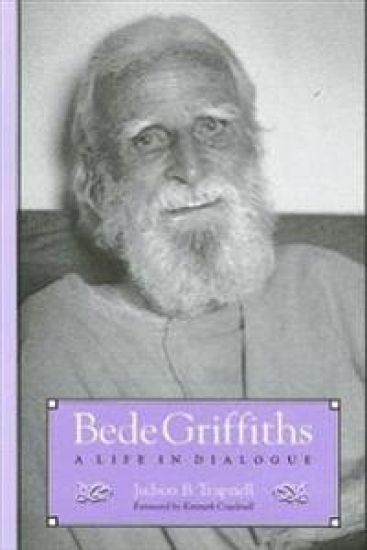
Bede Griffiths, O.S.B.Cam. (1906–1993) was a pioneer in the meeting of faiths and of cultures in the second half of the twentieth century. This captivating study of his pioneering work in intercultural and interreligious dialogue draws from meticulous research of Griffiths's writings and his sources, as well as numerous personal interviews with the man himself.Born in England, Griffiths immersed himself in Western culture through an Oxford education and twenty-five years in Benedictine monasteries. Yet early mystical experiences in nature and the study of Asian scriptures sparked a life-long search for what he called "the other half of my soul"—a search that would in 1958 take him to India. After participating in two Christian monastic experiments, he accepted leadership of Saccidananda Ashram, a community dedicated to pursuing the recently renewed Christian contemplative ideal in an India context. Here he boldly explored interreligious dialogue and inculturation, two projects of the Second Vatican Council. Envisioning "the marriage of East and West" in his writings and incarnating that marriage in spirituality, Griffiths became a prophet of our age, publishing more than a dozen books and scores of articles. In latter years, Griffiths attracted large audiences and received recognition from fellow pioneers in the dialogue of faiths, including the Dalai Lama.
Title: Tong Church, 1892. An account of its restoration and re-opening. Signed G. G., i.e. George Griffiths?]Publisher: British Library, Historical Print EditionsThe British Library is the national library of the United Kingdom. It is one of the world's largest research libraries holding over 150 million items in all known languages and formats: books, journals, newspapers, sound recordings, patents, maps, stamps, prints and much more. Its collections include around 14 million books, along with substantial additional collections of manuscripts and historical items dating back as far as 300 BC.The HISTORY OF BRITAIN & IRELAND collection includes books from the British Library digitised by Microsoft. As well as historical works, this collection includes geographies, travelogues, and titles covering periods of competition and cooperation among the people of Great Britain and Ireland. Works also explore the countries' relations with France, Germany, the Low Countries, Denmark, and Scandinavia. ++++The below data was compiled from various identification fields in the bibliographic record of this title. This data is provided as an additional tool in helping to insure edition identification: ++++ British Library Griffiths, George; 1892] 8 p.; 4 . 10360.g.17.
Title: Cursory Observations on the Churches of Bristol. By an occasional visitor i.e. Samuel Griffiths Tovey]. The second edition, revised and considerably augmented.Publisher: British Library, Historical Print EditionsThe British Library is the national library of the United Kingdom. It is one of the world's largest research libraries holding over 150 million items in all known languages and formats: books, journals, newspapers, sound recordings, patents, maps, stamps, prints and much more. Its collections include around 14 million books, along with substantial additional collections of manuscripts and historical items dating back as far as 300 BC.The HISTORY OF BRITAIN & IRELAND collection includes books from the British Library digitised by Microsoft. As well as historical works, this collection includes geographies, travelogues, and titles covering periods of competition and cooperation among the people of Great Britain and Ireland. Works also explore the countries' relations with France, Germany, the Low Countries, Denmark, and Scandinavia. ++++The below data was compiled from various identification fields in the bibliographic record of this title. This data is provided as an additional tool in helping to insure edition identification: ++++ British Library Anonymous; Tovey, Samuel Griffiths; 1843. viii. 248 p.; 8 . 10368.ccc.23.
The Golden String is an autobiography written by Bede Griffiths, a Benedictine monk of Prinknash Abbey. The book chronicles Griffiths' life from his childhood in England to his spiritual awakening and journey to India, where he spent the majority of his adult life. Griffiths shares his experiences of discovering Hinduism and the teachings of various Indian spiritual leaders, including Sri Ramakrishna and Sri Aurobindo. He also discusses his decision to become a Christian and his eventual ordination as a priest in the Catholic Church. Throughout the book, Griffiths reflects on his spiritual growth and the challenges he faced in integrating Eastern and Western spiritual traditions. He also shares his insights on the nature of God, the purpose of human existence, and the role of religion in the modern world. The Golden String offers a unique perspective on the intersection of Christianity and Eastern spirituality, as well as the personal journey of a man who dedicated his life to exploring the depths of the human spirit.This scarce antiquarian book is a facsimile reprint of the old original and may contain some imperfections such as library marks and notations. Because we believe this work is culturally important, we have made it available as part of our commitment for protecting, preserving, and promoting the world's literature in affordable, high quality, modern editions, that are true to their original work.











![Tong Church, 1892. [an Account of Its Restoration and Re-Opening. Signed G. G., i.e. George Griffiths?]](/covers/9781241325800.jpg)
![Cursory Observations on the Churches of Bristol. by an Occasional Visitor [I.E. Samuel Griffiths Tovey]. the Second Edition, Revised and Considerably Augmented.](/covers/9781241326470.jpg)