Kirjojen hintavertailu. Mukana 11 342 296 kirjaa ja 12 kauppaa.

Kirjahaku

Etsi kirjoja tekijän nimen, kirjan nimen tai ISBN:n perusteella.

1000 tulosta hakusanalla Gustave Haller

Wissenschaftliche Veröffentlichungen aus den Siemens-Werken

Wissenschaftliche Veröffentlichungen aus den Siemens-Werken

Rudolf Bingel; Heinrich Von Buol; Rob. Fellinger; Fritz Feßel; H. Paul Fink; Hans Gerdien; Curt Hailer; Friedrich Heintzenberg; Gustav Hertz; Hans Kerschbaum; Emil Otto Kieffer; Carl Knot; Carl Köttgen; Aladar Koos; Karl Küpfmüller; Fritz Löschen; Hans Ferdinant Mayer; Na Mi

Springer-Verlag Berlin and Heidelberg GmbH Co. K
1938
nidottu
Dieser Buchtitel ist Teil des Digitalisierungsprojekts Springer Book Archives mit Publikationen, die seit den Anfängen des Verlags von 1842 erschienen sind. Der Verlag stellt mit diesem Archiv Quellen für die historische wie auch die disziplingeschichtliche Forschung zur Verfügung, die jeweils im historischen Kontext betrachtet werden müssen. Dieser Titel erschien in der Zeit vor 1945 und wird daher in seiner zeittypischen politisch-ideologischen Ausrichtung vom Verlag nicht beworben.
Protestkritik

Protestkritik

Mikkel Bolt; Tania Ørum; Michael Hardt; Antonio Negri; Kirsten Hyldgaard; Kristian Thorup; Katrin Hjort; Gry Worre Halberg; Sisters Hope; Gustav Johannes Hoder; Rasmus Bro Clemmensen; Brian Benjamin Hansen

-
2020
sidottu
PROTESTKRITIK samler en række kritiske, analytiske, eksperimentelle og teoretiske tekster i lyset og den lange historiske skygge af oprøret i '68. Gennem elleve forskellige bidrag formuleres nye historiske analyser og aktuelle protestbevægelser såsom klimabevægelsen, #MeToo, De Gule Veste, Nuit Debout, Et andet universitet og Occupy analyseres.Bogen er en flertydig og fælles refleksion over protestens væsen, et møde mellem generationer, erfaringer og fagligheder, og en anledning til at reflektere over, hvordan vi kan bringe arven fra '68 med ind i fremtiden.MED BIDRAG FRA: Mikkel Bolt, Kirsten Hyldgaard, Michael Hardt & Antonio Negri, Tania Ørum, Brian Benjamin Hansen, Gry Worre Hallberg & Sisters Hope, Arkivaristerne, Katrin Hjort, Kristian Thorup, Rasmus Bro Clemmensen og Gustav Johannes Hoder.
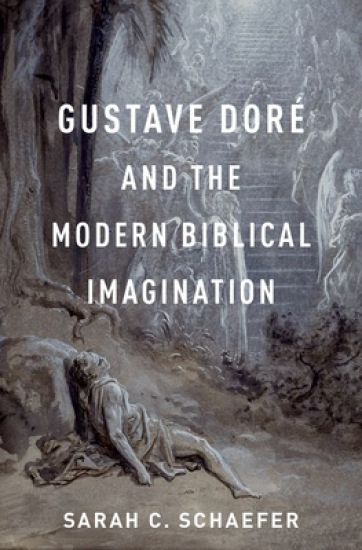
Gustave Doré and the Modern Biblical Imagination

Gustave Doré and the Modern Biblical Imagination

Sarah C. Schaefer

Oxford University Press Inc
2021
sidottu
Gustave Doré and the Modern Biblical Imagination explores the role of biblical imagery in modernity through the lens of Gustave Doré (1832-83), whose work is among the most reproduced and adapted scriptural imagery in the history of Judeo-Christianity. First published in France in late 1865, Doré's Bible illustrations received widespread critical acclaim among both religious and lay audiences, and the next several decades saw unprecedented dissemination of the images on an international scale. In 1868, the Doré Gallery opened in London, featuring monumental religious paintings that drew 2.5 million visitors over the course of a quarter-century; when the gallery's holdings travelled to the United States in 1892, exhibitions at venues like the Art Institute of Chicago drew record crowds. The United States saw the most creative appropriations of Doré's images among a plethora of media, from prayer cards and magic lantern slides to massive stained-glass windows and the spectacular epic films of Cecile B. DeMille. This book repositions biblical imagery at the center of modernity, an era that has often been defined through a process of secularization, and argues that Doré's biblical imagery negotiated the challenges of visualizing the Bible for modern audiences in both sacred and secular contexts. A set of texts whose veracity and authority were under unprecedented scrutiny in this period, the Bible was at the center of a range of historical, theological, and cultural debates. Gustave Doré is at the nexus of these narratives, as his work established the most pervasive visual language for biblical imagery in the past two and a half centuries, and constitutes the means by which the Bible has persistently been translated visually.
Letters of Gustave Courbet

Letters of Gustave Courbet

Gustave Courbet

University of Chicago Press
1992
sidottu
The French Realist painter Gustave Courbet (1819-77), a pivotal figure in the emergence of modern painting, remains an artist whose interests, attitudes, and friendships are little understood. A voluminous correspondent, Courbet himself, through his letters, offers a tantalizing avenue toward a keener assessment of his character and accomplishments. In her critical edition of over six hundred of the artist's letters, Petra ten-Doesschate Chu presents just such a look at the inner life of the artist; her unparalleled feat of gathering together all of Courbet's known letters, many heretofore unpublished and untranslated, is sure to change our evaluation of Courbet's creativity and of his place in nineteenth-century French life. Beginning when Courbet left his provincial home at eighteen and ending eight days before his death in exile in Switzerland, this correspondence enables readers to follow the artist's development from youth to mature artist of international repute. Addressed to correspondents such as the poet Charles Baudelaire, the painter Claude Monet, the writers Champfleury, Victor Hugo, and Théeophile Gautier, the political theorist Pierre-Joseph Proudhon, and the politician Jules Simon, the letters offer numerous insights into Courbet's life and art as well as the cultural and political activity of his day. In fascinating detail, they present the artist's relation to the contemporary media, his deliberate choice of subject matter for Salon paintings, his preoccupation with photography, and his participation in the Commune. Besides collecting, translating, and annotating the letters, Chu provides an introduction, a chronology, biographies of persons appearing frequently in the letters, and a list of paintings and sculptures mentioned in the letters. Her work is an essential resource of immediate use to historians of art and culture, political and social historians, and readers of biography. Petra ten-Doesschate Chu is professor and head of the Department of Art and Music at Seton Hall University.
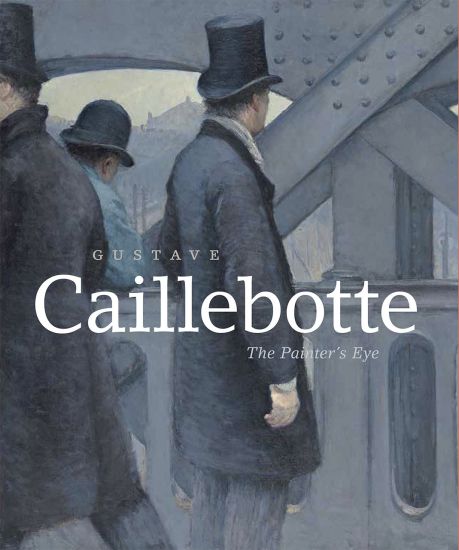
Gustave Caillebotte

Gustave Caillebotte

Mary Morton; George Shackelford

University of Chicago Press
2015
sidottu
Though largely out of the public eye for more than a century, Gustave Caillebotte (1848 - 94) has come to be recognized as one of the most dynamic and original artists of the impressionist movement in Paris. His paintings are favorites of museum-goers, and recent restoration of his work has revealed more color, texture, and detail than was visible before while heightening interest in all of Caillebotte's artwork. This lush companion volume to the National Gallery of Art's major new exhibition, coorganized with the Kimbell Art Museum, explores the power and technical brilliance of his oeuvre. The book features fifty of Caillebotte's strongest paintings, including post-conservation images of Paris Street, Rainy Day, along with The Floorscrapers and Pont de l'Europe, all of which date from a particularly fertile period between 1875 and 1882. The artist was criticized at the time for being too realistic and not impressionistic enough, but he was a pioneer in adopting the angled perspective of a modern camera to compose his scenes. Caillebotte's skill and originality are evident even in the book's reproductions, and essays offer critical insights into his inspiration and subjects. This sumptuously illustrated publication makes clear why Caillebotte is among the most intriguing artists of nineteenth-century France, and it deepens our understanding of the history of impressionism.
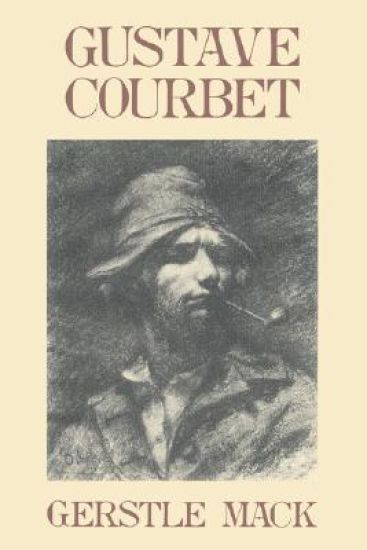
Gustave Courbet

Gustave Courbet

Gerstle Mack

Da Capo Press Inc
1989
pokkari
No biographer could ask for a more colourful or difficult subject than the painter and revolutionary Gustave Courbet. One of the fathers of Realism, a style he created with his huge canvases of his birthplace in Ornans ( After Dinner at Ornans, 1949 Funeral at Ornans, 1850, and The Stonebreakers, 1850), Courbet chose his subjects from ordinary life and portrayed them with the same monumental dignity as the great men of history. A man with big appetites for life, women, and politics, he frequently found himself at odds with French authorities, especially during the period of the Commune when he and his friends pulled down the Vendome Column. Impressionism and Modernism would be unthinkable without his fierce opposition to the academies of art. This biography by one of the most reliable students of French art paints a large and fascinating canvas, which Courbet dominates but never overwhelms.