

Kirjahaku
Etsi kirjoja tekijän nimen, kirjan nimen tai ISBN:n perusteella.
1000 tulosta hakusanalla H Walniel



H är en roman om minnet. Om förälskelse och en dörr som står öppen. Vågar jag?H är hjärnforskare med hippocampus, den del av hjärnan som organiserar våra minnen, som specialområde. Vetenskapen har gått snabbt framåt och H befinner sig mitt uppe i denna våg, med en prestigetjänst som professor och en rad hängivna studenter. Deras mål är att förstå minnets funktion och dess betydelse för hur vi fattar beslut. Men H är också uppe på en annan våg. Han håller på att bli förälskad i D – som egentligen inte verkar vara hans typ. H utspelar sig under ett dygn i H:s liv när frågorna om vem han är och vad han vill med sitt liv ställs på sin spets. H berättar själv sin historia, men inte på något konventionellt sätt …Åsa Nilsonne har skrivit en djupt originell och underhållande roman som väcker frågor om det mest grundläggande. Vad är ett ”jag” och var sitter det?

Interesant simos cuentos filos ficos cortos que tratan metaf ricamente diferentes aristas de la vida. Literatura profunda donde se trabajan temas serios a trav s del humor negro. Encontrar s romance, filosof a, dudas, dolor, rencor, ilusiones, frustraci n, alienaci n, soledad, fuerza, debilidades... todas las categor as emocionales que se esconden en el cerebro humano.

H
BoD - Books on Demand
2026
sidottu

H
OmniScriptum
2026
pokkari
H. G. Wells
Rowman Littlefield Publishers
1980
sidottu

H+ (Plus) A New Religion? provides a framework for achievement through daily acts of help or contribution.

This biography, written by the Commander-in-Chief Land Command, is about Falklands War hero H. Jones, whose death in the battle for Darwin had huge significance and was one of the turning points for the whole campaign.

Discover the number one bestselling phenomenon that is a powerful and profound mediation on grief expressed through the trials of training a goshawk. As a child, Helen Macdonald was determined to become a falconer, learning the arcane terminology and reading all the classic books.

But to Captain Richard Chesnaye she brings back memories - memories of the First World War when he and the old monitor went through the Gallipoli campaign together. But as the war enters a new phase Chesnaye senses the possibility of a fresh, significant role - for him and the Saracen.


Joss can't believe she's become such good friends with Hannah - and they've never met! When Joss wins tickets to the Raging Bandits concert, she invites Hannah to go with her. Joss is in for a few surprises when Hannah arrives to spend the weekend. She discovers she doesn't know her pen pal as well as she thought.
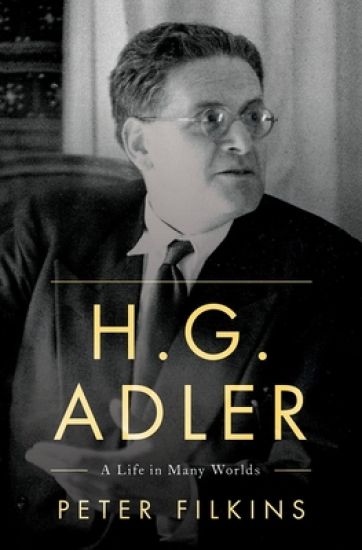
The biography of H.G. Adler (1910-88) is the story of a survivor of Theresienstadt, Auschwitz, and two other concentration camps who not only lived through the greatest cataclysm of the 20th century, but someone who also devoted his literary and scholarly career to telling the story of those who perished in over two dozen books of fiction, poetry, history, sociology, and religion. And yet for much of his life he remained almost entirely unknown. A writer's writer, a scholar of seminal, pioneering works on the Holocaust, a renowned radio essayist in postwar Germany, a last representative of the Prague Circle of literature headed by Kafka, a key contributor to the prosecution in the trial of Adolf Eichmann, Adler was a man of his time whose times lived through him. His is the story of many others, but also one that is singularly his own. And at its heart lies a profound story of love and perseverance amid the loss of his first wife, Gertrud Klepetar, who accompanied her mother to the gas chamber in Auschwitz, and the courtship and extended correspondence with Bettina Gross, a Prague artist who escaped to the Britain, only to later learn that her mother had also been in Theresienstadt with Adler before her eventual death in Auschwitz. His delivery of a lecture in Theresienstadt commemorating Kafka's sixtieth birthday, and with Kafka's favorite sister present; the nurturing of a younger generation of artists and intellectuals, including the Israeli artist Jehuda Bacon and the Serbian novelist Ivan Ivanji; the preservation of Viktor Ullmann's compositions and his opera The Emperor of Atlantis, only to see them premiered decades later to world acclaim; and the penury of postwar life while churning out the novels, poetry, and scholarship that would make his reputation - all of these are part of a life survived in the moment, but dedicated to the future, and that of a man committed to helping human dignity survive in his time and that to come.
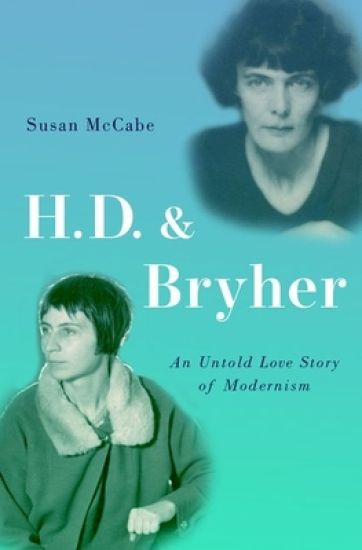
H.D. & Bryher: An Untold Love Story of Modernism takes on the daring task of examining the connection between two queer women, one a poet and the other a historical novelist, living from the late 19th century through the 20th century. When they met in 1918, H.D. was a modernist poet, married to a shell-shocked adulterous poet, and pregnant by another man. She fell in love with Bryher, who was entrapped by her wealthy secretive family. Their bond grew over Greek poetry, geography, ancient history and literature, the telegraph, and telepathy. They felt their love-and their true identities existed invisibly- a giddy, and disturbing element to their relationship; they lived off and on in distant geographies, though in near continual contact. This book exposes why literary history has occluded this love story of the world wars and poetic modernism.

H.D. and the Public Sphere of Modernist Women Writers 1913-1946
Georgina Taylor
Clarendon Press
2001
sidottu
This book locates H.D. within an Anglo-American 'public sphere' of women writers, a discursive arena in which individuals come together in debate and discussion. The theoretical framework used is that outlined in Jürgen Habermas's The Structural Transformation of the Public Sphere, modified in order to consider this group as a 'counter-public sphere', a non-dominant group whose interests were non-identical to those of the dominant public sphere. From 1913 a network of little magazines enabled women writers to come together in unprecedented numbers in public exchange. The ethos of this public sphere was a challenge to all convention, including challenges to the perceived sentimentality of earlier women's writing; H.D.'s Imagism was crucial in this. Initially this public sphere avoided engagement with the wider socio-political world, focusing instead on psychic reality. Writing became increasingly experimental in a new wave of avant-garde activity, fuelling heated debate in the magazines around the nature of 'literature'. By the mid 1920s this particular literary sphere had lost direction, but continued to experiment and seek new ways forward. New discussions around cinematic forms (in which H.D. participated) kept critical discussion very much alive. In the 1930s the work emerging from this network was increasingly politically aware. This was a period of highly disturbed writing such as H.D.'s Nights and Djuna Barnes's Nightwood, internalizations of the sadomasochism enacted on the world stage. After the war, this public sphere declined into personal exchanges in letters and private circulation of manuscripts.
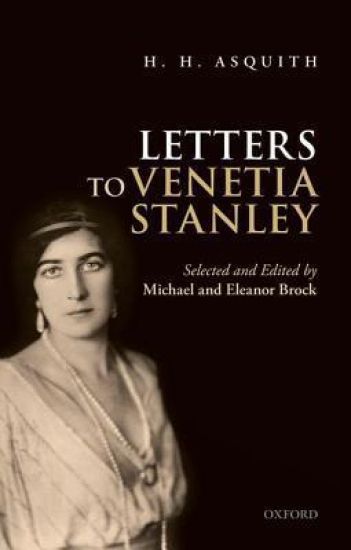
H. H. Asquith Letters to Venetia Stanley
Oxford University Press
2014
nidottu
H. H. Asquith fell in love with Venetia Stanley in the spring of 1912. Over the next three years he wrote to her whenever he could not see her: sometimes three times a day, sometimes during a debate in the house of Commons, on occasion even during a Cabinet meeting. He shared many political and military secrets with her and wrote freely of his colleagues in government, who included LLoyd George, Churchill, and Kitchener. The correspondence ended abruptly in May 1915 when Venetia told Asquith of her engagement to a junior Cabinet Minister, Edwin Montagu. The Prime Minister, who was at a crisis in his political fortunes, confessed himself utterly heart-broken. This reissue of Asquith's letters to Venetia Stanley includes explanatory notes from Michael and Eleanor Brock, two of the leading authorities in the field. This volume documents a romance, and yet is vital reading for anyone interested in the history of World War I or in British politics of the time.

This book is based on an account, rendered in diary form and subsequently typed, of a round trip to Gallipoli made by Hospital Ship REWA between June 13th 1915 and Sept 1st 1915 by Temporary Surgeon Reginald Eccles Smith, MB, FRCS Edin.