Kirjahaku
Etsi kirjoja tekijän nimen, kirjan nimen tai ISBN:n perusteella.
1000 tulosta hakusanalla HAROLD FREDERIC


The Young Emperor, William II of Germany; A Study in Character Development on a Throne
Harold Frederic
Trieste Publishing
2018
nidottu
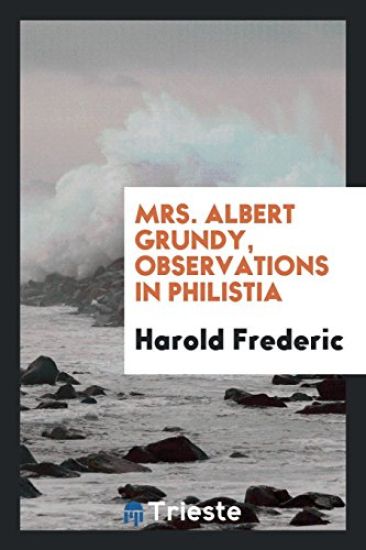
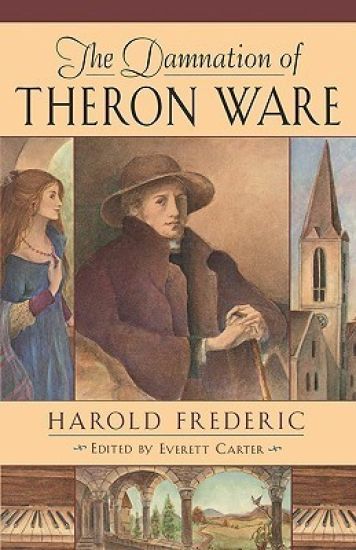
This Faustian tale of the spiritual disintegration of a young minister, written in the 1890s, deals subtly and powerfully with the impact of science on innocence and the collective despair that marked the transition into the modern age. In its realism, The Damnation of Theron Ware foreshadows Howells; in its conscious imagery it prefigures Norris, Crane, Henry James, and the "symbolic realism" of the twentieth century. Its author, Harold Frederic, internationally famous as London correspondent for the New York Times, wrote the novel two years before his death.
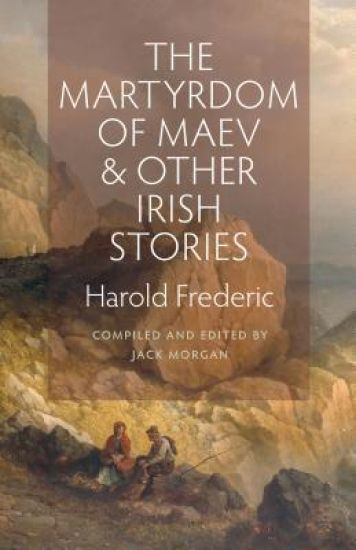
The Martyrdom of Maev and Other Irish Stories
Harold Frederic
The Catholic University of America Press
2015
nidottu
Harold Frederic was for a long time known primarily as a writer of New York regional fiction and historical novels. His most outstanding and influential novel, The Damnation of Theron Ware (1896) represents the first extended narrative in US literature of Irish-Catholic entry into American life. In 1995, a year short of that novel’s centenary, Joyce Carol Oates wrote: “WHAT a wonderful novel is The Damnation of Theron Ware.” Though raised in a German-American, Methodist environment in the Mohawk Valley of New York state, Frederic became intrigued with Ireland’s people, politics, and history when post-Famine Irish began arriving in his hometown of Utica in the 1860s and 1870s.The Martyrdom of Mave and other Irish Stories gathers for the first time all of the Irish work Harold Frederic completed in his lifetime. He planned more, but died of a stroke in his early forties, in England, where he was employed as The New York Times London Correspondent. He had earlier written his publisher that he had been “toiling for years” on the archeology of the Iveagha (present Mizen) Peninsula in Cork, and that the projected book of historical fiction underway would be unique. The Martyrdom of Maev and Other Irish Stories brings together the four sixteenth-century stories that Frederic finished and published in magazines in 1895–96, and two of his stories set in the west of Ireland of the second-half of the nineteenth century.Taken together the stories track the ramifications of the Elizabethan invasions as they extend to the famine, evictions, and humiliations still plaguing the country just before the rise of Parnell. The dramatic title story involves young romance caught in the political unrest that begot the Land-League and portrays as well the adamant, menacing, sexual prohibitions prevailing in the rural Ireland of the late nineteenth century. Others portray life within the remote Gaelic clans of late medieval Ireland. All the stories reveal Frederic’s brilliant prose talent—“The Path of Murtogh,” for example, a starkly primitive revenge tale, is as dark and shocking as anything by Edgar Allen Poe.For those who like Harold Frederic’s fiction, or who love dramatic tales set in Ireland, this collection makes for compelling reading.
Harold Frederic's "The Damnation of Theron Ware" explores the spiritual and intellectual crisis of a young Methodist minister grappling with a rapidly changing world. Thrust into a new parish, Theron Ware encounters ideas and individuals that challenge his deeply held beliefs, leading to a profound loss of faith. Set against a backdrop of social change and religious conflict, the novel examines the complexities of pastoral life and the allure of intellectual and personal freedom. This meticulously prepared edition offers readers a window into a pivotal moment in American religious history, capturing the timeless struggle between tradition and modernity. "The Damnation of Theron Ware" remains a powerful and thought-provoking exploration of faith, doubt, and the search for meaning in a world undergoing dramatic transformation.This work has been selected by scholars as being culturally important, and is part of the knowledge base of civilization as we know it.This work is in the public domain in the United States of America, and possibly other nations. Within the United States, you may freely copy and distribute this work, as no entity (individual or corporate) has a copyright on the body of the work.Scholars believe, and we concur, that this work is important enough to be preserved, reproduced, and made generally available to the public. We appreciate your support of the preservation process, and thank you for being an important part of keeping this knowledge alive and relevant.