Kirjahaku
Etsi kirjoja tekijän nimen, kirjan nimen tai ISBN:n perusteella.
1000 tulosta hakusanalla HENRY ADAMS


The Education of Henry Adams follows the life of presidential descendent Henry Adams. However, instead of serving just as an account of Adams’ deeds, The Education of Henry Adams is a series of observations and introspections Adams makes on social changes, scientific advancements, personal relationships, professional success, travel, religion, war, and education. Born into the privilege of wealth and the renowned success of his ancestors, President John Adams and President John Quincy Adams, Adams received an education from notable schools, such as Harvard. He continued his prestigious education in Berlin, studying law and the German language. Despite his formal education, Adams felt unprepared to face the changing dynamics of his country, including shifts in social, religious, political, and scientific beliefs. For this reason, Adams advocates for “self-education” through experience, friendships, and reading. In his autobiography, Adams endorses studying American history and science in school, and encourages the process of self-educating after one’s formal education. With a set of strong political and religious beliefs, Adams invokes a substantial impression with his perspectives on the on-going transformation of the United States of America. Henry Adams’ autobiography, The Education of Henry Adams, has earned remarkable acclaim, including receiving a Pulitzer Prize. As a man who had direct access to many American political offices, including the presidential cabinet, the senate, and the congress, Adams had an intimate view of the innerworkings of American politics, and lived through social changes such as the Civil War, the abolition of slavery, scientific advancements, shifts in religious views, and the first World War. Though he felt his formal education left him unprepared for such happenings, Adams encourages readers to learn from their experiences and relationships. The Education of Henry Adams offers invaluable insight on the rapid changes in society, and reminds readers that one’s education is never finished. Now with a new, eye-catching cover design and reprinted in a modern font, The Education of Henry Adams by Henry Adams is more accessible than ever and able to offer modern-day readers insight on historical events and philosophy of learning that will always be relevant.
The Education of Henry Adams follows the life of presidential descendent Henry Adams. However, instead of serving just as an account of Adams’ deeds, The Education of Henry Adams is a series of observations and introspections Adams makes on social changes, scientific advancements, personal relationships, professional success, travel, religion, war, and education. Born into the privilege of wealth and the renowned success of his ancestors, President John Adams and President John Quincy Adams, Adams received an education from notable schools, such as Harvard. He continued his prestigious education in Berlin, studying law and the German language. Despite his formal education, Adams felt unprepared to face the changing dynamics of his country, including shifts in social, religious, political, and scientific beliefs. For this reason, Adams advocates for “self-education” through experience, friendships, and reading. In his autobiography, Adams endorses studying American history and science in school, and encourages the process of self-educating after one’s formal education. With a set of strong political and religious beliefs, Adams invokes a substantial impression with his perspectives on the on-going transformation of the United States of America. Henry Adams’ autobiography, The Education of Henry Adams, has earned remarkable acclaim, including receiving a Pulitzer Prize. As a man who had direct access to many American political offices, including the presidential cabinet, the senate, and the congress, Adams had an intimate view of the innerworkings of American politics, and lived through social changes such as the Civil War, the abolition of slavery, scientific advancements, shifts in religious views, and the first World War. Though he felt his formal education left him unprepared for such happenings, Adams encourages readers to learn from their experiences and relationships. The Education of Henry Adams offers invaluable insight on the rapid changes in society, and reminds readers that one’s education is never finished. Now with a new, eye-catching cover design and reprinted in a modern font, The Education of Henry Adams by Henry Adams is more accessible than ever and able to offer modern-day readers insight on historical events and philosophy of learning that will always be relevant.
The Education is much more a record of Adams's introspection than of his deeds. It is an extended meditation on the social, technological, political, and intellectual changes that occurred over Adams's lifetime. Adams concluded that his traditional education failed to help him come to terms with these rapid changes, hence, his need for self-education. The organizing thread of the book is how the "proper" schooling and other aspects of his youth was time wasted, thus, his search for self-education through experiences, friendships, and reading.
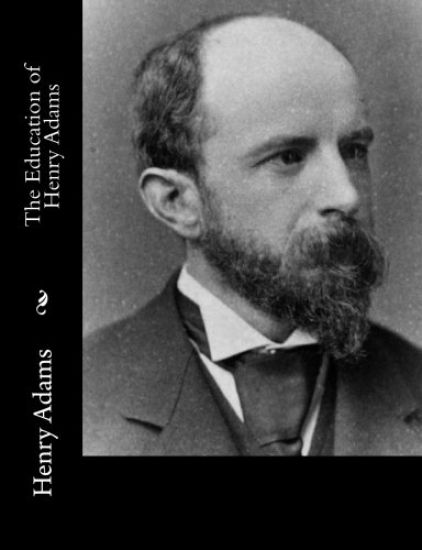

The Education of Henry Adams (1918) by: Henry Adams ( Autobiografy ) This Book Won the Pulitzer Prize in 1919.
Henry Adams
Createspace Independent Publishing Platform
2016
nidottu
The Education of Henry Adams is an autobiography that records the struggle of Bostonian Henry Adams (1838-1918), in his later years, to come to terms with the dawning 20th century, so different from the world of his youth. It is also a sharp critique of 19th-century educational theory and practice. In 1907, Adams began privately circulating copies of a limited edition printed at his own expense. Commercial publication of the book had to await its author's 1918 death, whereupon it won the 1919 Pulitzer Prize. The Modern Library placed it first in a list of the top 100 English-language nonfiction books of the 20th century.
The Education of Henry Adams (1918) by: Henry Adams ( This book won the Pulitzer Prize in 1919. )
Henry Adams
Createspace Independent Publishing Platform
2017
nidottu
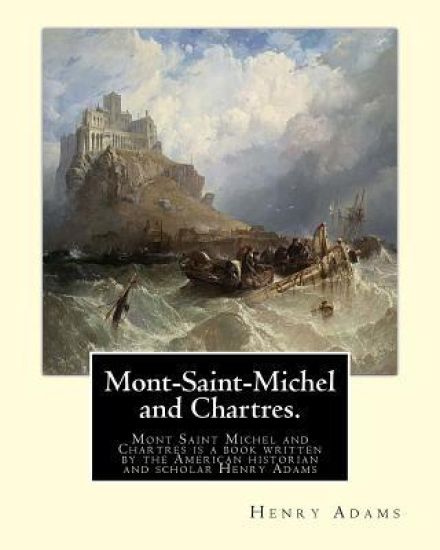
Mont-Saint-Michel and Chartres. By: Henry Adams: Mont Saint Michel and Chartres is a book written by the American historian and scholar Henry Adams (1
Henry Adams
Createspace Independent Publishing Platform
2017
nidottu
Mont Saint Michel and Chartres is a book written by the American historian and scholar Henry Adams (1838-1918). Adams wrote this book, a meditative reflection on medieval culture, well after his historical masterpiece, The History of the United States of America (1801-1817). Whereas the latter is a serious academic work of history, Mont Saint Michel and Chartres is far more whimsical, a playful meditative reflection on medieval culture. It was published privately in 1904, originally intended simply for his nieces; in 1913, it was made more widely available when published with the support of the American Institute of Architects. 1] Despite having a far less serious intent than his earlier historical writings, Mont Saint Michel and Chartres has garnered high praise: for example, Maurice le Briton said, "Mont-Saint-Michel and Chartres is undoubtedly Adams's greatest work; though not apparently related to his earlier writings, this inspired work of poetry is the crowning achievement of his severe and somber historical oeuvre." 2] A few years after Adams published Mont Saint Michel and Chartres, he published his most famous work, the Education of Henry Adams in 1907. Raymond Carney has said of this pair of works: "Taken together they may be read as Adams' spiritual autobiography-two monumental volumes in which he attempts to bring together in a vast synthesis all of his knowledge of politics, economics, psychology, science, philosophy, art, and literature in order to attempt to understand the individual's place in history and society."....... Henry Brooks Adams (February 16, 1838 - March 27, 1918) was an American historian and member of the Adams political family, being descended from two U.S. Presidents. As a young Harvard graduate, he was secretary to his father, Charles Francis Adams, Abraham Lincoln's ambassador in London, a posting that had much influence on the younger man, both through experience of wartime diplomacy and absorption in English culture, especially the works of John Stuart Mill. After the American Civil War, he became a noted political journalist who entertained America's foremost intellectuals at his homes in Washington and Boston. In his lifetime, he was best known for his History of the United States During the Administrations of Thomas Jefferson and James Madison, a 9-volume work, praised for its literary style. His posthumously published memoirs, The Education of Henry Adams, won the Pulitzer Prize and went on to be named by the Modern Library as the top English-language nonfiction book of the 20th century...........
The life of George Cabot Lodge By: Henry Adams: George Cabot "Bay" Lodge (October 10, 1873 - August 21, 1909) was an American poet and politician of t
Henry Adams
Createspace Independent Publishing Platform
2017
nidottu
Originally published in 1907, The Education of Henry Adams is an autobiography that records the struggle of Bostonian Henry Adams, in his later years, to come to terms with the dawning 20th century, so different from the world of his youth.

His great grandfather and his grandfather had been presidents of the United States, and to a small boy this seemed a matter of course in his family. But Henry Adams, belonging to a later generation, coming to maturity at the time of the Civil War, found himself in an age uncongenial to the leadership of such men as his ancestors. In the changing world of the late nineteenth century and early twentieth century, Adams found his rightful place as an observer and critic rather than a participant in public life. But no time and no country ever had a keener mind to take note of the comic and tragic qualities embedded in the political, economic, and human drama upon which he gazed. And his writings appeal timelessly in their incisive wit, their warm charm, and in the way they speak to us of a very individual personality. When Stevenson's book first appeared, the New York Times called it 'One of the noteable biographies of recent years,' and it won the Bancroft Prize that year. It remains an engrossing portrait of a remarkable man.It is good to take note of the sage he became in his late, great books: Mont-St. Michel and Chartres and The Education of Henry Adams. This biography explains how Henry Adams became the man both admired and feared in his later years. He was first a bright, unformed young man who was a diplomatic assistant to his father; then an ambitious journalist, a writer of several 'sensational' newspaper and magazine articles. Next he became a provocative and innovative teacher, and a historian unequalled in his presentation of the Jeffersonian period. Until his wife's tragic death, he was a willing actor on the social scene of his beloved Washington, D.C. Throughout, he remained a friend and instigator of the careers of friends in artistic and scientific fields. His writings speak to us still and seem contemporary in their tone as well as their view of cycles of culture and their warnings of decline and achievement.

The Testimony of Henry Adams, Freedman: Hope, Terror, and Exodus in the Post-Civil War South
Henry Adams
Library of America
2026
sidottu
A FORGOTTEN EPISODE FROM THE ERA OF RECONSTRUCTION: An extraordinary American hero travels to the nation's capital to tell an unforgettable story of violence, resistance, and social action in the post-Civil War South. For Black History Month, the never-before-published testimony with an introduction by Pulitzer Prize-winning historian Steven Hahn. In March 1880 a committee of the U.S. Senate investigating the ongoing "Negro Exodus" from the South heard two days of testimony from an extraordinary American. A freedman, former soldier, laborer, faith healer, political activist, and sometime undercover government operative, Henry Adams was one of the leaders of the exodus movement in Louisiana. In his exchanges with the senators and his written testimony, Adams chronicles: the nightmarish violence and insidious economic exploitation inflicted upon the freedpeople by "the very men who held us slaves"the defiant Black resistance of voters determined to go to the polls in the face of systemic terrorismhis work with "the committee," a secret group of workingmen who sought to learn "the true condition of our race" throughout the South.The Testimony of Henry Adams, Freedman presents the entirety of Adams's questioning by the committee and the five documents he submitted for the record, including the enumeration of hundreds of cases of atrocities perpetrated in the cause of white supremacy. This fascinating, never-before-available text provides an illuminating perspective on Reconstruction as it was experienced "from below," far removed from Washington and the major cities of the South. Adams's remarkable testimony is a tribute to Black determination and self-reliance that looks forward to the Great Migration of the twentieth century. It is also a terrifying and timely reminder of the fragility of democracy in the face of unrestrained lawlessness.