Göran Larsson; Simon Sorgenfrei; Tanja Viklund; Micael Björk; Per Brinkemo; Thomas Bull; Per-Olof Hellqvist; Jonas Lindström; Peter Lindström; Jenny Madestam; Christer Mattsson; Susanne Olsson; Niclas Persgården; Tove Pettersson; Johan Rosquist; Amir Rostami; Hans-Olof Sandén; Anders Strindberg; David Thurfjell; Malin Wieslander; Malin Eklund Wimelius; Karin Åström
På några decennier har Sverige gått från att vara etniskt och religiöst relativt homogent till att bli ett av Europas mest mångreligiösa länder. Religion, migration och polisiärt arbete beskriver några av de utmaningar och möjligheter polisen kan ställas inför i ett pluralistiskt samhälle. I boken varvas teoretiska perspektiv med konkreta exempel på polisiärt arbete relaterat till religion och migration. Bokens kapitel är skrivna av forskare och praktiker verksamma inom olika områden, och behandlar en lång rad ämnen: religionsfrihetslagstiftning, segregation, hatbrott, globala konflikter med lokala konsekvenser, klanstrukturer, hedersvåld, våldsbejakande extremism, bemötandestrategier, arbete med fördomar inom poliskåren samt utmaningar som konspirationsteorier och miljörelaterade hot som kan beröra polisens arbete.Denna andra upplaga av Religion, migration och polisiärt arbete är reviderad och aktualiserad och innehåller fyra nyskrivna kapitel.

När sultanens sändebud Mehmed Said Efendi äntligen stiger i land i Stockholm sommaren 1733 hälsas han av enligt egen utsago druvklasar av åskådare, kanonsalvor och en ståtlig kortege. Resan hade tagit mer än ett halvår och hemma i Istanbul rådde politisk oro efter att den reformvänlige och tulpanälskande sultanen Ahmed III störtats. Historikern Joachim Östlund återskapar atmosfären och miljön kring Saids besök vid världens ände och levandegör detaljerna i smått och stort. Visitens officiella syfte var att säkra återbetalningen av skulder som Karl XII ådragit sig i Bender, men Said var också ivrig att inhämta kunskap om samhälleliga innovationer och odla nya bekantskaper. I en så kallad sefaretnâme en diplomatisk rapport ger Said ord åt sina förhoppningar om ett osmanskt politiskt och kulturellt närmande till Europa. Östlunds närläsning av Saids text och resa ger en unik inblick i osmanskt tänkande och smakprov på konsten att navigera i en värld bortom den egna.
This sparkling adaptation of Hans Christian Andersen's Snow Queen by popular children's author Kaye Umansky comes as a complete performance pack including great songs, dramatic incidental music, full CD backing tracks, and an expandable cast list which gives everyone a chance to shine. To present a public performance of this musical you will need a performance licence. Simply email [email protected] or phone 01484 668 148 and request a Performance Licence Application Form.
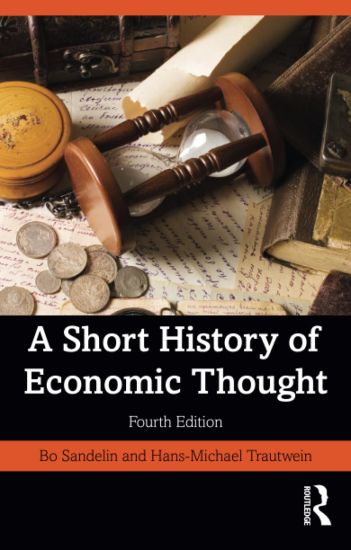
Now in its fourth edition, A Short History of Economic Thought provides an elementary overview of the history of economic thought.This new edition continues to offer its trademark of clear and concise coverage of the main schools of thought and paradigm shifts in the field of mainland Europe, as well as addressing Anglo-American trends. The book has been thoroughly updated throughout in order to reflect changes in the landscape of the field. Details on key thinkers, on early developments outside the Western world, and on the recent evolution of scholarship in quantitative and non-orthodox turns have been added or expanded, while not compromising on the book’s concise approach. A chapter is devoted to each of the major developments in the history of the discipline, concluding with a chapter in which the authors draw together some of the key strands and comment on major works and textbooks in the history of economic ideas. They also reflect on the changes in economic thinking within the general context of the philosophy of science. This text is ideal for courses where the history of economic thought constitutes only a small part or required background reading. It also continues to be an extremely useful, much-needed text for all introductory economics courses in the field.
This book offers a concise introduction to fatigue crack growth, based on practical examples. It discusses the essential concepts of fracture mechanics, fatigue crack growth under constant and variable amplitude loading and the determination of the fracture-mechanical material parameters. The book also introduces the analytical and numerical simulation of fatigue crack growth as well as crack initiation. It concludes with a detailed description of several practical case studies and some exercises. The target group includes graduate students, researchers at universities and practicing engineers.
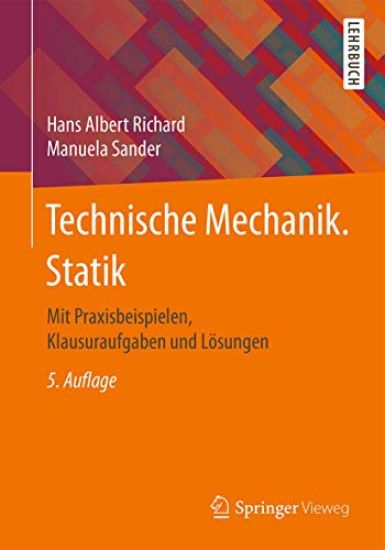
Dieses Lehr- und Übungsbuch vermittelt an Praxisbeispielen anschaulich und anwendungsnah die wesentlichen Grundlagen der Statik in kurzer und prägnanter Form. Aufgrund des didaktischen Konzepts ist es für den Einsatz in Diplom- und Bachelorstudiengängen gleichermaßen gut geeignet. Durchgerechnete Übungsbeispiele, ausgewählte Klausuraufgaben und viele selbsterklärende Abbildungen ermöglichen das erfolgreiche Selbststudium. Die aktuelle Auflage enthält jetzt farbige Abbildungen und Skizzen, um das Verständnis zu fördern. Systematisch werden äußere Kräfte rot, Reaktionskräfte blau und innere Kräfte sowie Gelenk- und Reibkräfte grün dargestellt.
Dieses Lehr- und Übungsbuch vermittelt an Praxisbeispielen und selbsterklärenden Abbildungen sehr effektiv die wesentlichen Grundlagen der Dynamik. Im Mittelpunkt stehen die Kinematik und Kinetik geradliniger, ebener und räumlicher Bewegungen sowie freie und erzwungene Schwingungen. Ausgewählte Übungsbeispiele und Klausuraufgaben ermöglichen ideal das erfolgreiche Selbststudium. In der aktuellen Auflage wurden vier neue Klausuraufgaben mit Lösungen aufgenommen.
Dieses Lehr- und Übungsbuch vermittelt durch Praxisbeispiele anschaulich und anwendungsnah die wesentlichen Grundlagen der Festigkeitslehre. Es beschäftigt sich insbesondere mit Spannungen und Verzerrungen von verformbaren Körpern. Durchgerechnete Übungsbeispiele, ausgewählte Klausuraufgaben und viele selbsterklärende Abbildungen ermöglichen das erfolgreiche Selbststudium. In der aktuellen Auflage wurde die Anzahl der Klausuraufgaben erhöht.
Will Steffen; Regina Angelina Sanderson; Peter D. Tyson; Jill Jäger; Pamela A. Matson; Berrien Moore III; Frank Oldfield; Katherine Richardson; Hans-Joachim Schellnhuber; Billie L. Turner; Robert J. Wasson
The interactions between environmental change and human societies have a long, complex history spanning many millennia, but these have changed fundamentally in the last century. Human activities are now so pervasive and profound that they are altering the Earth in ways which threaten the very life support system upon which humans depend. This book describes what is known about the Earth System and the impact of changes caused by humans. It considers the consequences of these changes with respect to the stability of the Earth System and the well-being of humankind; as well as exploring future paths towards Earth System science in support of global sustainability.
Will Steffen; Regina Angelina Sanderson; Peter D. Tyson; Jill Jäger; Pamela A. Matson; Berrien Moore III; Frank Oldfield; Katherine Richardson; Hans-Joachim Schellnhuber; Billie L. Turner; Robert J. Wasson
The interactions between environmental change and human societies have a long, complex history spanning many millennia, but these have changed fundamentally in the last century. Human activities are now so pervasive and profound that they are altering the Earth in ways which threaten the very life support system upon which humans depend. This book describes what is known about the Earth System and the impact of changes caused by humans. It considers the consequences of these changes with respect to the stability of the Earth System and the well-being of humankind; as well as exploring future paths towards Earth System science in support of global sustainability.
Virginia H. Dale; Catherine L. Kling; Judith L. Meyer; James Sanders; Holly Stallworth; Thomas Armitage; David Wangsness; Thomas Bianchi; Alan Blumberg; Walter Boynton; Daniel J. Conley; William Crumpton; Mark David; Denis Gilbert; Robert W. Howarth; Richard Lowrance; Kyle Mankin; James Opaluch; Hans Paerl; Kenneth Reckhow; Andrew N. Sharpley; Thomas W. Simpson; Clifford S. Snyder; Donelson Wright
Since 1985, scientists have been documenting a hypoxic zone in the Gulf of Mexico each year. The hypoxic zone, an area of low dissolved oxygen that cannot s- port marine life, generally manifests itself in the spring. Since marine species either die or ee the hypoxic zone, the spread of hypoxia reduces the available habitat for marine species, which are important for the ecosystem as well as commercial and recreational shing in the Gulf. Since 2001, the hypoxic zone has averaged 2 1 16,500 km during its peak summer months , an area slightly larger than the state 2 2 of Connecticut, and ranged from a low of 8,500 km to a high of 22,000 km . To address the hypoxia problem, the Mississippi River/Gulf of Mexico Watershed Nutrient Task Force (or Task Force) was formed to bring together represen- tives from federal agencies, states, and tribes to consider options for responding to hypoxia. The Task Force asked the White House Of ce of Science and Technology Policy to conduct a scienti c assessment of the causes and consequences of Gulf hypoxia through its Committee on Environment and Natural Resources (CENR).
Virginia H. Dale; Catherine L. Kling; Judith L. Meyer; James Sanders; Holly Stallworth; Thomas Armitage; David Wangsness; Thomas Bianchi; Alan Blumberg; Walter Boynton; Daniel J. Conley; William Crumpton; Mark David; Denis Gilbert; Robert W. Howarth; Richard Lowrance; Kyle Mankin; James Opaluch; Hans Paerl; Kenneth Reckhow; Andrew N. Sharpley; Thomas W. Simpson; Clifford S. Snyder; Donelson Wright
Since 1985, scientists have been documenting a hypoxic zone in the Gulf of Mexico each year. The hypoxic zone, an area of low dissolved oxygen that cannot s- port marine life, generally manifests itself in the spring. Since marine species either die or ee the hypoxic zone, the spread of hypoxia reduces the available habitat for marine species, which are important for the ecosystem as well as commercial and recreational shing in the Gulf. Since 2001, the hypoxic zone has averaged 2 1 16,500 km during its peak summer months , an area slightly larger than the state 2 2 of Connecticut, and ranged from a low of 8,500 km to a high of 22,000 km . To address the hypoxia problem, the Mississippi River/Gulf of Mexico Watershed Nutrient Task Force (or Task Force) was formed to bring together represen- tives from federal agencies, states, and tribes to consider options for responding to hypoxia. The Task Force asked the White House Of ce of Science and Technology Policy to conduct a scienti c assessment of the causes and consequences of Gulf hypoxia through its Committee on Environment and Natural Resources (CENR).
Rolf Rettig; Friedrich Golter; Eduard Mändle; Ursula Engelen-Kefer; Reinhard Blasig; Werner Glastetter; Hermann Schubnell; Gerhard Brinkmann; Werner Oehler; Rainer Thoss; O.-Ernst Starke; Wolfgang Mansfeld; Hermann Adam; Rainer Skiba; Wilhelm Krelle; Günter Sandermann; Ulrich Engelmann; Wolfgang Pieper; Klaus Mackscheidt; Guy Kirsch; Heinz Dieter Hessler; Hans G. Schachtschabel; Eugen Paul; Wim Kösters; Werner H. Hoyer; Theo Thiemeyer; Hans-Werner Winter; Werner Wilhelm Engelhardt; Günter Ebert; Horst Friedrich; Manfred Neumann
Lars Hultkrantz; Pär Österholm; Lena Andersson-Skog; Mats Bergman; Björn Carlén; Anders Forslund; Göran Hjelm; Maria Vredin; Henrik Jordahl; Hans Lind; Magnus Lindmark; Katarina Nordblom; Bo Sandelin; Oskar Nordström Skans; Ulf Söderström; David Vestin; Arvid Wallgren; Pehr Wissén
De senaste femton åren har delvis varit turbulenta för svensk ekonomi. Den ekonomiska politiken har bland annat konfronterats med en global finanskris, historiskt sett mycket omfattande invandring och en viruspandemi. Till detta kan läggas Rysslands invasion av Ukraina 2022 och dess följdverkningar, vilka ur ett ekonomiskt perspektiv bland annat har bidragit till den högsta inflationen i såväl Sverige som många andra länder på ungefär tre decennier.För att förstå hur den svenska ekonomin fungerar och analysera frågeställningar kring den är det nödvändigt att sätta sig in i förhållanden som inte behandlas i internationella läroböcker. Hur bedrivs svensk finans- och penningpolitik? Hur styrs den offentliga sektorn? Hur fungerar arbetsmarknaden, bostadsmarknaden och finansmarknaderna? Hur bedrivs konkurrens- och miljöpolitik? Vad blir effekterna av det svenska skattesystemet?Marknad och politik förändras med sin omvärld. Samtliga kapitel i denna trettonde upplaga är antingen nyskrivna eller omarbetade. Boken ger en fullödig bild av den svenska ekonomin och den ekonomiska politiken i inledningen av 2000-talets tredje decennium – detta utan att tappa de historiska kopplingarna.Marknad och politik är en modern lärobok om den svenska ekonomin avsedd för grundutbildningen i nationalekonomi vid universitet och högskolor. Boken är en naturlig byggsten i en utbildning för framtidens svenska ekonomer. Den lämpar sig också väl för andra som vill sätta sig in i hur den svenska ekonomin fungerar då den inte kräver några djupare förkunskaper i nationalekonomi.
Mats Bergstrand; Jagdish Bhagwati; Yves Bourdet; Fredrik Braconier; Henrik Braconier; Karolina Ekholm; Gunnar Eriksson; Ronald Findlay; Gunnar Fredriksson; Birgit Friggebo; Stig Gustafsson; Göte Hansson; Erik Jonasson; Ronald W. Jones; Dale W. Jorgenson; Peter Kindlund; Mats Lundahl; Nils Lundgren; Johan Lönnroth; Anders Milton; Svante Nycander; Inga Persson; Lennart Petersson; Gunnar Petri; Lars Pettersson; Nils-Eric Sandberg; Bo Sandelin; Fredrik Sjöholm; Birgitta Strömbom; Hans Tson Söderström
Den orädde debattören är en vänbok till Bo Södersten på 80-årsdagen. Han är mest känd som nationalekonom, framför allt som författare till standardboken International Economics. Han var i tur och ordning professor i nationalekonomi i Göteborg, i internationell ekonomi i Lund och i nationalekonomi med särskild inriktning mot internationell ekonomi i Jönköping från början av 1970-talet till början av 2000-talet. Under skoltiden blev Bo Södersten politiskt intresserad. Han var riksdagsman för Socialdemokraterna 1979-1988 och satt bland annat i finansutskottet. När han kom tillbaka till universitetslivet kom han alltmer att engagera sig i fackliga akademiska frågor. Bo Södersten var under en period på 1990-talet ordförande i SULF (Sveriges universitetslärarförbund). Uppsatserna i Den orädde debattören spänner över de flesta av Bo Söderstens intresseområden. Den innehåller en handfull personliga porträtt av honom, speglar hans intresse för idéhistoria, svensk och internationell ekonomi, utvecklingsfrågor, rättighetsproblem och, sist men inte minst, hans debattvilja. Bo Södersten har aldrig varit riktigt politiskt opportun. Han kunde ta steget från Den hierarkiska välfärden till Kapitalismen byggde landet. Bo Södersten har drivit sina egna frågor, eldad av sin övertygelse, i bland annat Tiden, Aftonbladet, Svenska Dagbladet, Dagens Nyheter och Sydsvenska Dagbladet. I boken medverkar Mats Bergstrand, Jagdish Bhagwati, Yves Bourdet, Fredrik Braconier, Henrik Braconier, Karolina Ekholm, Gunnar Eriksson, Ronald Findlay, Gunnar Fredriksson, Birgit Friggebo, Stig Gustafsson, Göte Hansson, Erik Jonasson, Ronald W Jones, Dale W Jorgenson, Peter Kindlund, Mats Lundahl, Nils Lundgren, Johan Lönnroth, Anders Milton, Svante Nycander, Inga Persson, Lennart Petersson, Gunnar Petri, Lars Pettersson, Nils-Eric Sandberg, Bo Sandelin, Fredrik Sjöholm, Birgitta Strömbom och Hans Tson Söderström. Den orädde debattören har redigerats av Mats Lundahl.
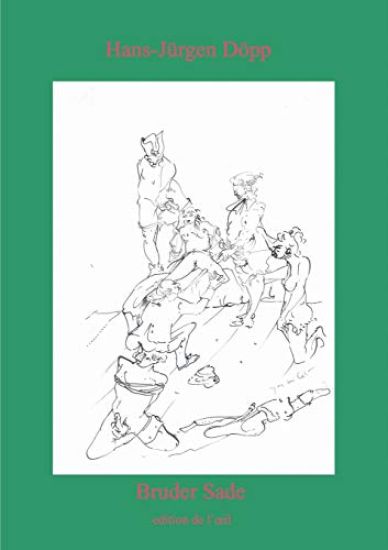
Bruder Sade - Ein Versuch, Sade zu verstehen. Der Autor versucht, Sades Werk zu seinem Leben als Gefangener in Beziehung zu setzen. Seine Philosophie des B sen erscheint als point de r sistance, der ihm dazu verhilft, seine Opferrolle zu verlassen, um nicht zu zerbrechen. ber psychoanalytische Betrachtungen wird Sade entd monisiert und erh lt er ein menschliches Gesicht. "Ich wende mich nur an jene, die f hig sind, mich zu verstehen, und sie werden mich ohne Schaden lesen" . Sade