

Kirjahaku
Etsi kirjoja tekijän nimen, kirjan nimen tai ISBN:n perusteella.
1000 tulosta hakusanalla Harriet Levin
Harriet Thesleff, kirjailijan isoisoäiti, lähti kahden majurin kanssa ajomatkalle Karjalankannaksella juuri ennen Suomen sisällissodan päättymistä. Matkan aikana toinen majureista kuoli hämärissä olosuhteissa. Oliko kyseessä onnettomuus, hyökkäys vai intohimomurha? Mikä on totuus tapahtumista ja kuka sen kertoo?

Build your child’s reading confidence at home with books at the right level Harriet Tubman was born into slavery in 19th Century America, but managed to escape and gain her freedom. Follow this amazing biography of a woman who was prepared to risk her own life to save others from the slavery she had escaped, and learn about the Underground Railroad that she used to achieve this. Topaz/Band 13 books offer longer and more demanding reads for children to investigate and evaluate.Text type: A biographyCurriculum links: History; CitizenshipThis book has been quizzed for Accelerated Reader.
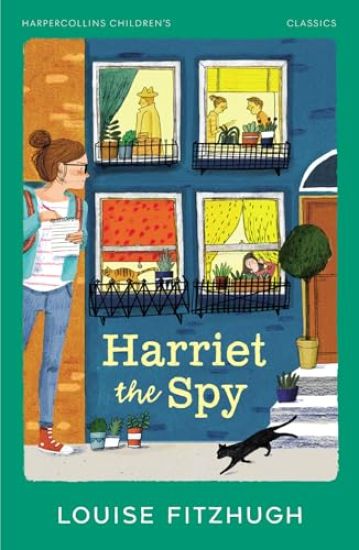
First published by HarperCollinsUS in 1964, this classic children’s novel has sold over 4 million copies and was awarded the New York Times Outstanding Book Award. Sixth-grader Harriet attends school on the New York's Upper East Side along with her two best pals, Sport and Janie. After school every day, she takes her notebook and proceeds through her spy route. Harriet observes the rich lady who never gets out of bed; the man with twenty-five cats and the Italian family who runs a grocery store. She writes brutally honest notes on them all. Harriet's downfall is that she also writes notes about people she actually knows… After a game in the park when her notebook is knocked out of her hands and read by her classmates, Harriet's innermost thoughts are revealed and she is shunned by all her classmates, who form the Spycatcher's Club. After her parents find out what's happened, Harriet receives a final, crushing blow. She is no longer allowed to take notes – her parents, her teacher and even the cook search her every day for a contraband notebook. Harriet's only consolation is the love and the wise advice of her nanny who manages to get her through this difficult period in her life. A classic in the US where it was first published and a major motion film from Paramount, Harriet the Spy is a beloved book throughout the world.

Learn about the inspiring life of Harriet Tubman in this early reader biography. This I Can Read book is an excellent choice to share in the classroom or at home.Harriet Tubman was a brave woman who was born enslaved in Maryland in the 1800s. After risking everything to escape from her slave master and be free, Harriet went on to lead many people to freedom on a journey known today as the Underground Railroad.This book covers some of the amazing aspects of Tubman's life: She led 13 escapes--all successful and at great personal risk--between 1850 and 1860. This book also covers some of the lesser-known amazing aspects of her life: During the Civil War, Harriet Tubman enlisted African American men to be soldiers. She served as a spy and led a battle under the command of a Union Army colonel Beginning readers will learn about the milestones in Harriet Tubman's life in this Level Two I Can Read biography. This biography includes a timeline and historical illustrations all about the life of this inspiring figure, as well as a rare historical photograph of her. Much mythology and conflicting lore exists about Harriet Tubman. This book was carefully vetted by noted Harriet Tubman expert Dr. Kate Larson.Harriet Tubman: Freedom Fighter is a Level Two I Can Read, geared for kids who read on their own but still need a little help.
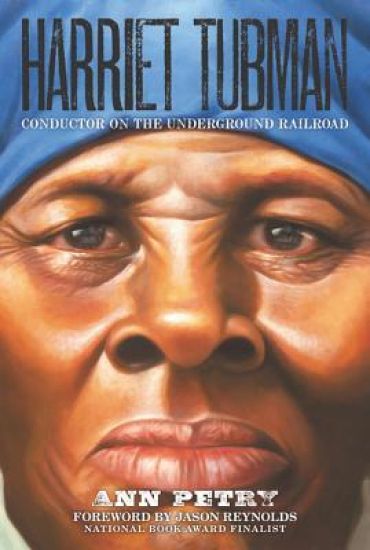
Harriet Tubman: Conductor on the Underground Railroad
Ann Petry
Amistad Books for Young Readers
2018
nidottu
This quintessential middle grade biography of Harriet Tubman now features a cover by NAACP Image Award winner and Caldecott Honor illustrator Kadir Nelson, a foreword by National Book Award finalist Jason Reynolds, and additional new material. A selection of the Schomburg Center's Black Liberation Reading List.Harriet Tubman: Conductor on the Underground Railroad was praised by the New Yorker as "an evocative portrait," and by the Chicago Tribune as "superb." It is a gripping and accessible portrait of the heroic woman who guided more than 300 enslaved people to freedom.Harriet Tubman was born in slavery and dreamed of being free. She was willing to risk everything--including her own life--to see that dream come true. After her daring escape, Harriet became a conductor on the secret Underground Railroad, helping others make the dangerous journey to freedom.This award-winning introduction to the late abolitionist, which was named an ALA Notable Book and a New York Times Outstanding Book, includes additional educational back matter such as a timeline, discussion questions, and extension activities.

The unforgettable star of Just Harriet returns for another mystery on Marble Island, from award-winning author Elana K. Arnold.There are a few things you should know about Harriet Wermer:She always tells the truth.She’s loving spending her summer on Marble Island, where she is an A+ mystery-solver.Okay, maybe she doesn’t always tell the truth.Actually...she has a tendency to lie quite a bit.Which is why, when one of the guests at her grandmother’s bed-and-breakfast finds that their treasured pair of binoculars has gone missing, no one believes Harriet when she said she had nothing to do with it. But this is one time Harriet isn’t lying—and she knows that if she can find the binoculars and figure out who really took them, she can prove it. With her cat, Matzo Ball, her grandmother’s basset hound, Moneypenny, and Harriet’s new friend, Clarence, helping her out, Harriet knows she can crack the case. But when the culprit isn’t who Harriet expects, it’s up to her to decide how important the truth really is.
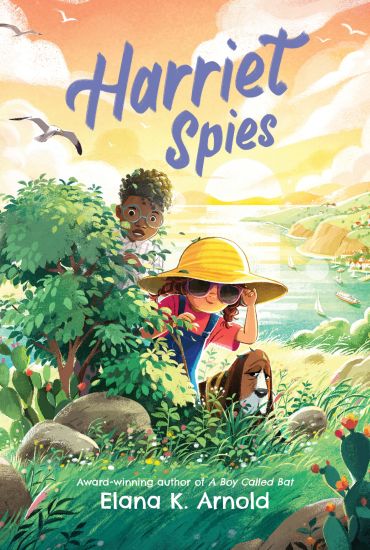
The unforgettable star of Just Harriet returns for another mystery on Marble Island, from award-winning author Elana K. Arnold.There are a few things you should know about Harriet Wermer: She always tells the truth.She's loving spending her summer on Marble Island, where she is an A+ mystery-solver.Okay, maybe she doesn't always tell the truth.Actually...she has a tendency to lie quite a bit.Which is why, when one of the guests at her grandmother's bed-and-breakfast finds that their treasured pair of binoculars has gone missing, no one believes Harriet when she said she had nothing to do with it. But this is one time Harriet isn't lying--and she knows that if she can find the binoculars and figure out who really took them, she can prove it. With her cat, Matzo Ball, her grandmother's basset hound, Moneypenny, and Harriet's new friend, Clarence, helping her out, Harriet knows she can crack the case. But when the culprit isn't who Harriet expects, it's up to her to decide how important the truth really is.
Sid Fleischman Humor Award WinnerHarriet sets out to solve a poisoning on Marble Island in the third book in the acclaimed cozy mystery series from award-winning author Elana K. Arnold.There are some things you should know about Harriet Wermer: She used to lie a lot, but not anymore.Seriously, she only tells the truth now.Even though she hadn't wanted to come to Marble Island in the first place, now she doesn't want to leave.It's the truth. With her mom and new baby brother home from the hospital, it's almost time for Harriet to pack up and head home from Marble Island and all the friends she's made. But Harriet doesn't have time to think about that--not when she discovers that Moneypenny, her Nanu's adorable basset hound, has been poisoned Harriet suspects the culprit is one of the guests staying at Nanu's bed-and-breakfast, and she and her best friend, Clarence, are once again on the case. But when someone else falls ill, Harriet's going to have to sleuth harder, spy sneakier, and be willing to see that sometimes the truth is more complicated than it seems.
Sid Fleischman Humor Award WinnerHarriet sets out to solve a poisoning on Marble Island in the third book in the acclaimed cozy mystery series from award-winning author Elana K. Arnold.There are some things you should know about Harriet Wermer: She used to lie a lot, but not anymore.Seriously, she only tells the truth now.Even though she hadn't wanted to come to Marble Island in the first place, now she doesn't want to leave.It's the truth. With her mom and new baby brother home from the hospital, it's almost time for Harriet to pack up and head home from Marble Island and all the friends she's made. But Harriet doesn't have time to think about that--not when she discovers that Moneypenny, her Nanu's adorable basset hound, has been poisoned Harriet suspects the culprit is one of the guests staying at Nanu's bed-and-breakfast, and she and her best friend, Clarence, are once again on the case. But when someone else falls ill, Harriet's going to have to sleuth harder, spy sneakier, and be willing to see that sometimes the truth is more complicated than it seems.

Harriet doesn't mean to be pesky. Sometimes she just is. And her mother doesn't mean to lose her temper. Sometimes she just does. But Harriet and her mother know that even when they do things they wish they hadn't, they still love each other very much.
"Up to this year I have always felt that I had no particular call to meddle with this subject....But I feel now that the time is come when even a woman or a child who can speak a word for freedom and humanity is bound to speak." Thus did Harriet Beecher Stowe announce her decision to begin work on what would become one of the most influential novels ever written. The subject she had hesitated to "meddle with" was slavery, and the novel, of course, was Uncle Tom's Cabin. Still debated today for its portrayal of African Americans and its unresolved place in the literary canon, Stowe's best-known work was first published in weekly installments from June 5, 1851 to April 1, 1852. It caused such a stir in both the North and South, and even in Great Britain, that when Stowe met President Lincoln in 1862 he is said to have greeted her with the words, "So you are the little woman who wrote the book that created this great war!" In this landmark book, the first full-scale biography of Harriet Beecher Stowe in over fifty years, Joan D. Hedrick tells the absorbing story of this gifted, complex, and contradictory woman. Hedrick takes readers into the multilayered world of nineteenth century morals and mores, exploring the influence of then-popular ideas of "true womanhood" on Stowe's upbringing as a member of the outspoken Beecher clan, and her eventful life as a writer and shaper of public opinion who was also a mother of seven. It offers a lively record of the flourishing parlor societies that launched and sustained Stowe throughout the 44 years of her career, and the harsh physical realities that governed so many women's lives. The epidemics, high infant mortality, and often disastrous medical practices of the day are portrayed in moving detail, against the backdrop of western expansion, and the great social upheaval accompanying the abolitionist movement and the entry of women into public life. Here are Stowe's public triumphs, both before and after the Civil War, and the private tragedies that included the death of her adored eighteen month old son, the drowning of another son, and the alcohol and morphine addictions of two of her other children. The daughter, sister, and wife of prominent ministers, Stowe channeled her anguish and her ambition into a socially acceptable anger on behalf of others, transforming her private experience into powerful narratives that moved a nation. Magisterial in its breadth and rich in detail, this definitive portrait explores the full measure of Harriet Beecher Stowe's life, and her contribution to American literature. Perceptive and engaging, it illuminates the career of a major writer during the transition of literature from an amateur pastime to a profession, and offers a fascinating look at the pains, pleasures, and accomplishments of women's lives in the last century.
Harriet Beecher Stowe's Uncle Tom's Cabin
Oxford University Press Inc
2007
sidottu
General for the Series: The Casebooks in Criticism introduce readers to the essential criticism on landmark works of literature and film. For each volume, a distinguished scholar who is an authority on the text has collected the most elucidating and distinctive scholarly essays on that work and added key supporting materials. Each volume includes a substantial introduction which considers the key features of the work, describes its publication history, and contextualizes its cultural import and contemporary reputation while also surveying the major approaches which have informed the works critical history. A condensed bibliography offers suggestions for further reading. The compact volumes provide a critical survey and suggest provocative ways to engage with their texts. They are ideally suited to those interested in developing a deeper understanding of a works history and significance. Specific for this book: Most of the best criticism on Stowe's landmark novel is fairly recent. Until the combined impact of the civil rights and women's movements changed the focus of the academic ciriculum, Uncle Tom's Cabin seldom appeared in classrooms or as the subject of published scholarship. However, from the mid-1970 forward, the book has been widely written about and taught. Today, Uncle Toms Cabin is a stable, important part of the nineteenth-centruy American literature canon and has generated a rich body of new critical work. This casebook collects the best of the new scholarship as well as the most influencial older essays. Included in this volume are letters by Harriet Beecher Stowe and articles by James Baldwin, Leslie Fiedler, Jane Tompkins, Gillian Brown, Robert Stepto, and Elizabeth Ammons.
Harriet Beecher Stowe's Uncle Tom's Cabin
Oxford University Press Inc
2007
nidottu
General for the Series: The Casebooks in Criticism introduce readers to the essential criticism on landmark works of literature and film. For each volume, a distinguished scholar who is an authority on the text has collected the most elucidating and distinctive scholarly essays on that work and added key supporting materials. Each volume includes a substantial introduction which considers the key features of the work, describes its publication history, and contextualizes its cultural import and contemporary reputation while also surveying the major approaches which have informed the works critical history. A condensed bibliography offers suggestions for further reading. The compact volumes provide a critical survey and suggest provocative ways to engage with their texts. They are ideally suited to those interested in developing a deeper understanding of a works history and significance. Specific for this book: Most of the best criticism on Stowe's landmark novel is fairly recent. Until the combined impact of the civil rights and women's movements changed the focus of the academic ciriculum, Uncle Tom's Cabin seldom appeared in classrooms or as the subject of published scholarship. However, from the mid-1970 forward, the book has been widely written about and taught. Today, Uncle Toms Cabin is a stable, important part of the nineteenth-centruy American literature canon and has generated a rich body of new critical work. This casebook collects the best of the new scholarship as well as the most influencial older essays. Included in this volume are letters by Harriet Beecher Stowe and articles by James Baldwin, Leslie Fiedler, Jane Tompkins, Gillian Brown, Robert Stepto, and Elizabeth Ammons.
Redolent of Chicago's ethnic culture, Susan Hahn's intensely personal lyrics emerge from the world of an extended Jewish family and its neighbors. The voices of these immigrants are imbued with the profound effects and memories of the journey "From a patrolled town in the Ukraine/to Baltimore on a boat, then a train to Chicago." Hahn's poetry is about love and the lack of love, about rejection, and about other forces—generational, political, social, and sexual—that overwhelm individuals and cause them to limit themselves both physically and psychologically.
Redolent of Chicago's ethnic culture, Susan Hahn's intensely personal lyrics emerge from the world of an extended Jewish family and its neighbors. The voices of these immigrants are imbued with the profound effects and memories of the journey "From a patrolled town in the Ukraine/to Baltimore on a boat, then a train to Chicago." Hahn's poetry is about love and the lack of love, about rejection, and about other forces—generational, political, social, and sexual—that overwhelm individuals and cause them to limit themselves both physically and psychologically.
Harriet’s Legacies
MCGILL-QUEEN'S UNIVERSITY PRESS
2022
sidottu
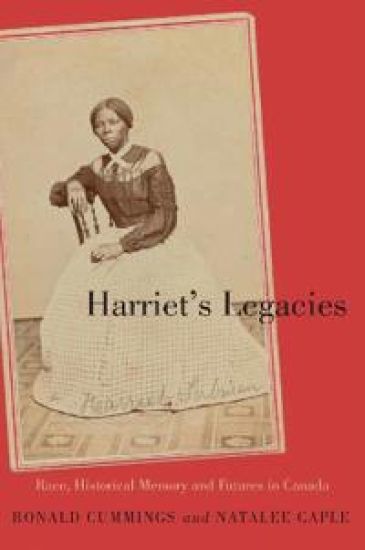
Historic freedom fighter and conductor of the Underground Railroad Harriet Tubman risked her life to ferry enslaved people from America to freedom in Canada. Her legacy instigates and orients this exploration of the history of Black lives and the future of collective struggle in Canada.Harriet’s Legacies recuperates the significance of Tubman’s time in Canada as more than just an interlude in her American narrative: it is a new point from which to think about Black diasporic mobilities, possibilities, and histories. Through essays and creative works this collection articulates new territory for Tubman in relation to the Black Atlantic archive, connecting her legacies of survival, freedom, and cultural expression within a transnational framework. Contributors take up the question of legacy in ways that remap discourses of genealogy and belonging, positioning Tubman as an important part of today’s freedom struggles. Integrating scholarship with creative and curatorial practices, the volume expands conversations about culture and expression in African Canadian life across art, literature, performance, politics, and public pedagogy.Considering questions of culture, community, and futures, Harriet’s Legacies explores what happened in the wake of Tubman’s legacy and situates Canada as a key part of that dialogue.

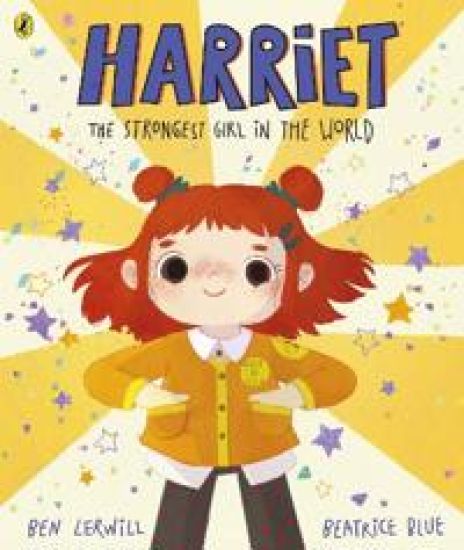
A vibrant, joyful, and powerful story about a little girl with a LOT of strength trying to find her place in the world.Harriet isn't just strong - she's the strongest girl in the whole world! And though her super-strength is mostly wonderful, it does make things like bouncing on trampolines, mixing cake batter, and putting the cap on the toothpaste a bit, well... tricky.So when the Seriously Strong Touring Circus comes to town, Harriet thinks she might POP with excitement to see other people just like her! Hans the Hairy and Betty Biceps show her that being strong should be celebrated - and when Muscleman Max prepares to break a world record, Harriet suddenly finds herself taking a starring role in the performance- one she could never have dreamed of...This humorous and empowering read features a brilliant cast of larger-than-life characters, and a heroine that you can't help but root for. A true celebration of strength, difference, and finding a place where you truly belong.
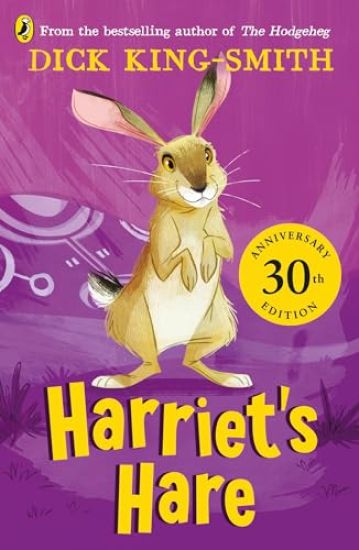
Puffin Classics: the definitive collection of timeless stories, for every child.Rediscover the Puffin Classics collection and bring the best-loved classics to a new generation - including this special 30th anniversary edition of Harriet's Hare.Hares don't talk. Everyone knows that. But the hare Harriet meets in a corn circle on Longhanger Farm is a very unusual hare.'He's a wizard, that's what he is. 'Wiz,' she said.' Wiz is a Partian, native to the distant planet Pars, and not only can he talk, he can speak any language, change into any shape, and even dance! Harriet and Wiz spend the summer galloping around the Farm together, but as his holiday on Earth comes to an end . . .Will Wiz want to go home?