Ulrike Ackermann; Scott Atran; James Bartolomew; Michael Bentley; Paul Berman; Vernon Bogdanor; Nick Boles; Robert Cooper; Stephan Eisel; Richard J Evans; Michael Freeden; David Frum; Dick Harrison; Anna Jardfeldt; Oliver Kamm; Robert D Kaplan; John Keane; Johan Lagerkvist; Mark Leonard; John Lloyd; Hisham Melhem; Richard Miles; Kenneth Minogue; Minxin Pei; Malise Ruthven; Roger Scruton; Per Schlingman; Nathan Shachar; Robert J Shapiro; Maria Wetterstrand
Ideologiernas död har förutspåtts ett flertal gånger under åren, men gång på gång har vi också sett gamla ideologier återvända under nya beteckningar. I denna bok behandlar vi både nuet och det förflutna. Vi belyser en del av de politiska idéer och system i historien som fortsätter att utöva inflytande på samtiden. Vi granskar också den auktoritära statskapitalismen, som i fallet Kina, och ställer frågan om den är hållbar. Om så är fallet, hur kommer den att inverka på världen? Kommer den att bli förebilden, precis som liberal demokrati under lång tid har varit det för många människor och nationer? Kommer islamism, främlings- och invandrarfientliga partier och andra rörelser i marginalen av det politiska och ideologiska spektrumet i Europa, USA och den islamiska världen att befästa den rådande ordningen eller undergräva tilltron till den? Vilka är globaliseringens konsekvenser för politik och ideologi? Kommer svaret att bli ett världsparlament, en världsomfattande miljörörelse eller olika strömningar med religion som gemensam nämnare? Eller kommer vi kanske i stället att få se ett annat gammalt spöke återvända: nationalismen? Boken ingår i serien Engelsbergsseminarierna och utges i samarbete med Bokförlaget Atlantis och Axel och Margaret Ax:son Johnsons stiftelse för almännyttiga ändamål.
For many, the story of the weeks of protests in the summer of 2020 began with the horrific eight minutes and 46 seconds when Police Officer Derek Chauvin killed George Floyd on camera, and it ended with the sweeping federal, state, and intrapersonal changes that followed. It is a simple story, wherein white America finally witnessed enough brutality to move their collective consciousness. The only problem is that it isn't true. George Floyd was not the first Black man to be killed by police-he wasn't even the first to inspire nation-wide protests-yet his death came at a time when America was already at a tipping point.In SAY THEIR NAMES, five seasoned journalists probe this critical shift. With a piercing examination of how inequality has been propagated throughout history, from Black imprisonment and the Convict Leasing program to long-standing predatory medical practices to over-policing, the authors highlight the disparities that have long characterized the dangers of being Black in America. They examine the many moderate attempts to counteract these inequalities, from the modern Civil Rights movement to Ferguson, and how the killings of George Floyd, Breonna Taylor and others pushed compliance with an unjust system to its breaking point. Finally, they outline the momentous changes that have resulted from this movement, while at the same time proposing necessary next steps to move forward.With a combination of penetrating, focused journalism and affecting personal insight, the authors bring together their collective years of reporting, creating a cohesive and comprehensive understanding of racial inequality in America.
For many, the story of the weeks of protests in the summer of 2020 began with the horrific nine minutes and twenty-nine seconds when Police Officer Derek Chauvin killed George Floyd on camera, and it ended with the sweeping federal, state, and intrapersonal changes that followed. It is a simple story, wherein white America finally witnessed enough brutality to move their collective consciousness. The only problem is that it isn't true. George Floyd was not the first Black man to be killed by police-he wasn't even the first to inspire nation-wide protests-yet his death came at a time when America was already at a tipping point.In Say Their Names, five seasoned journalists probe this critical shift. With a piercing examination of how inequality has been propagated throughout history, from Black imprisonment and the Convict Leasing program to long-standing predatory medical practices to over-policing, the authors highlight the disparities that have long characterized the dangers of being Black in America. They examine the many moderate attempts to counteract these inequalities, from the modern Civil Rights movement to Ferguson, and how the killings of George Floyd, Breonna Taylor and others pushed compliance with an unjust system to its breaking point. Finally, they outline the momentous changes that have resulted from this movement, while at the same time proposing necessary next steps to move forward.With a combination of penetrating, focused journalism and affecting personal insight, the authors bring together their collective years of reporting, creating a cohesive and comprehensive understanding of racial inequality in America.
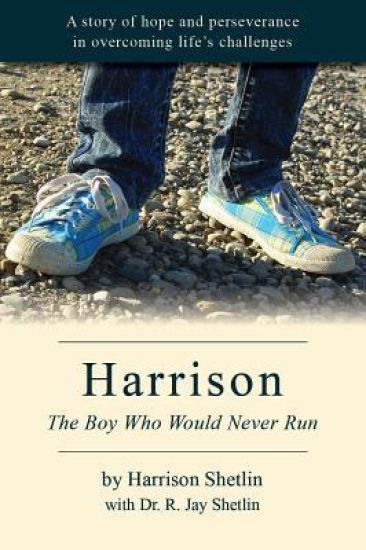
Challenge and adversity is part of life. But for little Harrison it hit hard the day after he was born. Faced with a serious case of Bacterial Meningitis his life was hanging in the balance. Typically Bacterial Meningitis has a 48 hour window before it becomes terminal. With only a few hours to spare, he received heavy doses of the appropriate medicine to hopefully help save his life. Luckily, he survived but then faced a difficult physical challenge known as Cerebral Palsy. His pediatrician and a neurologist reported to his parents when Harrison was just a few months old, "Your boy will never run or kick a ball. He simply won't have the physical coordination due to his severe case of Cerebral Palsy." Yet through persistence, faith, love, grace and his world travels, Harrison was able to cure himself of the "incurable." Today, Harrison is a 12 year old boy that looks acts, walks and talks like every other kid at school. To see the journey of where he came from and what he went through is nothing shy of miraculous. Harrison shares his story with pictures and a witty commentary in his book, The Boy Who Would Never Run.
la mort de son meilleur ami, Mirsad Bukvic est confront une situation in dite d'h ritage impliquant les fameux r seaux sociaux. Il va parcourir une partie du monde pour tenter de r soudre un probl me qu'il ressent juste titre comme insoluble. Mi polar mi conte philosophique, petit jeu pervers entre clause testamentaire et manipulation familiale, r flexion discr te sur les r seaux sociaux ? Il y a un peu de tout cela dans Harrison. Quel est l'impact de ces r seaux sur nos vies actuelles ? Des r gles familiales ancestrales pourraient-elles tre leur victime ? Que dire si par-dessus le march nos animaux domestiques font les frais de tout ce cirque ?
An honest and personal story of our family's journey with Neurodiversity. Harrison and Amelia are both neurodiverse and autistic, and Harrison also has ADHD and Dyspraxia. This story is written by parents for parents, to give a true and personal picture around the positives and the actual challenges that being a neurodiverse parent brings. We are not just parents, we are married, we also detail our journey, navigating around the social and education systems and this story may give you an idea of how others feel and how your life as a neurodiverse parent may be different to as you thought, but you may find out the parents you will be. This book is for anybody looking at exploring the pathway, already on the pathway or have just completed the pathway and don't know where else to turn and just need some guidance.
Build solid mathematical understanding and develop key conceptual connections. The inquiry-based approach integrates the MYP key concepts, helping you shift to a concept-based classroom and cement mathematical comprehension. Fully comprehensive and matched to the Revised MYP to support achievement.Progress your learners into IB Diploma - fully comprehensive and matched to the MYP Next Chapter curriculumDevelop conceptual understanding in the best way for your learners - learn by mathematical unit or by key concept Drive active, critical exploration of mathematical principles - build rounded comprehension framed within the key and related concepts Develop meaningful cross-curricular connections that help learners recognize and manipulate mathematical ideas in other disciplines Support higher level thinking skills through an approach grounded in factual, conceptual and debatable questions Build a solid foundation of practical skills with extensive practice equipping learners to apply skills Fully prepare learners for the MYP eAssessmentThe online Student Book will be available on Oxford Education Bookshelf until 2028. Access is facilitated via a unique code, which is sent in the mail. The code must be linked to an email address, creating a user account. Access may be transferred once to an additional user.
Brings together the output of a forty-year collaborative research project that unpicked and put into practice the fine details of John Harrison's extraordinary pendulum clock system. Harrison predicted that his unique method of making pendulum clocks could provide as much as one-hundred-times the stability of those made by his contemporaries. However, his final publication, which promised to describe the system, was a chaotic jumble of information, much of which had nothing to do with clockwork. One contemporary reviewer of Harrison's book could only suggest that the end result was a product of Harrison's 'superannuated dotage.' The focus of this book centres on the making, adjusting, and testing of Clock B which was the subject of various trials at the Royal Observatory, Greenwich. The modern history of Clock B is accompanied by scientific analysis of the clock system, Clock B's performance, the methods of data-gathering alongside historical perspectives on Harrison's clockmaking, that of his contemporaries, and some evaluation of the possible influence of early 18th century scientific thought.
Harrison Decoded: Towards a Perfect Pendulum Clock brings together the output of a forty-year collaborative research project that unpicked and put into practice the fine details of John Harrison's extraordinary pendulum clock system. Harrison predicted that his unique method of making pendulum clocks could provide as much as one-hundred-times the stability of those made by his contemporaries. However, his final publication, which promised to describe the system, was a chaotic jumble of information, much of which had nothing to do with clockwork. One contemporary reviewer of Harrison's book could only suggest that the end result was a product of Harrison's 'superannuated dotage.' The focus of this book centres on the making, adjusting, and testing of Clock B which was the subject of various trials at the Royal Observatory, Greenwich. The modern history of Clock B is accompanied by scientific analysis of the clock system, Clock B's performance, the methods of data-gathering alongside historical perspectives on Harrison's clockmaking, that of his contemporaries, and some evaluation of the possible influence of early 18th century scientific thought.
Have you ever thought... Maybe a tree doesn't want to be where he is at? Maybe he doesn't want to stay there for twenty or thirty years, planted in one spot.Join us on the journey of a little sapling who is unhappy with the way his life is going. Pay attention, along the way, to how others help him to help himself.
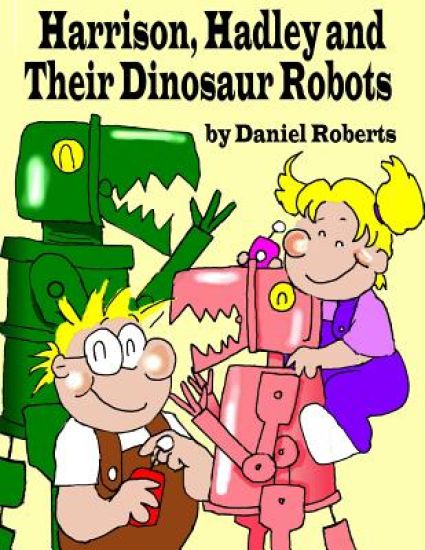
Young Harrison finds himself having to take his faithful dinosaur robot to the doctor when it does not feel well. Can Doctor Apple A Day figure out what is wrong with Harrison's faithful friend? Find out in this humorous and colorful children's picture book. It is a book in the "Harrison and his Dinosaur Robot" series.
Where is Harrison and his dinosaur robot? With help from her own invention, Harrison's little sister, Hadley, and her dinosaur robot are determined to find them. This is a fun and colorful addition to the "Harrison and his Dinosaur Robot" book series by cartoonist Daniel Roberts.