Kirjojen hintavertailu. Mukana 11 244 527 kirjaa ja 12 kauppaa.

Kirjahaku

Etsi kirjoja tekijän nimen, kirjan nimen tai ISBN:n perusteella.

1000 tulosta hakusanalla Hart

Hart Crane

Hart Crane

Berthoff Warner

UNIVERSITY OF MINNESOTA PRESS
1989
nidottu
Hart Crane was first published in 1989. Minnesota Archive Editions uses digital technology to make long-unavailable books once again accessible, and are published unaltered from the original University of Minnesota Press editions.More than half a century after his death, the work of Hart Crane (1899–1932) remains central to our understanding of twentieth-century American poetry. During his short life, Crane's contemporaries had difficulty seeing past the "roaring boy" who drank too much and hurled typewriters from windows; in recent years, he has come to be seen as a kind of "last poet" whose only theme is self-destruction, and who himself exemplifies the breakdown of poetry in the modern age. Taking as a point of departure Robert Lowell's 1961 valuation of Crane and his power to speak from "the center of things," Warner Berthoff in this book reappraises the essential character and force of Crane's still problematic achievement. Though he takes into account the substantial body of commentary on Crane's work, his primary intent is to look afresh at the poems themselves, and at the poet's clear-eyed (and brilliant) letters. This approach enables Berthoff, first, to track the emergence and development of Crane's lyric style—an art that recreates, in compact form, the turbulence of the modern city. He then explores the background and historical community that nourished Crane's creative imagination, and he evaluates Crane's conception of the ideal modern poetic: a poetry of ecstasy created with architectural craft. His final chapter is devoted to The Bridge, the ambitious lyric suite that proved to be the climax and terminus of Crane's work. Berthoff's emphasis throughout is on the beauty and power of individual poems, and on the sanity, shrewdness, and sense of purpose that informed Crane's working intelligence.
Hart Crane

Hart Crane

Brian Reed

The University of Alabama Press
2006
sidottu
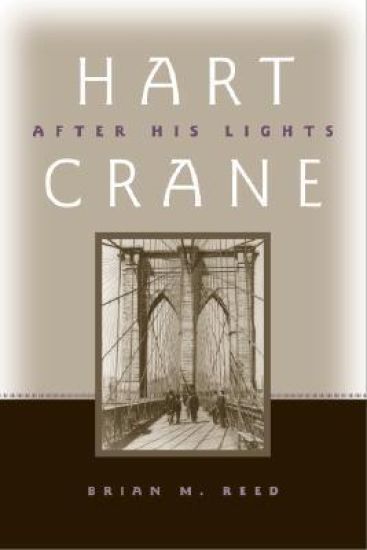
With his suicide in 1932, Hart Crane left behind a small body of work - ""White Buildings"" (1926) and ""The Bridge"" (1930). Yet, Crane's poetry was championed and debated publicly by many of the most eminent literary and cultural critics of his day, among them Van Wyck Brooks, Kenneth Burke, Robert Graves, Allen Tate, and Edmund Wilson. ""The Bridge"" appears in its entirety in the ""Norton Anthology of American Literature"" and Crane himself has been the subject of two recent biographies. In ""Hart Crane: After His Lights"", Brian Reed undertakes a study of Crane's poetic output that takes into account, but also questions, the post-structural and theoretical developments in humanities scholarship of the last decade that have largely approached Crane in a piecemeal way, or pigeonholed him as representative of his class, gender, or sexual orientation. Reed examines Crane's career from his juvenilia to his posthumous critical reception and his impact on practicing poets following World War II. The first part of the study tests common rubrics of literary theory - nationality, sexuality, period - against Crane's poetry, and finds that these labels, while enlightening, also obfuscate the origin and character of the poet's work. The second part examines Crane's poetry through the process of its composition, sources, and models, taking up questions of style, genealogy, and genre. The final section examines Crane's influence on subsequent generations of American poets, especially by avant-garde literary circles like the New American poets, the Black Mountain School, the New York School, and the Beats. The result is a study that complicates and enriches our understandings of Crane's poetry and contributes to the ongoing reassessment of literary modernism's origins, course, and legacy.
Hart Crane

Hart Crane

Brian Reed

The University of Alabama Press
2006
nidottu
A critical reassessment of the life's work of a major American poet. With his suicide in 1932, Hart Crane left behind a small body of work - White Buildings (1926) and The Bridge (1930). Yet, Crane's poetry was championed and debated publicly by many of the most eminent literary and cultural critics of his day, among them Van Wyck Brooks, Kenneth Burke, Robert Graves, Allen Tate, and Edmund Wilson. The Bridge appears in its entirety in the Norton Anthology of American Literature, and Crane himself has been the subject two recent biographies. In Hart Crane: After His Lights, Brian Reed undertakes a study of Crane's poetic output that takes into account, but also questions, the post-structural and theoretical developments in humanities scholarship of the last decade that have largely approached Crane in a piecemeal way, or pigeonholed him as represen-tative of his class, gender, or sexual orientation. Reed examines Crane's career from his juvenilia to his posthumous critical reception and his impact on practicing poets following World War II. The first part of the study tests common rubrics of literary theory - nationality, sexuality, period - against Crane's poetry, and finds that these labels, while enlightening, also obfuscate the origin and character of the poet's work. The second part examines Crane's poetry through the process of its composition, sources, and models, taking up questions of style, genealogy, and genre. The final section examines Crane's influence on subsequent generations of American poets, especially by avant-garde literary circles like the New American poets, the Black Mountain School, the New York School, and the Beats. The result is a study that complicates and enriches our understandings of Crane's poetry and contributes to the ongoing reassessment of literary modernism's origins, course, and legacy.
Hart Crane's 'the Bridge'

Hart Crane's 'the Bridge'

Hart Crane

FORDHAM UNIVERSITY PRESS
2011
sidottu
Hart Crane's long poem The Bridge has steadily grown in stature since it was published in 1930. At first branded a noble failure by a few influential critics— a charge that became conventional wisdom—this panoramic work is now widely regarded as one of the finest achievements of twentieth-century American poetry. It unites mythology and modernity as a means of coming to terms with the promises, both kept and broken, of American experience. The Bridge is also very difficult. It is well loved but not well understood. Obscure and indirect allusions abound in it, some of them at surprisingly fine levels of detail. The many references to matters of everyday life in the 1920s may baffle or elude today's readers. The elaborate compound metaphors that distinguish Crane's style bring together diverse sources in ways that make it hard to say what, if anything, is "going on" in the text. The poem is replete with topical and geographical references that demand explication as well as identification. Many passages are simply incomprehensible without special knowledge, often special knowledge of a sort that is not readily available even today, when Google and Wikipedia are only a click away. Until now, there has been no single source to which a reader can go for help in understanding and enjoying Crane's vision. There has been no convenient guide to the poem's labyrinthine complexities and to its dense network of allusions—the "thousands of strands" that, Crane boasted, "had to be sorted out, researched, and interwoven" to compose the work. This book is that guide. Its detailed and far-reaching annotations make The Bridge fully accessible, for the first time, to its readers, whether they are scholars, students, or simply lovers of poetry.
Hart Wood

Hart Wood

Don J. Hibbard; Glenn E. Mason; Karen J. Weitze

University of Hawai'i Press
2010
sidottu
This lavishly illustrated book traces the life and work of Hart Wood (1880-1957), from his beginnings in architectural offices in Denver and San Francisco to his arrival in Hawaii in 1919 as a partner of C. W. Dickey and eventual solo career in the Islands. An outspoken leader in the development of a Hawaiian style of architecture, Wood incorporated local building traditions and materials in many of his projects and was the first in Hawaii to blend Eastern and Western architectural forms in a conscious manner. Enchanted by Hawaii's vivid beauty and its benevolent climate, exotic flora, and cosmopolitan culture, Wood sought to capture the aura of the Islands in his architectural designs. Hart Wood's magnificent and graceful buildings remain critical to Hawaii's architectural legacy more than fifty years after his death: the First Church of Christ Science on Punahou Street, the First Chinese Church on King Street, the S & G Gump Building on Kalakaua Avenue, the Honolulu Board of Water Supply Administration Building on Beretania Street, and the Alexander & Baldwin Building on Bishop Street, as well as numerous Wood residences throughout the city.
Complete Poems of Hart Crane

Complete Poems of Hart Crane

Hart Crane

Liveright Publishing Corporation
2001
nidottu
This edition features a new introduction by Harold Bloom as a centenary tribute to the visionary of White Buildings (1926) and The Bridge (1930). Hart Crane, prodigiously gifted and tragically doom-eager, was the American peer of Shelley, Rimbaud, and Lorca. Born in Garrettsville, Ohio, on July 21, 1899, Crane died at sea on April 27, 1932, an apparent suicide. A born poet, totally devoted to his art, Crane suffered his warring parents as well as long periods of a hand-to-mouth existence. He suffered also from his honesty as a homosexual poet and lover during a period in American life unsympathetic to his sexual orientation. Despite much critical misunderstanding and neglect, in his own time and in ours, Crane achieved a superb poetic style, idiosyncratic yet central to American tradition. His visionary epic, The Bridge, is the most ambitious and accomplished long poem since Walt Whitman's Song of Myself. Marc Simon's text is accepted as the most authoritative presentation of Hart Crane's work available to us. For this centennial edition, Harold Bloom, who was introduced to poetry by falling in love with Crane's work while still a child, has contributed a new introduction.
The Complete Poems of Hart Crane

The Complete Poems of Hart Crane

Hart Crane

Liveright Publishing Corporation
2000
sidottu
This edition features a new introduction by Harold Bloom as a centenary tribute to the visionary of White Buildings (1926) and The Bridge (1930). Hart Crane, prodigiously gifted and tragically doom-eager, was the American peer of Shelley, Rimbaud, and Lorca. Born in Garrettsville, Ohio, on July 21, 1899, Crane died at sea on April 27, 1932, an apparent suicide. A born poet, totally devoted to his art, Crane suffered his warring parents as well as long periods of a hand-to-mouth existence. He suffered also from his honesty as a homosexual poet and lover during a period in American life unsympathetic to his sexual orientation. Despite much critical misunderstanding and neglect, in his own time and in ours, Crane achieved a superb poetic style, idiosyncratic yet central to American tradition. His visionary epic, The Bridge, is the most ambitious and accomplished long poem since Walt Whitman's Song of Myself. Marc Simon's text is accepted as the most authoritative presentation of Hart Crane's work available to us. For this centennial edition, Harold Bloom, who was introduced to poetry by falling in love with Crane's work while still a child, has contributed a new introduction.
Hart Town Environs: A Chronicle of People, Places and Events Carroll County, Georgia 1825-1900
As early as 1825, when Carroll County was yet unnamed, white intruders came in droves into Indian Territory brought by a thirst for land and gold. Adventurers came to this region to mine for gold. Pioneers brought their families to clear the land and farm. By 1827, when the land lottery was issued, people from North Carolina, South Carolina and Tennessee moved into this area. The population grew. Old Indian trails were cut into the first roads. The settlers built the first log cabins, first churches, schools and meeting houses on this newly acquired land.
Hart and Soul: Gary Hart's New Hampshire Odyssey and Beyond
Stunning Political Upset. The long forgotten story of Gary Hart's 1984 stunning upset victory over Walter Mondale in the New Hampshire Democratic primary is much more than a political story. It is the moving story of ordinary people out to change the world and one man who inspired them to try.New Hampshire Primary. The New Hampshire primary holds a special place in the history of presidential elections, and continues to be a unique political and cultural phenomenon that regularly defies the common political wisdoms of the day. And the defiance of conventional political wisdom was never more telling than in 1984. Hart and Soul. Hart and Soul is the untold story of teachers and factory workers, housewives and college students who realized and exercised their political power in the selection of the president of the United States.Always Unexpected Drama. New Hampshire voters treasure their role in the primary process, especially when they do the unexpected and fool a lot of people. In 1968, Gene McCarthy, an unknown, esoteric Minnesota senator, did so well in conservative New Hampshire that the then sitting president decided to end his bid for reelection. In 1972 it was in New Hampshire that Edmund Muskie, the front-runner and fellow New Englander, the inevitable Democratic nominee, began to crumble. Who would have thought that the New Hampshire voters would have turned their backs on their neighbor from Maine? In 1976, Jimmy Carter, an unknown Georgia peanut farmer, a southerner, began his rise to prominence and the White House with a win in New Hampshire. It makes no sense. In 1980, George Bush came out of Iowa with the big "mo" and seemed unstoppable, until Reagan ambushed him in Nashua, New Hampshire, and burst that balloon for good.And then came Gary Hart and 1984--or more accurately, 1982, for that is when the action began.I thought about it a lot. It's a long-shot, dark-horse, uphill battle; the odds are long. But all signals seemed to be go. Not that if you run, you're going to win, but it's worth a try. Gary Hart Inside, Untold Story. Although the New Hampshire primary process allows, even encourages, rank-and-file voters to become as deeply involved as they choose, for many months it is primarily an insider's game played by a few hundred people. In 1982, 1983 and 1984, the author was one of those insiders involved in the campaign of Senator Gary Hart of Colorado. She was there when the process began, through the dark days of 1983 and the days of glory in February of 1984. And she was there at the end, during the final weeks of the primary season in June and the final day in July at the Democratic National Convention.Ordinary People, Extraordinary Story. This is not, however, her story or simply a story of the New Hampshire primary. Nor is it fundamentally a political story, for what happened in New Hampshire during the 1984 presidential primary campaign has very little to do with the everyday experiences of most politicians or most voters. The New Hampshire primary and the story of Gary Hart's 1984 campaign provide the backdrop for a story of ordinary people caught up in an extraordinary process. And it is the story of Gary Hart, a farm boy from Kansas, who seemingly came from nowhere to within inches of winning the Democratic presidential nomination. It is the story of how the election of a president hinged on the efforts of ordinary people, and in the end, was lost as those voices became lost.
Hart of Darkness

Hart of Darkness

S B Alexander

Raven Wing Publishing
2018
pokkari
The road to love is paved in the dark. Former gang member Dillon Hart abandoned the streets to join the US Merchant Marines. He feels his life is finally on track until he returns home to discover that his sixteen-year-old sister is missing. With his younger brother in jail and his older brother living a life of crime, it's up to Dillon to find Grace. After four years of searching, a phone call from a morgue gives him a lead that he can't pass up. Enlisting the help of a cutthroat reporter may be his only hope.Crime reporter Maggie Marx has just the right mix of grit and sex appeal to get anything she wants, even the darkest stories on the street. Growing up in a gang, she had her fair share of setbacks and obstacles. When Dillon Hart seeks her help, she's more than ready to take down the street's biggest enemy. Her actions could help her exact revenge or land her in the belly of the beast.As Dillon and Maggie team up to search for Dillon's sister, they aren't prepared to find what lies ahead. One family is torn apart. Another is brought together. Hearts are shredded, secrets are uncovered, and love takes on a whole new meaning.Intended for audiences 18+
Hart Family History: Silas Hart, His Ancestors and Descendants

Hart Family History: Silas Hart, His Ancestors and Descendants

William Lincoln 1867- Hart

Hassell Street Press
2021
sidottu
This work has been selected by scholars as being culturally important and is part of the knowledge base of civilization as we know it.This work is in the public domain in the United States of America, and possibly other nations. Within the United States, you may freely copy and distribute this work, as no entity (individual or corporate) has a copyright on the body of the work.Scholars believe, and we concur, that this work is important enough to be preserved, reproduced, and made generally available to the public. To ensure a quality reading experience, this work has been proofread and republished using a format that seamlessly blends the original graphical elements with text in an easy-to-read typeface.We appreciate your support of the preservation process, and thank you for being an important part of keeping this knowledge alive and relevant.
Hart's Girls

Hart's Girls

Lynda Rees

Indy Pub
2020
pokkari
Hart's Girlsby Award Winning Author, Lynda ReesOur Kids Are NOT For Sale The highly profitable, disgusting human trafficking industry puts children in all neighborhoods at risk, especially prevalent along the I75 corridor. FBI Special Agent Reggie Casse and U. S. Marshal Shae Montgomery are determined to stop abductions of innocents in and around Sweetwater, Kentucky. The professionals clash. Antagonism turns to attraction they can't act on without putting lives in danger. A break in the investigation leads to powerful players. Return of Shae's ex-fianc , relocation of a WITSEC witness and wedding plans interrupt any possibility of romance.♥ AMAZING Lynda IS an amazing writer I have read all of Lynda's books and love them. I can't wait for the next one. Once I start reading one of Lynda's books I CAN'T put it down. K. Dawn
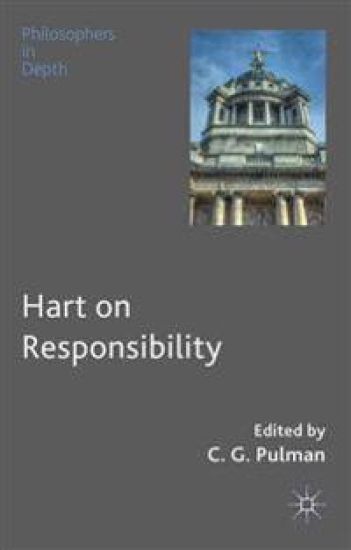
Hart on Responsibility

Hart on Responsibility

Palgrave Macmillan
2014
sidottu
A collection of essays discussing Herbert Hart's writings on responsibility. The essays focus upon Hart's work on causation in the law and on the justification of punishment. Specific topics discussed include senses of 'responsibility', voluntariness, Mill's harm principle, mens rea, excuses, the Hart-Wootton debate, and negligence.
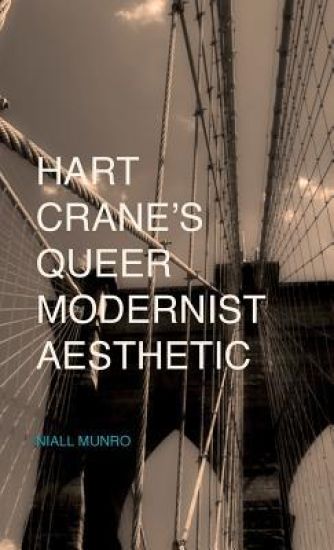
Hart Crane's Queer Modernist Aesthetic

Hart Crane's Queer Modernist Aesthetic

N. Munro

Palgrave Macmillan
2015
sidottu
Hart Crane's Queer Modernist Aesthetic argues that the aspects of experience which modernists sought to interrogate – time, space, and material things – were challenged further by Crane's queer poetics. Reading Crane alongside contemporary queer theory shows how he creates an alternative form of modernism.