Kirjojen hintavertailu. Mukana 12 390 323 kirjaa ja 12 kauppaa.

Kirjahaku

Etsi kirjoja tekijän nimen, kirjan nimen tai ISBN:n perusteella.

1000 tulosta hakusanalla Heather a Juneja

International Law and the Use of Force by National Liberation Movements
This book examines two branches of the international law of armed conflict as they apply to national liberation movements. First, it explores the idea that national liberation movements may legitimately resort to the use of force to secure the right of their peoples to self-determination. Second, it examines the application of the humanitarian law of armed conflict in wars of national liberation.
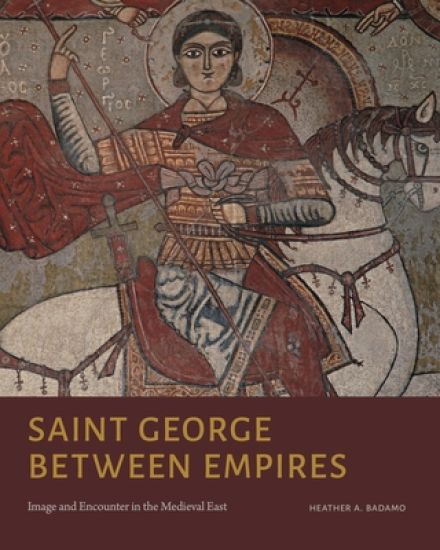
Saint George Between Empires

Saint George Between Empires

Heather A. Badamo

Pennsylvania State University Press
2023
sidottu
This volume examines Saint George’s intertwined traditions in the competing states of the eastern Mediterranean and Transcaucasia, demonstrating how rival conceptions of this well-known saint became central to Crusader, Eastern Christian, and Islamic medieval visual cultures.Saint George Between Empires links the visual cultures of Byzantium, North Africa, the Levant, Syria, and the Caucasus during the Crusader era to redraw our picture of interfaith relations and artistic networks. Heather Badamo recovers and recontextualizes a vast body of images and literature—from etiquette manuals and romances to miracle accounts and chronicles—to describe the history of Saint George during a period of religious and political fragmentation, between his “rise” to cross-cultural prominence in the eleventh century and his “globalization” in the fifteenth. In Badamo’s analysis, George emerges as an exemplar of cross-cultural encounter and global translation.Featuring important new research on monuments and artworks that are no longer available to scholars as a result of the occupation of Syria and parts of Iraq, Saint George Between Empires will be welcomed by scholars of Byzantine, medieval, Islamic, and Eastern Christian art and cultural studies.
This City Belongs to You

This City Belongs to You

Heather A. Vrana

University of California Press
2017
sidottu
Between 1944 and 1996, Guatemala experienced a revolution, counterrevolution, and civil war. Playing a pivotal role within these national shifts were students from Guatemala's only public university, the University of San Carlos (USAC). USAC students served in, advised, protested, and were later persecuted by the government, all while crafting a powerful student nationalism. In no other moment in Guatemalan history has the relationship between the university and the state been so mutable, yet so mutually formative. By showing how the very notion of the middle class in Guatemala emerged from these student movements, this book places an often-marginalized region and period at the center of histories of class, protest, and youth movements and provides an entirely new way to think about the role of universities and student bodies in the formation of liberal democracy throughout Latin America.
This City Belongs to You

This City Belongs to You

Heather A. Vrana

University of California Press
2017
nidottu
Between 1944 and 1996, Guatemala experienced a revolution, counterrevolution, and civil war. Playing a pivotal role within these national shifts were students from Guatemala's only public university, the University of San Carlos (USAC). USAC students served in, advised, protested, and were later persecuted by the government, all while crafting a powerful student nationalism. In no other moment in Guatemalan history has the relationship between the university and the state been so mutable, yet so mutually formative. By showing how the very notion of the middle class in Guatemala emerged from these student movements, this book places an often-marginalized region and period at the center of histories of class, protest, and youth movements and provides an entirely new way to think about the role of universities and student bodies in the formation of liberal democracy throughout Latin America.
Magazines and the Making of America

Magazines and the Making of America

Heather A. Haveman

PRINCETON UNIVERSITY PRESS
2015
sidottu
From the colonial era to the onset of the Civil War, Magazines and the Making of America looks at how magazines and the individuals, organizations, and circumstances they connected ushered America into the modern age. How did a magazine industry emerge in the United States, where there were once only amateur authors, clumsy technologies for production and distribution, and sparse reader demand? What legitimated magazines as they competed with other media, such as newspapers, books, and letters? And what role did magazines play in the integration or division of American society? From their first appearance in 1741, magazines brought together like-minded people, wherever they were located and whatever interests they shared. As America became socially differentiated, magazines engaged and empowered diverse communities of faith, purpose, and practice. Religious groups could distinguish themselves from others and demarcate their identities. Social-reform movements could energize activists across the country to push for change. People in specialized occupations could meet and learn from one another to improve their practices. Magazines built translocal communities--collections of people with common interests who were geographically dispersed and could not easily meet face-to-face. By supporting communities that crossed various axes of social structure, magazines also fostered pluralistic integration. Looking at the important role that magazines had in mediating and sustaining critical debates and diverse groups of people, Magazines and the Making of America considers how these print publications helped construct a distinctly American society.
Magazines and the Making of America

Magazines and the Making of America

Heather A. Haveman

Princeton University Press
2020
pokkari
From the colonial era to the onset of the Civil War, Magazines and the Making of America looks at how magazines and the individuals, organizations, and circumstances they connected ushered America into the modern age. How did a magazine industry emerge in the United States, where there were once only amateur authors, clumsy technologies for production and distribution, and sparse reader demand? What legitimated magazines as they competed with other media, such as newspapers, books, and letters? And what role did magazines play in the integration or division of American society?From their first appearance in 1741, magazines brought together like-minded people, wherever they were located and whatever interests they shared. As America became socially differentiated, magazines engaged and empowered diverse communities of faith, purpose, and practice. Religious groups could distinguish themselves from others and demarcate their identities. Social-reform movements could energize activists across the country to push for change. People in specialized occupations could meet and learn from one another to improve their practices. Magazines built translocal communities—collections of people with common interests who were geographically dispersed and could not easily meet face-to-face. By supporting communities that crossed various axes of social structure, magazines also fostered pluralistic integration.Looking at the important role that magazines had in mediating and sustaining critical debates and diverse groups of people, Magazines and the Making of America considers how these print publications helped construct a distinctly American society.
The Power of Organizations

The Power of Organizations

Heather A. Haveman

PRINCETON UNIVERSITY PRESS
2022
sidottu
How organizations developed in history, how they operate, and how research on them has evolvedOrganizations are all around us: government agencies, multinational corporations, social-movement organizations, religious congregations, scientific bodies, sports teams, and more. Immensely powerful, they shape all social, economic, political, and cultural life, and are critical for the planning and coordination of every activity from manufacturing cardboard boxes to synthesizing new drugs and reducing greenhouse gas emissions. To understand our world, we must understand organizations. The Power of Organizations defines the features of organizations, examines how they operate, traces their rise over the course of a millennium, and explains how research on organizations has evolved from the mid-nineteenth century to today.Heather Haveman shows how almost all contemporary research on organizations fits into three general perspectives: demographic, relational, and cultural. She offers constructive criticism of existing research, showing how it can be remade to be both more interesting and influential. She examines how we can use existing theories to understand the changes wrought by digital technologies, and she argues that organizational scholars can and should alter the impact that organizations have on society, particularly societal and global inequality, formal politics, and environmental degradation.The Power of Organizations demonstrates the benefits and dangers of these ubiquitous foundations of modern society.
The Power of Organizations

The Power of Organizations

Heather A. Haveman

PRINCETON UNIVERSITY PRESS
2022
pokkari
How organizations developed in history, how they operate, and how research on them has evolvedOrganizations are all around us: government agencies, multinational corporations, social-movement organizations, religious congregations, scientific bodies, sports teams, and more. Immensely powerful, they shape all social, economic, political, and cultural life, and are critical for the planning and coordination of every activity from manufacturing cardboard boxes to synthesizing new drugs and reducing greenhouse gas emissions. To understand our world, we must understand organizations. The Power of Organizations defines the features of organizations, examines how they operate, traces their rise over the course of a millennium, and explains how research on organizations has evolved from the mid-nineteenth century to today.Heather Haveman shows how almost all contemporary research on organizations fits into three general perspectives: demographic, relational, and cultural. She offers constructive criticism of existing research, showing how it can be remade to be both more interesting and influential. She examines how we can use existing theories to understand the changes wrought by digital technologies, and she argues that organizational scholars can and should alter the impact that organizations have on society, particularly societal and global inequality, formal politics, and environmental degradation.The Power of Organizations demonstrates the benefits and dangers of these ubiquitous foundations of modern society.
Hunting for Hides

Hunting for Hides

Heather A. Lapham

The University of Alabama Press
2006
nidottu
This volume investigates the use of deer, deerskins, and nonlocal goods in the period from A.D. 1400 to 1700 to gain a comprehensive understanding of historic-era cultural changes taking place within Native American communities in the southern Appalachian Highlands. In the 1600s, hunting deer to obtain hides for commercial trade evolved into a substantial economic enterprise for many Native Americans in the Middle Atlantic and Southeast. An overseas market demand for animal hides and furs imported from the Americas, combined with the desire of infant New World colonies to find profitable export commodities, provided a new market for processed deerskins as well as new sources of valued nonlocal goods. This new trade in deerskins created a reorganization of the priorities of native hunters that initiated changes in native trade networks, political alliances, gender relations, and cultural belief systems. Through research on faunal remains and mortuary assemblages, Lapham tracks both the products Native Americans produced for colonial trade - deerskins and other furs - as well as those items received in exchange - European and native prestige goods that end up in burial contexts. Zooarchaeological analyses provide insights into subsistence practices, deer-hunting strategies, and deer-hide production activities, while an examination of mortuary practices contributes information on the use of the nonlocal goods acquired through trade in deerskins. This study reveals changes in economic organization and mortuary practices that provide new insights into how participation in the colonial deerskin trade initially altered Native American social relations and political systems.
The Three Day Reset

The Three Day Reset

Heather a. Denniston

Denniston Chiropractic
2016
nidottu
Do you want to feel and look healthier than you ever have? Do you want a food plan that shows results quickly? The Three Day Reset is a whole food, organic eating plan geared to charge your metabolism, give you tons of energy and provide all the nutrients and vitamins you need. Why should you do The Three Day Reset? Lose weight and get lean Move toward "healthy" with do-able non-extreme methods Build habits that spill over into regular life Watch symptoms like headache, bloating and brain fog clear Celebrate less joint and muscle pain The Three Day Reset is not a diet. It is a transformational experience that will leave you refreshed and renewed. Here is what people are saying. "Not only was the Three Day Reset incredibly easy to follow, but I was also amazed at how quickly I felt lean, light and energized. I've experienced several cleanses and detoxifying plans, and this was by far the most effective. It was gentle on my body, and I never felt deprived or lethargic as is often the case when making a dietary change. The Reset also ushered in a new way to approach eating for the long term, and I was exposed to some new foods and supplements which have become mainstays in my diet." - Michael Soltis, M.Ed. Actor, visual artist
Cybernetic Aesthetics

Cybernetic Aesthetics

Heather A. Love

Cambridge University Press
2023
sidottu
Cybernetic Aesthetics draws from cybernetics theory and terminology to interpret the communication structures and reading strategies that modernist text cultivate. In doing so, Heather A. Love shows how cybernetic approaches to communication emerged long before World War II; they flourished in the literature of modernism's most innovative authors. This book engages a range of literary authors, including Ezra Pound, John Dos Passos, Gertrude Stein, Virginia Woolf, and James Joyce, and cybernetics theorists, such as Norbert Wiener, Claude Shannon, Ross Ashby, Silvan Tomkins, Margaret Mead, Gregory Bateson, and Mary Catherine Bateson. Through comparative analysis, Love uncovers cybernetics' relevance to modernism and articulates modernism's role in shaping the cultural conditions that produced not merely technological cybernetics, but also the more diffuse notion of cybernetic thinking that still exerts its influence today.