Kirjojen hintavertailu. Mukana 11 342 296 kirjaa ja 12 kauppaa.

Kirjahaku

Etsi kirjoja tekijän nimen, kirjan nimen tai ISBN:n perusteella.

419 tulosta hakusanalla Hee-Cheon Oh

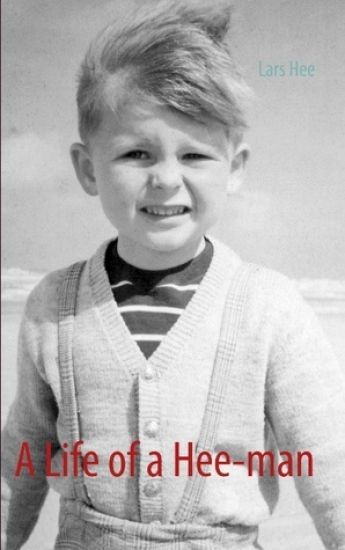
A Life of a Hee-man

A Life of a Hee-man

Lars Hee

Books on Demand
2011
pokkari
A Life of a Hee-man is an honest account on one man´s self-development over 50 years. A journey marked by an unrelenting struggle against the very Danish ´who do you think you are´ attitude, against family succession, and sometimes himself. It is also a career adventure that begins in 1978 at the prestigious BMW in England, and ends in 1990 in the middle of the battle for the most powerful position in Toyota Denmark. It is an account of the classic battlefield between father and son. Self-development, lifestyle, successes, disappointments, and how to land on one´s feet again, are the recurring themes. Nicknamed Hee-man and the analogy to the 80s cartoon character unintended becomes the thread. Despite the status as ruler of the universe, there is one thing the real He-man fears; his father´s lack of respect.
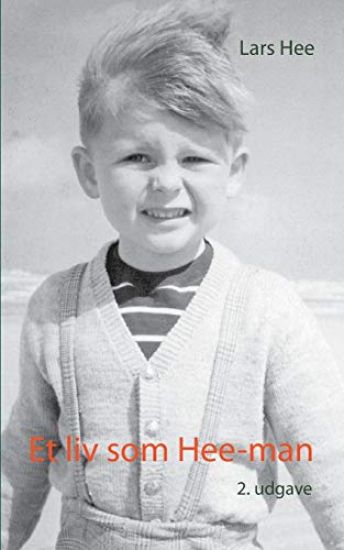
Et liv som Hee-man

Et liv som Hee-man

Lars Hee

Books on Demand
2015
pokkari
"Et liv som Hee-man" er en hudl st rlig beretning om en enkelt mands personlige udvikling gennem 50 r. Det er en sp ndende rejse pr get af en utr ttelig kamp mod den danske jantelov, mod familiens arv og sig selv. Det er et karrierem ssigt eventyr, der tager sin begyndelse i 1978 hos det prestigefyldte BMW i England og slutter i 1990 midt i en hektisk kamp om den mest magtfulde position i Toyota Danmark. Det er beretningen om det klassiske spr ngfelt mellem far og s n. Personlig udvikling, livsstil, succeser, skuffelser og ikke mindst kampen for at lande p benene igen, er de gennemg ende temaer. Tilnavnet Hee-man og analogien til 80'ernes tegneseriefigur bliver utilsigtet den r de tr d. Trods status som universets hersker, er der alligevel en ting den virkelige He-man frygter; sin fars manglende respekt. Rejsen g r kronologisk gennem herlige tidsbilleder. Fra K benhavns boligkarr er i 60'erne, over Birker ds forstadsliv i 70'erne, via England i 1979 og til de mond ne kvarterer i H rsholm og Rungsted i 80'erne og 90'erne. Her oplever hovedpersonen gl de og smerte som den fremadstormende s n, den dominerende gtemand og den omsorgsfulde far. Bagagen er fyldt med farverige oplevelser, der bindes sammen af forst else og tilgivelse, af digte og filosofiske livssyn. Herefter er tasken pakket til den n ste destination; peace of mind.
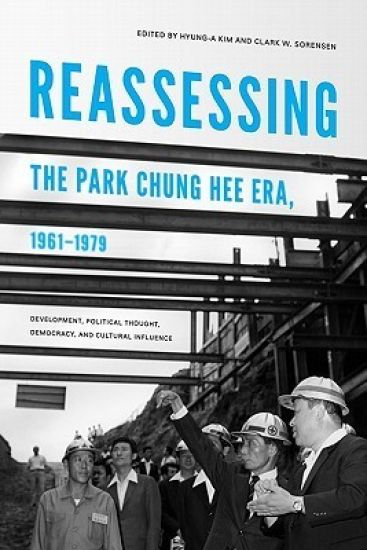
Reassessing the Park Chung Hee Era, 1961-1979
The Republic of Korea achieved a double revolution in the second half of the twentieth century. In just over three decades, South Korea transformed itself from an underdeveloped, agrarian country into an affluent, industrialized one. At the same time, democracy replaced a long series of military authoritarian regimes. These historic changes began under President Park Chung Hee, who seized power through a military coup in 1961 and ruled South Korea until his assassination on October 26, 1979. While the state's dominant role in South Korea's rapid industrialization is widely accepted, the degree to which Park was personally responsible for changing the national character remains hotly debated. This book examines the rationale and ideals behind Park's philosophy of national development in order to evaluate the degree to which the national character and moral values were reconstructed.
Reassessing the Park Chung Hee Era, 1961-1979
The Republic of Korea achieved a double revolution in the second half of the twentieth century. In just over three decades, South Korea transformed itself from an underdeveloped, agrarian country into an affluent, industrialized one. At the same time, democracy replaced a long series of military authoritarian regimes. These historic changes began under President Park Chung Hee, who seized power through a military coup in 1961 and ruled South Korea until his assassination on October 26, 1979. While the state's dominant role in South Korea's rapid industrialization is widely accepted, the degree to which Park was personally responsible for changing the national character remains hotly debated. This book examines the rationale and ideals behind Park's philosophy of national development in order to evaluate the degree to which the national character and moral values were reconstructed.
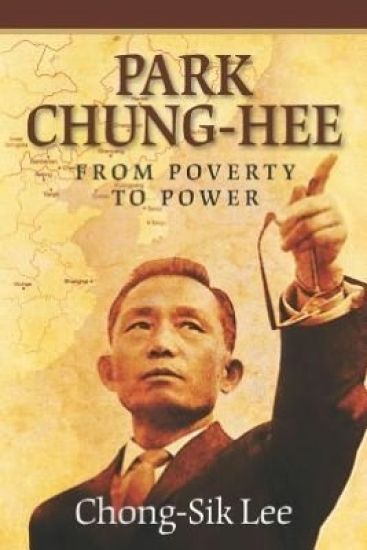
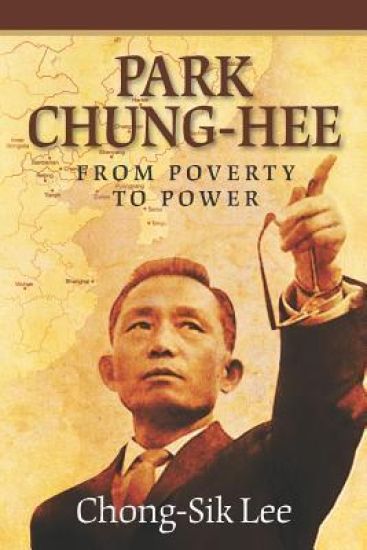
Park Chung-Hee: From Poverty to Power
How do we explain Park Chung-Hee's determination to push through the coup d' tat in 1961 and the modernization programs afterward? How did his family's poverty and his experiences in Manchuria, Japan, and China affect his later career as South Korea's leader? How would he have answered his critics' charge that he was a pro-Japanese collaborator and a Communist renegade? How can we explain his harsh suppression of domestic dissidents and opponents? In trying to answer these and other questions, Lee presents a kaleidoscopic history of modern Korea from the 1890s to the 1960s. Like Park, the author also grew up under Japanese rule and lived in Manchuria, where Park spent more than three years. This meticulously researched book uses Korean, Japanese, and English sources to put Park's life into historical context.
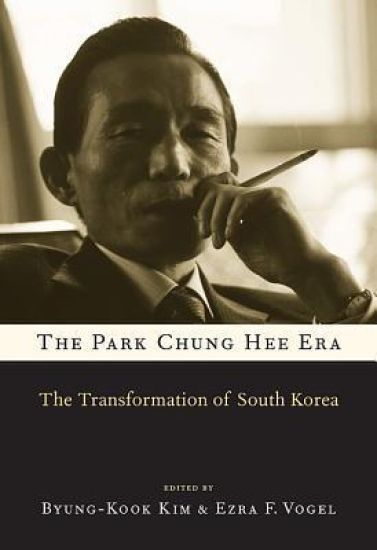
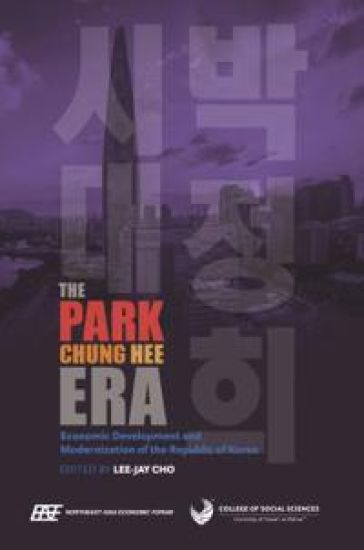
The Park Chung Hee Era

The Park Chung Hee Era

Harvard University Press
2013
nidottu
In 1961 South Korea was mired in poverty. By 1979 it had a powerful industrial economy and a vibrant civil society in the making, which would lead to a democratic breakthrough eight years later. The transformation took place during the years of Park Chung Hee's presidency. Park seized power in a coup in 1961 and ruled as a virtual dictator until his assassination in October 1979. He is credited with modernizing South Korea, but at a huge political and social cost.South Korea's political landscape under Park defies easy categorization. The state was predatory yet technocratic, reform-minded yet quick to crack down on dissidents in the name of political order. The nation was balanced uneasily between opposition forces calling for democratic reforms and the Park government's obsession with economic growth. The chaebol (a powerful conglomerate of multinationals based in South Korea) received massive government support to pioneer new growth industries, even as a nationwide campaign of economic shock therapy-interest hikes, devaluation, and wage cuts-met strong public resistance and caused considerable hardship.This landmark volume examines South Korea's era of development as a study in the complex politics of modernization. Drawing on an extraordinary range of sources in both English and Korean, these essays recover and contextualize many of the ambiguities in South Korea's trajectory from poverty to a sustainable high rate of economic growth.
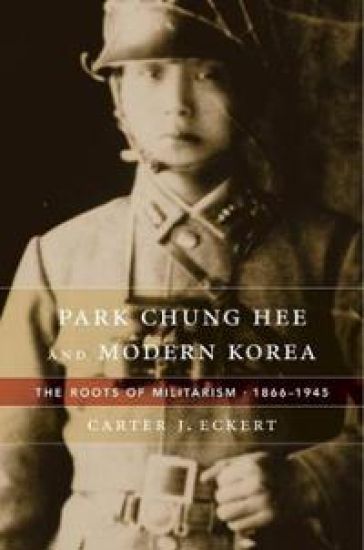
Park Chung Hee and Modern Korea

Park Chung Hee and Modern Korea

Carter J. Eckert

The Belknap Press
2016
sidottu
For South Koreans, the twenty years from the early 1960s to late 1970s were the best and worst of times—a period of unprecedented economic growth and of political oppression that deepened as prosperity spread. In this masterly account, Carter J. Eckert finds the roots of South Korea’s dramatic socioeconomic transformation in the country’s long history of militarization—a history personified in South Korea’s paramount leader, Park Chung Hee.The first volume of a comprehensive two-part history, Park Chung Hee and Modern Korea: The Roots of Militarism, 1866–1945 reveals how the foundations of the dynamic but strongly authoritarian Korean state that emerged under Park were laid during the period of Japanese occupation. As a cadet in the Manchurian Military Academy, Park and his fellow officers absorbed the Imperial Japanese Army’s ethos of victory at all costs and absolute obedience to authority. Japanese military culture decisively shaped Korea’s postwar generation of military leaders. When Park seized power in an army coup in 1961, he brought this training and mentality to bear on the project of Korean modernization.Korean society under Park exuded a distinctively martial character, Eckert shows. Its hallmarks included the belief that the army should intervene in politics in times of crisis; that a central authority should plan and monitor the country’s economic system; that the Korean people’s “can do” spirit would allow them to overcome any challenge; and that the state should maintain a strong disciplinary presence in society, reserving the right to use violence to maintain order.
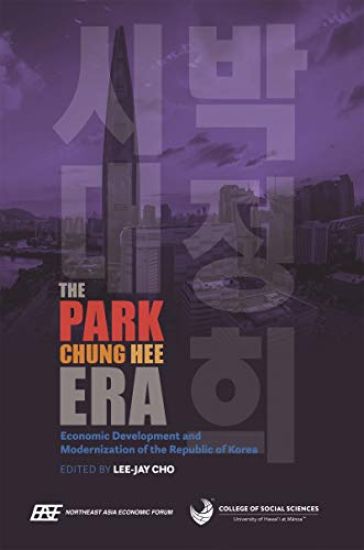
The Park Chung Hee Era

The Park Chung Hee Era

Lee-Jay Cho

University of Hawai'i Press
2018
nidottu
This volume presents a collection of authoritative summaries and analyses of the most significant economic policies of the Park Chung Hee years (1961–1979). It is the product of a major project by Korean academics and officials to critically review and analyze policies aimed at economic development and modernization of Korea. Most of the project participants who contributed chapters to this book were closely involved in developing or implementing the policies, and thus were able to provide previously unavailable first-hand accounts and behind-the-scenes information. The chapters are the result of a series of dialogues on Park-era policies among researchers, former senior government policymakers from Korea, and leading Japanese and American academics. The non-Korean economic experts analyzed and reviewed the accounts and provided comparative international perspectives. This approach based on an interactive research process has since been recognized by development economists as an innovative and successful means of producing policy-relevant analysis.Previous versions have been published in Korean, Chinese, and Japanese using various combinations of the original English-language policy papers. Designed to represent the essence of Park’s development strategies, the present volume is a thoroughly revised and abridged version of the Korean edition, which received the Best Book Award from the Korea Federation of Industries.
The Park Chung Hee Era

The Park Chung Hee Era

Lee-Jay Cho

University of Hawai'i Press
2018
sidottu
This volume presents a collection of authoritative summaries and analyses of the most significant economic policies of the Park Chung Hee years (1961–1979). It is the product of a major project by Korean academics and officials to critically review and analyze policies aimed at economic development and modernization of Korea. Most of the project participants who contributed chapters to this book were closely involved in developing or implementing the policies, and thus were able to provide previously unavailable first-hand accounts and behind-the-scenes information. The chapters are the result of a series of dialogues on Park-era policies among researchers, former senior government policymakers from Korea, and leading Japanese and American academics. The non-Korean economic experts analyzed and reviewed the accounts and provided comparative international perspectives. This approach based on an interactive research process has since been recognized by development economists as an innovative and successful means of producing policy-relevant analysis.Previous versions have been published in Korean, Chinese, and Japanese using various combinations of the original English-language policy papers. Designed to represent the essence of Park’s development strategies, the present volume is a thoroughly revised and abridged version of the Korean edition, which received the Best Book Award from the Korea Federation of Industries.
Park Chung-Hee: From Poverty to Power

Park Chung-Hee: From Poverty to Power

Chong-Sik Lee

Createspace Independent Publishing Platform
2012
nidottu
How do we explain Park Chung-Hee's determination to push through the coup d' tat in 1961 and the modernization programs afterward? How did his family's poverty and his experiences in Manchuria, Japan, and China affect his later career as South Korea's leader? How would he have answered his critics' charge that he was a pro-Japanese collaborator and a Communist renegade? How can we explain his harsh suppression of domestic dissidents and opponents? In trying to answer these and other questions, Lee presents a kaleidoscopic history of modern Korea from the 1890s to the 1960s. Like Park, the author also grew up under Japanese rule and lived in Manchuria, where Park spent more than three years. This meticulously researched book uses Korean, Japanese, and English sources to put Park's life into historical context.
Carrots à la Hee-Haw

Carrots à la Hee-Haw

Avis Wilkins

Three Wing Publishing
2024
pokkari
Dive into a delightful adventure with Chickadee Chalk and his siblings, Chickadee Chops and Chickadee Cheryl, as they are visited by one of their favorite playmates, Old Doc the donkey. Join them for a day of fun and games when a cheeky little mouse gives Old Doc a bit of a fright. As Old Doc gallops across the farm, Chickadee Chalk, Chickadee Chops, and Chickadee Cheryl, clinging to Old Doc's ears, find themselves far from home."Carrots la Hee-Haw" is the third installment in the beloved Chickadee Chalk Series by Avis Wilkins. Inspired by the cherished tales Avis shared with her children and grandchildren, this heartwarming story captures the magic of family storytelling. Perfect as a bedtime story and a delight to read for all ages.
Carrots à la Hee-Haw

Carrots à la Hee-Haw

Avis Wilkins

Three Wing Publishing
2024
sidottu
Dive into a delightful adventure with Chickadee Chalk and his siblings, Chickadee Chops and Chickadee Cheryl, as they are visited by one of their favorite playmates, Old Doc the donkey. Join them for a day of fun and games when a cheeky little mouse gives Old Doc a bit of a fright. As Old Doc gallops across the farm, Chickadee Chalk, Chickadee Chops, and Chickadee Cheryl, clinging to Old Doc's ears, find themselves far from home."Carrots la Hee-Haw" is the third installment in the beloved Chickadee Chalk Series by Avis Wilkins. Inspired by the cherished tales Avis shared with her children and grandchildren, this heartwarming story captures the magic of family storytelling. Perfect as a bedtime story and a delight to read for all ages.
Marie-José Van Hee architecten: More Home, More Garden
This publication is dedicated to projects by Marie-José Van Hee – from small interventions and furniture to award-winning outdoor spaces. Nine key projects are examined in detail, while various essays and an interview provide a comprehensive overview of her work. Furthermore, three photographers present Van Hee’s architecture from their personal perspectives, while three clients report on their lives and their impressive houses. The publication is rounded off by a small selection of Van Hee’s “black drawings”, affording insight into contextual relationships between architecture and nature, as well as an updated project list. New, revised edition of the volume published in Belgium in 2019. Text in English and German.
Marie-José Van Hee architecten: More Home, More Garden
This publication is dedicated to projects by Marie-José Van Hee – from small interventions and furniture to award-winning outdoor spaces. Nine key projects are examined in detail, while various essays and an interview provide a comprehensive overview of her work. Furthermore, three photographers present Van Hee’s architecture from their personal perspectives, while three clients report on their lives and their impressive houses. The publication is rounded off by a small selection of Van Hee’s “black drawings”, affording insight into contextual relationships between architecture and nature, as well as an updated project list. New, revised edition of the volume published in Belgium in 2019. Text in English and French.
Anne Duk Hee Jordan (Bilingual edition)
The artist Anne Duk Hee Jordan (*1978) was born in Korea and grew up in Germany. She argues in a sensuous and humorous manner that we as humans should see ourselves as a part of the ecosystem. Jordan’s multimedia, immersive installations create a mysterious and at the same time whimsical world inspired by marine life, geology, sexuality, procreation and symbiosis.In Anne Duk Hee Jordan’s oeuvre, nature is not only a comfort landscape but rather a true orgy of death, exploitation and new beginnings. As a master student of Ólafur Elíasson, she regards thinking in cycles as a prime concern. The volume combines images of her impressive installations, writings on art and literature, together with contributions in the form of essays which examine the characteristic work approach of Anne Duk Hee Jordan from various angles.
Life Isn't All Ha Ha Hee Hee

Life Isn't All Ha Ha Hee Hee

Meera Syal

Picador USA
2001
nidottu
Irreverent and moving, Meera Syal's Life Isn't All Ha Ha Hee Hee is an evocative story of friendship, marriage, betrayal, and the difficult choices women face. Meera Syal has created an indelible portrait of a close-knit group of Indian women living in London. Caught between two cultures, three childhood friends--Chila, Sunita, and Tania--are expected to revert to being obedient mothers and wives. But their world explodes when Tania makes a documentary, starring Chila and Sunita, about contemporary urban Indian Life. The result is an unforgettable story of friendship from the award-winning author of Anita and Me.
Korea's Development Under Park Chung Hee
Based on personal interviews with the principal policy-makers of the 1970s, Korea's Development under Park Chung-Hee examines how the president sought to develop South Korea into an independent, autonomous sovereign state both economically and militarily. Kim provides a new narrative in the complex task of exploring the paradoxical nature and effects of Korea's rapid development which maintains that any judgement of Park must consider his achievements in the socio-economic, cultural and political context in which they took place. Aspects of Park's government analyzed include:*his abhorrence of Korea's reliance on the US presence*the Korean model of state-guided industrialization*Park's rapid development strategy *the role of the ruling elites*Park's clandestine nuclear development program*the heavy chemical industrialisation of the 1970sThe prevailing popularity of Park in the eyes of the Korean public is significant and relevant to their acceptance of how their national development was achieved. This book tells that story while simultaneously recognizing the flaws in the process. With a great deal of material never before published, scholars of Korean politics and history at all levels will find this book a stimulating account of South Korea in the 1960s and 1970s.