Kirjojen hintavertailu. Mukana 12 369 035 kirjaa ja 12 kauppaa.

Kirjahaku

Etsi kirjoja tekijän nimen, kirjan nimen tai ISBN:n perusteella.

1000 tulosta hakusanalla Heinrich Helms

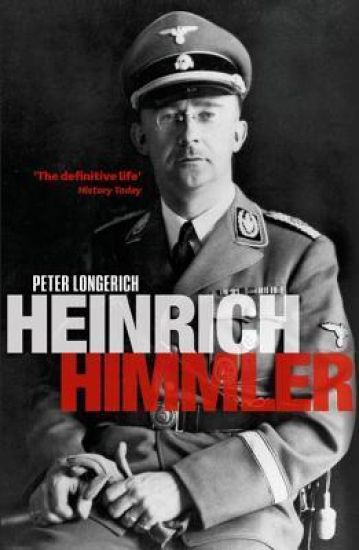
Heinrich Himmler

Heinrich Himmler

Peter Longerich

Oxford University Press
2012
nidottu
As head of the SS, chief of police, 'Reichskommissar for the Consolidation of Germanness', and Reich Interior Minister, Heinrich Himmler enjoyed a position of almost unparalleled power and responsibility in Nazi Germany. Perhaps more than any other single Nazi leader aside from Hitler, his name has become a byword for the terror, persecution, and destruction that characterized the Third Reich. His wide-ranging powers meant that he bore equal responsibility for the repression of the German people on the home front and the atrocities perpetrated by the SS in the East. Yet, in spite of his central role in the crimes of the Nazi regime, until now Himmler has remained a colourless and elusive figure in the history of the period. In this, the first-ever comprehensive biography of the SS-Reichsführer, leading German historian Peter Longerich puts every aspect of Himmler's life under the microscope. Masterfully interweaving the story of Himmler's personal life and political career with the wider history of the Nazi dictatorship, Longerich shows how skilfully he exploited and manipulated his disparate roles in the pursuit of his far-reaching and grandiose objectives. In the process, he illuminates the extraordinary degree to which Himmler's own personal prejudices, idiosyncrasies, and predilections made their mark on the organizations for which he was responsible - especially the SS, which in so many ways bore the characteristic hallmarks of its leader, and whose history remains both incomplete and incomprehensible without a detailed and intimate knowledge of its deeply sinister commander-in-chief.
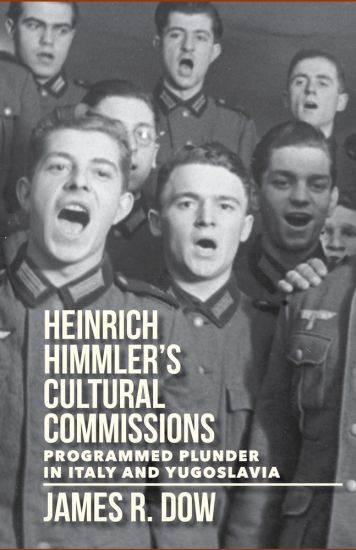
Heinrich Himmler's Cultural Commissions

Heinrich Himmler's Cultural Commissions

James Dow

University of Wisconsin Press
2018
sidottu
German scholars were early pioneers in folklore and historical linguistics. As the Nazis rose to power, however, these disciplines were distorted into racist pseudoscience. Under the direction of Heinrich Himmler's SS-Ahnenerbe (Ancestral Inheritance), folklore became a tool for constructing a unified German realm and a manufactured lineage from ancient and ""pure"" Germanic and Nordic blood.Drawing on extensive research in public and private archives and interviews with family members of fieldworkers, James R. Dow uncovers both details of the SS cultural commissions' work and the continuing vestiges of the materials they assembled. Teams of poorly qualified and ideologically motivated collectors were sent to South Tyrol in Italy and Gottschee in Slovenian Yugoslavia, from which ethnically German communities were to be resettled in the German Reich. Although a mass of information on narratives, songs and dances, beliefs, customs, local clothing and architecture, and folk speech was collected, the research was deeply tainted and skewed by racialist and nationalist preconditions. Dow sharply critiques the continued use of these ersatz archives.
Heinrich Heine

Heinrich Heine

George Prochnik

Yale University Press
2021
sidottu
A rich, provocative, and lyrical study of one of Germany’s most important, world-famous, and imaginative writers “A concise, fast-paced biography of the German poet, critic, and essayist. . . . A discerning portrait of the writer and his times.”—Kirkus Reviews “Prochnik provides a jaunty narrative of Heine’s schooldays in Bonn and Göttingen, journalistic career in Berlin, and twenty-five-year exile in Paris, detailing his literary feuds, scraps with censors, and unwavering belief in political liberty.”—New Yorker Heinrich Heine (1797–1856) was a virtuoso German poet, satirist, and visionary humanist whose dynamic life story and strikingly original writing are ripe for rediscovery. In this vividly imagined exploration of Heine’s life and work, George Prochnik contextualizes Heine’s biography within the different revolutionary political, literary, and philosophical movements of his age. He also explores the insights Heine offers contemporary readers into issues of social justice, exile, and the role of art in nurturing a more equitable society. Heine wrote that in his youth he resembled “a large newspaper of which the upper half contained the present, each day with its news and debates, while in the lower half, in a succession of dreams, the poetic past was recorded fantastically like a series of feuilletons.” This book explores the many dualities of Heine’s nature, bringing to life a fully dimensional character while also casting into sharp relief the reasons his writing and personal story matter urgently today.
Heinrich Rudolf Hertz (1857-1894)
This book, first available in 1994, was published to commemorate the one-hundredth anniversary of Heinrich Hertz’s death at the terribly young age of thirty-six. The introductory biography together with eleven papers by Hertz and seven about him are intended to highlight the importance of Hertz’s contributions to physics and at the same time to serve the needs of anyone interested in doing research on this highly gifted scientist.
Heinrich Rudolf Hertz (1857-1894)
This book, first available in 1994, was published to commemorate the one-hundredth anniversary of Heinrich Hertz’s death at the terribly young age of thirty-six. The introductory biography together with eleven papers by Hertz and seven about him are intended to highlight the importance of Hertz’s contributions to physics and at the same time to serve the needs of anyone interested in doing research on this highly gifted scientist.
Heinrich Rudolf Hertz (1857-1894)
Published in 1994: This book is to commemorate the one hundredth anniversary of Heinrich Hertz’s death at the terribly young age of thirty-six. The introductory biography together with eleven papers by Hertz and seven about him are intended to highlight the importance of Hertz’s contributions to physics and at the same time to serve the needs of anyone interested in doing research on this highly gifted scientist.
Heinrich Rudolf Hertz (1857-1894)
Published in 1994: This book is to commemorate the one hundredth anniversary of Heinrich Hertz’s death at the terribly young age of thirty-six. The introductory biography together with eleven papers by Hertz and seven about him are intended to highlight the importance of Hertz’s contributions to physics and at the same time to serve the needs of anyone interested in doing research on this highly gifted scientist.
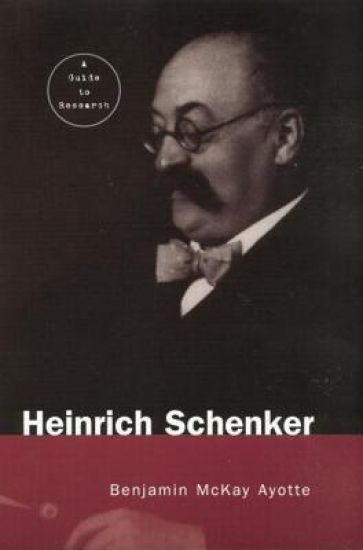
Heinrich Schenker

Heinrich Schenker

Benjamin Ayotte

Routledge
2014
nidottu
Heinrich Schenker: A Research and Information Guide is an annotated bibliography concerning both the nature of primary sources related to the composer and the scope and significance of the secondary sources which deal with him, his compositions, and his influence as a composer and theorist.
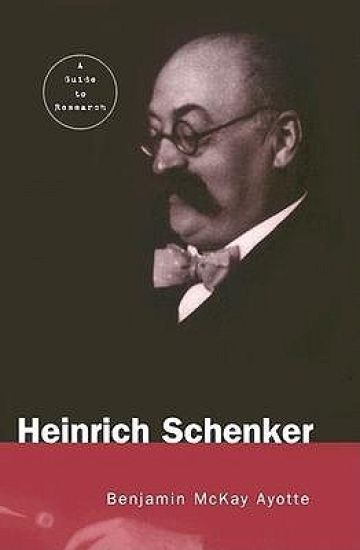
Heinrich Schenker

Heinrich Schenker

Benjamin Ayotte

Routledge
2003
sidottu
This book consists of over 1,500 citations to both primary sources and the burgeoning secondary literature of Heinrich Schenker, annotated and subdivided by category. The citations are supplemented with indices cross-referencing entries according to individual works and analytical topic.
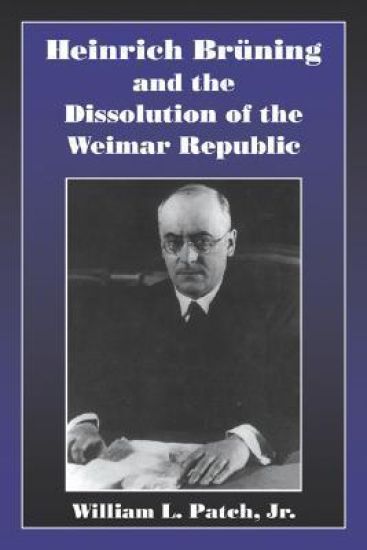
Heinrich Bruning and the Dissolution of the Weimar Republic
Scholars have long debated whether Heinrich Brüning, head of the German government from 1930 to 1932, was the 'last democratic chancellor'of the Weimar Republic or the trailblazer of the Nazi dictatorship. His memoirs (published in 1970) damaged his reputation badly by terming the restoration of monarchy the 'crux' of his policies. This 1998 book is the first scholarly biography of Bruning in any language and offers a systematic analysis of the economic, social, foreign, and military policies of his cabinet as it sought to cope with the Great Depression. With the help of newly available sources, it clarifies the peculiar distortions in the memoirs, showing that Chancellor Brüning intended to restore parliamentary democracy intact when the economic crisis passed. He was curbing the Nazi menace successfully when President Hindenburg, reactionary landowners, and army generals eager for massive rearmament made the disastrously misguided decision to topple him.