Kirjahaku
Etsi kirjoja tekijän nimen, kirjan nimen tai ISBN:n perusteella.
1000 tulosta hakusanalla Helene Brecker
H l ne est une trag die grecque d'Euripide, sans doute repr sent e pour la premi re fois la Grande Dionysie de 412 av. J.-C., et qui illustre la version du mythe troyen selon laquelle H l ne aurait v cu la guerre de Troie exil e en gypte.
Helenes mor er død. De jordiske rester befinder sig i Spanien, så Helene er tvunget til at rejse sydpå for at hente sin mor hjem. Det skal dog vise sig at være en rejse, der gør Helene klogere på meget mere end sin mors død. Helene er historien om, hvordan man som menneske indimellem er tvunget til at blive klogere på andre, før man kan blive klogere på sig selv. Det er samtidig en historie om, hvordan livet byder på udfordringer, som man ikke nødvendigvis løser bedre på egen hånd. Menneskeskæbner er en serie af noveller, der beskriver en uge i en tilfældig 29-årigs liv. Der er indtil videre planlagt ni noveller i serien, som alle vil blive udgivet i løbet af 2024.
Helene
Helene moss
2025
sidottu
"HELENE" on Eesti menukirjaniku Helene Mossi kümnes raamat - psühholoogiline ja kirglik armastuslugu, mis on tulvil keelatud iha, sisemist segadust, meeleheitlikku igatsust, rusuvat lootusetust, valusaid konflikte ja magusaid leppimisi. Aga eeskätt on see lugu kahest inimesest, kes armastavad teineteist kogu südamest, hoolimata vanusevahest, põrkuvatest maailmavaadetest ja vägagi erinevast elutempost. Romaan rullub lugeja ees lahti läbi noore jalgpalluri Aleksi teraapiaseansside, kuhu ta otsustas pöörduda, et mõista paremini enda suhet keskealise kirjaniku, salapärase Helenega. Nende lugu algab suhtlusäpis tänu süütule valele, kasvades kiiresti millekski, mida kumbki ei oska oodata, paisates nad mida aeg edasi, seda sügavamale sõltuvusse teineteisest. Sõltuvusse vastandi armastusest. Romaanis "HELENE" ei ole küsimus mitte üksnes armastuses, vaid ka saatuses, juhatades lugejaid sisemisele arutelule, kui paljud meist elavad tegelikult enda valitud elu, olemata osatäitjad kellegi teise kirjutatud loos.
In 1896, a young Genevan medium named Hélène Smith perceived in trance the following words from a Martian inhabitant: "michma michtmon mimini thouainenm mimatchineg." Those attending her séance dutifully transcribed these words and the event marked the beginning of a series of occult experiences that transported her to the red planet. In her state of trance, Smith came to produce foreign conversations, a new alphabet, and paintings of the Martian surroundings that captured the popular and scientific imagination of Geneva. Alongside her Martian travels, she also retrieved memories of her past lives as a fifteenth-century "Hindoo" princess and as Queen Marie Antoinette. Today, Smith's séances may appear to be nothing more than eccentric practices at the margins of modernity. As author Claudie Massicotte argues, however, the medium came to embody the extreme possibilities of a new form of subjectivity, with her séances becoming important loci for pioneering authors' discoveries in psychology, linguistics, and the arts. Through analyses of archival documents, correspondences, and publications on the medium, Massicotte sheds light on the role of women in the construction of turn-of-the-century psychological discourses, showing how Smith challenged traditional representations of female patients as powerless victims and passive objects of powerful doctors. She shows how the medium became the site of conflicting theories about subjectivity--specifically one's relationship to embodiment, desire, language, art, and madness--while unleashing a radical form of creativity that troubled existing paradigms of modern sciences. Massicotte skillfully retraces the story of this prolific figure and the authors, scientists, and artists she inspired in order to bring to light a forgotten chapter in modern intellectual history.
Abigail Bray offers a lucid and accessible introduction to Hélène Cixous and her theorisation of writing and sexual difference. This book explores the context of feminist debates surrounding Cixous's work and provides a concise explanation of her major philosophical and literary concepts, including the 'other bisexuality', the 'third body', and l'écriture feminine. Bray demonstrates, through original and provocative readings of texts by James Joyce, Virginia Woolf, Clarice Lispector and Angela Carter, the creative potential of Cixous's thought on literature and philosophy. Reading Cixous alongside Nietzsche, Heidegger, Deleuze and Derrida, Bray argues for a recognition of Cixous as one of the important thinkers of our times.
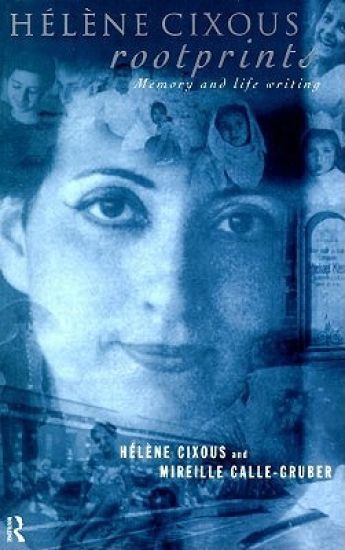
Helene Cixous is undoubtedly one of the most brilliant and innovative contemporary thinkers. Published here in English for the first time Helene Cixous, Rootprints is an ideal introduction to Cixous's theory and her fiction, tracing her development as a writer and intellectual whose remarkable prespicacity and electrifying poetic force are known world-wide.Unprecedented in its form and content this collection breaks new ground in the theory and practice of auto/biography. Cixous's creative reflections on the past provide occasion for scintillating forays into the future.The text includes:* an extended interview between Cixous and Calle-Gruber, exploring Cixous's creative and intellectual processes* a revealing collection of photographs taken from Cixous's family album, set against a poetic reflection by the author * selections from Cixous's private notebooks* a contribution by Jacques Derrida* original 'thing-pieces' by Calle-Gruber.
Cixous' work as a playwright - working mainly with Theatre du Soleil and their director Ariane Mnouchkine - establishes her as a participant in some of the most adventurous European theatre making of the last 40 years. This collection brings together for the first time, four translations into English of Helene Cixous' plays. It is a unique and extraordinary resource for scholars, students and theatre-makers. The collection includes: *The Perjured City, translated by Bernadette Fort *Black Sail, White Sail, translated by Donald Watson *Portrait of Dora, translated by Ann Liddle *Drums on the Dam, translated by Judith G. Miller and Brian J. Mallet This exciting new anthology will disseminate her work to a wide and receptive English-speaking audience.
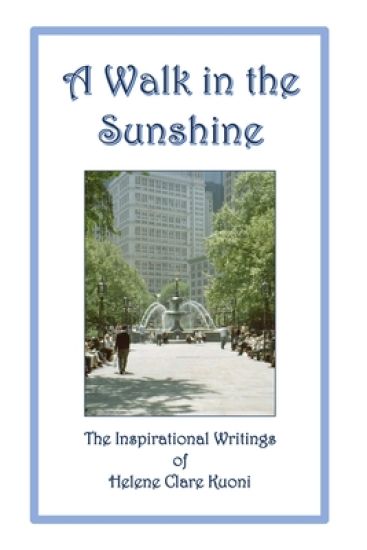
A Walk in the Sunshine: The Inspirational Writings of Helene Clare Kuoni
Helene Clare Kuoni
John P. Kuoni
2019
nidottu
Christian writing groups often challenge their members to compose individual devotions all based on the same scripture passage. Without fail, the exercise results in as many different messages as there are members at the table. Why is that?Often believers who know the Bible well, will report that one day a familar verse jumped off the page with richer meaning. Why is that?Devotion writer, Helene Kuoni believes Biblical nuggets of truth - "gems" if you will - are multifaceted. (See Proverbs 1:5-6, TLB.) Each person reads the passage in light of their life experiences. The Bible speaks truth, but tell the story of Noah's Ark to a child and to an adult, and different aspects of the story will resonate with each. It all depends on the maturity of their faith.God's word does not change. Over time people grow in their understanding.This volume of personal-experience devotions and essays is the work of a writer who desires to grow closer to the Lord. Her hope is that this compilation encourages others to embark on that same glorious path.Enjoy A Walk in the Sunshine
This book is a clear and accessible introduction to the writings of Helene Cixous, novelist, dramatist and critic, whose work has had a major impact on feminist theory and practice. Susan Sellers, a major scholar on Cixous, provides a lucid account of Cixous's theoretical position, and in particular her distinctive theory of an 'écriture féminine'. She discusses the development of Cixous's literary oeuvre in the context of this theory, and analyses a selection of the works in detail to illustrate the different stages in Cixous's writing career. Focusing on the key novels and plays, Sellers explores a range of issues and themes central to her work; the correlation between the death of Cixous's own father and her 'coming-into-being' as a writer; the psychological process of separation and individuation and the creation of a female authorial self; the discovery of the other and the dramatization of love; the delineation/depiction of an alternative form of relationship between self and other which would have a significance in a wider sphere than that of the merely personal. This much-needed book will be welcomed by students in literature and literary theory, feminism and women's studies, English and French studies and philosophy.
Born in Algeria in 1937, Hélène Cixous achieved world fame for her short stories, criticism, and fictionalized autobiography (Dedans, 1969). Her work quickly became controversial because it frankly tested a distinction between male and female writing. Her literary experiments and her conclusions make her one of the most stimulating and most elusive feminist theorists of our time. Verena Andermatt Conley, a professor of French and women's studies at Miami University, has written the first full-length study of Cixous in English. Looking at Cixous as writer, teacher, and theoretician, Conley takes up Cixous's ongoing exploration of the "feminine" as related to the "masculine"—words not to be equated with "woman" and "man"—and her search for a terminology less freighted with emotion and prejudgment. Conley has updated this paperback edition with a new preface, bibliography, and interview with Cixous conducted by the editors of Hors Cadre.
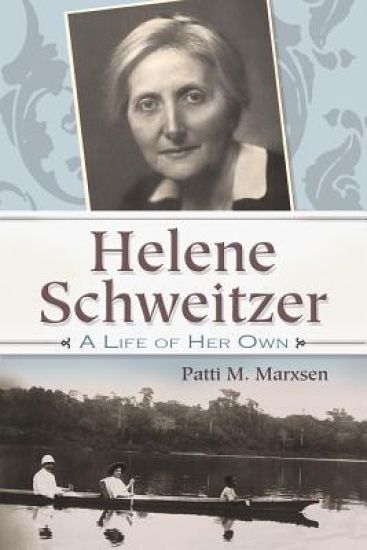
Born in Berlin, Helene Schweitzer came of age in Strasbourg during a time of great social, architectural, and historical developments. It was in this cultural milieu, as a history professor’s daughter, that Helene met a young pastor named Albert Schweitzer (1875–1965) and developed a deep friendship that flourished for a decade before their marriage in 1912. During those years, she served as the first woman Inspector of City Orphanages in Strasbourg, a position she held for four years before becoming a certified nurse. She also edited and proofread a number of Schweitzer’s books in multiple fields as they worked together to realize their shared dream of devoting their lives tohumanity. Together in 1913, Albert and Helene Schweitzer founded what is now the longest-running hospital established by Europeans in Africa, the Albert Schweitzer Hospital in current-day Gabon.With her quiet strength, clear sense of purpose, independent spirit, and wide range of skills and talents, Helene was a model for many other women who later served the Schweitzer Hospital. Drawing upon the couple’s lifelong correspondence, as well as Helene’s journals and professional writing, Marxsenreveals a modern woman of courage in dark times whose resilient, optimistic spirit allowed her to leave a lasting legacy that has yet to be fully understood.Helene Schweitzer’s dramatic life reveals deeper questions of how memory is influenced by gender assumptions and how biography is shaped by place and history. By providing a counter-narrative to the traditional image of a frail woman who sacrificed her life to her husband’s genius, this richly detailed chronicle of a little-known figure invites a larger discussion about the meaning of a woman’s life obscured by a partner’s fame.
Hélène Cixous: Live Theory
Ian Blyth; Susan Sellers
Continuum International Publishing Group Ltd.
2004
sidottu
Helene Cixous: Live Theory provides a clear and informative introduction to one of the most important and influential European writers working today. The book opens with an overview of the key features of Cixous's theory of ecriture feminine (feminine writing). The various manifestations of ecriture feminine are then explored in chapters on Cixous's fictional and theatrical writing, her philosophical essays, and her intensely personal approach to literary criticism. The book concludes with a new, lively and wide-ranging interview with Helene Cixous in which she discusses her influences and inspirations, and her thoughts on the nature of writing and the need for an ethical relationship with the world. Also offering a survey of the many English translations of Cixous's work, this book is an indispensable introduction to her work for students of Literature, Philosophy, Cultural and Gender Studies.
Hélène Cixous: Live Theory
Ian Blyth; Susan Sellers
Continuum International Publishing Group Ltd.
2004
nidottu
Helene Cixous: Live Theory provides a clear and informative introduction to one of the most important and influential European writers working today. The book opens with an overview of the key features of Cixous's theory of ecriture feminine (feminine writing). The various manifestations of ecriture feminine are then explored in chapters on Cixous's fictional and theatrical writing, her philosophical essays, and her intensely personal approach to literary criticism. The book concludes with a new, lively and wide-ranging interview with Helene Cixous in which she discusses her influences and inspirations, and her thoughts on the nature of writing and the need for an ethical relationship with the world. Also offering a survey of the many English translations of Cixous's work, this book is an indispensable introduction to her work for students of Literature, Philosophy, Cultural and Gender Studies.
Hélène Metzger, Historian and Historiographer of the Sciences
Cristina Chimisso
Taylor Francis Ltd
2021
nidottu
Is there something important to learn from the history of science about knowledge and the mind? Do habits and emotions play a significant role in science? To what extent do present concerns and knowledge distort our understanding of past texts and practices? These are crucial questions in current debates, but they are not new. This monograph evaluates the answers to these and other questions that Hélène Metzger (1889-1944) provided. Metzger, who was the leading historian of chemistry of her generation, left us unparalleled reflections on the theory, practice and aims of history writing. Despite her influence on subsequent generations of thinkers, including Thomas Kuhn, this is the first full-length monograph on her. Beginning with an overview of her life, and the challenges faced by a Jewish woman working within academia, the book goes on to discuss the most important themes of her historiography, and her engagement with other disciplines, notably general history, philosophy, ethnology and religious studies. The book also explores both Metzger’s immediate legacy and the relevance of her ideas for a host of current debates in science studies. The Appendices include four of her historiographical papers, translated into English for the first time.