Kirjojen hintavertailu. Mukana 11 244 527 kirjaa ja 12 kauppaa.

Kirjahaku

Etsi kirjoja tekijän nimen, kirjan nimen tai ISBN:n perusteella.

1000 tulosta hakusanalla Helene Cixous

The Hélène Cixous Reader
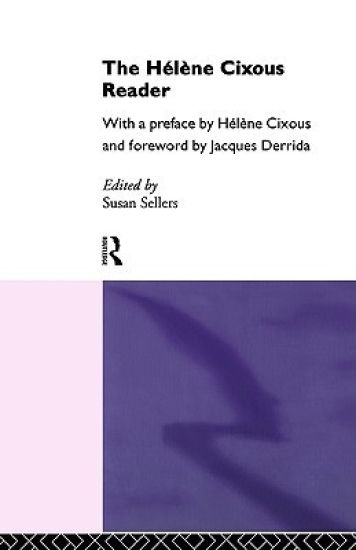
This is the first truly representative collection of texts by Helene Cixous. The substantial pieces range broadly across her entire oeuvre, and include essays, works of fiction, lectures and drama. Arranged helpfully in chronological order, the extracts span twenty years of intellectual thought and demonstrate clearly the development of one of the most creative and brilliant minds of the twentieth century.With a foreword by Jacques Derrida, a preface by Cixous herself, and first-class editorial material by Susan Sellers, The Helene Cixous Reader is destined to become a key text of feminist writing.
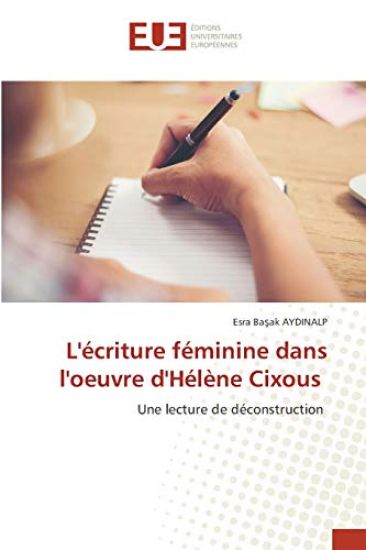
L'écriture féminine dans l'oeuvre d'Hélène Cixous

L'écriture féminine dans l'oeuvre d'Hélène Cixous

Esra Basak Aydinalp

Editions Universitaires Europeennes
2020
pokkari
Vers la fin du vingti me si cle, H l ne Cixous pr sente l' criture f minine comme un mod le contre la sc ne historique envahie par le concept d' criture bas sur un mouvement de structure et de rh torique masculine en substituant l' conomie libidinale masculine une inscription f minine fond e sur l' criture du corps et sur l' conomie libidinale f minine. Elle d construit le regard phallocentrique de la pens e occidentale en utilisant l'image de M duse dans son oeuvre intitul e Le Rire de la M duse. Dans cette tude, le but est de d montrer l'utilisation de la m thode de pens e qui est la d construction, d velopp e par Jacques Derrida dans l'oeuvre de H l ne Cixous et de la poser comme critique du syst me linguistique gouvern par le syst me symbolique/phallique qu'il faut voir galement comme les constituants de cette nouvelle forme d' criture f minine qui se manifeste travers un nouveau discours d velopp par Cixous. L' tude comprend non seulement l'exploration d'une lecture de d construction du discours productif de Cixous mais aussi essaye de r pondre une s rie de questions concernant l' criture, le langage, le corps, le potentiel d'une conomie f minine libidinale.
Écriture Des Origines, Origines de l'Écriture. Hélène Cixous
crivaine inclassable, H l ne Cixous offre une criture dont les grands th mes - le p re mort, le pays perdu et la m re trang re -, aux fortes r sonances autobiographiques, s'affirment continuellement tout en multipliant les chos po tiques et philosophiques. La question de l'origine, la fois singuli re et plurielle, donne lieu une criture-pens e d'une subjectivit qui montre ses enracinements, revisite les lieux et les liens, mais (se) d fait aussi des mythes de l'origine. Ce volume se propose d' tudier les marqueurs de la f minit , de l' alg riance et de la jud it comme les principaux lieux d'interrogation de l'origine, auxquels s'ajoutent la filiation allemande mise en lumi re dans les textes les plus r cents, Gare d'Osnabr ck J rusalem et Une autobiographie allemande. Le volume ouvre par un in dit d'H l ne Cixous, Un legs empoisonn . H l ne Cixous offers us an unclassifiable oeuvre, the main themes of which - the dead father, the lost country and the foreign mother -, all autobiographically inspired, assert themselves as such while offering the reader continuously new poetical and philosophical insights. The question of origin, either singular or multiple, gives rise to an criture-pens e of a subjectivity which shows its roots, revisits places and relationships, but also breaks down myths of origin. This collection of essays proposes to study the markers of femininity, "alg riance", Jewishness and, as expressed in Cixous' latest works of fiction, the German filiation, as the main places of questioning origin. "Un legs empoisonn ", an unpublished text by H l ne Cixous, opens the collection.
The Portable Cixous

The Portable Cixous

Hélène Cixous

Columbia University Press
2010
sidottu
Helene Cixous is more than an influential theorist. She is also a groundbreaking author and playwright. Combining an idiosyncratic mix of autobiographical and fictional narrative with a host of philosophical and poetic observations, Cixous's writing matches the kaleidoscopic nature of her thought, offering new ways of conceptualizing sex, relationships, identity, and the self, among other topics. Yet, as Jacques Derrida once observed, a "profound misunderstanding" hangs over the accomplishments of Cixous, with many believing the intellectual excelled only at theoretical exploration. Providing a truly liberal selection of her writings from throughout her career, Marta Segarra rediscovers Cixous's acts of invention for a new generation to enjoy. Divided into thematic concerns, these works fully capture Cixous's genius for merging fiction, theory, and the experience of living. They discuss dreaming in the feminine, Algeria and Germany, love and the other, the animal, Derrida, and the theater. They defy classification, locking literature, philosophy, and psychoanalysis into thrilling new patterns of engagement. Whether readers are familiar with Cixous or are approaching her thought for the first time, all will find fresh perspectives on gender, fiction, drama, philosophy, religion, and the postcolonial.
The Portable Cixous

The Portable Cixous

Hélène Cixous

Columbia University Press
2010
pokkari
Helene Cixous is more than an influential theorist. She is also a groundbreaking author and playwright. Combining an idiosyncratic mix of autobiographical and fictional narrative with a host of philosophical and poetic observations, Cixous's writing matches the kaleidoscopic nature of her thought, offering new ways of conceptualizing sex, relationships, identity, and the self, among other topics. Yet, as Jacques Derrida once observed, a "profound misunderstanding" hangs over the accomplishments of Cixous, with many believing the intellectual excelled only at theoretical exploration. Providing a truly liberal selection of her writings from throughout her career, Marta Segarra rediscovers Cixous's acts of invention for a new generation to enjoy. Divided into thematic concerns, these works fully capture Cixous's genius for merging fiction, theory, and the experience of living. They discuss dreaming in the feminine, Algeria and Germany, love and the other, the animal, Derrida, and the theater. They defy classification, locking literature, philosophy, and psychoanalysis into thrilling new patterns of engagement. Whether readers are familiar with Cixous or are approaching her thought for the first time, all will find fresh perspectives on gender, fiction, drama, philosophy, religion, and the postcolonial.
Three Steps on the Ladder of Writing

Three Steps on the Ladder of Writing

Hélène Cixous

Columbia University Press
1994
pokkari
Three Steps on the Ladder of Writing is a poetic, insightful, and ultimately moving exploration of 'the strange science of writing.' In a magnetic, irresistible narrative, Cixous reflects on the writing process and explores three distinct areas essential for 'great' writing: The School of the Dead-the notion that something or someone must die in order for good writing to be born; The School of Dreams-the crucial role dreams play in literary inspiration and output; and The School of Roots-the importance of depth in the 'nether realms' in all aspects of writing. Cixous's love of language and passion for the written word is evident on every page. Her emotive style draws heavily on the writers she most admires: the Brazilian novelist Clarice Lispector, the Russian poet Marina Tsvetaeva, the Austrian novelists Ingeborg Bachmann and Thomas Bernhard, Dostoyevsky and, most of all, Kafka.
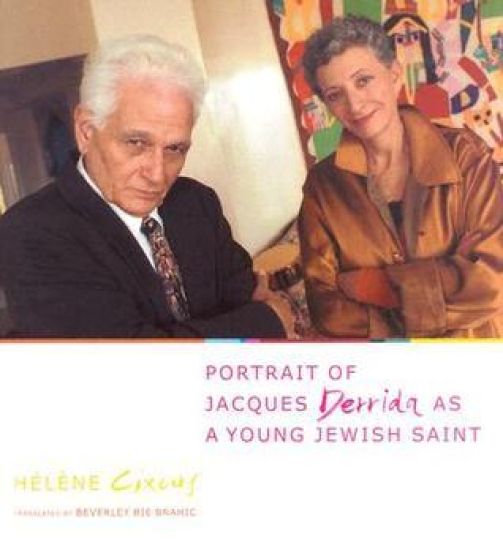
Portrait of Jacques Derrida as a Young Jewish Saint

Portrait of Jacques Derrida as a Young Jewish Saint

Hélène Cixous

Columbia University Press
2004
sidottu
Who can say "I am Jewish?" What does "Jew" mean? What especially does it mean for Jacques Derrida, founder of deconstruction, scoffer at boundaries and fixed identities, explorer of the indeterminate and undecidable? In Portrait of Jacques Derrida as a Young Jewish Saint, French feminist philosopher Helene Cixous follows the intertwined threads of Jewishness and non-Jewishness that play through the life and works of one of the greatest living philosophers. Cixous is a lifelong friend of Derrida. They both grew up as French Jews in Algeria and share a "belonging constituted of exclusion and nonbelonging"-not Algerian, rejected by France, their Jewishness concealed or acculturated. In Derrida's family "one never said 'circumcision'but 'baptism,'not 'Bar Mitzvah'but 'communion.'" Judaism cloaked in Catholicism is one example of the undecidability of identity that influenced the thinker whom Cixous calls a "Jewish Saint." An intellectual contemporary of Derrida, Cixous's ideas on writing have an affinity with his philosophy of deconstruction, which sought to overturn binary oppositions-such as man/woman, or Jew/non-Jew-and blur boundaries of exclusion inherent in Western thought. In portraying Derrida, Cixous uses metonymy, alliteration, rhyme, neologisms, and puns to keep the text in constant motion, freeing language from any rigidity of meaning. In this way she writes a portrait of "Derrida in flight," slipping from one appearance to the next, unable to be fixed in one spot, yet encompassing each point he passes. From the circumcision act to family relationships, through Derrida's works to those of Celan, Rousseau, and Beaumarchais, Cixous effortlessly merges biography and textual commentary in this playful portrait of the man, his works, and being (or not being) Jewish.
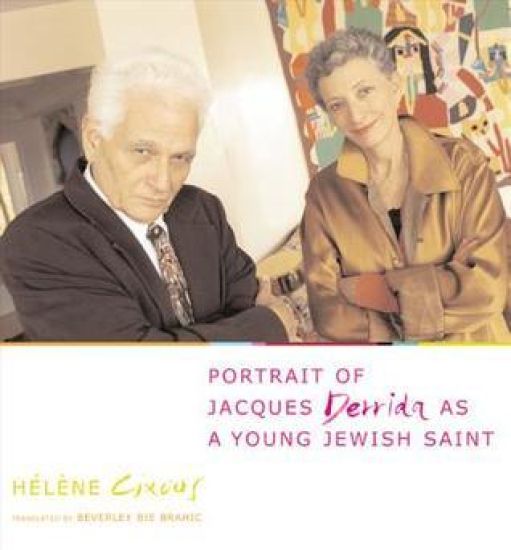
Portrait of Jacques Derrida as a Young Jewish Saint

Portrait of Jacques Derrida as a Young Jewish Saint

Hélène Cixous

Columbia University Press
2005
pokkari
Who can say "I am Jewish?" What does "Jew" mean? What especially does it mean for Jacques Derrida, founder of deconstruction, scoffer at boundaries and fixed identities, explorer of the indeterminate and undecidable? In Portrait of Jacques Derrida as a Young Jewish Saint, French feminist philosopher Helene Cixous follows the intertwined threads of Jewishness and non-Jewishness that play through the life and works of one of the greatest living philosophers. Cixous is a lifelong friend of Derrida. They both grew up as French Jews in Algeria and share a "belonging constituted of exclusion and nonbelonging"-not Algerian, rejected by France, their Jewishness concealed or acculturated. In Derrida's family "one never said 'circumcision'but 'baptism,'not 'Bar Mitzvah'but 'communion.'" Judaism cloaked in Catholicism is one example of the undecidability of identity that influenced the thinker whom Cixous calls a "Jewish Saint." An intellectual contemporary of Derrida, Cixous's ideas on writing have an affinity with his philosophy of deconstruction, which sought to overturn binary oppositions-such as man/woman, or Jew/non-Jew-and blur boundaries of exclusion inherent in Western thought. In portraying Derrida, Cixous uses metonymy, alliteration, rhyme, neologisms, and puns to keep the text in constant motion, freeing language from any rigidity of meaning. In this way she writes a portrait of "Derrida in flight," slipping from one appearance to the next, unable to be fixed in one spot, yet encompassing each point he passes. From the circumcision act to family relationships, through Derrida's works to those of Celan, Rousseau, and Beaumarchais, Cixous effortlessly merges biography and textual commentary in this playful portrait of the man, his works, and being (or not being) Jewish.
White Ink

White Ink

Hélène Cixous

Columbia University Press
2008
sidottu
These interviews with Helene Cixous offer invaluable insight into her philosophy and criticism. Culled from newspapers, journals, and books, White Ink collects the best of these conversations, which address the major concerns of Cixous's critical work and features two dialogues with twentieth-century intellectuals Michel Foucault and Jacques Derrida. The interviews in White Ink span more than three decades and include a new conversation with Susan Sellers, the book's editor and a leading Cixous scholar and translator. Cixous discusses her work and writing process. She shares her views on literature, feminism, theater, autobiography, philosophy, politics, aesthetics, religion, ethics, and human relations, and she reflects on her roles as poet, playwright, professor, woman, Jew, and, her most famous, "French feminist theorist." Sellers organizes White Ink in such a way that readers can grasp the development of Cixous's commentary on a series of vital questions. Taken together, the revealing performances in White Ink provide an excellent introduction this thinker's brave and vital work--each one an event in language and thought that epitomizes Cixous's intellectual and poetic force.
Stigmata

Stigmata

Hélène Cixous

Routledge
1998
sidottu
Hèléne Cixous -- author, playwright and French feminist theorist -- is a key figure in twentieth-century literary theory. Stigmata brings together her most recent essays for the first time.Acclaimed for her intricate and challenging writing style, Cixous presents a collection of texts that get away -- escaping the reader, the writers, the book. Cixous's writing pursues authors such as Stendhal, Joyce, Derrida, and Rembrandt, da Vinci, Picasso -- works that share an elusive movement in spite of striking differences. Along the way these essays explore a broad range of poetico-philosophical questions that have become characteristic of Cixous' work:* love's labours lost and found* feminine hours* autobiographies of writing* the prehistory of the work of artStigmata goes beyond theory, becoming an extraordinary writer's testimony to our lives and times.
Stigmata

Stigmata

Hélène Cixous

Routledge
2005
nidottu
A 'wilful extremist' according to the London Times, Hélène Cixous is hailed as one of the most formidable writers and thinkers of our time. Acclaimed by luminaries such as Jacques Derrida, her writing has nonetheless been misunderstood and misread, to a surprising extent. With the inclusion of Stigmata, one of her greatest works into the Routledge Classics series, this is about to change. Questions that have long concerned her – the self and the other, autobiographies of writing, sexual difference, literary theory, post-colonial theory, death and life – are explored here, woven into a stunning narrative. Displaying a remarkable virtuosity, the work of Cixous is heady stuff indeed: exciting, powerful, moving, and dangerous.
“Coming to Writing” and Other Essays

“Coming to Writing” and Other Essays

Hélène Cixous

Harvard University Press
1992
nidottu
This collection presents six essays by one of France’s most remarkable contemporary authors. A notoriously playful stylist, here Hélène Cixous explores how the problematics of the sexes—viewed as a paradigm for all difference, which is the organizing principle behind identity and meaning—manifest themselves, write themselves, in texts. These superb translations do full justice to Cixous’s prose, to its songlike flow and allusive brilliance.
Love Itself

Love Itself

Hélène Cixous

Polity Press
2008
sidottu
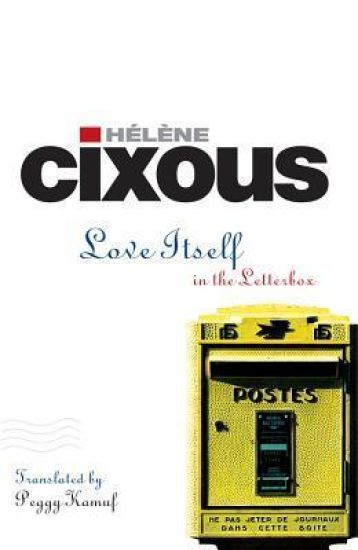
Love’s memories, love recalling itself in letters lost and found over an interval of forty years: Cixous’s writer-narrator advances here far into a labyrinth of passions long ago delivered and yet still arriving through the mail, through letters and literature, in other words, the poetry of the post. As for the lovers’ returning scenes, they have their addresses in Paris (rue Olivier de Serres, Avenue de Choisy, street names that endlessly feed love’s unconscious language) and in New York, but also in a lost oasis of the Egyptian desert during the Napoleonic wars, in Athens and along the shores of a great lake centuries ago in the country of myth. The lovers are poets or soldiers, philosophers or students madly in love with poetry and poets. They are as well mermaids or panthers. Panthers? Yes, for it is the passion of the animal that drives all these lovers to bare themselves, and sometimes their claws, before the beloved. Misunderstandings are often, even inevitably the result. Seconded and witnessed by her passionate, truth-telling cats, Cixous’s narrator-writer returns unerringly to moments of errancy inflicted on address and language, those errors and faults when love, perhaps, is listening only to itself, without subject or object, lover or beloved, just love itself, l’amour même, l’amour m’aime, love loving me, in the letter box of memory.
Love Itself

Love Itself

Hélène Cixous

Polity Press
2008
nidottu
Love’s memories, love recalling itself in letters lost and found over an interval of forty years: Cixous’s writer-narrator advances here far into a labyrinth of passions long ago delivered and yet still arriving through the mail, through letters and literature, in other words, the poetry of the post. As for the lovers’ returning scenes, they have their addresses in Paris (rue Olivier de Serres, Avenue de Choisy, street names that endlessly feed love’s unconscious language) and in New York, but also in a lost oasis of the Egyptian desert during the Napoleonic wars, in Athens and along the shores of a great lake centuries ago in the country of myth. The lovers are poets or soldiers, philosophers or students madly in love with poetry and poets. They are as well mermaids or panthers. Panthers? Yes, for it is the passion of the animal that drives all these lovers to bare themselves, and sometimes their claws, before the beloved. Misunderstandings are often, even inevitably the result. Seconded and witnessed by her passionate, truth-telling cats, Cixous’s narrator-writer returns unerringly to moments of errancy inflicted on address and language, those errors and faults when love, perhaps, is listening only to itself, without subject or object, lover or beloved, just love itself, l’amour même, l’amour m’aime, love loving me, in the letter box of memory.
Hyperdream

Hyperdream

Hélène Cixous

Polity Press
2009
sidottu
Hyperdream is a major new novel by celebrated French author Hélène Cixous. It is a literary tour de force, returning anew to challenge necessity itself, the most implacable of human certainties: you die in the end – and that’s the end. For you, for me. But what if? What if death did not inevitably spell the end of life? Hyperdream invests this fragile, tentative suspension of disbelief with the sheer force of its poetic audacity, inventing a sort of magic telephone: a wireless lifeline against all the odds to the dearly departed. It is a book about time, age, love and the greatest loss. A book which turns on death: on the question or the moment of death, depending on it, expecting it, living off it, taking place at once before and after, but at the same time turning against it, contesting it, outwriting it hopefully, desperately, performatively, as an interruptible interruption. Hyperdream is a book of mourning, but also of morning, a tragedy-with-comedy and a universal family romance in which it transpires that the narrator is the veritable offspring of a “treasure of literature” in the form of a bed, purchased by her mother from a certain W. Benjamin in 1934, slept on for 40 years by her brother and dreamt of by her friend “J.D.”
Hyperdream

Hyperdream

Hélène Cixous

Polity Press
2009
nidottu
Hyperdream is a major new novel by celebrated French author Hélène Cixous. It is a literary tour de force, returning anew to challenge necessity itself, the most implacable of human certainties: you die in the end – and that’s the end. For you, for me. But what if? What if death did not inevitably spell the end of life? Hyperdream invests this fragile, tentative suspension of disbelief with the sheer force of its poetic audacity, inventing a sort of magic telephone: a wireless lifeline against all the odds to the dearly departed. It is a book about time, age, love and the greatest loss. A book which turns on death: on the question or the moment of death, depending on it, expecting it, living off it, taking place at once before and after, but at the same time turning against it, contesting it, outwriting it hopefully, desperately, performatively, as an interruptible interruption. Hyperdream is a book of mourning, but also of morning, a tragedy-with-comedy and a universal family romance in which it transpires that the narrator is the veritable offspring of a “treasure of literature” in the form of a bed, purchased by her mother from a certain W. Benjamin in 1934, slept on for 40 years by her brother and dreamt of by her friend “J.D.”
Zero's Neighbour

Zero's Neighbour

Hélène Cixous

Polity Press
2010
sidottu
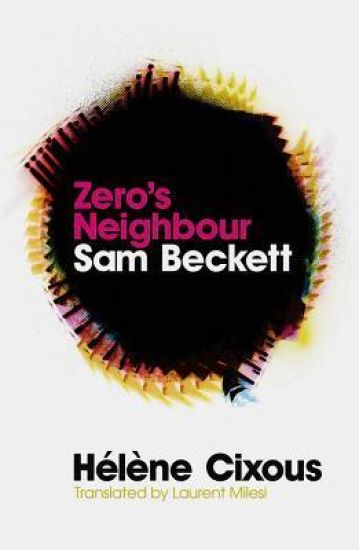
Zero's Neighbour is Hélène Cixous's tribute to the minimalist genius of the artist in exile who courted nothingness in his writing like nobody else: Samuel Beckett. In this unabashedly personal odyssey through a sizeable range of his novels, plays and poems, Cixous celebrates Beckett’s linguistic flair and the poignant, powerful thrust of his stylistic terseness, and passionately declares her love for his unrivalled expression of the meaningless ‘precious little’ of life, its unfathomable banality ending in chaos and death. Poised between a critical essay and a textual performance across two languages adapting Beckett's own literary vein, this book will appeal to scholars, critics and creative writers as well as students of the ‘grey self-Sam’. Its allusive intertextual insights will also prove to be of critical relevance to readers of Dante and Proust, among other literary figures, as much as to those appreciative of Cixous’s own inimitable genius for dissecting the quintessence of the life and works of a ‘neighbourly’ artist.
Zero's Neighbour

Zero's Neighbour

Hélène Cixous

Polity Press
2010
nidottu
Zero's Neighbour is Hélène Cixous's tribute to the minimalist genius of the artist in exile who courted nothingness in his writing like nobody else: Samuel Beckett. In this unabashedly personal odyssey through a sizeable range of his novels, plays and poems, Cixous celebrates Beckett’s linguistic flair and the poignant, powerful thrust of his stylistic terseness, and passionately declares her love for his unrivalled expression of the meaningless ‘precious little’ of life, its unfathomable banality ending in chaos and death. Poised between a critical essay and a textual performance across two languages adapting Beckett's own literary vein, this book will appeal to scholars, critics and creative writers as well as students of the ‘grey self-Sam’. Its allusive intertextual insights will also prove to be of critical relevance to readers of Dante and Proust, among other literary figures, as much as to those appreciative of Cixous’s own inimitable genius for dissecting the quintessence of the life and works of a ‘neighbourly’ artist.