Kirjojen hintavertailu. Mukana 11 232 919 kirjaa ja 12 kauppaa.

Kirjahaku

Etsi kirjoja tekijän nimen, kirjan nimen tai ISBN:n perusteella.

1000 tulosta hakusanalla Helge Mercker (Compiler)

Versuch Einer Einordnung Der Kunstfigur Helge Schneider in Eine 'dada-Avantgardistische' Geisteshaltung
Wissenschaftlicher Aufsatz aus dem Jahr 2010 im Fachbereich Medien / Kommunikation - Mediengeschichte, Note: 1,0, Universit t zu K ln (Theater-/ Film- und Fernsehwissenschaften), Veranstaltung: Geschichte der (Medien-)Avantgarden, Sprache: Deutsch, Abstract: Dada-Avantgardistische Medienkunstfigur Helge Schneider - Lebensform Dada "Der Dadaismus, so wie ich es heute nach vielen Jahren sehe, war eine Revolte der von vielen Seiten bedr ngten Pers nlichkeit. Es war der Aufstand gegen die drohende Vermassung, Verdummung, Zerst rung." 1 ffentliche Auftritte der Kunstfigur Helge Schneider in der Medienlandschaft sind stets ein 'Fest des Absurden'. Einen Roten Faden in der Summe seiner Aussagen festzustellen scheint nahezu unm glich und doch wirkt er nicht d mmlich oder gar ungebildet. Vielmehr zeigt er dem Publikum einen Spiegel auf, dessen Reflektion wiedergibt in wiefern es sich selbst zum Narren macht, wenn es sich selbst, seiner Lebensform, gepr gt von Prestige und sozialem Status, in ihrem gesellschaftlichen Umgebung und dem damit verbunden Wirtschaftssystem, derart ernst nimmt und in keiner Relation zu tats chlichen Missst nden des gesellschaftlichen Wandels stehen. So formulierte Richard Huelsenbeck, einer der ersten bekannten Dadaisten zu Beginn des 20. Jahrhunderts, in seiner Autobiografie aus dem Jahre 1957, dass er sich pers nlich gezwungen f hlte, aus seinem existentialistisch gepr gten Selbstverst ndnis heraus, gegen eine drohende Vermassung, Verdummung, der technisierten aufkommenden Informations- und Gesellschaft, zu rebellieren. So war und ist jene dadaistische Avantgarde der Vergangenheit, aber auch die einer Figur des Helge Schneider, ein Aufschrei, Rebellion sowie Versinnbildlichung eines unzufriedenstellendes Zeitgeschehens von u eren wirtschafts- und sozialpolitischen Ver nderungen und Lebensbedingung. Mit dem Resultat einer sich alles verweigernden nihilistischen Einstellung, fernab eines sich immer mehr ausbildenden
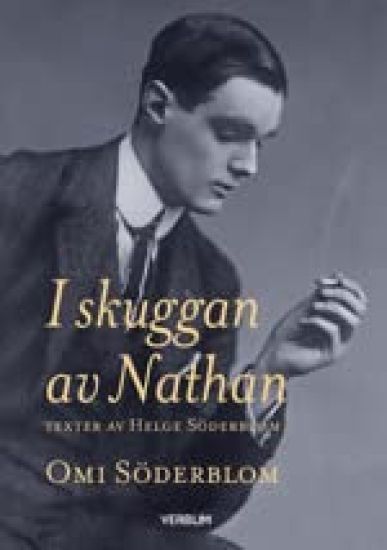
I skuggan av Nathan : texter av Helge Söderblom
I Skuggan av Nathan är en spännande och verklighetsbaserad berättelse om Helge Söderblom, son till den kände ärkebiskopen Natahan Söderblom. Helges egna texter, som aldrig förr har publicerats, ger tillsammans med Omi Söderbloms reflektioner en bild av Helges liv och av hans berömde far, sedd ur den äldste sonens perspektiv. Skådespelaren Helge är en främmande fågel i en stålhård hierarkisk värld och hans liv avslutades tragiskt strax innan han skulle fylla 36.Boken är skriven av Omi Söderblom som är barnbarnsbarn till Nathan Söderblom.
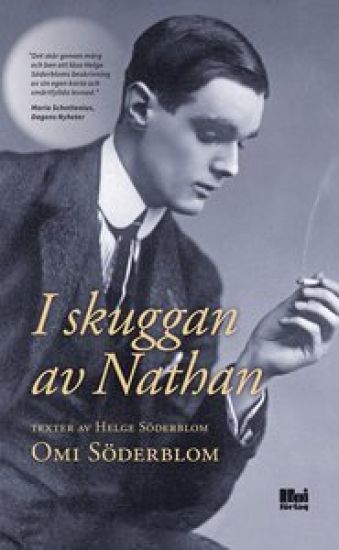
I skuggan av Nathan : texter av Helge Söderblom
Vem var han, Helge Söderblom, som dog den 7 januari 1932 på Ulleråkers mentalsjukhus i Uppsala, dagen före sin 36-årsdag? Bara ett halvår tidigare hade hans berömde far ärkebiskopen Nathan Söderblom gått bort och landssorg utlysts. I Helges texter möter vi en skicklig stilist och träffsäker berättare, en skådespelare och posör, men också en man med ett barns bekräftelsebehov sida vid sida med en djup klarsynthet när det gäller hans eget och familjens liv. Han brottas med en sexualitet som inte accepteras och livsval som inte får göras i den påpassade ärkebiskopsfamiljen. Omi Söderblom som är barnbarn till Helge sökte efter information om en farfar som det var märkligt tyst om under hennes uppväxt, och på besynnerliga vägar blev hon ägare till en ask med hans papper. Till Helges texter har Omi Söderblom skrivit en introduktion och analys av det hon funnit under sitt sökande. I skuggan av Nathan är en mycket gripande biografi om en av vår tids största familjedramer. Om författarenOmi Söderblom, född i Uppsala 1950, är domare i Svea hovrätt och barnbarnsbarn till ärkebiskop Nathan Söderblom. I sin kritikerrosade författardebut delar hon med sig av sin släkthistoria och tecknar ett gripande porträtt av sin farfar, Helge Söderblom, Nathans och Annas äldste son. Omi har gått igenom ett gediget material i sin research – brev, böcker och artiklar.Sagt om boken:Vilken fantastisk bok! Som föll ner som en bomb. Det skär genom märg och ben att läsa Helge Söderbloms beskrivning av sin egen korta och smärtfyllda levnad. Maria Schottenius, DN I skuggan av Nathan är en djupt allvarlig, innerlig och spännande bok. Som gammal Uppsalabo blir jag fascinerad av inblickarna i den berömda ärkebiskopsfamiljen. Som hbtq-person blir jag blir jag både djupt förbannad över hyckleriet i den heliga familjen och imponerad av Helges mod¨ Ulrika Johnsson, QX Om Helge Söderbloms texter vill jag ärligt vittna, att få självbiografier gripit mig så starkt. Torgny Nevéus, UNT En djupt mänsklig bok som är värd en stor och bred läsekrets. Boken fick högsta betyg hos Bibliotekstjänst, fem av fem. Bibliotekstjänst genom Inger Littberger Caissou-Rousseau, BTJ-häfte 15, 2014 Jag fick boken på 7-dagarslån och skyndade att läsa: inte visste jag vilken hjälteroll Nathan Söderblom spelade i syn tid? Inte visste jag att hans hustru Anna födde tolv barn? Eller att familjens liv var mer dramatiskt än den mest överdrivna tv-serie – med ständiga clifffangers - och nu är jag där igen. Boken om Söderblomsfamiljen heter ”I skuggan av Nathan”. Den cirklar runt Helge och hans geniförklarade far, ärkebiskopen, som fick Nobels fredspris 1930 och dog året efter. Helge gick bort ett halvår senare. Det är hans sondotter Omi Söderblom som sammanställt texterna — jag ska inte spoila, men tänk en överspänd Norénsk släkt-historia i samma tidsdräkt som Downtown Abbey, med stora kändisar, kombinera med Torka inte tårar utan handskar, lägg till både tro och tvivel. Det kan bli en succé-serie. Religion är inne. Pia Naurin, GP
What's my name? HELGE

What's my name? HELGE

Tiina Walsh

Createspace Independent Publishing Platform
2018
nidottu
A personalised storybook for girls called HELGE. The story is based on the letters of the child's own name. All books are different from one another. The girl wakes up but can't remember her name. Magic Mouse knows how to solve the problem. They go on a wonderful adventure in the Magic Bus Translated and adapted by the author from the top-selling Finnish language children's namebook series "Tytt /Poika, joka unohti nimens ". The beautiful hand-drawn pictures will delight both the young and the young-at-heart Looking for a namebook "What's my name?" but couldn't find a book for the name you are looking for? Please don't hesitate to contact me with your name request -Tiina Walsh Author fb.me/whatsmynamestorybooks for more details about the storybooks
Sosiologi, teologi og Helge Hognestads doktoravhandling

Sosiologi, teologi og Helge Hognestads doktoravhandling

Jan Ove Ulstein

Cappelen Damm akademisk
2023
sidottu
I 1978 disputerte Helge Hognestad for doktorgraden i Gamle festsal ved Universitetet i Oslo. Salen var fullstappa, og der var trampeklapp og buing. Avhandlinga analyserte andaktar over tekster frå Matteusevangeliet i aviser og kristelege organisasjonsblad og fann at dei stort sett legitimerte kyrkjeinstitusjonen og ikkje det tekstene sa. Det som forblinda dei, var den lutherske læra om rettferdiggjering ved tru åleine, grunngitt i Jesu soningsdød, vår påstanden.Avhandlinga fekk grundig drøfting, med mykje kritikk. Hognestad stod i samtida som eit mediesynleg symbol på den radikale kritikaren av samfunn og kyrkje, opprøraren som ville opne kyrkja, men som møtte motstand då han ville søkje stilling som prest, med forkjetring frå indre bane og applaus i mediefeltet. Boka framstiller både dei teologiske brytingane og forviklingane omkring prestetenesta.Forholdet mellom sosiologi og teologi var eit gjennomgåande tema i perioden. Denne tematikken er sentral i boka. Vi fekk ei spenstig nybrotsfase for religionssosiologien ved unge sosiologar. Dei fekk lita hjelp frå etablert fagmiljø, men gjekk laus på fleire temaområde innan kyrkjeliv og teologi etter alle kunstens reglar. Der var metoden ateistisk, noko som utfordra dialogen med teologien. Særleg var kunnskapssosiologien til Peter Berger og Thomas Luckmann i bruk. Den brukte også Hognestad i si avhandling. Han var den første som brukte sosiologien som aktiv samtalepartnar i ei teologisk doktoravhandling (saman med marxistisk ideologikritikk).Boka vender seg til den som er interessert i denne brytingstida i kyrkje og samfunn, omkring ein utfordrande teologi, og korleis teologi og sosiologi kan arbeide med same materiale med gjensidig nytte.
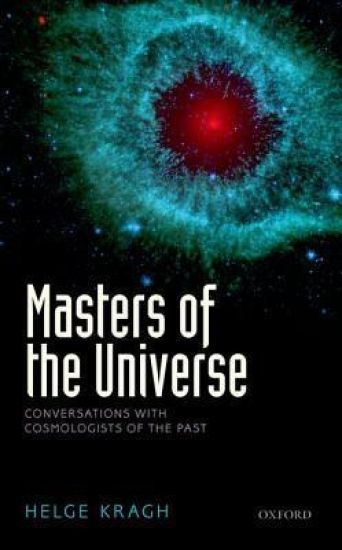
Masters of the Universe

Masters of the Universe

Helge Kragh

Oxford University Press
2014
sidottu
How did our modern picture of the universe come into being? Masters of the Universe tells this fascinating story in an unusual format that blends factual and fictional elements. It is based on a series of interviews that a fictional person conducted with leading astronomers and physicists between 1913 and 1965. Among the interviewed scientists are giants such as Albert Einstein, Edwin Hubble, and George Gamow, but also scientists who are less well known today or not primarily known as cosmologists such as Karl Schwarzschild, Paul Dirac, and Svante Arrhenius. By following the interviews the reader gets a lively and "almost authentic" impression of the problems that faced this early generation of cosmologists. Although the interviews are purely fictional, a product of the author's imagination, they could have taken place in just the way that is described. They are solidly based on historical facts and, moreover, supplemented with careful annotations and references to the literature. In this way the book bridges the gap between scholarly and popular history of science.
Higher Speculations

Higher Speculations

Helge Kragh

Oxford University Press
2015
nidottu
Throughout history, people have tried to construct 'theories of everything': highly ambitious attempts to understand nature in its totality. This account presents these theories in their historical contexts, from little-known hypotheses from the past to modern developments such as the theory of superstrings, the anthropic principle, and ideas of many universes, and uses them to problematize the limits of scientific knowledge. Do claims to theories of everything belong to science at all? Which are the epistemic standards on which an alleged scientific theory of the universe - or the multiverse - is to be judged? Such questions are currently being discussed by physicists and cosmologists, but rarely within a historical perspective. This book argues that these questions have a history and that knowledge of the historical development of 'higher speculations' may inform and qualify the current debate on the nature and limits of scientific explanation.
The Names of Science

The Names of Science

Helge Kragh

Oxford University Press
2024
nidottu
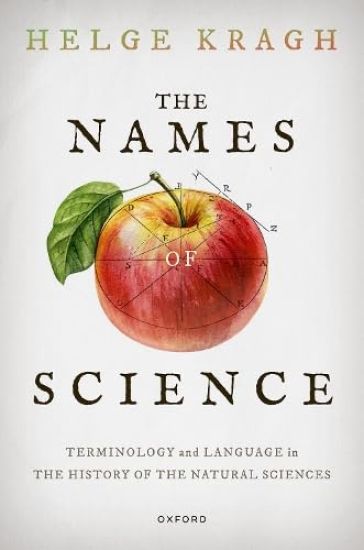
The history of science is echoed in the development of its language and the names chosen for its technical terms. The Names of Science examines in detail how, over time, new words have entered the scientific lexicon and how some of them, but far from all, have survived to the present. Why is a transistor called a transistor and not something else? Why was the term 'scientist' only coined in 1834, and why was the name regarded as controversial for a long time afterwards? There is a story behind every scientific word we use today. In this work, Helge Kragh tells many of these stories, taking a broad historical perspective from the Renaissance to the present. By combining elements of linguistics with the history of the natural sciences including physics, chemistry, and astronomy, this book offers a new and innovative perspective on the historical development of the natural sciences. Following an introductory list of useful linguistic terms, the book is structured in six chapters, which cover important phases in the history of science, dealing with a vast range of scientific terminology from physics, chemistry, geology, astronomy, to cosmology. It also considers, if only briefly, how English - and not, say, Latin or French - developed to become the internationally accepted language of science. Contrary to other works dealing with the subject, The Names of Science pays serious attention to the historical dimension of scientific language, and to the way in which scientists have, sometimes unconsciously, acted as linguists and neologists in their research work.
The Names of Science

The Names of Science

Helge Kragh

Oxford University Press
2024
sidottu
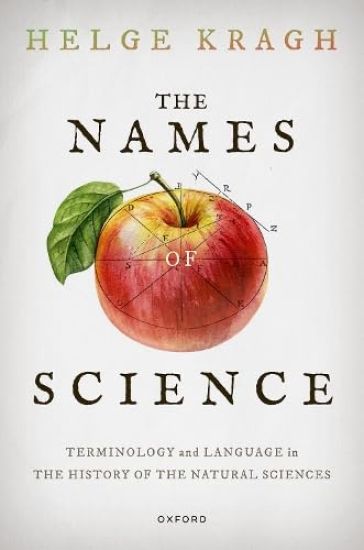
The history of science is echoed in the development of its language and the names chosen for its technical terms. The Names of Science examines in detail how, over time, new words have entered the scientific lexicon and how some of them, but far from all, have survived to the present. Why is a transistor called a transistor and not something else? Why was the term 'scientist' only coined in 1834, and why was the name regarded as controversial for a long time afterwards? There is a story behind every scientific word we use today. In this work, Helge Kragh tells many of these stories, taking a broad historical perspective from the Renaissance to the present. By combining elements of linguistics with the history of the natural sciences including physics, chemistry, and astronomy, this book offers a new and innovative perspective on the historical development of the natural sciences. Following an introductory list of useful linguistic terms, the book is structured in six chapters, which cover important phases in the history of science, dealing with a vast range of scientific terminology from physics, chemistry, geology, astronomy, to cosmology. It also considers, if only briefly, how English - and not, say, Latin or French - developed to become the internationally accepted language of science. Contrary to other works dealing with the subject, The Names of Science pays serious attention to the historical dimension of scientific language, and to the way in which scientists have, sometimes unconsciously, acted as linguists and neologists in their research work.
Conceptions of Cosmos

Conceptions of Cosmos

Helge S. Kragh

Oxford University Press
2006
sidottu
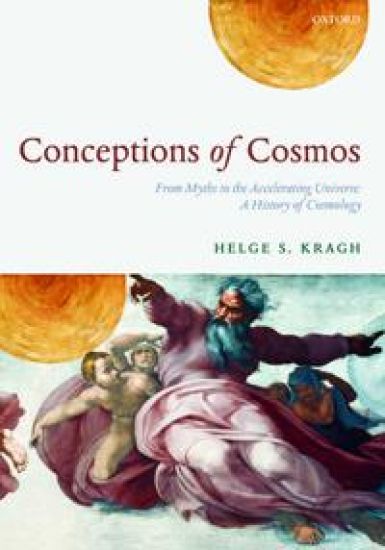
This book is a historical account of how natural philosophers and scientists have endeavoured to understand the universe at large, first in a mythical and later in a scientific context. Starting with the creation stories of ancient Egypt and Mesopotamia, the book covers all the major events in theoretical and observational cosmology, from Aristotle's cosmos over the Copernican revolution to the discovery of the accelerating universe in the late 1990s. It presents cosmology as a subject including scientific as well as non-scientific dimensions, and tells the story of how it developed into a true science of the heavens. Contrary to most other books in the history of cosmology, it offers an integrated account of the development with emphasis on the modern Einsteinian and post-Einsteinian period. Starting in the pre-literary era, it carries the story onwards to the early years of the 21st century.
Higher Speculations

Higher Speculations

Helge Kragh

Oxford University Press
2011
sidottu
Throughout history, people have tried to construct 'theories of everything': highly ambitious attempts to understand nature in its totality. This account presents these theories in their historical contexts, from little known hypotheses from the past to modern developments such as the theory of superstrings, the anthropic principle and ideas of many universes, and uses them to problematize the limits of scientific knowledge. Do claims to theories of everything belong to science at all? Which are the epistemic standards on which an alleged scientific theory of the universe - or the multiverse - is to be judged? Such questions are currently being discussed by physicists and cosmologists, but rarely within a historical perspective. This book argues that these questions have a history and that knowledge of the historical development of 'higher speculations' may inform and qualify the current debate of the nature and limits of scientific explanation.
Niels Bohr and the Quantum Atom

Niels Bohr and the Quantum Atom

Helge Kragh

Oxford University Press
2012
sidottu
Niels Bohr and the Quantum Atom is the first book that focuses in detail on the birth and development of Bohr's atomic theory and gives a comprehensive picture of it. At the same time it offers new insight into Bohr's peculiar way of thinking, what Einstein once called his 'unique instinct and tact'. Contrary to most other accounts of the Bohr atom, the book presents it in a broader perspective which includes the reception among other scientists and the criticism launched against it by scientists of a more conservative inclination. Moreover, it discusses the theory as Bohr originally conceived it, namely, as an ambitious theory covering the structure of atoms as well as molecules. By discussing the theory in its entirety it becomes possible to understand why it developed as it did and thereby to use it as an example of the dynamics of scientific theories.
Conceptions of Cosmos

Conceptions of Cosmos

Helge S. Kragh

Oxford University Press
2013
nidottu
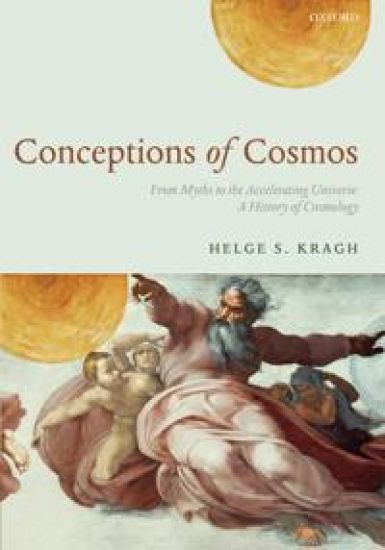
This book is a historical account of how natural philosophers and scientists have endeavoured to understand the universe at large, first in a mythical and later in a scientific context. Starting with the creation stories of ancient Egypt and Mesopotamia, the book covers all the major events in theoretical and observational cosmology, from Aristotle's cosmos over the Copernican revolution to the discovery of the accelerating universe in the late 1990s. It presents cosmology as a subject including scientific as well as non-scientific dimensions, and tells the story of how it developed into a true science of the heavens. Contrary to most other books in the history of cosmology, it offers an integrated account of the development with emphasis on the modern Einsteinian and post-Einsteinian period. Starting in the pre-literary era, it carries the story onwards to the early years of the 21st century.
Fröbel’s Pedagogy of Kindergarten and Play
This text provides a comprehensive analysis of historical archives, letters, and primary sources to offer unique insight into how Fröbel’s pedagogy of kindergarten and play has been understood, interpreted, and modified throughout history and in particular, as a consequence of it’s adoption in the US.Tracing the development, modification, and global spread of the kindergarten movement, this volume demonstrates the far-reaching impacts of Fröbel’s work, and asks how far contemporary understandings of the kindergarten pedagogy reflect the educationalist’s original intentions. Recognizing that Fröbel’s pedagogy has at times been simplified or misunderstood, the book tackles issues caused by translation, or transfer to non-German speaking countries such as the US, and so demonstrates how and why contemporary research and Froebelian practice is in the danger of diverging from the original ideas expressed in Fröbel’s work. By returning to original documents produced by Fröbel, Wasmuth traces various interpretations, and explains how and why some of these understandings established themselves in the context of US Early Childhood Education, whilst others did not.This insightful text will be of great interest to graduate and postgraduate students, researchers, academics, professionals and policy makers in the fields of early childhood education, history of education, Philosophy of Education and Teacher Education.
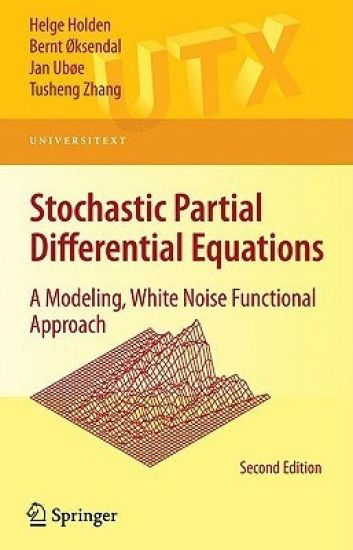
Stochastic Partial Differential Equations

Stochastic Partial Differential Equations

Helge Holden; Bernt Øksendal; Jan Ubøe; Tusheng Zhang

Springer-Verlag New York Inc.
2009
nidottu
The first edition of Stochastic Partial Differential Equations: A Modeling, White Noise Functional Approach, gave a comprehensive introduction to SPDEs. In this, the second edition, the authors build on the theory of SPDEs driven by space-time Brownian motion, or more generally, space-time Levy process noise. Applications of the theory are emphasized throughout. The stochastic pressure equation for fluid flow in porous media is treated, as are applications to finance. Graduate students in pure and applied mathematics as well as researchers in SPDEs, physics, and engineering will find this introduction indispensible. Useful exercises are collected at the end of each chapter.
Yearbook of International Cooperation on Environment and Development 1999-2000

Yearbook of International Cooperation on Environment and Development 1999-2000

Helge Ole Bergesen; Georg Parmann; Oystein B. Thommessen

Routledge
2013
nidottu
This edition includes the new Convention on Access to Information, Public Participation in decision Making and Access to Justice in Environmental Matters and the Convention on the Prior Informed Consent Procedure for Certain Hazardous Chemicals and Pesticides in International Trade. ? Intergovernmental Organizations (IGOs), including UN specialized agencies objectives ,Country Profiles Summaries of the performance and main commitments of 15 OECD countries in addition to Brazil, Indonesia, Nigeria, South Africa, and Thailand. Originally published in 1999
Ecology Control and Economic Development in East African History: The Case of Tanganyika 1850-1950
Ecology Control and Economic Development in East African History: The Case of Tanganyika, 1850-1950 explores a significant shift in East African historiography, particularly with the move toward political independence. This change has prompted a re-examination of the African past, with an emphasis on reclaiming African agency, rejecting colonial-era interpretations that focused predominantly on European actions. Scholars like Oliver, Mathew, Kimambo, and Temu have led the way in this new wave of historiography, arguing that the African past was dynamic and that Africans were active agents in shaping their history, particularly in the face of crises such as intertribal warfare and colonial incursions. However, this study seeks to go beyond political history and traditional frameworks, shifting the focus to the ecological and economic systems that shaped African life in the 19th century. The book argues that pre-colonial East Africans were not merely responding defensively to external crises but were actively engaged in managing their environment and developing their economy. Through ecological control, such as agricultural and pastoral practices, East Africans maintained a sustainable relationship with their land, even in the face of challenges like the tsetse fly and the disruptions caused by intertribal conflict. This study challenges the prevailing notion that East Africa was economically underdeveloped due to shifting cultivation and warfare. Instead, it highlights the prosperous agricultural and cattle economies that were able to thrive despite these challenges. By examining the economic activities such as agriculture, iron smelting, and trade, the study demonstrates the region's economic vibrancy and the agency of its people in controlling their environment and developing a complex economic system. Through this approach, the study calls for a reimagined understanding of East African history that emphasizes the active role of its peoples in shaping their destiny. This title is part of UC Press's Voices Revived program, which commemorates University of California Press's mission to seek out and cultivate the brightest minds and give them voice, reach, and impact. Drawing on a backlist dating to 1893, Voices Revived makes high-quality, peer-reviewed scholarship accessible once again using print-on-demand technology. This title was originally published in 1977.