Kirjojen hintavertailu. Mukana 12 390 323 kirjaa ja 12 kauppaa.

Kirjahaku

Etsi kirjoja tekijän nimen, kirjan nimen tai ISBN:n perusteella.

1000 tulosta hakusanalla Henri Brisson

Henri Cartier-Bresson and the Artless Art

Henri Cartier-Bresson and the Artless Art

Jean-Pierre Montier

Thames Hudson Ltd
1996
sidottu
Henri Cartier-Bresson was perhaps the greatest photographer of the twentieth century. In a career spanning over sixty years, he used his camera as an impassive and neutral third eye to capture the vagaries of human behaviour and to produce some of the most memorable and compelling photographs ever published. In this impressive biographical study, Jean-Pierre Montier traces Cartier-Bresson's artistic progression from his early training as a painter and draughtsman; he provides a detailed analysis of his most famous images and discusses the various philosophies that informed his work, notably Zen and Surrealism. Drawing together a remarkable selection of the paintings, sketches, and photographs, this book attempts a serious evaluation, not just of Cartier-Bresson's photojournalism, but of his œuvre as a whole.
Henri Cartier-Bresson: Landscape/Townscape
The incomparable photographer Henri Cartier-Bresson is renowned for his ability to capture striking and memorable images of people and places. He has described his personal approach to photography as being 'at one and the same time the recognition of a fact in a fraction of a second and the rigorous arrangement of the forms visually perceived which give the fact expression and significance'. This book is the first major publication to deal with Cartier-Bresson's landscape photography. His work as a reporter took Cartier-Bresson through many countries and continents - his passion for China, India and Spain is well-known and well documented in other books published by Thames & Hudson - but his extraordinary country and city landscapes are a lesser-known part of his oeuvre. These richly diverse and compelling images, many of which have never been published before, are superbly reproduced in this volume by the finest quality duotone printing. They underscore yet again Cartier-Bresson's reputation as the geniune master of photography.
Henri Cartier-Bresson / Scrapbook
Published in its entirety for the first time, a memorial volume of the late iconic photographer's famous 1940s scrapbook features restored images of his prints and showcases the pieces hand-selected by the photographer that originally appeared in his 1947 Museum of Modern Art exhibition.
Henri Cartier-Bresson: China 1948–1949, 1958

Henri Cartier-Bresson: China 1948–1949, 1958

Michel Frizot; Ying-lung Su

Thames Hudson Ltd
2019
sidottu
In December 1948, Henri Cartier-Bresson travelled to China at the request of Life magazine. He stayed for ten months and captured some of the most spectacular moments in China’s history: he photographed Beijing in ‘the last days of the Kuomintang’, and then headed back to Shanghai, where he recorded the new regime’s takeover. Moreover, in 1958, Henri Cartier-Bresson was one of the first Western photographers to go back to China to explore the changes that had occurred over the preceding decade. The ‘picture stories’ he sent to Magnum and Life on a regular basis played a key role in Westerners’ understanding of Chinese political events. Many of these images are among the most significant photographs in Cartier-Bresson’s oeuvre; his empathy with the populace and sense of responsibility as a witness making them an important part of his legacy. Henri Cartier-Bresson in China allows these photographs to be re-examined along with all of the documents that were preserved: the photographer’s captions and comments, contact sheets and abundant correspondence, as well as the published versions that appeared in both American and European magazines. A welcome addition to any photography lover’s bookshelf, this is an exciting new volume on one of the 20th century’s most important photographers.
Henri Cartier-Bresson: Paris Revisited
Henri Cartier-Bresson was ‘the eye of the 20th century’ and one of the world’s most acclaimed photographers. Paris was his home, on and off, for most of his life (1908–2004). The photographs he took of the city and its people manage to be both dreamlike and free of affectation. Here are around 160 photographs taken over a more than fifty-year career. Mostly in black and white, this selection reveals the strong influence on Cartier-Bresson of pioneering documentary photographer Eugène Atget (1857–1927), and the clear visual links with Surrealism that infused Cartier-Bresson’s early pictures. After an apprenticeship with Cubist painter André Lhote, in 1932 Cartier-Bresson bought his first Leica, a small portable camera that allowed him to capture movement and the rhythms of daily life in Paris. Cartier-Bresson observed from close quarters the Liberation in August 1944 and the civil disturbances of May 1968. In between he also succeeded in capturing the faces of Parisians in their natural habitat, celebrated artists and writers and citizens alike. Ever-attentive to different ways of portraying the city around him, Cartier-Bresson returned to drawing during the last two decades of his life. This collection is not only a superb portrait of Paris in the 20th century, it is testament to Cartier-Bresson’s skill as a supreme observer of human life.With 200 illustrations
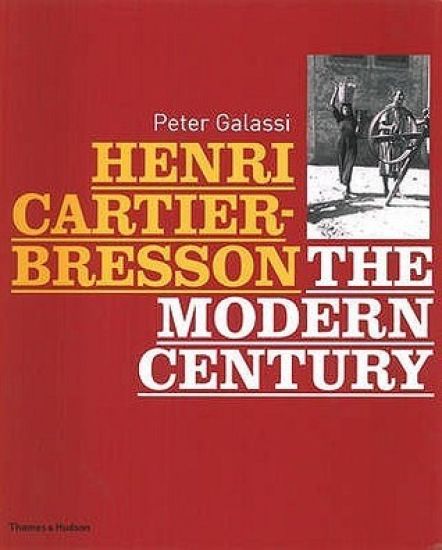
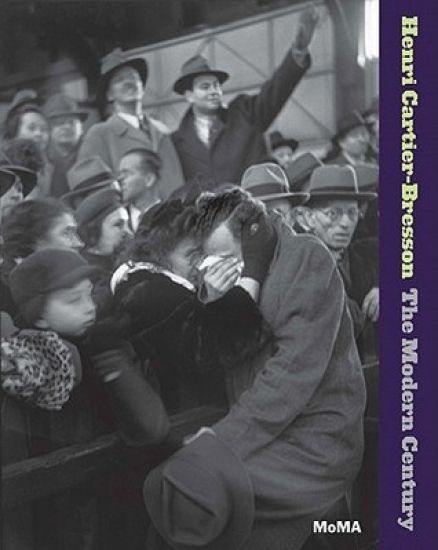
Henri Cartier-Bresson: The Modern Century

Henri Cartier-Bresson: The Modern Century

Peter Galassi

Museum of Modern Art
2010
sidottu
Henri Cartier-Bresson (1908-2004) is one of the most influential and beloved figures in the history of photography. His inventive work of the early 1930s helped define the creative potential of modern photography. Following World War II, he helped found the Magnum photo agency, which enabled photojournalists to reach a broad audience through magazines such as Life while retaining control over their work. Cartier-Bresson would go on to produce major bodies of photographic reportage, capturing such events as China during the revolution, the Soviet Union after Stalin's death, the United States in the postwar boom and Europe as its older cultures confronted modern realities. Published to accompany an exhibition at The Museum of Modern Art, this is the first major publication to make full use of the extensive holdings of the Fondation Cartier-Bresson--including thousands of prints and a vast resource of documents relating to the photographer's life and work. The heart of the book surveys Cartier-Bresson's career through 300 photographs divided into 12 chapters. While many of his most famous pictures are included, a great number of images will be unfamiliar even to specialists. A wide-ranging essay by Peter Galassi, Chief Curator of Photography at the Museum, offers an entirely new understanding of Cartier-Bresson's extraordinary career and its overlapping contexts of journalism and art. The extensive supporting material--featuring detailed chronologies of the photographer's professional travels and of spreads of his picture stories as they appeared in magazines--will revolutionize the study of Cartier-Bresson's work.
Henri Cartier-Bresson

Henri Cartier-Bresson

Clément Chéroux; Julie Jones

Aperture
2017
nidottu
Presented for the first time in English, this volume brings together twelve notable interviews and conversations with Henri Cartier-Bresson carried out between 1951 and 1998. While many of us are acquainted with his images, there are so few texts available by Cartier-Bresson on his photographic process. These verbal, primary accounts capture the spirit of the master photographer and serve as a lasting document of his life and work, which has inspired generations of photographers and artists. Here, Cartier-Bresson speaks passionately, with metaphors and similes, about the world and photography. A man of principles shaped by the evolving eras of the twentieth century, his major influences included Surrealism, European politics of the 1930s and ’40s, the Second World War, and his experiences with Magnum as cofounder and reporter. This book illuminates his thoughts, personality, and reflections on a seminal career. In his own words: “[Photography] is a way of questioning the world and questioning yourself at the same time. . . . It entails a discipline. For me, freedom is a basic frame of reference, and inside that frame are all the possible variations. Everything, everything, everything. But it is within a frame. The important thing is the sense of limit. And visually, it is the sense of form. Form is important. The structure of things. The space.”
Henri Cartier-Bresson: The Mind's Eye (Signed Edition): Writings on Photography and Photographers
Henri Cartier-Bresson's writings on photography and photographers have been published sporadically over the past 45 years. His essays--several of which have never before been translated into English--are collected here for the first time. The Mind's Eye features Cartier-Bresson's famous text on "the decisive moment" as well as his observations on Moscow, Cuba and China during turbulent times. These essays ring with the same immediacy and visual intensity that characterize his photography.
Henri Cartier-Bresson: The Decisive Moment

Henri Cartier-Bresson: The Decisive Moment

Henri Cartier-Bresson

Fondation Henri Cartier-Bresson
2024
sidottu
A new edition of one of the most important and genre-defining photobooks of the twentieth century. The Decisive Moment (Images à la Sauvette in French) is one of the greatest photography books ever published. It brings together photographic material from the first twenty years of Henri Cartier-Bresson’s career. Images à la Sauvette was published in 1952 by Verve, with an original cover by Matisse. It was the result of a collaboration between the photographer, the famous art critic and publisher Tériade, and the painter, at the peak of his career. The American version, published the same year by Simon and Schuster, was the first to introduce the now-famous expression “decisive moment”. The book, which reveals the intrinsic duality of Henri Cartier-Bresson’s work, the combination of intimate interpretation with documentary observation, received tremendous critical acclaim within the art world and is considered a “bible for photographers”, in the words of photographer Robert Capa. It remains an essential reference for photographers to this day. The original book, now out of print, has become a collector’s item. The Fondation Henri Cartier-Bresson sought to make this classic photography book accessible again, in a smaller and practical format, at an affordable price. The latest print features the same material as the original 1952 edition, and is accompanied by a comprehensive study of the book’s making, its enduring popularity and the considerations behind its title, written by Clément Chéroux, Director of the Fondation Henri Cartier-Bresson.
Henri Cartier-Bresson
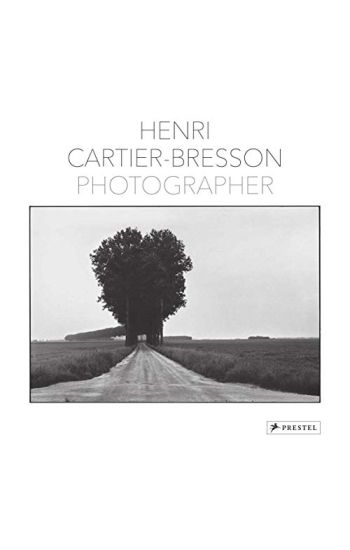
Reproduced in exquisite black and white, the images in this book range from Henri Cartier-Bresson’s earliest work in France, Spain, and Mexico through his postwar travels in Asia, the US, and Russia, and even include landscapes from the 1970s, when he retired his camera to pursue drawing. While his instinct for capturing what he called the decisive moments was unparalleled, as a photojournalist Cartier-Bresson was uniquely concerned with the human impact of historic events. In his photographs of the liberation of France from the Nazis, the death of Gandhi, and the creation of the People’s Republic of China in 1949, Cartier-Bresson focused on the reactions of the crowds rather than the subjects of the events. And while his portraits of Sartre, Giacometti, Faulkner, Capote, and other artists are iconic, he gave equal attention to those forgotten by history: a dead resistance fighter lying on the bank of the Rhine, children playing alongside the Berlin Wall, and a eunuch in Peking’s Imperial Court. Divided into six thematic sections, the book presents the photographs in spare double-page spreads. In a handwritten note included at the end of the book, Cartier-Bresson writes, “In order to give meaning to the world, one must feel involved in what one singles out through the viewfinder.” His work shows how he has been able to capture the decisive moment with such extreme humility and profound humanity.
Henri Cartier-Bresson

Henri Cartier-Bresson

Clement Chéroux

Schirmer /Mosel Verlag Gm
2012
nidottu
Zum 100. Geburtstag von Henri Cartier-Bresson am 22. August dieses Jahres legt der französische Schriftsteller und Photohistoriker Cl?ment Ch?roux eine erste wissenschaftliche und reich bebilderte Biographie dieses Jahrhundertkünstlers vor. Die Lebensgeschichte Henri Cartier-Bressons liest sich wie ein Roman. Der begabte junge Mann, der aus einer wohlhabenden Pariser Industriellenfamilie stammte, studierte zunächst Malerei bei Andr? Lhote, bevor er im Kreis der Surrealisten Zaungast wird, um dann bei Jean Renoir die Anfänge von Film- und Schauspielkunst zu erlernen. Es dauerte nicht lange, bis Henri Cartier-Bresson seine wahre Leidenschaft entdeckt. Sie geht einher mit der Entwicklung einer deutschen Erfindung, der Kleinbildkamera von Leica. In den Händen von Henri Cartier-Bresson entwickelte sich dieser Apparat zu einem magischen Instrument, und fortan sind es Henri Cartier-Bresson und die Leica-Photographie in Symbiose, die gemeinsam die Lichtbildkunst des Jahrhunderts revolutionieren. Mechanisch-technische und geistig-artistische Schnelligkeit haben in den Bildern von Henri Cartier-Bresson zueinander gefunden. Eine Liaison, die Epoche machte, neue, sehr hohe Maßstäbe setzte und trotz vieler Versuche, sie zu kopieren, bis heute einzigartig geblieben ist.
Henri Cartier-Bresson: Le Grand Jeu
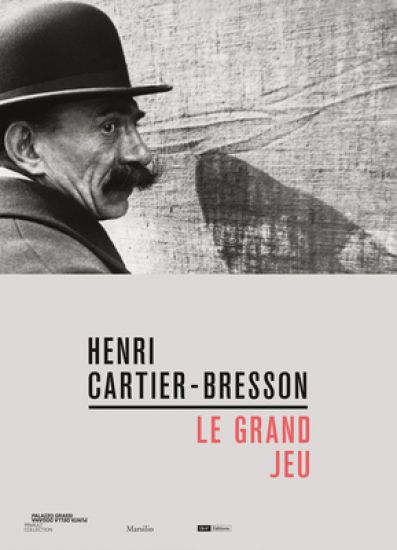
Cartier-Bresson by Cartier-Bresson: the photographer's "master set" survey of his career, presented for the first time alongside selections by Annie Leibovitz, Wim Wenders and others In the early 1970s, at the request of his friends and collectors John and Dominique Menil, Henri Cartier-Bresson went through the thousands of prints in his archives with the idea of choosing the most important and significant works of his career. He picked 385 photographs, which were printed in a format of 12 x 16 inches at his most trusted laboratory in Paris between 1972 and 1973, in five copies each. This so-called "Master Set" has never before been published in its entirety. Now, photographer Annie Leibovitz, film director Wim Wenders, writer Javier Cercas, chief curator of the Department of Prints and Photographs at the Bibliotheque Nationale de France Sylvie Aubenas and collector Francois Pinault have been invited to each choose roughly 50 pictures from this Master Set. Through their selection, each of them shares a personal vision of the work of this great artist. Henri Cartier-Bresson: Le Grand Jeu is divided into two parts: the first presents the personal choice of each of the curators, accompanied by a text written for the occasion; the second presents the whole of the Master Set as it was assembled by Cartier-Bresson. This unprecedented volume thus constitutes the most personal, and indeed the most authoritative, panorama of his oeuvre yet published. Henri Cartier-Bresson (1908-2004) was born in Chantelou-en-Brie, France. He initially studied painting and began photographing in the 1930s. Cartier-Bresson cofounded Magnum in 1947. In the late 1960s he returned to his original passion, drawing. In 2003 Cartier-Bresson established the Fondation Henri Cartier-Bresson in Paris, one year before his death.
Henri Cartier-Bresson: The Europeans

Henri Cartier-Bresson: The Europeans

Henri Cartier-Bresson

Fondation Henri Cartier-Bresson
2025
sidottu
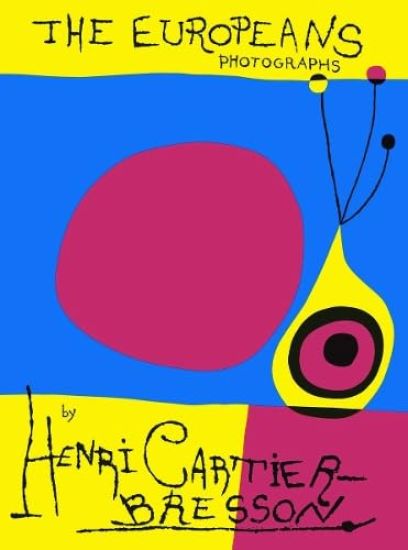
For the first time in 70 years, the Fondation Henri Cartier-Bresson is reissuing this emblematic work by Henri Cartier-Bresson. Published by Verve in 1955, three years after the resounding success of The Decisive Moment, The Europeans brings together 114 photographs taken by Henri Cartier-Bresson between 1950 and 1955 across ten European countries. Taken during assignments for Harper’s Bazaar, Life, Holiday, and Paris Match, these images form a unique visual testimony of post-war Europe in the midst of reconstruction. From the revelers of Bastille Day in Paris to midnight masses in the Abruzzi, and from the funeral of George VI to the dockworkers of Hamburg, The Europeans does not aim to provide an exhaustive inventory, but rather composes a vibrant portrait of the inhabitants of a continent undergoing profound change. Beyond national borders, the book evokes a broader sense of European identity, shaped as much by everyday life as by the major upheavals of the time. The Europeans shared with The Decisive Moment a similar format, a sober and elegant layout, high-quality printing, and a cover designed by a renowned artist (Joan Miró for The Europeans, echoing Matisse’s cover for The Decisive Moment). As with The Decisive Moment in 2024, the Fondation Henri Cartier-Bresson now offers a reissue of The Europeans in a smaller, more manageable and accessible format, while remaining faithful to the spirit of the original edition. Seventy years after its first publication, this reissue provides a unique opportunity to rediscover a major work of Henri Cartier-Bresson’s oeuvre, enriched with an unpublished text by Clément Chéroux that places the work in its historical and artistic context.
Henri Cartier-Bresson

Henri Cartier-Bresson

VDM Publishing House
2010
nidottu
Observera att förlaget som ger ut denna produkt baserar innehållet i sina produkter på fria källor som Wikipedia. Boken är med stor sannolikhet endast ett utdrag ur dessa informationskällor, alltså inte en vanlig bok i den bemärkelsen.
Temperaments: Memoirs of Henri Cartier-Bresson and Other Artists
In these five profiles, four of which originally appeared in the New Yorker, the author evokes the life and work of seven gifted artists. Among those presented, often through lively conversations, are Jean Hélion, Mark Rothko, R.B. Kitaj, and Dennis Creffield. Chief among those portrayed however is Henri Cartier-Bresson (1908-2004), the great French photographer and photojournalist who, famed for dodging contact with the press, is here sketched in rare and fond detail. Of all these artists, only two still live: what emerges from this book is a picture, often bizarre, often hilarious, of a bygone bohemian world.