Kirjahaku
Etsi kirjoja tekijän nimen, kirjan nimen tai ISBN:n perusteella.
1000 tulosta hakusanalla Henrietta Toth

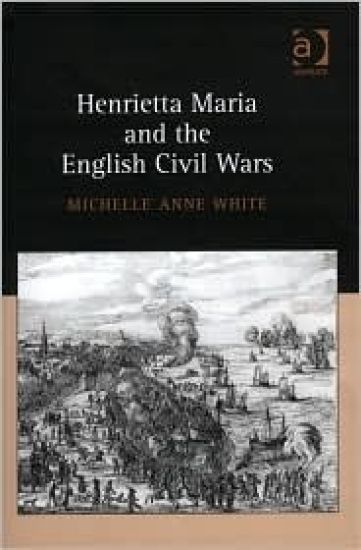
The influence exercised by Queen Henrietta Maria over her husband Charles I during the English Civil Wars, has long been a subject of interest. To many of her contemporaries, especially those sympathetic to Parliament, her French origins and Catholic beliefs meant that she was regarded with great suspicion. Later historians picking up on this, have spent much time arguing over her political role and the degree to which she could influence the decisions of her husband. What has not been so thoroughly investigated, however, are issues surrounding the popular perceptions of the Queen that inspired the plethora of pamphlets, newsbooks and broadsides. Although most of these documents are polemical propaganda devices that tell us little about the actual power wielded by Henrietta Maria, they do throw much light on how contemporaries viewed the King and Queen, and their relationship. The picture created by Charles and Henrietta's enemies was one of a royal household in patriarchal disorder. The Queen was characterized as an overly assertive, unduly influential, foreign, Catholic queen consort, whilst Charles was portrayed as a submissive and weak husband. Such an image had wide political ramifications, resulting in accusations that Charles was unfit to rule, and thus helping to justify Parliamentary resistance to the monarch. Because Charles had permitted his Catholic wife to interfere in state matters he stood accused of threatening the patriarchal order upon which all of society rested, and of imperilling the Church of England. In this book Michelle White tackles these dual issues of Henrietta's actual and perceived influence, and how this was portrayed in popular print by those sympathetic and hostile to her cause. In so doing she presents a vivid portrait of a strong willed woman who had a profound influence on the course of English history.

Henrietta Maria
Ashgate Publishing Limited
2008
sidottu
Compiled by art historians, literary scholars, musicologists, and historians, this essay collection is an innovative and interdisciplinary study of Queen Henrietta Maria and her multi-faceted roles and responsibilities. Elements of the queen's popular biography - her European identity and devout Catholic faith - are only a part of the backdrop against which Henrietta Maria is re-considered. Drawing on the expertise of an international group of scholars from different disciplines, these essays explore and shed new light on the Queen's various roles: a patron of performing and visual arts with taste and influence comparable to her husband's, her salient political position between the French and English courts, and her political sentiments at the outbreak of the English Civil War. Through cutting-edge archival research that includes investigations into household accounts and personal correspondence, this collection ultimately presents a new assessment of female power and influence at the early modern court. What becomes strikingly evident is that Henrietta Maria had a distinct and profound influence on material and political culture that deserves the attention of art history, literature, theatre, and musicology scholars.


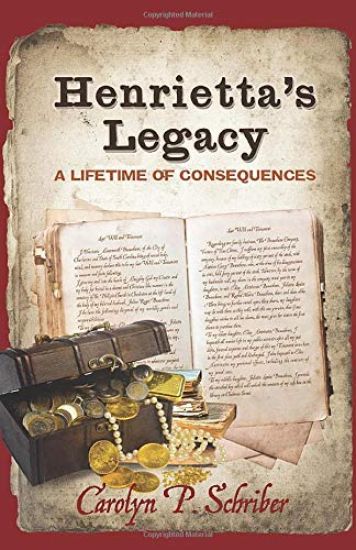
We first met Henrietta in 1832 and followed her as she left England to marry a South Carolina cotton broker. We watched her learn to be a proper wife, a mother, a businesswoman, and eventually a widow, handling every conflict through a series of compromises. Now it's 1859. The country stands on the brink of Civil War, and Henrietta is about to learn another important lesson: Every compromise comes with its own set of consequences.Henrietta knows she will never fit into the ranks of Charleston's high society because of her family's commercial activities and her foreign birth. Nevertheless, social mavens will expect her to follow their rules of behavior. She will try to be soft-spoken, uninvolved in political or commercial affairs, and subservient to the male members of her family. She will accept the rules that women should not own property, hold opinions contrary to those of her husband, work outside of the home, vote, or speak in public. Such restrictions grate against Henrietta's English upbringing, but she will break the rules only when she finds a way to do so legally.Motherhood presents Henrietta with a different set of restrictions. Although she was firmly set against allowing her children to be brought up by slaves, she soon learned to rely on trusted servants to care for them and handle their early education. And now that her daughters are grown, she finds herself pushing them to conform to the same social patterns against which she herself struggled. Above all other questions, however, there looms a family secret that could destroy Henrietta's relationship with her daughters. And there is no solution except to perpetuate a lie.Upon the early death of her husband, Henrietta found herself the major stockholder in the family business. She seemed to switch effortlessly from Southern lady to hard-driven businesswoman. In that effort, she now benefits from a booming cotton marketplace. The weather has yielded bumper crops, while cotton buyers, skittishly fearing a wartime slowdown, are eager to pay high prices to stockpile the raw cotton they need for their textile industry. For several years, Henrietta has been able to keep the family business returning high profits without sacrificing her femininity. How long the cotton boom will last, however, is another question she does not want to handle.Henrietta's life is a juggling act. She balances proper widowhood against an undeniable attraction to an eligible bachelor without raising a single society eyebrow. She praises her daughters' independence while hoping they will marry someone who will give them a foothold among Charleston's most prominent families. She can defend the principles of abolition while her household slaves do her bidding. She can fly not just two, but three, flags-the American citizenship she accepted when she married a traveler from abroad, her pride in being a resident of South Carolina and Charleston in particular, and the loyalty she retains for her homeland.The prospect of war, however, changes everything. Henrietta will find that she can no longer maintain that middle-of-the-road position she has held in every aspect of her life. That American flag becomes a symbol, not of proud independence, but of tyranny over her adopted state of South Carolina, and England teeters between supporting the Confederacy or acting to cause its downfall. She must decide whether to engage in blockade-running and smuggling or to act against the economic interests of her own company. As the schemes of espionage spin around her, she must protect one country she loves by betraying another. In her personal life, she must turn her back on a budding romance and protect a cluster of secrets that threaten to destroy her family. No compromise, no hedging of bets, she learns, can solve a problem without imposing a set of consequences.
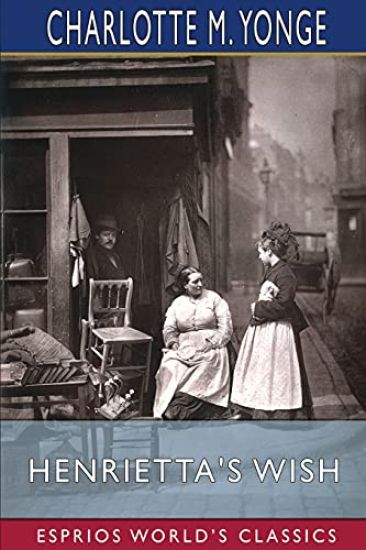
Charlotte Mary Yonge (1823-1901), was an English novelist, known for her huge output. She was devoted to the Church of England, and much influenced by John Keble, a near neighbour and one of the leaders of the Oxford Movement. Her novels reflected the values and concerns of Anglo-Catholicism. She began writing in 1848, and published during her long life about 100 works, chiefly novels. Her first commercial success, The Heir of Redclyffe (1854), provided the funding to enable the schooner Southern Cross to be put into service on behalf of George Selwyn. Similar charitable works were done with the profits from later novels. She was also editor, for nearly forty years, of a magazine for young ladies, the Monthly Packet with a varied readership, but targeted at British Anglican girls.

This work has been selected by scholars as being culturally important and is part of the knowledge base of civilization as we know it.This work is in the public domain in the United States of America, and possibly other nations. Within the United States, you may freely copy and distribute this work, as no entity (individual or corporate) has a copyright on the body of the work.Scholars believe, and we concur, that this work is important enough to be preserved, reproduced, and made generally available to the public. To ensure a quality reading experience, this work has been proofread and republished using a format that seamlessly blends the original graphical elements with text in an easy-to-read typeface.We appreciate your support of the preservation process, and thank you for being an important part of keeping this knowledge alive and relevant.
"Henrietta's Wish" by Charlotte M. Yonge offers a compelling glimpse into 19th-century English family life. As a classic of domestic fiction, this historical novel explores the intricate dynamics within a household, portraying the everyday joys and challenges faced by its characters. Rooted in Christian values and beliefs, the story provides a window into the moral and spiritual landscape of its time. Yonge's work delves into themes of family, duty, and faith, capturing the essence of a bygone era with its nuanced portrayal of relationships and societal expectations. Readers interested in historical fiction and narratives centered around family life will appreciate the enduring themes and timeless appeal of "Henrietta's Wish." This edition has been carefully prepared for print, ensuring the original text is preserved.This work has been selected by scholars as being culturally important, and is part of the knowledge base of civilization as we know it.This work is in the public domain in the United States of America, and possibly other nations. Within the United States, you may freely copy and distribute this work, as no entity (individual or corporate) has a copyright on the body of the work.Scholars believe, and we concur, that this work is important enough to be preserved, reproduced, and made generally available to the public. We appreciate your support of the preservation process, and thank you for being an important part of keeping this knowledge alive and relevant.
Experience the passionate depths of "Henrietta Temple: A Love Story," a captivating romance from the 19th century by Benjamin Disraeli. Set against the backdrop of English social life, this literary gem explores the complexities of love and relationships. Delve into a world of dandies and societal expectations in this classic work of fiction. "Henrietta Temple" offers a glimpse into a bygone era, where matters of the heart intertwine with the intricacies of social standing. Rediscover the enduring power of love in this meticulously prepared print republication. A compelling read for those who appreciate historical romance and timeless literary fiction.This work has been selected by scholars as being culturally important, and is part of the knowledge base of civilization as we know it.This work is in the public domain in the United States of America, and possibly other nations. Within the United States, you may freely copy and distribute this work, as no entity (individual or corporate) has a copyright on the body of the work.Scholars believe, and we concur, that this work is important enough to be preserved, reproduced, and made generally available to the public. We appreciate your support of the preservation process, and thank you for being an important part of keeping this knowledge alive and relevant.
Experience the passionate depths of "Henrietta Temple: A Love Story," a captivating romance from the 19th century by Benjamin Disraeli. Set against the backdrop of English social life, this literary gem explores the complexities of love and relationships. Delve into a world of dandies and societal expectations in this classic work of fiction. "Henrietta Temple" offers a glimpse into a bygone era, where matters of the heart intertwine with the intricacies of social standing. Rediscover the enduring power of love in this meticulously prepared print republication. A compelling read for those who appreciate historical romance and timeless literary fiction.This work has been selected by scholars as being culturally important, and is part of the knowledge base of civilization as we know it.This work is in the public domain in the United States of America, and possibly other nations. Within the United States, you may freely copy and distribute this work, as no entity (individual or corporate) has a copyright on the body of the work.Scholars believe, and we concur, that this work is important enough to be preserved, reproduced, and made generally available to the public. We appreciate your support of the preservation process, and thank you for being an important part of keeping this knowledge alive and relevant.