Kirjojen hintavertailu. Mukana 11 627 064 kirjaa ja 12 kauppaa.

Kirjahaku

Etsi kirjoja tekijän nimen, kirjan nimen tai ISBN:n perusteella.

1000 tulosta hakusanalla Henry-F

Henry Fielding
The Critical Heritage gathers together a large body of critical sources on major figures in literature. Each volume presents contemporary responses to a writer's work, enabling students and researchers to read the material themselves.
Henry Ford

Henry Ford

Routledge
2002
sidottu
This collection includes evaluations of and responses to the contributions made by Henry Ford and the ways in which his influence helped shape the understanding of management practices.Henry Ford was an eccentric, and occasionally enlightened, thinker and remains a controversial figure today. He developed F.W. Taylor's ideas of scientific management (the subject of another four volume collection in this series), turning them into a whole 'system of production'. Ford's system was characterized by highly efficient, high volume and vertically integrated production, with high wages and low prices. His methods helped make the motor car the defining product of the twentieth century and also ensured his own iconic status.
Henry Fielding
The Critical Heritage gathers together a large body of critical sources on major figures in literature. Each volume presents contemporary responses to a writer's work, enabling students and researchers to read the material themselves.
Henry Fielding

Henry Fielding

Andrew Wright

University of California Press
2020
pokkari
This title is part of UC Press's Voices Revived program, which commemorates University of California Press’s mission to seek out and cultivate the brightest minds and give them voice, reach, and impact. Drawing on a backlist dating to 1893, Voices Revived makes high-quality, peer-reviewed scholarship accessible once again using print-on-demand technology. This title was originally published in 1965.
Henry Fielding

Henry Fielding

Andrew Wright

University of California Press
2021
sidottu
This title is part of UC Press's Voices Revived program, which commemorates University of California Press’s mission to seek out and cultivate the brightest minds and give them voice, reach, and impact. Drawing on a backlist dating to 1893, Voices Revived makes high-quality, peer-reviewed scholarship accessible once again using print-on-demand technology. This title was originally published in 1965.
Henry Fielding

Henry Fielding

Simon Varey

Cambridge University Press
1986
sidottu
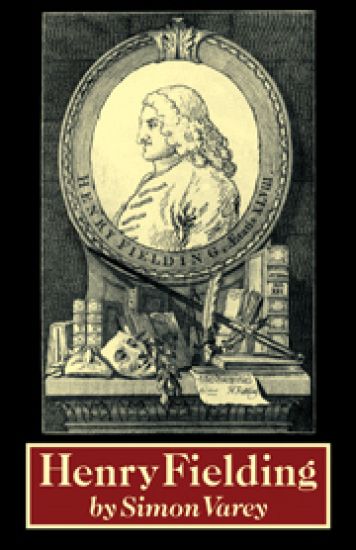
This concise and lucid study provides an ideal introduction to the major work of Henry Fielding for all students. Fielding's stature as a great comic novelist is assured, but as Professor Varey illustrates, he was a remarkably versatile writer. In his day Fielding was one of England's leading dramatists and also pursued a career in law. He founded, edited, and contributed essays for four different periodicals, and wrote a political-satirical novel Jonathan Wild, in addition to a work of powerful social protest Amelia and his two outstanding contributions to the development of English prose fiction: Tom Jones and Joseph Andrews. Professor Varey clarifies and explains this varied body of writing, concentrating on Fielding's technique of combining opposites or apparently ill-matched elements - of language, character, narrative made, and even philosophical thought.
Henry Fielding

Henry Fielding

Simon Varey

Cambridge University Press
1986
pokkari
This concise and lucid study provides an ideal introduction to the major work of Henry Fielding for all students. Fielding's stature as a great comic novelist is assured, but as Professor Varey illustrates, he was a remarkably versatile writer. In his day Fielding was one of England's leading dramatists and also pursued a career in law. He founded, edited, and contributed essays for four different periodicals, and wrote a political-satirical novel Jonathan Wild, in addition to a work of powerful social protest Amelia and his two outstanding contributions to the development of English prose fiction: Tom Jones and Joseph Andrews. Professor Varey clarifies and explains this varied body of writing, concentrating on Fielding's technique of combining opposites or apparently ill-matched elements - of language, character, narrative made, and even philosophical thought.
Henry Friendly, Greatest Judge of His Era

Henry Friendly, Greatest Judge of His Era

David M. Dorsen; Richard A. Posner

The Belknap Press
2012
sidottu
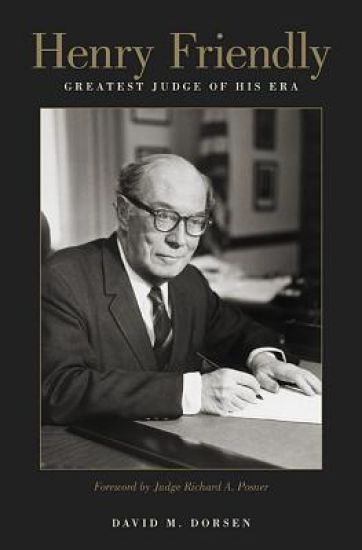
Henry Friendly is frequently grouped with Oliver Wendell Holmes, Louis Brandeis, Benjamin Cardozo, and Learned Hand as the best American jurists of the twentieth century. In this first, comprehensive biography of Friendly, David M. Dorsen opens a unique window onto how a judge of this caliber thinks and decides cases, and how Friendly lived his life.During his time on the Court of Appeals for the Second Circuit (1959–1986), Judge Friendly was revered as a conservative who exemplified the tradition of judicial restraint. But he demonstrated remarkable creativity in circumventing precedent and formulating new rules in multiple areas of the law. Henry Friendly, Greatest Judge of His Era describes the inner workings of Friendly’s chambers and his craftsmanship in writing opinions. His articles on habeas corpus, the Fourth Amendment, self-incrimination, and the reach of the state are still cited by the Supreme Court. Dorsen draws on extensive research, employing private memoranda between the judges and interviews with all fifty-one of Friendly’s law clerks—a veritable Who’s Who that includes Chief Justice John R. Roberts, Jr., six other federal judges, and seventeen professors at Harvard, Yale, Stanford, and elsewhere. In his Foreword, Judge Richard Posner writes: “David Dorsen has produced the most illuminating, the most useful, judicial biography that I have ever read . . . We learn more about the American judiciary at its best than we can learn from any other . . . Some of what I’ve learned has already induced me to make certain changes in my judicial practice.”
Henry Fuseli

Henry Fuseli

Martin Myrone; Henry Fuseli

Princeton University Press
2001
pokkari
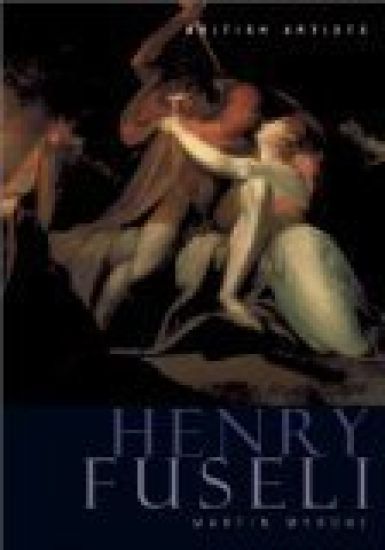
Painter, poet, critic and teacher, Henry Fuseli (1741-1825) is one of the most idiosyncratic and original figures in the history of British art. His work has always been the subject of speculation, gossip and fantasy. This book offers a completely new interpretation of the artist, placing him firmly in the context of a period of traumatic social, cultural and political revolution. Martin Myrone explores his career from his early work in London and Rome to his old age, the period of his greatest professional success when he exerted a profound influence on a whole generation of younger British artists. A vivid image of the artist emerges, revealing Fuseli as a seminal figure in the development of modern art.
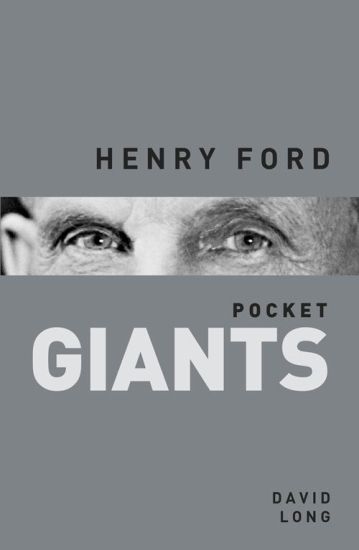
Henry Ford: pocket GIANTS

Henry Ford: pocket GIANTS

David Long

The History Press Ltd
2014
nidottu
Why is Henry Ford a giant? Because he put the world on wheels. Henry Ford did not invent the motor car, nor for all the claims did he invent the assembly line or mass production. But more than anyone before or since he is remembered as the man who almost singlehandedly took an expensive contraption of doubtful utility and recast it as a machine which in a real and profound sense changed the world forever. In an industry with many giants –André Citroen, Louis Renault and Giovanni Agnelli of Fiat – Henry Ford stands tallest as the greatest ever motor mogul. A Michigan farmer’s son who became a dollar billionaire, a ruthlessly single-minded autocrat who became a folk hero, a pacifist who went on to inspire Adolf Hitler - he was a boss who paid his workers twice as much as his competitors yet waged an unrelenting war on unions and badly abused the power he had worked so hard to attain. David Long has been an author and journalist for thirty years, and has regularly appeared in The Times, Sunday Times and many magazines, here and abroad. He is a celebrated author of over twenty titles and has ghostwritten many more.
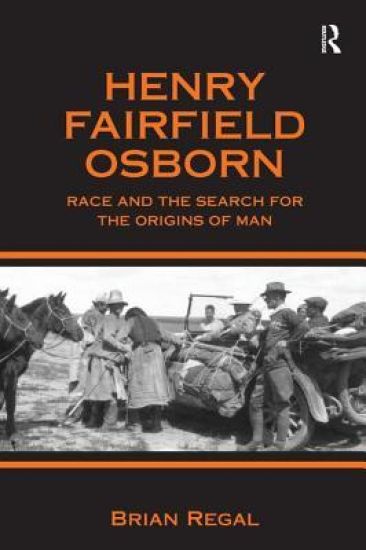
Henry Fairfield Osborn

Henry Fairfield Osborn

Brian Regal

Ashgate Publishing Limited
2002
sidottu
The discovery in the 1920s of a huge cache of fossils in the Gobi Desert fuelled a mania for dinosaurs that continues to the present. But the original goal of the expedition was to search for the origins of man. Henry Fairfield Osborn (1857-1935), director of the American Museum of Natural History, stood at the forefront of the debate over human evolution and the expedition aimed to prove his theory of human origins. Osborn rejected the idea of primate ancestry and constructed a non-Darwinian theory that the evolution of man was the long adventurous story of individuals and groups exerting personal will-power and inborn characteristics to achieve both biological and spiritual success. It is an idea that still echoes today. Study of Osborn’s thinking, however, has been obscured by the perception that racism influenced his theories. Brian Regal paints a different and more textured picture in this book - he shows that Osborn's views on race, like his political ideas, were motivated by his science, itself grounded in religious doctrine. His belief in the Central Asian origins of man, his role as an activist for eugenic reform and immigration controls, his support for Nordicism, his place in the 'New' versus 'Old' biology debate, his role in the Christian Fundamentalist controversy, the Scopes Monkey trial, and finally his construction of the 'Dawn Man' hypothesis - all stemmed from his desire to support his human evolution theory, and point the way to salvation. This biography charts Osborn's intellectual development, from its roots in the eclectic Christianity of his mother, through his student days with Arnold Guyot, James McCosh, and T.H. Huxley, to his mature work at the American Museum. It examines his trials and tribulations, friendships and conflicts, and the world in which he lived: all contributed to the construction of his theory. It is the dramatic story of a man holding onto ideas that for him represented the very meaning of life itself.
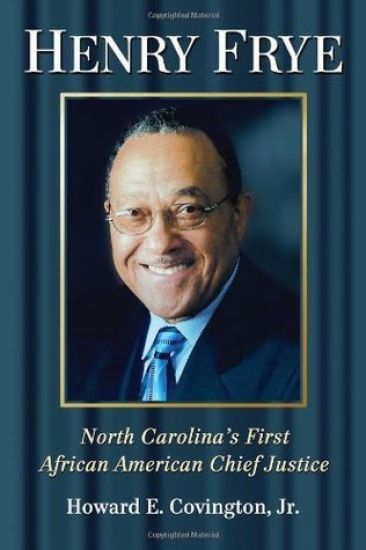
Henry Frye

Henry Frye

Howard E. Covington

McFarland Co Inc
2013
pokkari
Henry E. Frye came of age just as the South was beginning a transformational change. When he graduated from college in 1953, African Americans like him could only hope that the future would be different from the past. At the close of his public career in 2001, he was chief justice of the North Carolina Supreme Court--the head of the state's third branch of government. Throughout their lives, Frye and his wife, Shirley, were in the vanguard of the advances that shaped the lives of African Americans. His election to the state legislature in 1968 was the beginning of steady, determined efforts to expand opportunities for African Americans in politics, business and society at large. This book traces, along with his career, the growing participation of African Americans in the civic, political and social life of North Carolina.
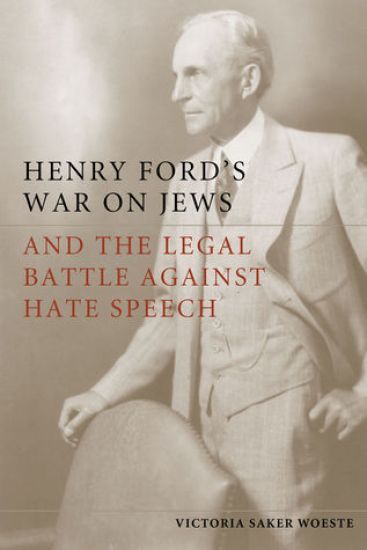
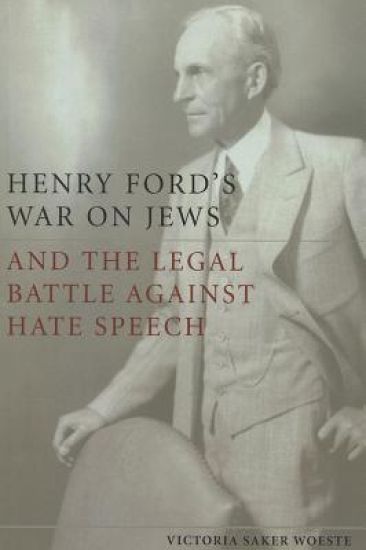
Henry Ford's War on Jews and the Legal Battle Against Hate Speech

Henry Ford's War on Jews and the Legal Battle Against Hate Speech

Victoria Saker Woeste

Stanford University Press
2012
sidottu
Henry Ford is remembered in American lore as the ultimate entrepreneur—the man who invented assembly-line manufacturing and made automobiles affordable. Largely forgotten is his side career as a publisher of antisemitic propaganda. This is the story of Ford's ownership of the Dearborn Independent, his involvement in the defamatory articles it ran, and the two Jewish lawyers, Aaron Sapiro and Louis Marshall, who each tried to stop Ford's war. In 1927, the case of Sapiro v. Ford transfixed the nation. In order to end the embarrassing litigation, Ford apologized for the one thing he would never have lost on in court: the offense of hate speech. Using never-before-discovered evidence from archives and private family collections, this study reveals the depth of Ford's involvement in every aspect of this case and explains why Jewish civil rights lawyers and religious leaders were deeply divided over how to handle Ford.
Henry Ford's War on Jews and the Legal Battle Against Hate Speech

Henry Ford's War on Jews and the Legal Battle Against Hate Speech

Victoria Saker Woeste

Stanford University Press
2013
pokkari
Henry Ford is remembered in American lore as the ultimate entrepreneur—the man who invented assembly-line manufacturing and made automobiles affordable. Largely forgotten is his side career as a publisher of antisemitic propaganda. This is the story of Ford's ownership of the Dearborn Independent, his involvement in the defamatory articles it ran, and the two Jewish lawyers, Aaron Sapiro and Louis Marshall, who each tried to stop Ford's war. In 1927, the case of Sapiro v. Ford transfixed the nation. In order to end the embarrassing litigation, Ford apologized for the one thing he would never have lost on in court: the offense of hate speech. Using never-before-discovered evidence from archives and private family collections, this study reveals the depth of Ford's involvement in every aspect of this case and explains why Jewish civil rights lawyers and religious leaders were deeply divided over how to handle Ford.