Kirjojen hintavertailu. Mukana 11 244 527 kirjaa ja 12 kauppaa.

Kirjahaku

Etsi kirjoja tekijän nimen, kirjan nimen tai ISBN:n perusteella.

1000 tulosta hakusanalla Herman Franck

The Family Business: Will the REal Criminals Please Stand Up

The Family Business: Will the REal Criminals Please Stand Up

Herman D. Franck Esq

Createspace Independent Publishing Platform
2011
nidottu
Who is Tina, what is a Mafia spy girl, why does she save the lover she can't have when he falls from grace, and how on earth does she infiltrate corporate America to expose one of the largest price fixing conspiriacies ever? Tony Lucchense is the young Harvard educated son of a wealthy Mafia Don who decides not to participate in the family business. Instead, armed with a Harbard MBA, he goes into what he thinks is a legitimate business. The family runs a sophisticated international niche business, importing Asian hookers, heroin, and sweat labor into America. The Lucchense family is a cut above the other Mafia families, and does not involve itself in breaking kneecaps to collect loan payments. Instead, they travel the world with great diplomacy, locate the best exotic young girls in the jungles of Asia, train these jungle Asians to speak "English for Asian Girls" (a type of real soft dirty talk) and bring them over for wholesaling in America and Europe. Within weeks of starting his new corporate job, Tony gets caught up in an anti-trust price fixing ring, which fouls up his whole plan to strike it rich in legitimate business. Tony makes some decisions which get him into deep hot water with corporate America, the sort of problems that don't just get you fired. Tina, the family's Mafia spy girl, comes to his rescue. Tina is one fo the Asian imports of the Family, who has now graduated to become a spy girl. She uses her sexual prowess to gain access to information, and is proud to say, "I always get my data." She is high tech, clever with the latest in spy gadgets, and is willing to go the extra mile (or inches) to get the goods on the culprit. She has some of her own personal challenges in this story, which reform her own being, and give her some unbeatable powers as the ultimate spy girl. Tony's headstrong decision to avoid involvement with The Family Business includes avoiding the decades of advances from Tina, since she is a symbol of his Father's empire. His experiences in dealing with so called legitimate business put a test to all these decisions. When the Lucchense boys learn of the horrible corporate injustices which are visited upon their youngest broghter, they decide to bring in their own style of justice. "We don't litigate, we annihilate."

Memoirs of Augustus Hermann Francke (1831)

Memoirs of Augustus Hermann Francke (1831)

August Hermann Francke; Rezeau Brown

Literary Licensing, LLC
2014
sidottu
Memoirs of Augustus Hermann Francke is a biographical account of the life of August Hermann Francke, a German Lutheran theologian, philanthropist, and founder of the Pietist movement. The book was originally published in 1831 and is written by Francke himself. The memoirs cover Francke's early life, his education, his religious conversion, and his work as a pastor and educator. The book also details Francke's founding of the Halle Orphanage and his efforts to improve the lives of the poor and needy in Germany. The memoirs provide a unique insight into the life and work of one of the most important figures in German religious history.This Is A New Release Of The Original 1831 Edition.This scarce antiquarian book is a facsimile reprint of the old original and may contain some imperfections such as library marks and notations. Because we believe this work is culturally important, we have made it available as part of our commitment for protecting, preserving, and promoting the world's literature in affordable, high quality, modern editions, that are true to their original work.
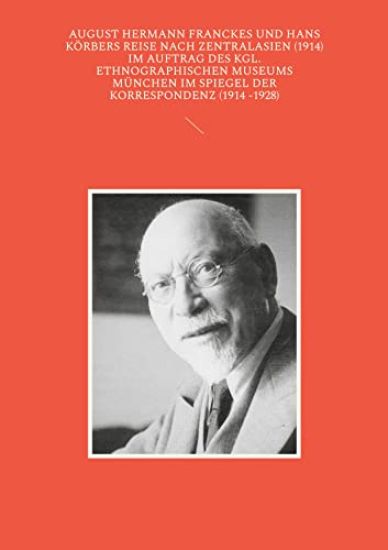
August Hermann Franckes und Hans Körbers Reise nach Zentralasien (1914) im Auftrag des Kgl. Ethnographischen Museums München im Spiegel der Korrespondenz (1914 -1928)
Angeregt durch die preu ischen Turfanexpeditionen (1902-1914) beabsichtigte Lucian Scherman (1864-1946), der Direktor des M nchner Ethnographischen Museums, ebenfalls eine Serindien-Sammlung aufzubauen und dazu einen Sammler nach Zentralasien zu schicken. Der Tibetmissionar August Hermann Francke (1870-1930), damals einer der besten Kenner Ladakhs und seiner Geschichte, schien ein geeigneter Kandidat zu sein; au erdem w rde die Mission einen Teil der anfallenden Kosten tragen, denn der Reisende w rde ja gewissermassen nebenher f r das Museum sammeln. Francke gewann als Mitreisenden den sprachkundigen Hans K rber, der sich jedoch in der Praxis als problematischer Mitarbeiter erwies. Die Expedition stand unter einem schlechten Stern: die Reisewege und die Kosten wurden untersch tzt, ein Besuch der Gegend von Turfan erwies sich als nicht durchf hrbar und zu allem berfluss brach der Weltkrieg aus, sodass die beiden Forscher 1914 in Leh festgenommen und ins Internierungslager Ahmednagar bergef hrt worden. Der russische Teil der Sammlung ging verloren, der andere, gr ssere Teil jedoch wurde 1928 nach Deutschland gebracht und von Francke noch ansatzweise bearbeitet. Der von Scherman mit Geduld und Geschick geleitete Briefwechsel dokumentiert die Forschungsreise mit all ihren praktischen und menschlichen Schwierigkeiten und ist eine aufschlussreiche Quelle zur Geschichte der Ethnographie und des Museums in M nchen.
Briefwechsel mit August Hermann Francke 1689-1704

Briefwechsel mit August Hermann Francke 1689-1704

Philipp Jakob Spener

Mohr Siebeck
2006
sidottu
Der vorliegende Briefwechsel zwischen Philipp Jakob Spener (1635-1705), dem Begründer des lutherischen Pietismus, und August Hermann Francke (1663-1727), der den Pietismus zu einer religiös-sozialen Reformbewegung mit gesamtgesellschaftlichem Anspruch ausprägte, ist nicht nur eine zentrale Quelle für die Etablierung des hallischen Pietismus mit den Franckeschen Anstalten und für die Gründung der Universität Halle. Die in der Kommentierung zusammengetragenen Informationen machen deutlich, dass schon die frühen Hallenser Aktivitäten Franckes nicht denkbar waren ohne das oft spannungsreiche Zusammenspiel von pietistischen Reformvorhaben und brandenburg-preußischer Politik. Auf der Basis der Edition lässt sich zudem theologiegeschichtlich konkretisieren, wie sich die Spenersche "Hoffnung besserer Zeiten" bei Francke mit innerweltlichem Realismus verband und zu "Projekten" formte, die die Realität auf eine Utopie hin zu überwinden suchten. Konkret fassbar werden diese "Projekte" in der Entstehung eines internationalen pietistischen Kommunikationsnetzes, in dem missionarische Aktivität, Diplomatie und Kommerz eine selbstverständliche Synthese eingingen. Der Briefwechsel macht somit anthropologische und soziologische Konstellationen deutlich, die für die Frage nach den Proprien dessen, was theologie- und geistesgeschichtlich als 'Pietismus' bezeichnet werden kann, generell aufschlussreich sind.