Kirjahaku
Etsi kirjoja tekijän nimen, kirjan nimen tai ISBN:n perusteella.
1000 tulosta hakusanalla Hermann Bendix Todsen
Hermann Von Helmholtz
Leo Koenigsberger; Frances A. (TRN) Welby; Lord Kelvin
Kessinger Pub
2008
pokkari
A collection of twenty-two fairy tales by the Nobel Prize-winning novelist, most translated into English for the first time, show the influence of German Romanticism, psychoanalysis, and Eastern religion on his development as an author. Simultaneous.
This masterful synthesis of criticism and biography surveys all of Hermann Hesse's major works and many of his minor ones in relation to the intricate psychological design of his entire life history. Eugene Stelzig examines what it means to be an "autobiographical writer" by considering Hesse's fictions of the self as an exemplary instance of the relationship between life and art and between biography and autobiography. In a graceful and inviting style, he frees this major confessional writer from the confines of German culture and the status of "cult figure" of the 1960s, and situates him in the tradition of world literature and in a variety of literary, psychological, philosophical, and religious contexts. Three introductory chapters on autobiography and Hesse set the stage for a chronological study. Then follows a penetrating analysis of the balance between biographical fact and confessional fantasy in Hesse's long career, from the failed autobiography of his first literary success, Beneath the Wheel, through the protracted midlife crisis of the grotesque Steppenwolf period, to the visionary autobiography of his magisterial fictional finale, The Glass Bead Game. Originally published in 1988. The Princeton Legacy Library uses the latest print-on-demand technology to again make available previously out-of-print books from the distinguished backlist of Princeton University Press. These editions preserve the original texts of these important books while presenting them in durable paperback and hardcover editions. The goal of the Princeton Legacy Library is to vastly increase access to the rich scholarly heritage found in the thousands of books published by Princeton University Press since its founding in 1905.
Hermann-Peter Piwitt
University of Wales Press
2000
nidottu
Born in 1935, Hermann Peter Piwitt falls between the generation of writers who experienced National Socialism as adults and went on to shape the early literary landscape of the Federal Republic, and the generation whose careers were influenced by direct participation in the Student Movement of the late 1960s. Although from the beginning of his career, he combined formal experimentation with an attempt to uncover the social realities that are concealed behind the dominance of capitalism, a growing sense of disillusionment at the absence of any alternative to capitalism and a developing awareness of green issues mark Piwitt's literary development. This volume begins with a previously unpublished essay by Piwitt and an interview held during his visit to the Centre for Contemporary German Literature in Swansea. Subsequent critical essays include an overview of Piwitt's work, an analysis of his attitudes towards the Student Movement, a reinterpretation of his critical essays and of Deutschland. Versuch einer Heimkehr, and an examination of the bleak conclusions he draws at the end of the millennium in Ein unversohnlich sanftes Ende. The volume concludes with a full bibliography.
Hermann-Peter Piwitt
University of Wales Press
2000
sidottu
Hermann-Peter Piwitt belongs to the generation of West German writers the beginning of whose careers coincided with the student movement of 1968. His career is of particular interest from the perspective of a Europe in which a left-wing alternative to the politics of the centre, has disappeared. Through a series of academic articles in English and German, this volume charts his career, from early left-wing commitment, through portraits of life in the Federal Republic of the 1970s and 1980s, to an assessment of his literary and political stance following unification. The volume also includes a previously unpublished essay by Piwitt himself, and an interview with the author held during his period as writer-in-residence at the University of Wales, Swansea.
They were the most unlikely of siblings – one, Adolf Hitler’s most trusted henchman, the other a fervent anti-Nazi.Hermann Goering was a founder member of the Nazi Party, who became commander of the Luftwaffe, ordering the terror bombing of civilians and promoting the use of slave labour in his factories.His brother, Albert, loathed Hitler’s regime and saved hundreds – possibly thousands – across Europe from Nazi persecution. He deferred to Hermann as head of the family but spent nearly a decade working against his brother’s regime. If he had been anyone else, he would have been imprisoned or executed. Despite their extreme and differing beliefs, Hermann sheltered his brother from prosecution and they remained close throughout the war.Here, for the first time, James Wyllie brings Albert out of the shadows and explores the extraordinary relationship of the Goering brothers.
A collection of essays on various aspects of the life, thought, and ministry of Hermann Sasse, a theologian at the university in Erlangen. Essays contributed by numerous Sasse scholars, many of whom knew Dr. Sasse personally.These essays are from the 1995 Lutheran Life Lectures at Concordia Lutheran Theological Seminary, St Catharines, Ontario, Canada.
During World War II, the Nazis plundered from occupied countries millions of items of incalculable value estimated in the hundreds of millions of dollars. Spearheaded by Hermann Goring the looting program quickly created the largest private art collection in the world, exceeding the collections amassed by the Metropolitan in New York, the British Museum in London, the Louvre in Paris and the Tretiakov Gallery in Moscow. By the end of the war, the Nazis had stolen roughly one-fifth of the entire art treasures of the world. This book explores the formation of the Nazi art collection and the methods used by Goring and his party to strip occupied Europe of a large part of its artistic heritage.
Hermann Günther Graßmann (1809-1877): Visionary Mathematician, Scientist and Neohumanist Scholar
Springer
1996
sidottu
In this volume specialists in mathematics, physics, and linguistics present the first comprehensive analysis of the ideas and influence of Hermann G. Grassmann (1809-1877), the remarkable universalist whose work recast the foundations of these disciplines and shaped the course of their modern development.
Originally published in celebration of Hermann Hesse's 80th birthday, this highly documented study, practical handbook, and reference work for Hesse scholarship is presented in three parts. Mileck gives a short biography of Hesse's life and a general characterization of his writing, followed by a critical history of Hesse scholarship through 1957 organized chronologically, categorically and thematically. Finally he presents an exhaustive bibliography containing more than 1800 items of all the works by and about Hesse.
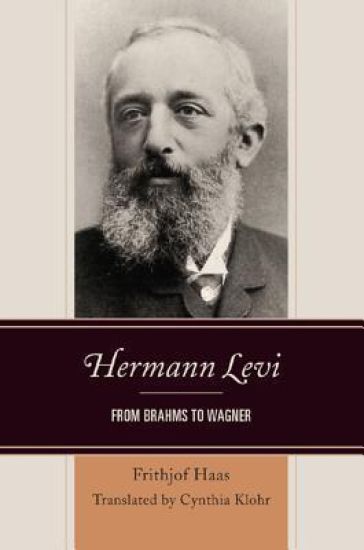
Jewish conductor Hermann Levi strove for excellence and recognition as a composer and conductor of classical music in 19th-century Germany. He unerringly devoted himself to the orchestral performance of works by the two major figures of the time: Johannes Brahms and Richard Wagner. In spite of the anti-Semitic atmosphere, Levi saw the conducting of Wagner's works as a major calling: one that pinnacled in the premier performance of Parsifal in Bayreuth. In this biography, newly translated into English by Cynthia Klohr, opera scholar and conductor Fritjof Haas surveys the life and work of this remarkable individual. Born of a long line of rabbis and raised on the ideals of political emancipation of Europe's Jews, Levi sought to break the social constraints and boundaries imposed upon him because of his religious heritage by the power brokers of the classical music scene. Like so many German Jews of his generation, Levi struggled nearly all his life to dissolve the battle between personal lot and social prejudice. Drawing on the wealth of material from the "Leviana" repository in Munich, Germany, Haas artfully weaves together Levi's personal history with his musical milieu to paint a portrait of this ambitious and ambivalent figure in the world of 19th-century German music. This work will be of special interest to musicologists, musicians, opera fans, classical music listeners, and historians and scholars of Judaic studies.
The amazing life story of a quadriplegic monk during the Middle Ages.One of the most brilliant minds of the Middle Ages, Herman of Reichenau was a severely crippled monk who, though he was marginalized and even mistreated by his fellow monks, is celebrated to this day for his groundbreaking scientific work and the beauty of his musical compositions, among them ""Salve Regina."" A quadriplegic since childhood and brought to the monastery at an early age, Herman lived at one of the most influential and powerful Medieval monasteries, situated on a small island in the Lake of Constance on the modern-day border of Austria, Switzerland, and Germany. As he grew and studied, investing his hope in the medical promises of the time to alleviate his physical ailments, his days meandered between deep despair and his growing faith. When his music was played and sung, an exhilarating joy entered the whole community, and the monks came to see the extraordinary spiritual strength, beauty, and true happiness coming from the weakest among them. A deeply encouraging book about the life of a man who overcame numerous obstacles, this work captures the grandeur of the human spirit.
One of the few books available on the HG units, this book covers the commanders, Knight’s Cross Holders, uniforms, insignia, standards, flags, pennants, and recruitment.
Hermann Rorschach's Psychodiagnostics
Hogrefe Publishing
2022
sidottu
This new English translation and 100th anniversary annotated edition of Psychodiagnostics, the only book published by Hermann Rorschach, showcases Rorschach's empiricism and the wide-ranging flexibility of his thinking - and thus helps us to understand why his iconic inkblot test has survived for a century and is still being used around the world, with the support of a strong evidence base. The expert translation team have collaborated closely to create an accessible rendition of Hermann Rorschach's presentation of the inkblot test that resulted from his empirical research experiments. Also included in this edition is the case study lecture on new developments in the test that Rorschach gave to the Swiss Psychoanalytic Society in 1922, just six weeks before his premature death. His book and the lecture are each accompanied by annotations for the first time, looking backward to the sources of Rorschach's terminology and also forward to how the test is used today. Drawings and photographs from the Rorschach Archive as well as introductory chapters on the history of the translation and the creation of Psychodiagnostics bring the story of this important figure and his work to life. This volume is essential reading for both historians and contemporary users of the inkblot test and anyone interested in exploring personality testing.