

Kirjahaku
Etsi kirjoja tekijän nimen, kirjan nimen tai ISBN:n perusteella.
1000 tulosta hakusanalla Hermann Hango
"A critical biography far surpassing the previous ones." (Times Higher Education Supplement). "There are to be sure many writers whose biographies are more interesting than their fiction but Hesse is not one of these. He led a long and sometimes eventful life with marital tensions, travel controversy, crises, even some thoughts of suicide and a period of time as a student in a home for retarded and unmanageable. In addition, there was his search which led him through the culture and arts of West and East, his views of politics and society, of psychology and philosophy. The difference between Hesse and other writers is that virtually every shred and patch of his life was brought into his writing, his fiction particularly. 'He had to write about himself and there is little of what he wrote that is not confessional in form and therapeutic in function.' Autobiography is the very matter of his work. Mileck's contribution is to extend and fill out the evidence of his life, his psychoanalysis, his drive toward self-realization which was the very engine of his being, to show the raw material and thus to invite readers to see how it was transmuted, transfigured, fantasized, poeticized, symbolized." (Los Angeles Times). "Hesse was a prolific author for some 60 years, and his mind drew everything it contemplated into his private wars between flesh and spirit. objectivity and subjectivity, the longings for society and isolation. No one is better qualified to disentangle this abundance than Mileck, compiler of the huge two-volume Hesse bibliography. For completeness, then, no biography in English compares." (Kirkus Reviews). "Mileck provides his own translations of the German quotations from Hesse's works, and the eight interpretive chapters are thoroughly indexed, making the work readily accessible to researchers and students concerned with specific Hesse questions and themes. This very readable book also contains a number of exceptional photographs, which, together with Mileck's fervor and understanding of the author, help create a living image of Hesse the man and the artist." (Choice). "Professor Mileck ...brings to his task an acquaintanceship with Hesse's published and unpublished writings ...which borders on omniscience. This is a literary biography which concentrates on the works and looks at the life of its subject briefly and always in relation to its involvement with the works ...[This] is true scholarship, which does not make the book less readable and accessible to the general public...a solid and valuable book which should make it easier ...to bring [Hesse] back into the orbit of serious appreciation in the English-speaking world." (Books and Bookmen).
Hermann von Helmholtz and the Foundations of Nineteenth-Century Science
University of California Press
1994
sidottu
Hermann von Helmholtz (1821-1894) was a polymath of dazzling intellectual range and energy. Renowned for his co-discovery of the second law of thermodynamics and his invention of the ophthalmoscope, Helmholtz also made many other contributions to physiology, physical theory, philosophy of science and mathematics, and aesthetic thought. During the late nineteenth century, Helmholtz was revered as a scientist-sage - much like Albert Einstein in this century. David Cahan has assembled an outstanding group of European and North American historians of science and philosophy for this intellectual biography of Helmholtz, the first ever to critically assess both his published and unpublished writings. It represents a significant contribution not only to Helmholtz scholarship but also to the history of nineteenth-century science and philosophy in general.
As a philosopher, psychologist, and physician, the German thinker Hermann Lotze (1817–81) defies classification. Working in the mid-nineteenth-century era of programmatic realism, he critically reviewed and rearranged theories and concepts in books on pathology, physiology, medical psychology, anthropology, history, aesthetics, metaphysics, logic, and religion. Leading anatomists and physiologists reworked his hypotheses about the central and autonomic nervous systems. Dozens of fin-de-siècle philosophical contemporaries emulated him, yet often without acknowledgment, precisely because he had made conjecture and refutation into a method. In spite of Lotze's status as a pivotal figure in nineteenth-century intellectual thought, no complete treatment of his work exists, and certainly no effort to take account of the feminist secondary literature. Hermann Lotze: An Intellectual Biography is the first full-length historical study of Lotze's intellectual origins, scientific community, institutional context, and worldwide reception.


Hermann Von Helmholtz
Leo Koenigsberger; Frances A. (TRN) Welby; Lord Kelvin
Kessinger Pub
2008
pokkari
A collection of twenty-two fairy tales by the Nobel Prize-winning novelist, most translated into English for the first time, show the influence of German Romanticism, psychoanalysis, and Eastern religion on his development as an author. Simultaneous.

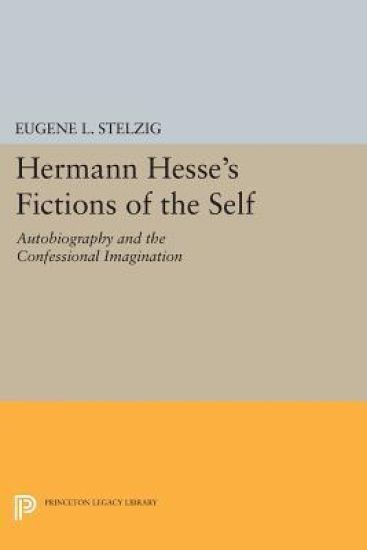
This masterful synthesis of criticism and biography surveys all of Hermann Hesse's major works and many of his minor ones in relation to the intricate psychological design of his entire life history. Eugene Stelzig examines what it means to be an "autobiographical writer" by considering Hesse's fictions of the self as an exemplary instance of the relationship between life and art and between biography and autobiography. In a graceful and inviting style, he frees this major confessional writer from the confines of German culture and the status of "cult figure" of the 1960s, and situates him in the tradition of world literature and in a variety of literary, psychological, philosophical, and religious contexts. Three introductory chapters on autobiography and Hesse set the stage for a chronological study. Then follows a penetrating analysis of the balance between biographical fact and confessional fantasy in Hesse's long career, from the failed autobiography of his first literary success, Beneath the Wheel, through the protracted midlife crisis of the grotesque Steppenwolf period, to the visionary autobiography of his magisterial fictional finale, The Glass Bead Game. Originally published in 1988. The Princeton Legacy Library uses the latest print-on-demand technology to again make available previously out-of-print books from the distinguished backlist of Princeton University Press. These editions preserve the original texts of these important books while presenting them in durable paperback and hardcover editions. The goal of the Princeton Legacy Library is to vastly increase access to the rich scholarly heritage found in the thousands of books published by Princeton University Press since its founding in 1905.

This masterful synthesis of criticism and biography surveys all of Hermann Hesse's major works and many of his minor ones in relation to the intricate psychological design of his entire life history. Eugene Stelzig examines what it means to be an "autobiographical writer" by considering Hesse's fictions of the self as an exemplary instance of the relationship between life and art and between biography and autobiography. In a graceful and inviting style, he frees this major confessional writer from the confines of German culture and the status of "cult figure" of the 1960s, and situates him in the tradition of world literature and in a variety of literary, psychological, philosophical, and religious contexts. Three introductory chapters on autobiography and Hesse set the stage for a chronological study. Then follows a penetrating analysis of the balance between biographical fact and confessional fantasy in Hesse's long career, from the failed autobiography of his first literary success, Beneath the Wheel, through the protracted midlife crisis of the grotesque Steppenwolf period, to the visionary autobiography of his magisterial fictional finale, The Glass Bead Game. Originally published in 1988. The Princeton Legacy Library uses the latest print-on-demand technology to again make available previously out-of-print books from the distinguished backlist of Princeton University Press. These editions preserve the original texts of these important books while presenting them in durable paperback and hardcover editions. The goal of the Princeton Legacy Library is to vastly increase access to the rich scholarly heritage found in the thousands of books published by Princeton University Press since its founding in 1905.

Hermann-Peter Piwitt
University of Wales Press
2000
nidottu
Born in 1935, Hermann Peter Piwitt falls between the generation of writers who experienced National Socialism as adults and went on to shape the early literary landscape of the Federal Republic, and the generation whose careers were influenced by direct participation in the Student Movement of the late 1960s. Although from the beginning of his career, he combined formal experimentation with an attempt to uncover the social realities that are concealed behind the dominance of capitalism, a growing sense of disillusionment at the absence of any alternative to capitalism and a developing awareness of green issues mark Piwitt's literary development. This volume begins with a previously unpublished essay by Piwitt and an interview held during his visit to the Centre for Contemporary German Literature in Swansea. Subsequent critical essays include an overview of Piwitt's work, an analysis of his attitudes towards the Student Movement, a reinterpretation of his critical essays and of Deutschland. Versuch einer Heimkehr, and an examination of the bleak conclusions he draws at the end of the millennium in Ein unversohnlich sanftes Ende. The volume concludes with a full bibliography.
Hermann-Peter Piwitt
University of Wales Press
2000
sidottu
Hermann-Peter Piwitt belongs to the generation of West German writers the beginning of whose careers coincided with the student movement of 1968. His career is of particular interest from the perspective of a Europe in which a left-wing alternative to the politics of the centre, has disappeared. Through a series of academic articles in English and German, this volume charts his career, from early left-wing commitment, through portraits of life in the Federal Republic of the 1970s and 1980s, to an assessment of his literary and political stance following unification. The volume also includes a previously unpublished essay by Piwitt himself, and an interview with the author held during his period as writer-in-residence at the University of Wales, Swansea.

They were the most unlikely of siblings – one, Adolf Hitler’s most trusted henchman, the other a fervent anti-Nazi.Hermann Goering was a founder member of the Nazi Party, who became commander of the Luftwaffe, ordering the terror bombing of civilians and promoting the use of slave labour in his factories.His brother, Albert, loathed Hitler’s regime and saved hundreds – possibly thousands – across Europe from Nazi persecution. He deferred to Hermann as head of the family but spent nearly a decade working against his brother’s regime. If he had been anyone else, he would have been imprisoned or executed. Despite their extreme and differing beliefs, Hermann sheltered his brother from prosecution and they remained close throughout the war.Here, for the first time, James Wyllie brings Albert out of the shadows and explores the extraordinary relationship of the Goering brothers.
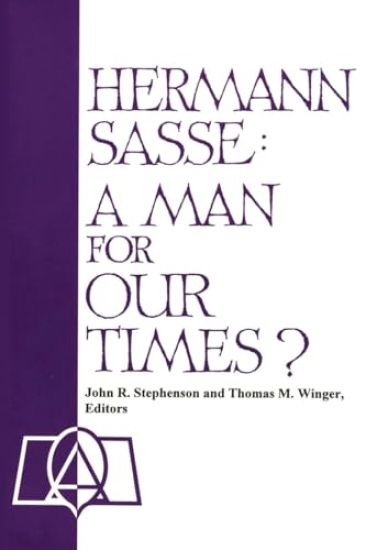
A collection of essays on various aspects of the life, thought, and ministry of Hermann Sasse, a theologian at the university in Erlangen. Essays contributed by numerous Sasse scholars, many of whom knew Dr. Sasse personally.These essays are from the 1995 Lutheran Life Lectures at Concordia Lutheran Theological Seminary, St Catharines, Ontario, Canada.

During World War II, the Nazis plundered from occupied countries millions of items of incalculable value estimated in the hundreds of millions of dollars. Spearheaded by Hermann Goring the looting program quickly created the largest private art collection in the world, exceeding the collections amassed by the Metropolitan in New York, the British Museum in London, the Louvre in Paris and the Tretiakov Gallery in Moscow. By the end of the war, the Nazis had stolen roughly one-fifth of the entire art treasures of the world. This book explores the formation of the Nazi art collection and the methods used by Goring and his party to strip occupied Europe of a large part of its artistic heritage.

Hermann Günther Graßmann (1809-1877): Visionary Mathematician, Scientist and Neohumanist Scholar
Springer
1996
sidottu
In this volume specialists in mathematics, physics, and linguistics present the first comprehensive analysis of the ideas and influence of Hermann G. Grassmann (1809-1877), the remarkable universalist whose work recast the foundations of these disciplines and shaped the course of their modern development.