Kirjojen hintavertailu. Mukana 12 420 868 kirjaa ja 12 kauppaa.

Kirjahaku

Etsi kirjoja tekijän nimen, kirjan nimen tai ISBN:n perusteella.

1000 tulosta hakusanalla Horace Stapfer

Horace: Satires Book II

Horace: Satires Book II

Horace

Cambridge University Press
2021
pokkari
The satires explored in this volume are some of the trickiest poems of ancient Rome's trickiest poet. Horace was an ironist, sneaky smart, and prone to hiding things under the surface. His Latin is dense and difficult. The challenges posed by these satires are especially acute because their voices, messages, and stylistic habits are many, and their themes range from the poet's anxieties about the limits of satiric free speech in the first poem to the ridiculous excesses of an outrageously overdone dinner party in the last. For students working at intermediate and advanced levels of Latin, this book makes the satires of Horace's second book of Sermones readable by explaining difficult issues of grammar, syntax, word-choice, genre, period, and style. For scholars who already know these poems well, it offers fresh insights into what satire is, and how these poems communicate as uniquely 'Horatian' expressions of the genre.
Horace: Satires Book I

Horace: Satires Book I

Horace

Cambridge University Press
2012
sidottu
Horace's first book of Satires is his debut work, a document of one man's self-fashioning on the cusp between republic and empire, and a pivotal text in the history of Roman satire. It wrestles with the problem of how to define and assimilate satire and justifies the poet's own position in a suspicious society. The commentary gives full weight to the dense texture of these poems while helping readers interpret their most cryptic aspects and appreciate their technical finesse. The introduction puts Horace in context as late-Republican newcomer and a vital figure in the development of satire, and discusses the structure and meaning of Satires I, literary and philosophical influences, style, metre, transmission and Horace's rich afterlife. Each poem is followed by an essay offering overall interpretation. This work is designed for upper-level students and scholars of classics but contains much of interest to specialists in later European literature.
Horace: Satires Book I

Horace: Satires Book I

Horace

Cambridge University Press
2012
pokkari
Horace's first book of Satires is his debut work, a document of one man's self-fashioning on the cusp between republic and empire, and a pivotal text in the history of Roman satire. It wrestles with the problem of how to define and assimilate satire and justifies the poet's own position in a suspicious society. The commentary gives full weight to the dense texture of these poems while helping readers interpret their most cryptic aspects and appreciate their technical finesse. The introduction puts Horace in context as late-Republican newcomer and a vital figure in the development of satire, and discusses the structure and meaning of Satires I, literary and philosophical influences, style, metre, transmission and Horace's rich afterlife. Each poem is followed by an essay offering overall interpretation. This work is designed for upper-level students and scholars of classics but contains much of interest to specialists in later European literature.
Horace: Odes IV and Carmen Saeculare

Horace: Odes IV and Carmen Saeculare

Horace

Cambridge University Press
2011
sidottu
The Carmen Saeculare was composed and published in 17 BCE as Horace was returning to the genre of lyric which he had abandoned six years earlier; the fourth book of Odes is in part a response to this poem, the only commissioned poem we know from the period. The hardening of the political situation, with the Republic a thing of the past and the Augustan succession in the air, threw the problematic issue of praise into fresh relief, and at the same time provided an impulse towards the nostalgia represented by the poet's private world. Professor Thomas provides an introduction and commentary (the first full commentary in English since the nineteenth century) to each of the poems, exploring their status as separate lyric artefacts and their place in the larger web of the book. The edition is intended primarily for upper-level undergraduates and graduate students, but is also important for scholars.
Horace: Odes IV and Carmen Saeculare

Horace: Odes IV and Carmen Saeculare

Horace

Cambridge University Press
2011
pokkari
The Carmen Saeculare was composed and published in 17 BCE as Horace was returning to the genre of lyric which he had abandoned six years earlier; the fourth book of Odes is in part a response to this poem, the only commissioned poem we know from the period. The hardening of the political situation, with the Republic a thing of the past and the Augustan succession in the air, threw the problematic issue of praise into fresh relief, and at the same time provided an impulse towards the nostalgia represented by the poet's private world. Professor Thomas provides an introduction and commentary (the first full commentary in English since the nineteenth century) to each of the poems, exploring their status as separate lyric artefacts and their place in the larger web of the book. The edition is intended primarily for upper-level undergraduates and graduate students, but is also important for scholars.
Horace: Odes Book I

Horace: Odes Book I

Horace

Cambridge University Press
2012
pokkari
In the first book of odes, Horace presents himself to his Roman readers in a novel guise, as the appropriator of the Greek lyric tradition. He aspired to add a new province to the empire of the national literature. The first book is designed both to establish Horace's engagement with his Greek predecessors and to create a role for lyric poetry in contemporary Rome. The collection of thirty-eight poems is therefore a dazzling feat of poetic appropriation and innovation, a blend of the public and the private voice of the poet. Classic Greek songs are evoked so as to provide a springboard for reflections on moral and political issues, for the praises of gods and men, friends and public figures, for celebration of love and drinking. This edition will enable students and their instructors to enter and enjoy Horace's lyric world.
Horace: Odes Book I

Horace: Odes Book I

Horace

Cambridge University Press
2012
sidottu
In the first book of odes, Horace presents himself to his Roman readers in a novel guise, as the appropriator of the Greek lyric tradition. He aspired to add a new province to the empire of the national literature. The first book is designed both to establish Horace's engagement with his Greek predecessors and to create a role for lyric poetry in contemporary Rome. The collection of thirty-eight poems is therefore a dazzling feat of poetic appropriation and innovation, a blend of the public and the private voice of the poet. Classic Greek songs are evoked so as to provide a springboard for reflections on moral and political issues, for the praises of gods and men, friends and public figures, for celebration of love and drinking. This edition will enable students and their instructors to enter and enjoy Horace's lyric world.
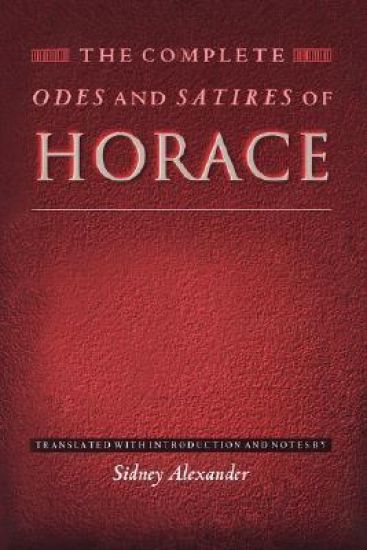
The Complete Odes and Satires of Horace

The Complete Odes and Satires of Horace

Horace

Princeton University Press
1999
pokkari
Horace has long been revered as the supreme lyric poet of the Augustan Age. In his perceptive introduction to this translation of Horace's Odes and Satires, Sidney Alexander engagingly spells out how the poet expresses values and traditions that remain unchanged in the deepest strata of Italian character two thousand years later. Horace shares with Italians of today a distinctive delight in the senses, a fundamental irony, a passion for seizing the moment, and a view of religion as aesthetic experience rather than mystical exaltation--in many ways, as Alexander puts it, Horace is the quintessential Italian. The voice we hear in this graceful and carefully annotated translation is thus one that emerges with clarity and dignity from the heart of an unchanging Latin culture. Alexander is an accomplished poet, novelist, biographer, and translator who has lived in Italy for more than thirty years. Translating a poet of such variety and vitality as Horace calls on all his literary abilities. Horace (Quintus Horatius Flaccus, 65-8 bce), was born the son of a freed slave in southern rural Italy and rose to become one of the most celebrated poets in Rome and a confidante of the most powerful figures of the age, including Augustus Caesar. His poetry ranges over politics, the arts, religion, nature, philosophy, and love, reflecting both his intimacy with the high affairs of the Roman Empire and his love of a simple life in the Italian countryside. Alexander translates the diverse poems of the youthful Satires and the more mature Odes with freshness, accuracy, and charm, avoiding affectations of archaism or modernism. He responds to the challenge of rendering the complexities of Latin verse in English with literary sensitivity and a fine ear for the subtleties of poetic rhythm in both languages. This is a major translation of one of the greatest of classical poets by an acknowledged master of his craft.
Horace, The Odes

Horace, The Odes

Horace

Princeton University Press
2005
pokkari
They have inspired poets and challenged translators through the centuries. The odes of Horace are the cornerstone of lyric poetry in the Western world. Their subtlety of tone and brilliance of technique have often proved elusive, especially when--as has usually been the case--a single translator ventures to maneuver through Horace's infinite variety. Now for the first time, leading poets from America, England, and Ireland have collaborated to bring all 103 odes into English in a series of new translations that dazzle as poems while also illuminating the imagination of one of literary history's towering figures. The thirty-five contemporary poets assembled in this outstanding volume include nine winners of the Pulitzer prize for poetry as well as four former Poet Laureates. Their translations, while faithful to the Latin, elegantly dramatize how the poets, each in his or her own way, have engaged Horace in a spirited encounter across time. Each of the odes now has a distinct voice, and Horace's poetic achievement has at last been revealed in all its mercurial majesty. In his introduction, J. D. McClatchy, the volume's editor and one of the translators, reflects on the meaning of Horace through the ages and relates how a poet who began as a cynical satirist went on to write the odes. For the connoisseur, the original texts appear on facing pages allowing Horace's ingenuity to be fully appreciated. For the general reader, these new translations--all of them commissioned for this book--will be an exhilarating tour of the best poets writing today and of the work of Horace, long obscured and now freshly minted. The contributors are Robert Bly, Eavan Boland, Robert Creeley, Dick Davis, Mark Doty, Alice Fulton, Debora Greger, Linda Gregerson, Rachel Hadas, Donald Hall, Robert Hass, Anthony Hecht, Daryl Hine, John Hollander, Richard Howard, John Kinsella, Carolyn Kizer, James Lasdun, J. D. McClatchy, Heather McHugh, W. S. Mervin, Paul Muldoon, Carl Phillips, Robert Pinsky, Marie Ponsot, Charles Simic, Mark Strand, Charles Tomlinson, Ellen Bryantr Voigt, David Wagoner, Rosanna Warren, Richard Wilbur, C. K. Williams, Charles Wright, and Stephen Yenser.
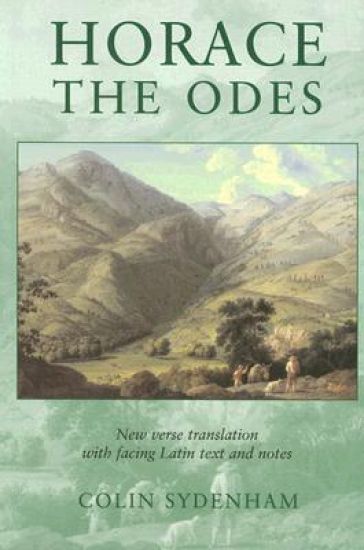
Horace

Horace

Colin Sydenham

Bristol Classical Press
2005
nidottu
"The Odes of Horace" are the lyric masterpieces of the golden age of Latin literature. They speak of the politics of the time, of the return to peace after the agony of civil war; they are imbued with consciousness of the brevity of life and the inevitability of death; but they are also filled with the pleasures of friendship, wine and love. The English have always responded to their humanity and humour, and have translated and quoted them more than any other Latin poetry, so that they are woven into the fabric of English literature. This new verse translation departs from the vogue for free verse and returns to the traditional English disciplines of rhyme and metre, thus imitating the strictness of Horace's own metrical discipline. It will delight those who already know something of Horace, but it is particularly designed for those, such as students of Classical Studies, who have little or no Latin, but who know of the reputation of the Odes and wish to find out what they say. There are notes to explain the historical, social and personal context of each poem, and the Latin is set out opposite the English, stanza for stanza. The Secular Hymn is included in its chronological position. With the learning of Latin under increasing threat there is a greater risk than ever before of losing contact with the Latin roots of our cultural heritage. All adults who care about the literary education of their children, godchildren, etc., should invest in a sufficient stock of this book. At present-giving time it will be a standby for years to come.
Horace

Horace

Randall L. B. McNeill

Johns Hopkins University Press
2001
sidottu
Traditional views of Horace seek to present the poet as a consistent, vivid personality who stands behind and orchestrates the diverse "Horatian" writings that have come down to us. In recent years, however, an alternate tradition suggests that there may be many Horaces, that his work is more productively read as the constant invention of rhetorical techniques sensitively attuned to the requirements of different situations and audiences. As Randall L. B. McNeill argues, any sense that readers have of the "real" Horace is clearly deceptive; Horace offers us no unguarded self-portrait, but rather a number of consciously developed characterizations to suit diverse audiences, whether patron, peers, or the public. Horace: Image, Identity, and Audience provides a wide-ranging analysis of Horace's use of self-presentation in his poetry: in his portrayal of his relationships with his patron Maecenas and with his larger readership as a whole; in his discussion of the craft of poetry and his own identity as a poet; and in his handling of contemporary Roman political events in the light of his assumed role as critic of his own society. McNeill uncovers the techniques Horace uses to depict the intricacies of his personal existence; in the book's conclusion, he explores how similar techniques were adapted by later poets such as Ovid. This volume will interest scholars of Horace, Latin poetry, rhetoric, as well as those interested in the cultural studies aspect of persona and identity.
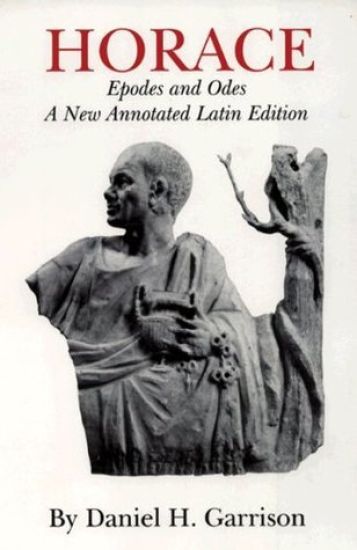
Horace

Horace

Daniel H. Garrison

University of Oklahoma Press
1998
nidottu
This fully annotated Latin edition, by Daniel H. Garrison, of Horace's Epodes, Odes, and Carmen Saeculare is the first comprehensive English commentary on these works since 1903. The full text of the Epodes is included and placed before the Odes, as it was originally written and published. Garrison offers help with meter, vocabulary, and difficult points of grammar. For advanced students, he place Horace against the background of archaic and Hellenistic Greek poetry, demonstrates the poet's debt to Catullus, and illuminates Horace's relation to his contemporaries, particularly Virgil. Biographical information and a discussion of Horace's literary persona expand our view of the poet and his works. Appendices on meter, persons mentioned in the poems, and technical terminology provide what readers end to understand topical and mythological references, rhetorical conventions, and poetic artistry.
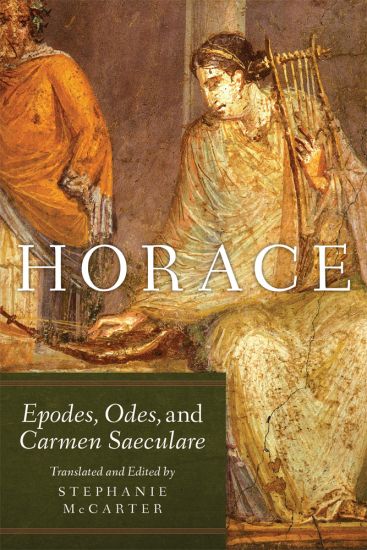
Horace

Horace

University of Oklahoma Press
2020
nidottu
One of the most admired poets of Roman antiquity, Horace (65-8 B.C.E.) had a major influence on later poets and writers. Even for those unfamiliar with his writings, the poet's admonitions to 'seize the day' or follow the 'golden mean' remain an eternal part of our common language. This new edition of Horace's best-known poetry presents the original Latin texts of his well-known Epodes, Odes, and Carmen Saeculare side by side with remarkably faithful English translations. Through rigorous scholarship and keen attention to poetic form and detail, Stephanie McCarter preserves in these pages Horace's stanzaic structures and line numbers, marrying Horace's verse to iambic meter, which has a natural and appealing flow in English. Her careful, line-by-line translation makes these works newly accessible to students and other readers, who will find fresh meaning in Horace's timeless observations about politics, ethics, and aesthetics. Ideally suited for use in both classical literature and Latin language courses, this bilingual edition of Horace's poetry is enhanced by an in-depth introduction, explanatory notes, reference maps, and a glossary of literary terms.
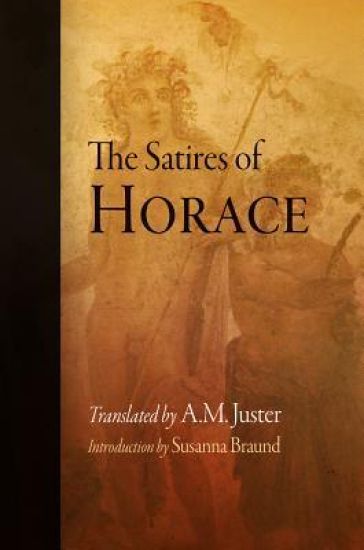
The Satires of Horace

The Satires of Horace

Horace

University of Pennsylvania Press
2012
pokkari
The Roman philosopher and dramatic critic Quintus Horatius Flaccus (65-3 B.C.), known in English as Horace, was also the most famous lyric poet of his age. Written in the troubled decade ending with the establishment of Augustus's regime, his Satires provide trenchant social commentary on men's perennial enslavement to money, power, fame, and sex. Not as frequently translated as his Odes, in recent decades the Satires have been rendered into prose or bland verse. Horace continues to influence modern lyric poetry, and our greatest poets continue to translate and marvel at his command of formal style, his economy of expression, his variety, and his mature humanism. Horace's comic genius has also had a profound influence on the Western literary tradition through such authors as Swift, Pope, and Boileau, but interest in the Satires has dwindled due to the difficulty of capturing Horace's wit and formality with the techniques of contemporary free verse. A. M. Juster's striking new translation relies on the tools and spirit of the English light verse tradition while taking care to render the original text as accurately as possible.
Horace on the Art of Poetry

Horace on the Art of Poetry

Horace

Hassell Street Press
2021
sidottu
This work has been selected by scholars as being culturally important and is part of the knowledge base of civilization as we know it.This work is in the public domain in the United States of America, and possibly other nations. Within the United States, you may freely copy and distribute this work, as no entity (individual or corporate) has a copyright on the body of the work.Scholars believe, and we concur, that this work is important enough to be preserved, reproduced, and made generally available to the public. To ensure a quality reading experience, this work has been proofread and republished using a format that seamlessly blends the original graphical elements with text in an easy-to-read typeface.We appreciate your support of the preservation process, and thank you for being an important part of keeping this knowledge alive and relevant.