Kirjojen hintavertailu. Mukana 11 717 486 kirjaa ja 12 kauppaa.

Kirjahaku

Etsi kirjoja tekijän nimen, kirjan nimen tai ISBN:n perusteella.

1000 tulosta hakusanalla Howard Gardner

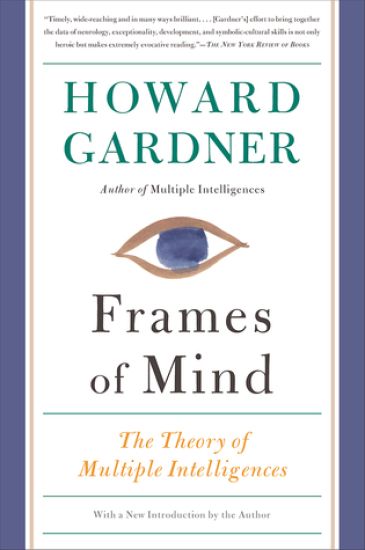
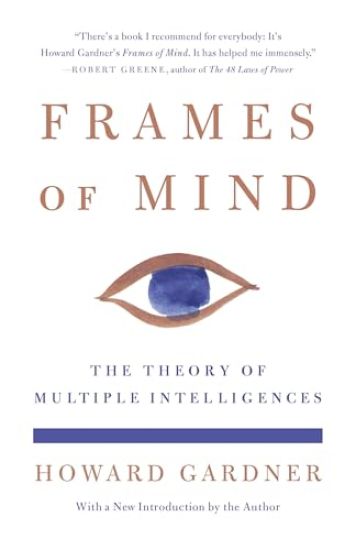
Frames of Mind

Frames of Mind

Howard Gardner

Basic Books
2011
pokkari
First published in 1983 and now available with a new introduction by the author, Gardner's trailblazing book revolutionized the worlds of education and psychology by positing that rather than a single type of intelligence, we have several- most of which are neglected by standard testing and educational methods.
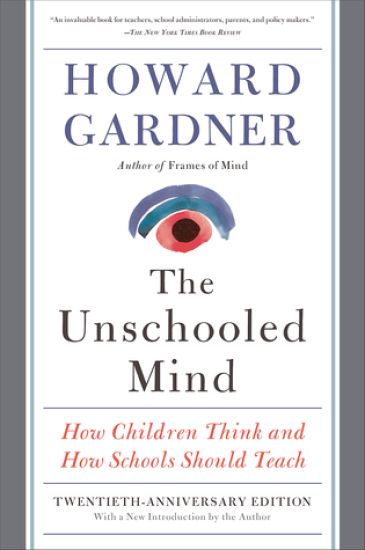
The Unschooled Mind

The Unschooled Mind

Howard Gardner

Basic Books
2011
pokkari
Merging cognitive science with educational agenda, Gardner makes an eloquent case for restructuring our schools by showing just how ill-suited our minds and natural patterns of learning are to the prevailing modes of education. This reissue includes a new introduction by the author.
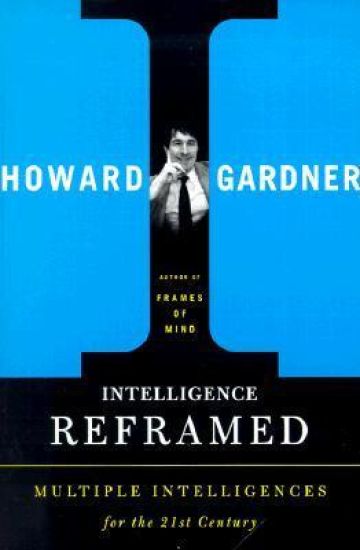
Intelligence Reframed

Intelligence Reframed

Howard Gardner

Basic Books
2000
pokkari
Harvard psychologist Howard Gardner has been acclaimed as the most influential educational theorist since John Dewey. His ideas about intelligence and creativity - explicated in such bestselling books as Frames of Mind and Multiple Intelligences (over 200,000 copies in print combined) - have revolutionized our thinking.In his ground-breaking 1983 book Frames of Mind , Howard Gardner first introduced the theory of multiple intelligences, which posits that intelligence is more than a single property of the human mind. That theory has become widely accepted as one of the seminal ideas of the twentieth century and continues to attract attention all over the world.Now in Intelligence Reframed , Gardner provides a much-needed report on the theory, its evolution and revisions. He offers practical guidance on the educational uses of the theory and responds to the critiques leveled against him. He also introduces two new intelligences (existential intelligence and naturalist intelligence) and argues that the concept of intelligence should be broadened, but not so absurdly that it includes every human virtue and value. Ultimately, argues Gardner, possessing a basic set of seven or eight intelligences is not only a unique trademark of the human species, but also perhaps even a working definition of the species. Gardner also offers provocative ideas about creativity, leadership, and moral excellence, and speculates about the relationship between multiple intelligences and the world of work in the future.
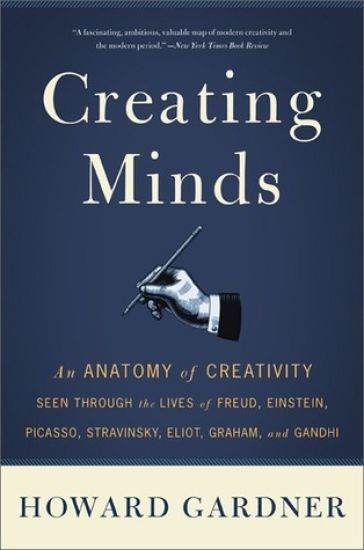
Creating Minds

Creating Minds

Howard Gardner

Basic Books
2011
pokkari
Since it was first published in 1993, Creating Minds has served as a peerless guide to the creative self. Now available as a paperback reissue with a new introduction by the author, the book uses portraits of seven extraordinary individuals to reveal the patterns that drive the creative process,and to demonstrate how circumstance also plays an indispensable role in creative success.
Truth, Beauty, and Goodness Reframed

Truth, Beauty, and Goodness Reframed

Howard Gardner

Basic Books
2012
pokkari
From ancient times, philosophers, theologians, and artists have attempted to describe and categorize the defining virtues of civilization. In Truth, Beauty, and Goodness Reframed , renowned education authority Howard Gardner explores the meaning of the title's three virtues in an age when vast technological advancement and relativistic attitudes toward human nature have deeply shaken our moral worldview. His incisive examination reveals that although these concepts are changing faster than ever before, they are- and will remain, with our stewardship- cornerstones of our society. Designed to appeal to a wide readership, Truth, Beauty, and Goodness Reframed is an approachable primer on the foundations of ethics in the modern age.
Multiple Intelligences

Multiple Intelligences

Howard Gardner

Basic Books
2006
pokkari
An updated edition of the multiple intelligences theory explains the concept of multiple intelligences, describes the diverse educational applications of the theory, and discusses its implications for future trends in teaching. Reprint.
To Open Minds

To Open Minds

Howard Gardner

Basic Books
1991
pokkari
In this unique attempt to address the dilemma in contemporary education, the noted cognitive scientist weaves the lessons garnered from three vantage points: his own traditional education as an American child, his years of research on creativity at Harvard, and what he saw in modern Chinese classrooms,into a program that draws on the best of both modes, traditional and progressive.
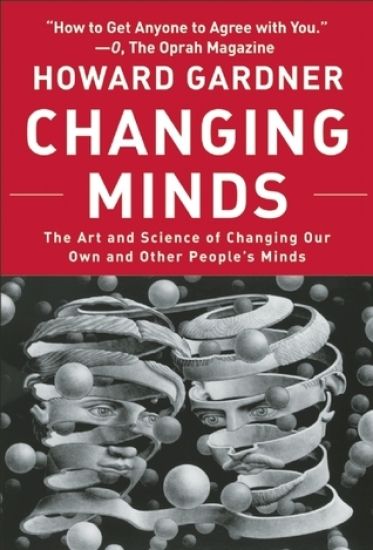
Changing Minds

Changing Minds

Howard Gardner

Harvard Business Review Press
2006
pokkari
Think about the last time you tried to change someone's mind about something important: a voter's political beliefs; a customer's favorite brand; a spouse's decorating taste. Chances are you weren't successful in shifting that person's beliefs in any way. In his book, Changing Minds, Harvard psychologist Howard Gardner explains what happens during the course of changing a mind -- and offers ways to influence that process. Remember that we don't change our minds overnight, it happens in gradual stages that can be powerfully influenced along the way. This book provides insights that can broaden our horizons and shape our lives.
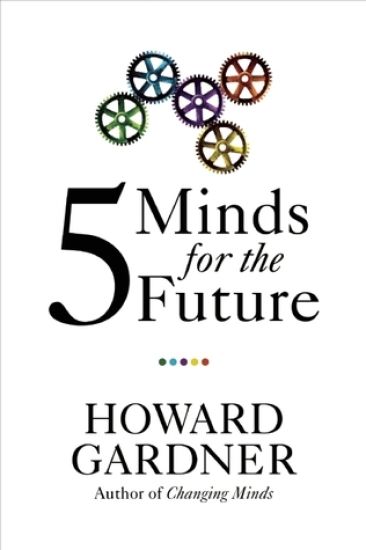
Five Minds for the Future

Five Minds for the Future

Howard Gardner

Harvard Business Review Press
2009
pokkari
We live in a time of relentless change. The only thing that?s certain is that new challenges and opportunities will emerge that are virtually unimaginable today. How can we know which skills will be required to succeed? In Five Minds for the Future, bestselling author Howard Gardner shows how we will each need to master "five minds" that the fast-paced future will demand: * The disciplined mind, to learn at least one profession, as well as the major thinking (science, math, history, etc.) behind it * The synthesizing mind, to organize the massive amounts of information and communicate effectively to others * The creating mind, to revel in unasked questions - and uncover new phenomena and insightful apt answers * The respectful mind, to appreciate the differences between human beings - and understand and work with all persons * The ethical mind, to fulfill one's responsibilities as both a worker and a citizen Without these "minds," we risk being overwhelmed by information, unable to succeed in the workplace, and incapable of the judgment needed to thrive both personally and professionally. Complete with a substantial new introduction, Five Minds for the Future provides valuable tools for those looking ahead to the next generation of leaders - and for all of us striving to excel in a complex world. Howard Gardner--cited by Foreign Policy magazine as one of the one hundred most influential public intellectuals in the world, and a MacArthur Fellowship recipient--is the Hobbs Professor of Cognition and Education at the Harvard Graduate School of Education.
Five Minds for the Future

Five Minds for the Future

Howard Gardner

Harvard Business Review Press
2007
sidottu
We live in a time of relentless change. The only thing that's certain is that new challenges and opportunities will emerge that are virtually unimaginable today. How can we know which skills will be required to succeed? In Five Minds for the Future, bestselling author Howard Gardner shows how we will each need to master "five minds" that the fast-paced future will demand: * The disciplined mind, to learn at least one profession, as well as the major thinking (science, math, history, etc.) behind it * The synthesizing mind, to organize the massive amounts of information and communicate effectively to others * The creating mind, to revel in unasked questions--and uncover new phenomena and insightful apt answers * The respectful mind, to appreciate the differences between human beings - and understand and work with all persons * The ethical mind, to fulfill one's responsibilities as both a worker and a citizen Without these "minds," we risk being overwhelmed by information, unable to succeed in the workplace, and incapable of the judgment needed to thrive both personally and professionally. Complete with a substantial new introduction, Five Minds for the Future provides valuable tools for those looking ahead to the next generation of leaders - and for all of us striving to excel in a complex world. Howard Gardner--cited by Foreign Policy magazine as one of the one hundred most influential public intellectuals in the world, and a MacArthur Fellowship recipient--is the Hobbs Professor of Cognition and Education at the Harvard Graduate School of Education.
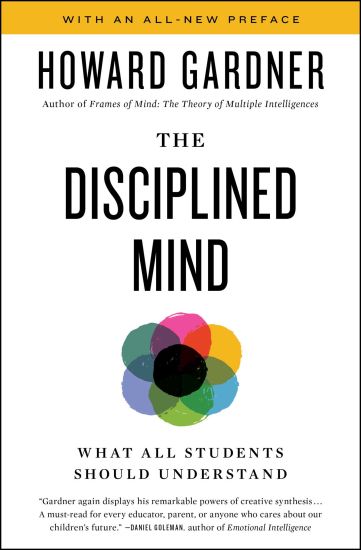
Disciplined Mind: What All Students Should Understand
This brilliant and revolutionary theory of multiple intelligences reexamines the goals of education to support a more educated society for future generations. Howard Gardner's concept of multiple intelligences has been hailed as perhaps the most profound insight into education since the work of Jerome Bruner, Jean Piaget, and even John Dewey. Here, in The Disciplined Mind, Garner pulls together the threads of his previous works and looks beyond such issues as charters, vouchers, unions, and affirmative action in order to explore the larger questions of what constitutes an educated person and how this can be achieved for all students. Gardner eloquently argues that the purpose of K-12 education should be to enhance students' deep understanding of the truth (and falsity), beauty (and ugliness), and goodness (and evil) as defined by their various cultures. By exploring the theory of evolution, the music of Mozart, and the lessons of the Holocaust as a set of examples that illuminates the nature of truth, beauty, and morality, The Disciplined Mind envisions how younger generations will rise to the challenges of the future--while preserving the traditional goals of a "humane" education. Gardner's ultimate goal is the creation of an educated generation that understands the physical, biological, and societal world in their own personal context as well as in a broader world view. But even as Gardner persuasively argues the merits of his approach, he recognizes the difficulty of developing one universal, ideal form of education. In an effort to reconcile conflicting educational viewpoints, he proposes the creation of six different educational pathways that, when taken together, can satisfy people's concern for student learning and their widely divergent views about knowledge and understanding overall.
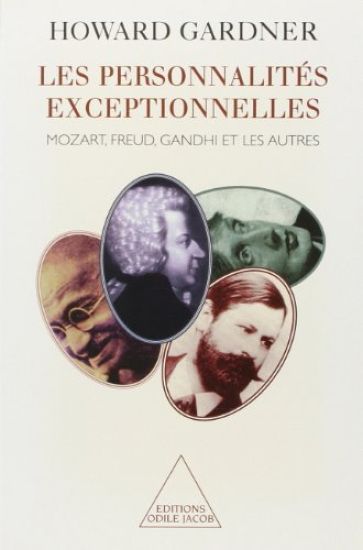
Creating Minds: An Anatomy of Creativity Seen through the Lives of Freud, Einstein, Picasso, Stravinsky, Eliot, Grah / Les Personnalit
When Howard Gardner first proposed his theory of "multiple intelligences" in 1983, he created a sensation. He argued that there is no single intelligence which could be reduced to verbal and analytical skills ? both of which are taught and measured in school; in his view, intelligences are multiple and comprise many aptitudes, including artistic creativity, spatial reasoning, and the ability to understand others. Gardner's approach has profoundly modified the way we regard the nature of the mied, genius, creativity and even leadership.In his new book, Gardner addresses another question: Are there any common psychological traits among people who accomplish great things, regardless of their field of endeavour or historical era?He begins his investigation by describing the process that each person follows to become a competent adult, and then proceeds to describe four exceptional iedividuals: Mozart, who can be regarded as the master of his domain: Freud, the founder of a new field; Virginia Woolf, the great introspective artist; and Gandhi, the leader of vast influence. What made them exceptional? Why did they accomplish great things? Gardner argues that their greatness was not only the result of their exceptional abilities; they became great because they were more capable than others of identifying their strengths and weaknesses, of carefully analysing events and of adapting the ups and downs of life to their utmost advantage.Genius is not a stroke of luck. It is the product of special qualities of the mied which may or may not be developed. This is a brilliant overview covering the various aspects of the making of greatness, which should offer readers many useful pointers. Howard Gardner is renowned for his work in the field of cognitive psychology, and particularly for his revolutionary theory on multiple intelligences. He teaches educational science in the Department of Education at Harvard University and is one of the directors Harvard's Project Zero. He also teaches neurology at Boston University's medical school.
Frames of Mind

Frames of Mind

Howard Gardner

BASIC BOOKS
2026
pokkari
In this "brilliant" (New York Review of Books) and groundbreaking classic, a leading psychologist argues that there are many human intelligences When we call someone "intelligent," we are often referring to traits like their high SAT score, their performance on an IQ test, or their ability to perform in today's schools-which prioritize linguistic and mathematical abilities. Traits like these underlie most popular and psychological understanding of intelligence-but they tell a very incomplete story. In this revolutionary classic, now updated with a new introduction, psychologist and educator Howard Gardner offers a dramatically different account: that by limiting our understanding of intelligence to "school smarts," we miss the impressive range of talents and aptitudes that characterize the human species. Gardner instead posits the revolutionary theory of multiple intelligences, which encompasses musical ability to physical dexterity to deep knowledge of other persons-and of oneself-each of which merits the label "intelligence." In a penetrating update, Gardner's Frames of Mind celebrates all forms of intellect-the varieties found in various animal species, plants, and ever-more powerful instruments of artificial intelligence.
The App Generation

The App Generation

Howard Gardner; Katie Davis

Yale University Press
2014
pokkari
From the famed Harvard psychologist and an expert on the impact of digital media technologies, a riveting exploration of the power of apps to shape our young people—for better or for worse No one has failed to notice that the current generation of youth is deeply—some would say totally—involved with digital media. Professors Howard Gardner and Katie Davis name today’s young people The App Generation, and in this spellbinding book they explore what it means to be “app-dependent” versus “app-enabled” and how life for this generation differs from life before the digital era. Gardner and Davis are concerned with three vital areas of adolescent life: identity, intimacy, and imagination. Through innovative research, including interviews of young people, focus groups of those who work with them, and a unique comparison of youthful artistic productions before and after the digital revolution, the authors uncover the drawbacks of apps: they may foreclose a sense of identity, encourage superficial relations with others, and stunt creative imagination. On the other hand, the benefits of apps are equally striking: they can promote a strong sense of identity, allow deep relationships, and stimulate creativity. The challenge is to venture beyond the ways that apps are designed to be used, Gardner and Davis conclude, and they suggest how the power of apps can be a springboard to greater creativity and higher aspirations.
Finding Home

Finding Home

Alford Dalrymple Gardner; Howard Gardner

Jacaranda Books Art Music Ltd
2023
sidottu
On 24 May 1948, the Empire Windrush sailed from Kingston, Jamaica, to harbour at Tilbury Docks. It carried 1,027 passengers and some stowaways, and more than two thirds of them were West Indies nationals. On 22 June 1948 they disembarked onto the docks, Alford Dalrymple Gardner was among them. Alford's story traverses both the uplifting highs and intolerant lows that West Indian migrants of his generation encountered upon travelling to Britain to forge out a life. From joining the British military during World War II to returning to Jamaica once it was won-only to come back to the UK when the government decided it needed him again-Alford witnessed milestone events of the 20th century that shaped the country he still lives in today. In the context of a supposedly 'post-Imperial' Britain where the lives of West Indian migrants hang precariously on the whims of the Home Office, Alford's heartening testimony is a celebration of those who endured hardships so that generations to come could call this place home.
Finding Home

Finding Home

Alford Dalrymple Gardner; Howard Gardner

Jacaranda Books Art Music Ltd
2024
nidottu
"A pioneering member of the Windrush generation of Caribbean migrants who marked the symbolic beginning of a multicultural Britain." - The GuardianRAF Veteran and Prince's Trust Awardee, Alford Dalrymple Gardner was one of the last living passengers to have travelled on the Empire Windrush. Now published in paperback, Finding Home is his stirring life story.On 22nd June 1948, the Empire Windrush sailed from Kingston, Jamaica, to harbour at Tilbury Docks. It carried 1,027 passengers and two stowaways, and more than two thirds of them were West Indies nationals. Alford Dalrymple Gardner was among them.Alford's story traverses both the uplifting highs and intolerant lows that West Indian migrants of his generation encountered upon travelling to Britain to forge out a life. From joining the British military during World War II to being forcibly deported back to Jamaica once it was won-only to come back to the UK when the government decided it needed him again-Alford witnessed milestone events of the 20th century that shaped the country he still lives in today.In the context of a supposedly 'post-Imperial' Britain where the lives of West Indian migrants hang precariously on the whims of the Home Office, Alford's heartening testimony is a celebration of those who endured hardships so that generations to come could call this place home.Today, Alford's portrait is a part of the Royal Collection Trust as commissioned by King Charles III in 2023, and he is a regular face and voice on the likes of The BBC, Channel 4, Sky News and more as his story continues to embody for all, the spirit of joyous resilience.