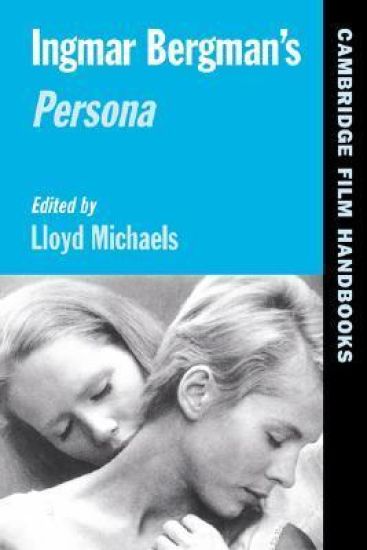
Long held to be among the world’s greatest filmmakers, Ingmar Bergman shaped international art cinema from the 1950s to the 1980s. Among his many works, Persona is often considered to be his masterpiece and is often described as one of the central works of Modernism. Bergman himself claimed that this film ‘touched wordless secrets only the cinema can discover’. The essays collected in this volume, and published for the first time, use a variety of methodologies to explore topics such as acting technique, genre, and dramaturgy. It also includes translations of Bergman’s early writings that have never before been available in English, as well as an updated filmography and bibliography that cover the filmmaker’s most recent work.
Gervais shows also how Bergman's work resonates in a much broader sphere than the personal. His films, which are without equal in the history of cinema in quality, consistency, and relevance, are crucial moments in an ongoing conversation with western culture in its frenetic evolution since World War II. Gervais situates Bergman within the tensions of modernism and the western tradition that have manifested themselves in the twentieth century from existentialism, through deconstruction, and into postmodernism. Bergman's films are experienced as incarnations, meditations, explorations, and aesthetic objects that reflect, comment on, conflict with, or embrace the movements that produced them.
This work offers an exploration of the power and mystery of Ingmar Bergman's cinema and its relevance in the evolution of western culture in the second half of the 20th century.
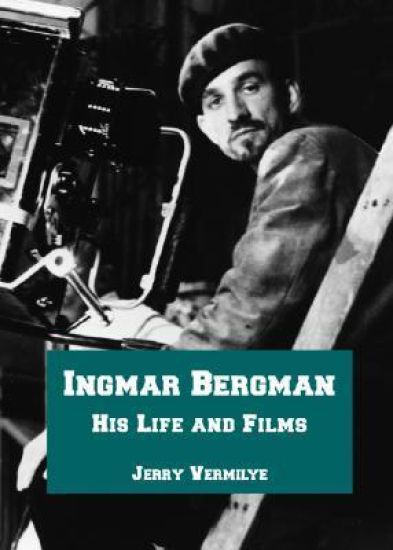
"He always is very, very close to the camera, and he is terribly inspiring. I don't know what his magic is, but it is something that makes you want to give everything you have. He has respect for actors and for everybody. A bad director very often doesn't have that respect." Liv Ullman's words about Ingmar Bergman hint at the consummate director he was, one who knew the business, the strengths and weaknesses of actors and crews, the arrangement of the set, the framing of the camera, and all other particulars of the fine art of directing. This work presents Bergman's life and work, beginning with his youth in Uppsala, Sweden, and covering his formative years, his development as an artist, and his career as a world-renowned director. A brief synopsis for each of Bergman's films is provided, with such information as producer, screenwriter, cinematographer, editor, art director, music sound credits, running time, casts, Bergman's own comments, and the reactions of critics.
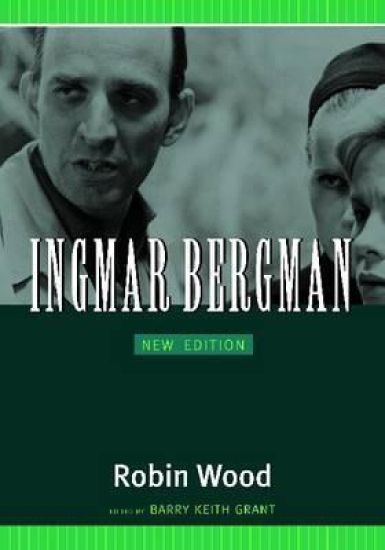
At a time when few reviewers and critics were taking the study of film seriously, Robin Wood released a careful and thoroughly cinematic commentary on Ingmar Bergman’s films that demonstrated the potential of film analysis in a nascent scholarly field. The original Ingmar Bergman influenced a generation of film scholars and cineastes after its publication in 1969 and remains one of the most important volumes on the director. This new edition of Ingmar Bergman, edited by film scholar Barry Keith Grant, contains all of Wood’s original text plus four later pieces on the director by Wood that were intended for a new volume that was not completed before Wood’s death in 2010. In analysing a selection of Bergman’s films, Wood makes a compelling case for the logic of the filmmaker’s development while still respecting and indicating the distinctiveness of his individual films. Wood’s emphasis on questions of value (What makes a work important? How does it address our lives?) informed his entire career and serve as the basis for many of these chapters. In the added material for this new edition, Wood considers three important films Bergman made after the book was first published—Cries and Whispers, Fanny and Alexander, and From the Life of the Marionettes—and also includes significant reassessment of Persona. These pieces provocatively suggest the more political directions Wood might have taken had he been able to produce Ingmar Bergman Revisited, as he had planned to do before his death. In its day, Ingmar Bergman was one of the most important volumes on the Swedish director published in English, and it remains compelling today despite the multitude of books to appear on the director since. Film scholars and fans of Bergman’s work will enjoy this updated volume.
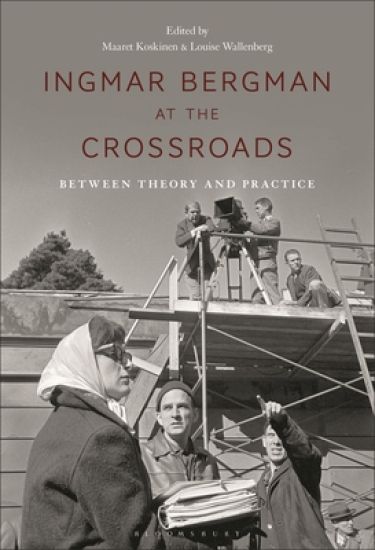
This collection offers new and insightful perspectives on Ingmar Bergman’s work as a film and theatre director as well as writer of fiction. Ingmar Bergman’s rich legacy as a film director and writer of classics such as The Seventh Seal, Scenes From a Marriage, and Fanny and Alexander has attracted scholars not only in film studies but also of literature, theater, gender, philosophy, religion, sociology, musicology, and more. Less known, however, is Bergman from the perspective of production studies, including all the choices, practices, and routines involved in what goes on behind the scenes. For instance, what about Bergman’s collaborations and conflicts with film producers? What about his work with musicians at the opera, technicians in the television studio, and actors on the film set? What about Bergman and MeToo? In order to throw light on these issues, art practitioners such as film directors Ang Lee and Margarethe von Trotta, film and opera director Atom Egoyan, and film producer and screenwriter James Schamus are brought together with academics such as philosopher and film scholar Paisley Livingston, musicologist Alexis Luko, and playwright and performance studies scholar Allan Havis to discuss Bergman’s work from their unique perspectives. In addition, Ingmar Bergman at the Crossroads provides, for the first time, in-depth interviews with Bergman’s longtime collaborators Katinka Faragó and Måns Reuterswärd, who both have first-hand experience of working intimately as producers in film and television with Bergman, covering more than 5 decades. In an open exchange between individual and institutional perspectives, this book bridges the often-rigid boundaries between theoreticians and practitioners, in turn pointing Bergman's studies in new directions.
This collection offers new and insightful perspectives on Ingmar Bergman’s work as a film and theatre director as well as writer of fiction. Ingmar Bergman’s rich legacy as a film director and writer of classics such as The Seventh Seal, Scenes From a Marriage, and Fanny and Alexander has attracted scholars not only in film studies but also of literature, theater, gender, philosophy, religion, sociology, musicology, and more. Less known, however, is Bergman from the perspective of production studies, including all the choices, practices, and routines involved in what goes on behind the scenes. For instance, what about Bergman’s collaborations and conflicts with film producers? What about his work with musicians at the opera, technicians in the television studio, and actors on the film set? What about Bergman and MeToo? In order to throw light on these issues, art practitioners such as film directors Ang Lee and Margarethe von Trotta, film and opera director Atom Egoyan, and film producer and screenwriter James Schamus are brought together with academics such as philosopher and film scholar Paisley Livingston, musicologist Alexis Luko, and playwright and performance studies scholar Allan Havis to discuss Bergman’s work from their unique perspectives. In addition, Ingmar Bergman at the Crossroads provides, for the first time, in-depth interviews with Bergman’s longtime collaborators Katinka Faragó and Måns Reuterswärd, who both have first-hand experience of working intimately as producers in film and television with Bergman, covering more than 5 decades. In an open exchange between individual and institutional perspectives, this book bridges the often-rigid boundaries between theoreticians and practitioners, in turn pointing Bergman's studies in new directions.
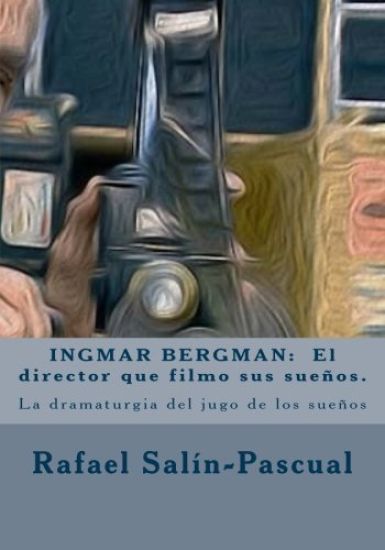
En el presente libro sobre el Director de Cine, Teatro, Radio y Televisi n, es una revisi n de la mayor a de su filmograf a, por lo menos la disponible en M xico. La perspectiva que he tratado de seguir es haciendo una rese a de estas pel culas, tratando de a adir una serie de reflexiones, la mayor a en el contexto de su biograf a, para lo cual hay dos libros claves: "Linterna M gica", que es la autobiograf a, que el propio Ingmar Bergman escribi cando estaba en la sesta d cada de su vida. Esta obra da una visi n "a vuelo de p jaro", de los or genes del artista, de su tenacidad en el trabajo del teatro y cine, de sus problemas que el estado sueco le ocasion , por una posible evasi n de impuestos, y las relaciones pareja, y su modo de vincularse a sus hijos. Esto, a mi juicio es la parte medular de la obra cinematogr fica de este genio. Las preguntas t picas de la filosof a, quiz s un poco en el terreno de la metaf sica: Qui n soy? Existe dios? qu es la m sica? Hay un motivo central de vida? A d nde vamos al morir? Por qu hay que tener una relaci n de pareja? Por qu eran los padres tan r gidos en la educaci n? Por qu nos castigaban severamente si nos quer an? Lo mas interesantes de Ingmar Bergman, adem s del aspecto artesanal en sus pel culas, es que no vacil en filmar peque os fragmentos de su vida, de su relaci n con el padre, Pastor luterano, capell n de la familia Real Sueca, que educ a sus hijos con golpes, perdones, y otras cosas poco agradables. Pero en la otra faceta, estaba el hombre sabio, con humor, que quer a a su manera a su esposa, la madre de Bergman, Karin. Bergman fue un genio, pero al mismo tiempo un hombre de su poca, que sali delante de sus estilos conflictivos de personalidad, por su entrega al arte. Situaci n con la cual explicaba, porque era un padre-flojo, es decir con poca presencia f sica con sus hijos, pero siempre los mantuvo econ micamente. Escribo este libro, con admiraci n y respeto hacia uno de los directores de cine que mas admiro, y de que hoy en d a he aprendido mucho, su forma de ser profesionalmente me ha cambiado, como psiquiatra, recomiendo ciertas escenas de sus pel culas, que son ilustradoras de la compulsi n a la repetici n y malestar hacia las personas que queremos y cuidamos de ellas. Este libro es para que no se olvide la obra de Ingmar Bergman, el director que film sus sue os.
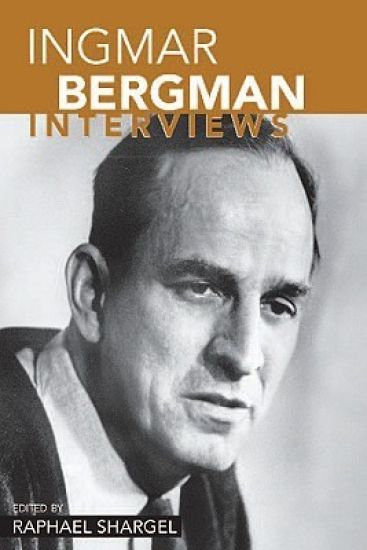
Although Ingmar Bergman (1918-2007) holds an undisputed place in the pantheon of major filmmakers, mention of his name unjustly evokes images of monolithic gloom and despair. All of his pictures, including his comedies, deal seriously with faith, morality, and mortality, but audiences and critics too often neglect the extraordinary wit and vitality that can be found in Wild Strawberries, Scenes from a Marriage, Fanny and Alexander, and many others. In Ingmar Bergman: Interviews, the director discusses various stages of his career and the many facets of his work. The man and his films are revealed to be funny, full of life, and surprising as well as thoughtful, complex, and profound. In interviews with important writers, critics, and filmmakers, including James Baldwin, Michiko Kakutani, John Simon, and Vilgot Sjoeman, Bergman describes a grand vision that justifies his affinity with Shakespeare, Ibsen, and Dostoyevsky. The volume begins with a 1957 piece, conducted just as he completed his early masterpiece The Seventh Seal, and ends in 2002, as he was preparing to direct Saraband, his latest film. Raphael Shargel is associate professor of English at Providence College, where he teaches literature and film. From 1997 to 2006, he was film critic for the New Leader. He has also written about film for MSNBC.com and reviewed movies on local radio.
The critically acclaimed film director discusses various stages of his career and the many facets of his work in a collection of interviews that begins with a 1957 piece and ends in 2002 as he was preparing to direct his latest film, featuring conversations with James Baldwin, Michiko Kakutani, John Simon, and Vilgot Sjman, among others. Simultaneous.
Director Ingmar Bergman occupies a central place in the history of modern cinema. Credited with igniting a cinematic revolution, his ability to produce work which resonated with audiences globally has brought scholarly attention to the impact of Bergman’s Swedish background on his oeuvre. Ingmar Bergman Out of Focus revises this question of Bergman’s “familiarity” to produce a more expansive understanding of Bergman’s cultural heritage. Considering the impact of Bergman’s films on film festival organizers, critics, academics, and audiences all over the world, this volume illuminates how Bergman’s film aesthetics simultaneously shaped modern culture and were themselves reshaped by the debates and concerns that preoccupied his viewers.
Ingmar Bergman was the last and arguably the greatest of the old-style European auteurs and his influence across all areas of contemporary cinema has continued to be considerable since his death in July 2007. Drawing on interviews with collaborators and original research, this book puts Bergman's career into the context of his life and offers a new and revealing portrait of this great filmmaker. Geoffrey Macnab explores the often painfully autobiographical nature of his work, while also looking in detail at Bergman as a craftsman. He considers Bergman's working relationship with his actors (especially the actresses he helped make into international stars), his passion for theatre, literature and classical music and his obsession with death and cruelty. The book traces his traumatic childhood, asking how his experiences growing up as the son of a strict Lutheran pastor fed into his later writing and filmmaking. It also looks at his political life, chronicling his teenage flirtation with Nazism, his bitter spat in the mid-70s with the Swedish authorities over his tax affairs and his often vexed relationship with his fellow Swedes. Geoffrey Macnab also considers how Bergman's work was financed and distributed, his relationship with US agents and how close he came to working in Hollywood. 'When I was 10 years old I received my first rattling film projector with its chimney and lamp which went round and round and round. I found it both mystifying and fascinating' - Ingmar Bergman.
Ingmar Bergman Revisited is a collection of new essays based on a major international symposium held in Stockholm in 2005 on the legacy of one of cinema’s most towering figures. Moving beyond simple auteurist readings of Bergman as a cinematic artist, the writings here evaluate the theatrical and literary sides of Bergman’s work to reconsider the achievements of the Swedish director, up to his last film Saraband (2003). Several essays result from research in Bergman’s own personal archive, and amongst the subjects discussed are Bergman’s stage adaptations of Shakespeare, his fascination with still photography and issues of identity, and the influence of philosophy and psychology on his work. With contributors including Thomas Elsaesser, Birgitta Steene, John Orr, Janet Staiger and Paisley Livingston, and a prologue written by Liv Ullmann, Ingmar Bergman Revisited forms a landmark study of one of Sweden’s great cultural icons, emphasising how Bergman should be understood with reference to an eclectic range of his artistic interests.
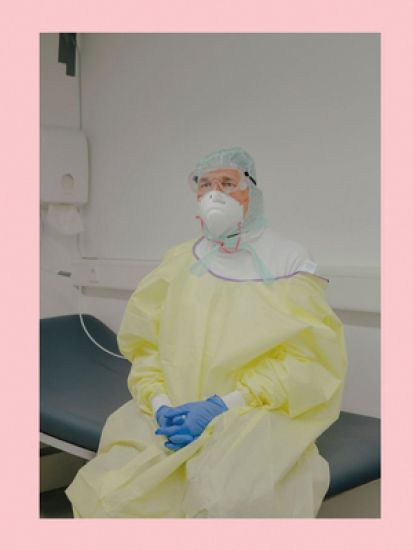
In response to the first Covid-19 lockdown in the spring of 2020, photographer Ingmar Björn Nolting (*1995) embarked on a road trip through Germany. Travelling under strict security precautions, he covered about 15,500 miles over the period of one year. During these strange journeys across the country, Nolting created with his camera a personal and comprehensive document of life in times of global crisis. His photo project About the Days Ahead reflects German society in a state of collective isolation, anguish, despair, and longing for an improvised normality. Nolting describes the photo project as a kind of confrontational therapy, as his way of dealing with the impotence and fear that he felt at the onset of the pandemic. His images are quiet and distant: with their muted colours and clear compositions, they have captured moments that transcend the horror of the pandemic, telling stories of social interaction and the absurdity of everyday life. The interplay of these condensed moments creates a complex mosaic, a narrative about a changing society. Text in English and German.