Iron is a key element in nutrition. It has a central role in energy metabolism of living cells and iron deficiency anaemia is one of the world's most common nutritional deficiency diseases. The Iron Task Force is a committee of acknowledged experts in the field of iron biochemistry and metabolism. The members were invited by the British Nutrition Foundation to review the current state of knowledge of the nutritional and physiological significance of this most important element. Iron: Nutritional and physiological significance is a thorough review of the subject by experts.
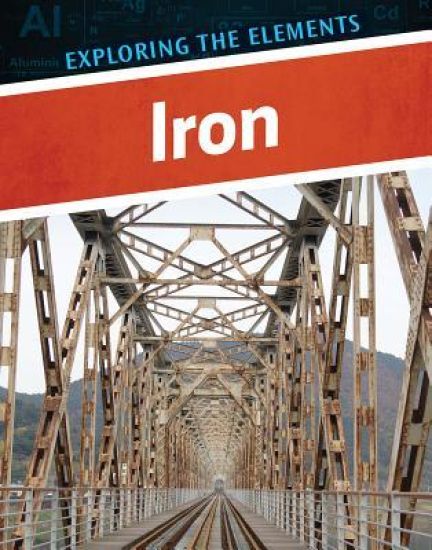
Iron is the most common metal found on earth. Not often found in its pure form, it is fashioned into things that are used every day. Iron forms part of the earth's core and is even added to breakfast cereal. From its early uses by the ancient Egyptians to modern times, this volume simplifies the complex facts of iron into an easy-to-understand story. Also explained is iron's place on the periodic table and how to locate it on the table.
Observera att förlaget som ger ut denna produkt baserar innehållet i sina produkter på fria källor som Wikipedia. Boken är med stor sannolikhet endast ett utdrag ur dessa informationskällor, alltså inte en vanlig bok i den bemärkelsen.
A monumental new roman series is here. 3rd century Rome, like youâ??ve never seen it before: murder, coup, terror on the streets, counter-rebellions and civil war.
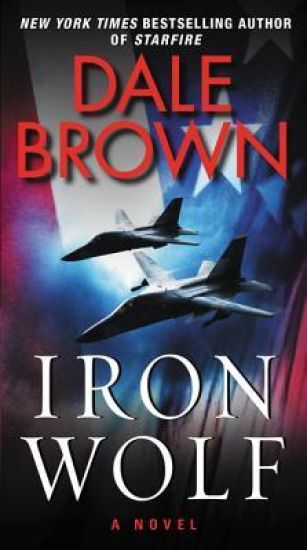
New York Times bestselling author Dale Brown goes beyond the headlines in this high-tech, high-tension military thriller in which a resurgent Russia enflames sectarian unrest and violence in Ukraine and Poland, setting off a stealth robotic war and escalating an international crisis.In the spring of 2017, the U.S. economy is rebounding under President Stacy Anne Barbeau, the country's first female president. But her leadership is about to be severely tested: Russian president Gennadiy Gryzlov has sent Special Troops, disguised as pro-Russian activists, into Ukraine and Moldova. Though NATO is outraged, its response is tepid. Refusing to let Russian aggression go unpunished, former U.S. president Kevin Martindale approaches Polish president Peter Wilk with a radical solution: a counterattack using a covert force of Cybernetic Infantry Device (CID): manned robots.Underwritten by the wealthy Wilk, Operation Iron Wolf is launched--without the knowledge of the Americans or its NATO partners. The CID's initial strikes are successful, infuriating Gryzlov and propelling President Barbeau to pledge western help to investigate the attack. With international tensions at the boiling point, Martindale's secret alliance, supported by the best military technology, is determined to outmaneuver the Russians.In this battle that will determine the fate of Eastern Europe, just which side will win?
New York Times bestselling author Dale Brown goes beyond the headlines in this high-tech, high-tension military thriller in which a resurgent Russia enflames sectarian unrest and violence in Ukraine and Poland, setting off a stealth robotic war and escalating an international crisis.In the spring of 2017, the U.S. economy is rebounding under President Stacy Anne Barbeau, the country's first female president. But her leadership is about to be severely tested: Russian president Gennadiy Gryzlov has sent Special Troops, disguised as pro-Russian activists, into Ukraine and Moldova. Though NATO is outraged, its response is tepid. Refusing to let Russian aggression go unpunished, former U.S. president Kevin Martindale approaches Polish president Peter Wilk with a radical solution: a counterattack using a covert force of Cybernetic Infantry Device (CID): manned robots.Underwritten by the wealthy Wilk, Operation Iron Wolf is launched--without the knowledge of the Americans or its NATO partners. The CID's initial strikes are successful, infuriating Gryzlov and propelling President Barbeau to pledge western help to investigate the attack. With international tensions at the boiling point, Martindale's secret alliance, supported by the best military technology, is determined to outmaneuver the Russians.In this battle that will determine the fate of Eastern Europe, just which side will win?
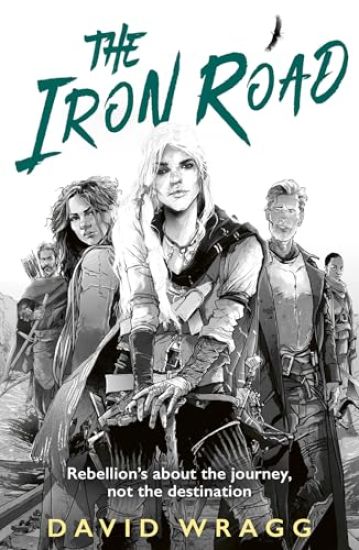
Critically acclaimed author Nina Varela delivers a stunning sequel to the richly imagined queer epic fantasy Crier’s War, which SLJ called “perfect for fans of Sarah J. Maas’s Throne of Glass.” For too long, Automae have lorded over the kingdom of Rabu, oppressing its human citizens. But the human revolution has risen, and at its heart is Ayla. Once a handmaiden, now a fugitive, Ayla narrowly escaped the palace of Lady Crier, the girl she would’ve killed if she hadn’t fallen in love first. Now Ayla has pledged her allegiance to Queen Junn, who can help accomplish the human rebellion’s ultimate goal: destroy the Iron Heart. Without its power, the Automae will be weakened to the point of extinction. Ayla wants to succeed, but can’t shake the strong feelings she’s developed for Crier. And unbeknownst to her, Crier has also fled the palace, taking up among traveling rebels, determined to find and protect Ayla. Even as their paths collide, nothing can prepare them for the dark secret underlying the Iron Heart.
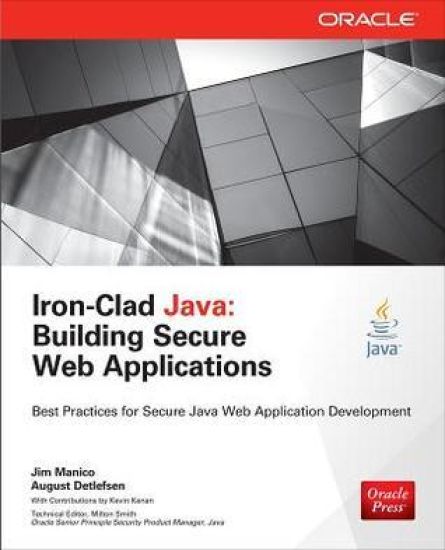
Publisher's Note: Products purchased from Third Party sellers are not guaranteed by the publisher for quality, authenticity, or access to any online entitlements included with the product.Proven Methods for Building Secure Java-Based Web ApplicationsDevelop, deploy, and maintain secure Java applications using the expert techniques and open source libraries described in this Oracle Press guide. Iron-Clad Java presents the processes required to build robust and secure applications from the start and explains how to eliminate existing security bugs. Best practices for authentication, access control, data protection, attack prevention, error handling, and much more are included. Using the practical advice and real-world examples provided in this authoritative resource, you'll gain valuable secure software engineering skills.Establish secure authentication and session management processesImplement a robust access control design for multi-tenant web applicationsDefend against cross-site scripting, cross-site request forgery, and clickjackingProtect sensitive data while it is stored or in transitPrevent SQL injection and other injection attacksEnsure safe file I/O and uploadUse effective logging, error handling, and intrusion detection methodsFollow a comprehensive secure software development lifecycle"In this book, Jim Manico and August Detlefsen tackle security education from a technical perspective and bring their wealth of industry knowledge and experience to application designers. A significant amount of thought was given to include the most useful and relevant security content for designers to defend their applications. This is not a book about security theories, it’s the hard lessons learned from those who have been exploited, turned into actionable items for application designers, and condensed into print." -From the Foreword by Milton Smith, Oracle Senior Principal Security Product Manager, Java
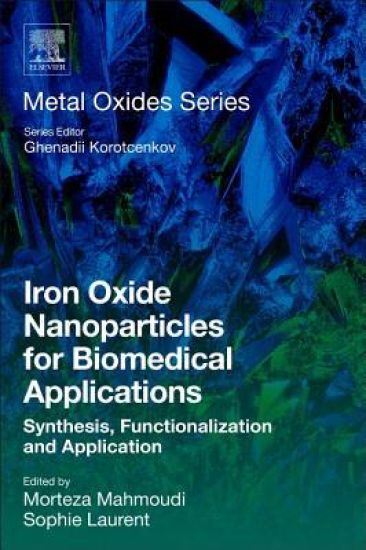
Iron Oxide Nanoparticles for Biomedical Applications: Synthesis, Functionalization and Application begins with several chapters covering the synthesis, stabilization, physico-chemical characterization and functionalization of iron oxide nanoparticles. The second part of the book outlines the various biomedical imaging applications that currently take advantage of the magnetic properties of iron oxide nanoparticles. Brief attention is given to potential iron oxide based therapies, while the final chapter covers nanocytotoxicity, which is a key concern wherever exposure to nanomaterials might occur. This comprehensive book is an essential reference for all those academics and professionals who require thorough knowledge of recent and future developments in the role of iron oxide nanoparticles in biomedicine.
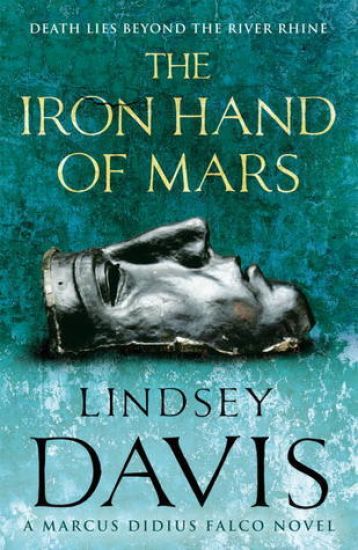
Easier said than done, thinks Falco, as he makes his uneasy way down the Rhenus, trying to forget that back in sunny Rome his girlfriend Helena Justina is being hotly pursued by Titus Caesar.
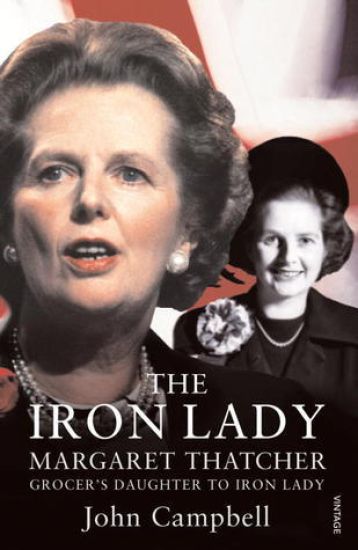
Traces the life of Britain's only female Prime Minister Margaret Thatcher, from her upbringing in Grantham to her unexpected challenge to Edward Heath for leadership of the Conservative party and her eventual removal from power.
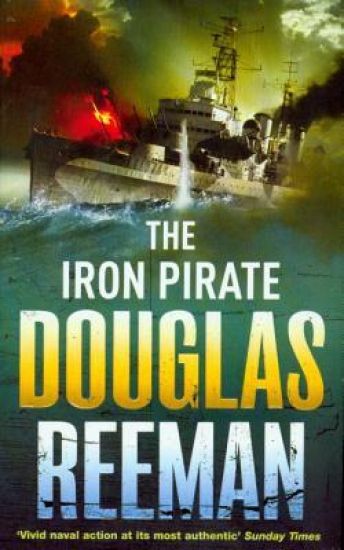
But it is the summer of 1944, and on every front the war is going badly for Germany. When the roder comes to leave the Baltic to attack and destroy eenmy shipping in the Atlantic, Kapitan zur See Dieter Hechler knows that once out in the vast killing ground it will only be a matter of time before the hunter becomes the hunted.
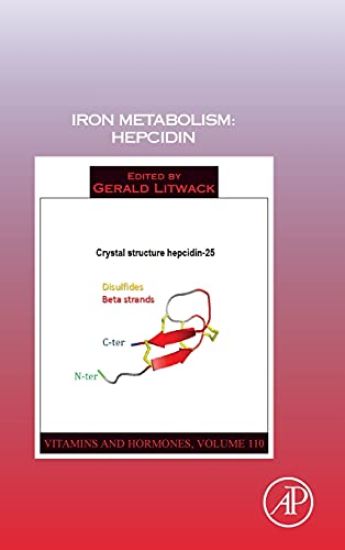
Iron Metabolism, Volume 110, the latest release in the Vitamins and Hormones series first published in 1943, covers the field of hormone action, vitamin action, X-ray crystal structure, physiology and enzyme mechanisms, with this release focusing on topics relating to hepcidin, bacterial infection, and iron overload, the role of heparan sulfates in hepcidin regulation, hepcidin CDNA and human gene sex hormones, growth factors and hepcidin, HFE gene polymorphisms and hereditary hemochromatosis, hepcidin and il-1beta, hepcidin-ferroportin axis, cardiomyocyte hepcidin, adipocyte iron, leptin and hepcidin, regulators of hepcidin expression, and much more.
Iron Ore: Mineralogy, Processing and Environmental Sustainability, Second Edition covers all aspects surrounding the second most important commodity behind oil. As an essential input for the production of crude steel, iron ore feeds the world's largest trillion-dollar-a-year metal market and is the backbone of the global infrastructure. The book explores new ore types and the development of more efficient processes/technologies to minimize environmental footprints. This new edition includes all new case studies and technologies, along with new chapters on the chemical analysis of iron ore, thermal and dry beneficiation of iron ore, and discussions of alternative iron making technologies. In addition, information on recycling solid wastes and P-bearing slag generated in steel mills, sustainable mining, and low emission iron making technologies from regional perspectives, particularly Europe and Japan, are included. This work will be a valuable resource for anyone involved in the iron ore industry.
Winner of the Wolfson History Prize, Christopher Clark's Iron Kingdom: The Rise and Downfall of Prussia 1600-1947 is a compelling account of a country that played a pivotal role in Europe's fortunes and fundamentally shaped our world. Prussia began as a medieval backwater, but transformed itself into a major European power and the force behind the creation of the German empire, until it was finally abolished by the Allies after the Second World War. With great flair and authority, Christopher Clark describes Prussia's great battles, dynastic marriages and astonishing reversals of fortune, its brilliant and charismatic leaders from the Hohenzollerns of Brandenburg to Bismarck and Frederick the Great, the military machine and the progressive, enlightened values on which it was built. 'Fascinating ... masterly ... littered with intriguing detail and wry observation' Richard Overy, Daily Telegraph 'A terrific book ... the definitive history of this much-maligned state' Daily Telegraph Books of the Year 'You couldn't have the triumph and the tragedy of Prussia better told' Observer 'A magisterial history of Europe's only extinct power' Financial Times 'Exemplary ... an illuminating, profoundly satisfying work of history' The New York Times Christopher Clark is a lecturer in Modern European History at St Catharine's College, University of Cambridge. He is also the author of Kaiser Wilhelm II: A Life in Power.
Chosen 16 times as a 'Book of the Year' - the top non-fiction pick of 2012'The best work of modern history I have ever read' A. N. Wilson, Financial TimesAt the end of the Second World War, the Soviet Union unexpectedly found itself in control of a huge swathe of territory in Eastern Europe. Stalin and his secret police set out to convert a dozen radically different countries to a completely new political and moral system: Communism. Anne Applebaum's landmark history of this brutal time shows how societies were ruthlessly eviscerated by Communist regimes, how opposition was destroyed and what life was like for ordinary people who had to choose whether to fight, to flee or to collaborate.A haunting reminder of how fragile freedom can be, Iron Curtain is an exceptional work of historical and moral reckoning.ANNE APPLEBAUM is a historian and journalist, a regular columnist for the Washington Post and Slate, and the author of several books, including Gulag: A History, which won the 2004 Pulitzer Prize for non-fiction. She is the Director of Political Studies at the Legatum Institute in London, and she divides her time between Britain and Poland, where her husband, Radek Sikorski, serves as Foreign Minister.'The outstanding book of the year ... a masterpiece' Oliver Kamm, The Times, Books of the Year'Exceptionally important, wise, perceptive, remarkably objective' Antony Beevor 'Explains in a manner worthy of Arthur Koestler what totalitarianism really means ... it is a window into a world of lies and evil that we can hardly imagine' Edward Lucas, Standpoint'At last the story can be told ... a magisterial history' Orlando Figes, Mail on Sunday
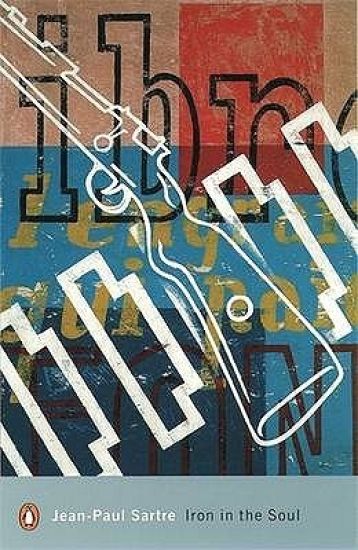
June 1940 was the summer of defeat for the French soldiers, deserted by their officers, utterly demoralized, awaiting the Armistice. Day by day, hour by hour, Iron in the Soul unfolds what men thought and felt and did as France fell. Men who shrugged, men who ran, men who fought and tragic men like Mathieu, who had dedicated his life to finding personal freedom, now overwhelmed by remorse and bitterness, who must learn to kill. Iron in the Soul, the third volume of Sartre's Roads to Freedom Trilogy, is a harrowing depiction of war and what it means to lose.
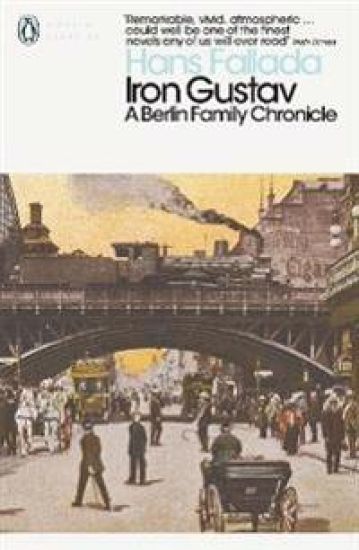
A powerful story of the shattering effects of the First World War on both a family and a country - from Hans Fallada, bestselling author of Alone in Berlin'This remarkable work, now complete after 76 years, could well be one of the finest novels any of us will ever read' Irish TimesGustav Hackendahl's will is law. Known as 'Iron Gustav', he runs his family and his Berlin carriage business with stern, unyielding discipline. But his children have wills of their own, and soon they slip from his control - some to better lives, some towards disaster. As war breaks out and Gustav's beloved Germany is devastated by hardship and violence, he finds everything he believes in destroyed. Can the man of iron endure, or even change?Brutal and moving, written with Hans Fallada's gift for capturing the small tragedies of ordinary lives, Iron Gustav is a heartbreaking family chronicle and an unflinching portrayal of the First World War and its aftermath.