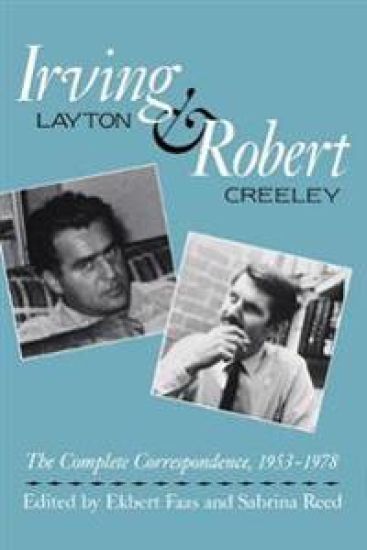
The correspondence includes heated and lively debates over the work of poets such as Robert Graves, Louis Dudek, and Charles Olson; anecdotes from the personal lives of Creeley and Layton at crucial stages in both their careers; and glimpses of a time of change when the Black Mountain and other postmodernist movements were beginning. Admirers of Creeley and Layton will find this book of special interest, as will students of literature and scholars of modern poetry.
(P/V/G Composer Collection). 60 of this brilliant composer's very best Features a bio, background notes on each song, show and movie listings by year, and loads of photos Includes: Always * Blue Skies * Cheek to Cheek * God Bless America * Happy Holiday * I've Got My Love to Keep Me Warm * Marie * Puttin' On the Ritz * Steppin' Out with My Baby * There's No Business like Show Business * White Christmas * and more. A must for every Irving Berlin fan
Irving Howe and the Critics is a selection of essays and reviews about the work of Irving Howe (1920–93), a vocal radical humanist and the most influential American socialist intellectual of his generation. Howe authored eighteen books, edited twenty-five more, wrote dozens of articles and reviews, and edited the magazine Dissent for forty years after founding it. His writings cover subjects ranging from U.S. labor to the vicissitudes of American communism and socialism to Yiddishkeit and contemporary politics. His book World of Our Fathers: The Journey of the East European Jews to America and the Life They Found and Made received the National Book Award for Nonfiction. John Rodden has chosen essays and reviews that focus on Howe's major works and on the disputes they generated. He features both Dissent contributors and those who have dissented from the Dissenters—on the Right as well as the Left. Rodden includes a few stern assessments of Howe from his less sympathetic critics, testifying not only to the range of response—from admiration to hostility—that his work received but also to his stature on the Left as a prime intellectual target of neoconservative fire.
Irving Howe and the Critics is a selection of essays and reviews about the work of Irving Howe (1920–93), a vocal radical humanist and the most influential American socialist intellectual of his generation. Howe authored eighteen books, edited twenty-five more, wrote dozens of articles and reviews, and edited the magazine Dissent for forty years after founding it. His writings cover subjects ranging from U.S. labor to the vicissitudes of American communism and socialism to Yiddishkeit and contemporary politics. His book World of Our Fathers: The Journey of the East European Jews to America and the Life They Found and Made received the National Book Award for Nonfiction. John Rodden has chosen essays and reviews that focus on Howe's major works and on the disputes they generated. He features both Dissent contributors and those who have dissented from the Dissenters—on the Right as well as the Left. Rodden includes a few stern assessments of Howe from his less sympathetic critics, testifying not only to the range of response—from admiration to hostility—that his work received but also to his stature on the Left as a prime intellectual target of neoconservative fire.
Few men in America's intellectual history have sought as much as Irving Babbitt to be a crucible for the cultural values that America, expecially in its ""progressive"" epoch, had no inclination to receive. Over sixty years after his death, Babbitt remains a figure of controversy. He retains his reputation as a reactionary defender of genteel morality and taste, yet, as Thomas Nevin reminds us, he continues to be a scholar of importance and an erudite, forceful teacher who influenced -- among others -- T. S. Eliot, Van Wyck Brooks, Walter Lippmann, Austin Warren, and David Riesman.Nevin argues that the tradition Babbit represented did not so much uphold class mores as it urged that literature embody and inculcate discipline. In this book-length study of Babbitt's humanism, Nevin examines the controversial critic's attacks on collegiate educational reform, his literary and aesthetic criticism, his political philosophy of an ""aristocratic democracy"" and his fusion of humanism with Buddhism. Included in each chapter are substantial portions of Babbitt's unpublished correspondence with Paul Elmer More, letters that eloquently reveal points of agreement and difference between Babbitt's humanism and the theism that More came to espouse.Although this study reflects the variety of Babbitt's concerns, it concentrates on his major ideas: the need to maintain the dualism that is the legacy of the Western philosophical tradition, the imperative that critically sound standards of judgment be maintained in the individual and in society, and the affirmation of the human will against the reductive forces of materialistic ideologies. Humanism, as Babbitt defines it, opposes the ascendance of utilitarian science because the sciences, however legitimate in the area of phenomenal inquiry, as a secular faith supplant the traditional strength and appeal of cultural and religious standards. Literature itself under the influence of naturalism either reflects a mechanized, demoralized society or merely escapes aesthetically from its ugliness.With the reprinting of some of Babbitt's writings, scholars may now reassess his thought. Irving Babbitt should renew interest in a major American thinker and vindicate many of his arguments that apply to the problems of our own day.Originally published in 1984.A UNC Press Enduring Edition -- UNC Press Enduring Editions use the latest in digital technology to make available again books from our distinguished backlist that were previously out of print. These editions are published unaltered from the original, and are presented in affordable paperback formats, bringing readers both historical and cultural value.
A New York Times "Books for Summer Reading" selection Winner of the 2003 National Jewish Book Award for History By the time he died in 1993 at the age of 73, Irving Howe was one of the twentieth century's most important public thinkers. Deeply passionate, committed to social reform and secular Jewishness, ardently devoted to fiction and poetry, in love with baseball, music, and ballet, Howe wrote with such eloquence and lived with such conviction that his extraordinary work is now part of the canon of American social thought. In the first comprehensive biography of Howe's life, historian Gerald Sorin brings us close to this man who rose from Jewish immigrant poverty in the 1930s to become one of the most provocative intellectuals of our time. Known most widely for his award-winning book World of Our Fathers, a rich portrayal of the East European Jewish experience in New York, Howe also won acclaim for his prodigious output of illuminating essays on American culture and as an indefatigable promoter of democratic socialism as can be seen in the pages of Dissent, the journal he edited for nearly forty years. Deeply devoted to the ideal of democratic radicalism and true equality, Howe was constantly engaged in a struggle for decency and basic fairness in the face of social injustice. In the century of Auschwitz, the Gulag, and global inter-ethnic mass murder, it was difficult to sustain political certainties and take pride in one's humanity. To have lived a life of conviction and engagement in that era was a notable achievement. Irving Howe lived such a life and Gerald Sorin has done a masterful job of guiding us through it in all its passion and complexity.
A New York Times "Books for Summer Reading" selection Winner of the 2003 National Jewish Book Award for History By the time he died in 1993 at the age of 73, Irving Howe was one of the twentieth century's most important public thinkers. Deeply passionate, committed to social reform and secular Jewishness, ardently devoted to fiction and poetry, in love with baseball, music, and ballet, Howe wrote with such eloquence and lived with such conviction that his extraordinary work is now part of the canon of American social thought. In the first comprehensive biography of Howe's life, historian Gerald Sorin brings us close to this man who rose from Jewish immigrant poverty in the 1930s to become one of the most provocative intellectuals of our time. Known most widely for his award-winning book World of Our Fathers, a rich portrayal of the East European Jewish experience in New York, Howe also won acclaim for his prodigious output of illuminating essays on American culture and as an indefatigable promoter of democratic socialism as can be seen in the pages of Dissent, the journal he edited for nearly forty years. Deeply devoted to the ideal of democratic radicalism and true equality, Howe was constantly engaged in a struggle for decency and basic fairness in the face of social injustice. In the century of Auschwitz, the Gulag, and global inter-ethnic mass murder, it was difficult to sustain political certainties and take pride in one's humanity. To have lived a life of conviction and engagement in that era was a notable achievement. Irving Howe lived such a life and Gerald Sorin has done a masterful job of guiding us through it in all its passion and complexity.
An intimate monograph of the professional and personal creations of a midcentury design legend. Irving Harper is the most famous designer you have never heard of. Working as an associate at the office of George Nelson in the 1950s and ’60s, Harper was responsible for such icons of midcentury design as the Marshmallow sofa, the Ball clock, and numerous Herman Miller textile designs. Harper’s unrecognized contribution to this seminal era of design, and his incredible paper sculptures (made in his spare time to "relieve stress"), are presented for the first time in this book. An essay by design critic Julie Lasky introduces Harper’s commercial design work, recognizable designs from graphics to domestic goods to furniture that are still coveted and appreciated today, designed for the offices of Raymond Loewy, George Nelson, and then his own studio Harper + George. The second part of the book documents Harper’s extensive paper sculptures, which have never been exhibited. More than three hundred works fill Harper’s house and barn in Rye, New York, where this array of fantastical people and animal sculptures was created from modest and inexpensive materials as diverse as spaghetti and toothpicks in addition to paper. Images of Harper’s home, filled with furniture and objects of his own design as well as his paper sculptures, offer a rare glimpse into a Modern design enthusiast’s paradise.Offering insight into an important era of American design as well as the prolific output of a creative mind, this book promises to be the first to recognize Irving Harper’s contribution to the field and will appeal to fans of Modern design.
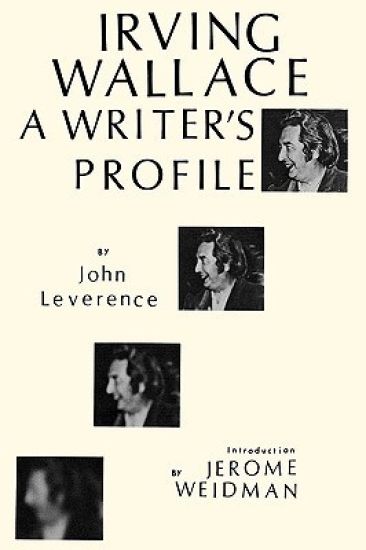
This profile of the man and the writer is an introduction to the personality behind The Chapman Report and The Fan Club. Through correspondence, diaries, manuscript annotations, interviews and other private sources, the profile reveals the man who began as a sports stringer for a Wisconsin newspaper and is now one of the world's most popular novelists.
This work has been selected by scholars as being culturally important and is part of the knowledge base of civilization as we know it.This work is in the public domain in the United States of America, and possibly other nations. Within the United States, you may freely copy and distribute this work, as no entity (individual or corporate) has a copyright on the body of the work.Scholars believe, and we concur, that this work is important enough to be preserved, reproduced, and made generally available to the public. To ensure a quality reading experience, this work has been proofread and republished using a format that seamlessly blends the original graphical elements with text in an easy-to-read typeface.We appreciate your support of the preservation process, and thank you for being an important part of keeping this knowledge alive and relevant.
This work has been selected by scholars as being culturally important and is part of the knowledge base of civilization as we know it.This work is in the public domain in the United States of America, and possibly other nations. Within the United States, you may freely copy and distribute this work, as no entity (individual or corporate) has a copyright on the body of the work.Scholars believe, and we concur, that this work is important enough to be preserved, reproduced, and made generally available to the public. To ensure a quality reading experience, this work has been proofread and republished using a format that seamlessly blends the original graphical elements with text in an easy-to-read typeface.We appreciate your support of the preservation process, and thank you for being an important part of keeping this knowledge alive and relevant.
This work has been selected by scholars as being culturally important and is part of the knowledge base of civilization as we know it.This work is in the public domain in the United States of America, and possibly other nations. Within the United States, you may freely copy and distribute this work, as no entity (individual or corporate) has a copyright on the body of the work.Scholars believe, and we concur, that this work is important enough to be preserved, reproduced, and made generally available to the public. To ensure a quality reading experience, this work has been proofread and republished using a format that seamlessly blends the original graphical elements with text in an easy-to-read typeface.We appreciate your support of the preservation process, and thank you for being an important part of keeping this knowledge alive and relevant.