Kirjojen hintavertailu. Mukana 11 213 693 kirjaa ja 12 kauppaa.

Kirjahaku

Etsi kirjoja tekijän nimen, kirjan nimen tai ISBN:n perusteella.

1000 tulosta hakusanalla Isaac Jenkinson

Isaac

Isaac

James Poole

OPEN BIBLE TRUST
2018
nidottu
The Bible contains many references to Abraham, Isaac and Jacob, and Genesis says so much about the lives of Abraham and Jacob. By contrast the life of Isaac is comparatively quiet and uneventful, no such dramatic incidents occur in the same intensity as in his father's life or in his son's. If we wonder why he is included with such giants as Abraham and Jacob, then this publication gives us the answer, providing us with important details about Isaac's life and faith.
Isaac

Isaac

Curtis Garner

ARSENAL PULP PRESS
2025
nidottu
A kaleidoscopic, intimate coming-of-age novel of modern queer lifeSet in London across a single, life-altering summer, Curtis Garner's debut novel, Isaac, is a queer story for our digital age, offering new perspectives on desire and intimacy, adolescent obsession, and dangerous first love.Isaac is an inexperienced gay youth whose first sexual encounter via a dating app is disappointing, yet thrillingly addictive. He spends his final months before university escaping into a dizzying new world of casual sex, but his world changes when he meets twenty-eight-year-old Harrison at a party.Isaac is immediately drawn to this handsome, charismatic artist, but as they grow closer, his sense of self becomes increasingly hazy. As Harrison becomes more demanding, Isaac tries everything to prove his worthiness, but he soon realizes that he must confront his toxic ideas about love, sex, and men, as well as himself.Written with verve and confidence, Isaac brilliantly captures the capriciousness of youth and the vagaries of queer desire.
Isaac

Isaac

James G Whitelaw

Swackie Ltd
2021
pokkari
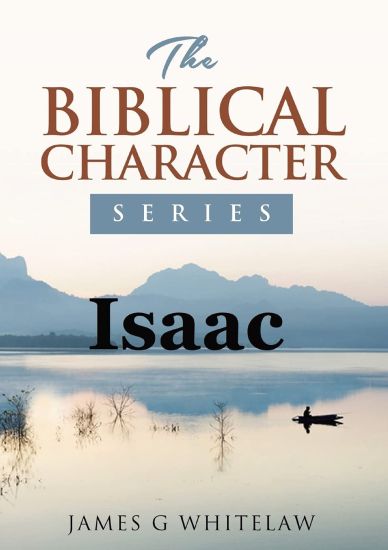
I firmly believe that every verse in the Bible has meaning for us today in the twenty-first century. If it did not, God would not have let it become part of the Bible. Every verse is there for a purpose, whether for encouragement, correction, guidance, or various reasons.I love studying Biblical characters, so I started writing this series of books. I think every personality in the Bible is fascinating, simply because they have meaning for us today.When I studied the character of Abraham, it was clear to me that the story of Abraham was likened to our spiritual walk and represented the steps and stages we would encounter in our lives. When I then turned to Isaac, I puzzled over him for a while, reading and re-reading the account of his life and wondering what the overall significance for us is today?Then I felt God say to me, "Isaac is like the Church today. He is a great man but achieves little." When God speaks to me like that, it still comes as a shock, but then when I look at it, yes, it's right. The Church is a great organisation, but it is achieving little today.Therefore, any burdened that the Church is achieving little need to study the character of Isaac and learn from him. This book seeks to recount the life of Isaac and look for deeper meaning related to us in the twenty-first century, but I must confess, I found this a difficult book to write, and I hope this does not detract from the content.I firmly believe that every verse in the Bible has meaning for us today in the twenty-first century. If it did not, God would not have let it become part of the Bible. Every verse is there for a purpose, whether for encouragement, correction, guidance, or various reasons.I love studying Biblical characters, so I started writing this series of books. I think every personality in the Bible is fascinating, simply because they have meaning for us today.When I studied the character of Abraham, it was clear to me that the story of Abraham was likened to our spiritual walk and represented the steps and stages we would encounter in our lives. When I then turned to Isaac, I puzzled over him for a while, reading and re-reading the account of his life and wondering what the overall significance for us is today?Then I felt God say to me, "Isaac is like the Church today. He is a great man but achieves little." When God speaks to me like that, it still comes as a shock, but then when I look at it, yes, it's right. The Church is a great organisation, but it is achieving little today.Therefore, any burdened that the Church is achieving little need to study the character of Isaac and learn from him. This book seeks to recount the life of Isaac and look for deeper meaning related to us in the twenty-first century, but I must confess, I found this a difficult book to write, and I hope this does not detract from the content.
Isaac

Isaac

Paty Jager

Windtree Press
2018
pokkari
Historical western filled with steamy romance and the rawness of a growing country.Alamayda Wagner's life has left her cynical, but also vigilant, and that's what propels her to Cornucopia, Oregon to uncover the secrets her father took to his grave. She quickly discovers her only hope includes trusting Isaac Corum. That soon proves to be expensive, and not just financially.The last thing Isaac Corum needs or wants is a snooty woman telling him he didn't do enough to save her father, which is what her letter implied. He'd helped the man more than most people would have, and swears he won't go out of his way like that again. He'll meet her at the Baker City train station, deliver her father's belongings, and send her back the way she came.
Isaac Newton

Isaac Newton

James Gleick

Harpercollins Publishers
2004
pokkari
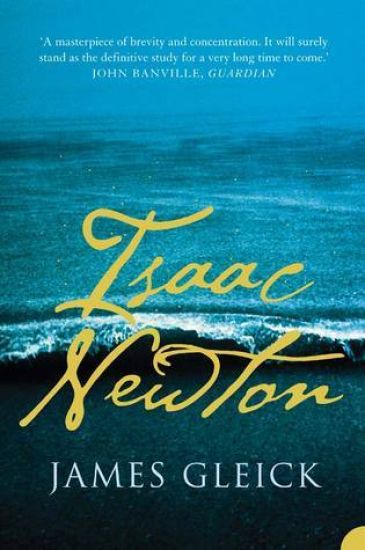
From one of the best writers on science, a remarkable portrait of Isaac Newton. The man who changed our understanding of the universe, of science, and of faith.
Isaac's Storm

Isaac's Storm

Erik Larson

HARPERCOLLINS PUBLISHERS
2008
pokkari
Galveston, Texas, 8 September 1900. It's another fine day in the Gulf according to Isaac Cline, chief observer of the new US Weather Bureau, but one day later, 6-10,000 people were dead, wiped out by the biggest storm the coast of America had ever witnessed.
Isaac Newton

Isaac Newton

Gale E. Christianson

Oxford University Press Inc
2005
sidottu
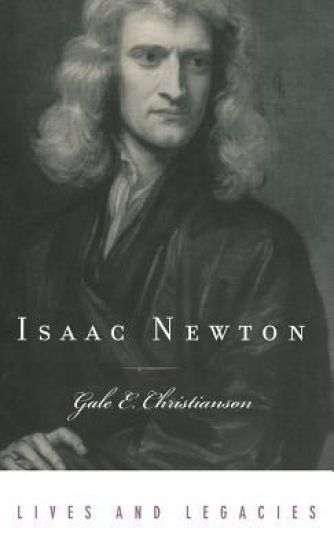
Quarrelsome and quirky, a disheveled recluse who ate little, slept less, and yet had an iron constitution, Isaac Newton rose from a virtually illiterate family to become one of the towering intellects of science. Now, in this fast-paced, colorful biography, Gale E. Christianson paints an engaging portrait of Newton and the times in which he lived. We follow Newton from his childhood in rural England to his student days at Cambridge, where he devoured the works of Copernicus, Kepler, and Galileo, and taught himself mathematics. There ensued two miraculous years at home in Woolsthorpe Manor, where he fled when plague threatened Cambridge, a remarkably fertile period when Newton formulated his theory of gravity, a new theory of light, and calculus--all by his twenty-fourth birthday. Christianson describes Newton's creation of the first working model of the reflecting telescope, which brought him to the attention of the Royal Society, and he illuminates the eighteen months of intense labor that resulted in his Principia, arguably the most important scientific work ever published. The book sheds light on Newton's later life as master of the mint in London, where he managed to convict and hang the arch criminal William Chaloner (a remarkable turn for a once reclusive scholar), and his presidency of the Royal Society, which he turned from a dilettante's club into an eminent scientific organization. Christianson also explores Newton's less savory side, including his long, bitter feud with Robert Hooke and the underhanded way that Newton established his priority in the invention of calculus and tarnished Liebniz's reputation. Newton was an authentic genius with all too human faults. This book captures both sides of this truly extraordinary man. A volume in Oxford's Lives and Legacies series. Brief, erudite, and inviting, the exciting new Lives and Legacies series offers a fresh look at some of the greatest minds in the humanities and sciences. Written by prominent authors, these engaging volumes will shed light on the life and work of our leading intellectual, artistic, and historical figures.
Isaac Albeniz

Isaac Albeniz

Clark Walter Aaron

Oxford University Press
1999
sidottu
An account of the career of Isaac Albeniz (1860-1909), a concert pianist renowned for creating a national style of Spanish piano music and fostering the growth of the concerto, orchestral music, and opera in Spain. As a touring child prodigy who supposedly stowed away on a steamer to the New World, later studied with Liszt, and eventually got ensnared in a "Faustian pact" with the wealthy English librettist, Frances Burdett Money-Coutts, his career has become the stuff of legend. Based on documentary evidence, this biography aims to debunk the mythology surrounding his career, much of it spun by the composer himself. Clark also reveals a complex individual who captured the mystery of Spain in his music yet felt estranged from his homeland in reality.
Isaac Newton: Eighteenth-century Perspectives

Isaac Newton: Eighteenth-century Perspectives

A. Rupert Hall

Oxford University Press
1998
sidottu
This new work by one of this century's most eminent Newtonian scholars - Rupert Hall - brings together for the first time the early eighteenth century biographical notices of Sir Isaac Newton. The centrepiece of the book is a brand new translation of Paolo Frisi's biography, the first published on Newton in 1778. Also included are the biographies by Fontenelle (1727), Thomas Birch (1738), Charles Hutton (1795), and John Conduitt. Each translation is accompanied by a commentary by Professor Hall. A brief biography and a bibliography of Newton have also been included for the reader. This book will be an extremely valuable addition to the works on Newton, and provide a fascinating text for historians of science
Isaac Newton's Scientific Method

Isaac Newton's Scientific Method

William L. Harper

Oxford University Press
2014
nidottu
Isaac Newton's Scientific Method examines Newton's argument for universal gravity and his application of it to resolve the problem of deciding between geocentric and heliocentric world systems by measuring masses of the sun and planets. William L. Harper suggests that Newton's inferences from phenomena realize an ideal of empirical success that is richer than prediction. Any theory that can achieve this rich sort of empirical success must not only be able to predict the phenomena it purports to explain, but also have those phenomena accurately measure the parameters which explain them. Harper explores the ways in which Newton's method aims to turn theoretical questions into ones which can be answered empirically by measurement from phenomena, and to establish that propositions inferred from phenomena are provisionally accepted as guides to further research. This methodology, guided by its rich ideal of empirical success, supports a conception of scientific progress that does not require construing it as progress toward Laplace's ideal limit of a final theory of everything, and is not threatened by the classic argument against convergent realism. Newton's method endorses the radical theoretical transformation from his theory to Einstein's. Harper argues that it is strikingly realized in the development and application of testing frameworks for relativistic theories of gravity, and very much at work in cosmology today.
Isaac of Nineveh's Ascetical Eschatology

Isaac of Nineveh's Ascetical Eschatology

Jason Scully

Oxford University Press
2017
sidottu
Isaac of Nineveh's Ascetical Eschatology demonstrates that Isaac's eschatology is an original synthesis based on ideas garnered from a distinctively Syriac cultural milieu. Jason Scully investigates six sources relevant to the study of Isaac's Syriac source material and cultural heritage. These include ideas adapted from Syriac authors like Ephrem, John the Solitary, and Narsai, but also adapted from the Syriac versions of texts originally written in Greek, like Evagrius's Gnostic Chapters, Pseudo-Dionysius's Mystical Theology, and the Pseudo-Macarian homilies. Isaac's eschatological synthesis of this material is a sophisticated discourse on the psychological transformation that occurs when the mind has an experience of God. It begins with the premise that asceticism was part of God's original plan for creation. Isaac says that God created human beings with infantile knowledge and that God intended from the beginning for Adam and Eve to leave the Garden of Eden. Once outside the garden, human beings would have to pursue mature knowledge through bodily asceticism. Although perfect knowledge is promised in the future world, Isaac also believes that human beings can experience a proleptic taste of this future perfection. Isaac employs the concepts of wonder and astonishment in order to explain how an ecstatic experience of the future world is possible within the material structures of this world. According to Isaac, astonishment describes the moment when a person arrives at the threshold of eschatological perfection but is still unable to comprehend the heavenly mysteries, while wonder describes spiritual comprehension of heavenly knowledge through the intervention of divine grace.
Isaac Albéniz

Isaac Albéniz

Clark Walter Aaron

Oxford University Press
2002
nidottu
Walter Aaron Clark's detailed and accurate account (the first in English) of one of the most intriguing figures of the Romantic period is now available in paperback. Isaac Albéniz (1860-1909), a renowned concert pianist, created a national style of Spanish piano music and also fostered the growth in Spain of the concerto, orchestral music, and opera. His career was to become the stuff of legend: a touring child prodigy who supposedly stowed away on a steamer to the New World, he later studied with Liszt, and eventually became ensnared in a 'Faustian pact' with the wealthy English librettist Frances Burdett Money-Coutts. Based on a wealth of new and previously overlooked documentary evidence, this biography debunks the mythology surrounding Albéniz's career—much of it spun by the composer himself—and reveals a complex individual who was able to capture the mystery of Spain in his music yet who in reality felt estranged from his homeland.
Isaac Rosenberg

Isaac Rosenberg

Oxford University Press
2008
sidottu
The first volume to be published in the new 21st-Century Oxford Authors series presents all of the surviving writings of Isaac Rosenberg (1890-1918): poetry, plays, prose works, and letters. The book also provides a commentary giving details of the composition and publication of the poems and plays and throws light on the people, places, and incidents described in both these and the letters. An introduction places the collection in context and a chronological table describes the main events of his life. There are also examples of his paintings and drawings. Although best known as a war poet, most of Rosenberg's work pre-dates the war. The son of Jewish immigrants from Lithuania, he grew up in London's East End. Financially impoverished, he nevertheless lived in a society that valued artistic creativity - among his friends were Mark Gertler and David Bomberg. He was a painter as well as a poet, and studied at the Slade School of Art. He knew many of the leading poets of the day, and his letters, in particular those to Edward Marsh and Gordon Bottomley, throw fascinating light on his own poetic creativitiy and the response to his work of those around him. In both his letters and prose works we find an insightful commentator on both poetry and painting. Though never a member of any movement, he was aware of the issues that preoccupied the artistic circles of his day. His artistic independence gives both power and insight to his work.
Isaac Newton's Scientific Method

Isaac Newton's Scientific Method

William L. Harper

Oxford University Press
2011
sidottu
Isaac Newton's Scientific Method examines Newton's argument for universal gravity and his application of it to resolve the problem of deciding between geocentric and heliocentric world systems by measuring masses of the sun and planets. William L. Harper suggests that Newton's inferences from phenomena realize an ideal of empirical success that is richer than prediction. Any theory that can achieve this rich sort of empirical success must not only be able to predict the phenomena it purports to explain, but also have those phenomena accurately measure the parameters which explain them. Harper explores the ways in which Newton's method aims to turn theoretical questions into ones which can be answered empirically by measurement from phenomena, and to establish that propositions inferred from phenomena are provisionally accepted as guides to further research. This methodology, guided by its rich ideal of empirical success, supports a conception of scientific progress that does not require construing it as progress toward Laplace's ideal limit of a final theory of everything, and is not threatened by the classic argument against convergent realism. Newton's method endorses the radical theoretical transformation from his theory to Einstein's. Harper argues that it is strikingly realized in the development and application of testing frameworks for relativistic theories of gravity, and very much at work in cosmology today.
Isaac Rosenberg

Isaac Rosenberg

Oxford University Press
2012
nidottu
This volume, part of the the 21st-Century Oxford Authors series, presents all of the surviving writings of Isaac Rosenberg (1890-1918): poetry, plays, prose works, and letters. The book also provides a commentary giving details of the composition and publication of the poems and plays and throws light on the people, places, and incidents described in both these and the letters. An introduction places the collection in context and a chronological table describes the main events of his life. There are also examples of his paintings and drawings. Although best known as a war poet, most of Rosenberg's work pre-dates the war. The son of Jewish immigrants from Lithuania, he grew up in London's East End. Financially impoverished, he nevertheless lived in a society that valued artistic creativity - among his friends were Mark Gertler and David Bomberg. He was a painter as well as a poet, and studied at the Slade School of Art. He knew many of the leading poets of the day, and his letters, in particular those to Edward Marsh and Gordon Bottomley, throw fascinating light on his own poetic creativitiy and the response to his work of those around him. In both his letters and prose works we find an insightful commentator on both poetry and painting. Though never a member of any movement, he was aware of the issues that preoccupied the artistic circles of his day. His artistic independence gives both power and insight to his work.
Isaac Israeli

Isaac Israeli

Isaac Israeli; Alfred L. Ivry

University of Chicago Press
2009
nidottu
Recognized as one of the earliest Jewish Neoplatonist writers, Isaac ben Solomon Israeli (ca. 855-955) influenced Muslim, Jewish, and Christian scholars through the Middle Ages. A native of Egypt who wrote in Arabic, Israeli explored definitions of such terms as imagination, sense-perception, desire, love, creation, and 'coming-to-be' in his writings. This classic volume contains English translations of Israeli's philosophical writings, including the "Book of Definitions", the "Book of Substances", and the "Book on Spirit and Soul". Additionally, Isaac Israeli features a biographical sketch of the philosopher and extensive notes and comments on the texts, as well as a survey and appraisal of his philosophy. Restored to print for the first time in decades, Isaac Israeli will be essential reading for students and scholars of medieval philosophy and Jewish studies.