

Kirjahaku
Etsi kirjoja tekijän nimen, kirjan nimen tai ISBN:n perusteella.
1000 tulosta hakusanalla Ivan Marcelo Pretti

Surovye budni vojskovoj razvedki opasny i tjazhely dazhe dlja vzroslykh zakalennykh bojtsov. Kak okazalsja sredi nikh dvenadtsatiletnij malchishka? Ego serdtse nastolko opalila vojna, chto nikakie ugovory i popytki otpravit Ivana v Suvorovskoe uchilische na nego ne dejstvujut. Sejchas on gorit tolko odnim zhelaniem - mstit. I raz za razom, riskuja zhiznju, Ivan otpravljaetsja cherez liniju fronta...Dlja srednego shkolnogo vozrasta.
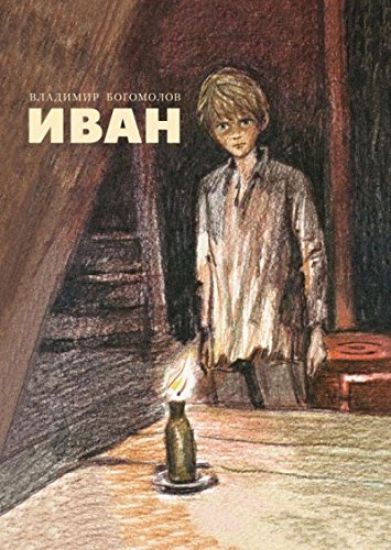
Na dolju dvenadtsatiletnego Ivana vypalo mnogo nedetskikh ispytanij, muzhskikh del i objazannostej. Malchik poterjal rodnykh i proshjol cherez uzhasy lagerja smerti. On nenavidit vraga - tjazhelo, po-vzroslomu - i zhivjot po surovym zakonam nastojaschej, nevydumannoj vojny. I byt zaschitnikom Otechestva - soznatelnyj vybor Ivana. V etoj knige bez priukrashivanija i utajki Vladimir Bogomolov rasskazyvaet o vojne - bezzhalostnoj i beschelovechnoj. Tragicheskaja i pravdivaja istorija malchika-razvedchika proilljustrirovana khudozhnikom Igorem Pchelko, kotoromu udalos tonko i gluboko peredat kharaktery personazhej. Povest posluzhila osnovoj dlja znamenitogo khudozhestvennogo filma "Ivanovo detstvo" rezhissjora Andreja Tarkovskogo.
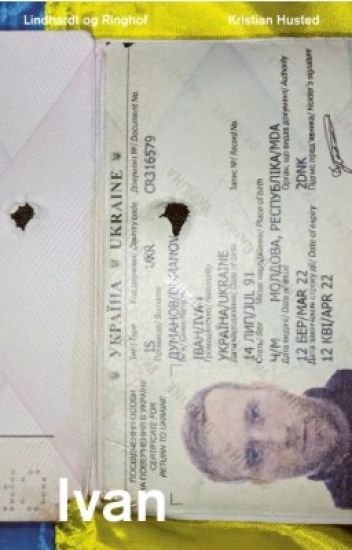
Kristian og Ivan møder hinanden i Sandholmlejren en decemberdag i 2015. Ivan er flygtet fra sit hjemland på grund af sin deltagelse i Majdanrevolutionen. Kristian befinder sig i lejren under dække af at være en iransk forfatter på flugt. Det bliver starten på et stærkt, men umage venskab. Ivan er Mixed Martial Arts-kæmper, finansanalytiker og revolutionær, og efter en lang og udmattende kamp mod det danske og grønlandske asylsystem, som udløser en diplomatisk krise imellem de to lande, bliver han den første asylmodtager i Grønland. Undervejs hører vi om Ivans opvækst i Kyiv i årene efter Sovjetunionens sammenbrud, frihedskampen på Majdan og flugten til Grønland, inden han til sidst drager hjem for at kæmpe imod den russiske invasion af Ukraine i 2022.Ivan er en hyldest til et menneskes kompromisløse kamp for frihed. Det er fortællingen om det ultimative offer midt i en af de vigtigste perioder i Europas nyere historie, men også historien om som ven at skrive sig ud af magtesløsheden og forstå drømmen om at kæmpe for noget, der er større end en selv.


Ivan & Friends 2-Book Collection: The One and Only Ivan and the One and Only Bob
Katherine Applegate
Storytide
2020
sidottu
Discover the unforgettable world of best friends Ivan and Bob in this gorgeous hardcover box set, including the Newbery Medal-winning The One and Only Ivan and its incredible sequel, The One and Only Bob Ivan is an easy-going gorilla. Living at the Exit 8 Big Top Mall and Video Arcade, he has grown accustomed to humans watching him through the glass walls of his domain. He rarely misses his life in the jungle. Mostly, he thinks about art.Then he meets Ruby, a baby elephant taken from her family, and she makes Ivan see their home--and his own art--through new eyes. When Ruby arrives, change comes with her, and it's up to Ivan to make it a change for the better.Continuing the story of these friends in The One and Only Bob, Bob sets out on a dangerous journey in search of his long-lost sister with the help of Ivan and Ruby. As a hurricane approaches and time is running out, Bob finds courage he never knew he had and learns the true meaning of friendship and family.In the tradition of timeless stories like Charlotte's Web and Stuart Little, Katherine Applegate blends humor and poignancy to create an unforgettable story of friendship, art, family, and hope.The One and Only Ivan and The One and Only Bob feature first-person narrative; author's use of literary devices (personification, imagery); and story elements (plot, character development, perspective).These acclaimed middle grade novels are an excellent choice for tween readers in grades 5 to 8, for independent reading, homeschooling, and sharing in the classroom.

Ivan & Friends Paperback 2-Book Box Set: The One and Only Ivan, the One and Only Bob
Katherine Applegate
Storytide
2022
nidottu
Discover the unforgettable world of best friends Ivan and Bob in this gorgeous illustrated paperback box set, including the Newbery Medal-winning The One and Only Ivan and its bestselling sequel, The One and Only Bob Ivan is an easy-going gorilla. Living at the Exit 8 Big Top Mall and Video Arcade, he has grown accustomed to humans watching him through the glass walls of his domain. He rarely misses his life in the jungle. Mostly, he thinks about art. Then he meets Ruby, a baby elephant taken from her family, and she makes Ivan see their home--and his own art--through new eyes. When Ruby arrives, change comes with her, and it's up to Ivan to make it a change for the better.Continuing the story of these friends in The One and Only Bob, Bob sets out on a dangerous journey in search of his long-lost sister with the help of Ivan and Ruby. As a hurricane approaches and time is running out, Bob finds courage he never knew he had and learns the true meaning of friendship and family.The One and Only Ivan is a modern classic that has enchanted readers for over a decade. The winner of the Newbery Medal and a #1 New York Times bestseller, the book was deemed "extraordinary" by Bulletin for the Center of Children's Books and "a must-have" by School Library Journal in starred reviews. And its sequel, The One and Only Bob, debuted at #1 on multiple bestseller lists, including the New York Times list, and was called "pitch-perfect" by Kirkus Reviews and "delightfully heartfelt and adventurous" by School Library Journal in starred reviews.In the tradition of timeless stories like Charlotte's Web and Stuart Little, Katherine Applegate blends humor and poignancy to create an unforgettable story of friendship, art, and hope.The One and Only Ivan and The One and Only Bob feature first-person narrative; author's use of literary devices (personification, imagery); and story elements (plot, character development, perspective).These acclaimed middle grade novels are an excellent choice for tween readers in grades 5 to 8, for independent reading, homeschooling, and sharing in the classroom.


In this book, Daniel P. Todes provides concise introduction to the life and science of the great Russian physiologist Ivan Pavlov (1849-1936). Todes weaves together Pavlov's life, values, context, and science by focusing upon his quest to understand the psyche and the "torments of our consciousness". This introduction follows the origins and maturation of Pavlov's quest from his early life in a priestly family in provincial Riazan, to his struggles and late professional success in the glittering capital of St. Petersburg, through the cataclysmic destruction of his world during the Bolshevik seizure of power and civil war of 1917-1921, to the rebuilding of his life in his 70s as a "prosperous dissident" during the Leninist 1920s, and his success and personal torments in 1929-1936 during the industrialization, cultural revolution, and terror of Stalin times. Beyond a basic biography, Todes devotes particular attention to Pavlov's Nobel Prize-winning research on digestion (1891-1903) and his iconic studies of conditional reflexes and higher nervous activity (1903-1936), as well as his experiments with dogs. Fundamentally reinterpreting Pavlov's famous research on conditional reflexes, Todes shows that Pavlov was not a behaviorist, did not use a bell, and was uninterested in training dogs. The Russian scientist sought to explain not merely external behaviors, but the emotional and intellectual life of animals and humans. Furthermore, this iconic "objectivist" was a profoundly anthropomorphic thinker whose science was suffused with his own experiences and values. Exploring the two unpublished manuscripts upon which Pavlov was working when he died, Todes shows the importance of his little-known experiments on chimps and explores his final thoughts about the relationship of science, Christianity, and Bolshevism.

This is a definitive, deeply researched biography of Russian physiologist Ivan Pavlov (1849-1936) and is the first scholarly biography to be published in any language. The book is Todes's magnum opus, which he has been working on for some twenty years. Todes makes use of a wealth of archival material to portray Pavlov's personality, life, times, and scientific work. Combining personal documents with a close reading of scientific texts, Todes fundamentally reinterprets Pavlov's famous research on conditional reflexes. Contrary to legend, Pavlov was not a behaviorist (a misimpression captured in the false iconic image of his "training a dog to salivate to the sound of a bell"); rather, he sought to explain not simply external behaviors, but the emotional and intellectual life of animals and humans. This iconic "objectivist" was actually a profoundly anthropomorphic thinker whose science was suffused with his own experiences, values, and subjective interpretations. This book is also a traditional "life and times" biography that weaves Pavlov into some 100 years of Russian history-particularly that of its intelligentsia--from the emancipation of the serfs to Stalin's time. Pavlov was born to a family of priests in provincial Ryazan before the serfs were emancipated, made his home and professional success in the glittering capital of St. Petersburg in late imperial Russia, suffered the cataclysmic destruction of his world during the Bolshevik seizure of power and civil war of 1917-1921, rebuilt his life in his 70s as a "prosperous dissident" during the Leninist 1920s, and flourished professionally as never before in 1929-1936 during the industrialization, revolution, and terror of Stalin. Todes's story of this powerful personality and extraordinary man is based upon interviews with surviving coworkers and family members (along with never-before-analyzed taped interviews from the 1960s and 1970s), examination of hundreds of scientific works by Pavlov and his coworkers, and close analysis of materials from some twenty-five archives. The documents range from the records of his student years at Ryazan Seminary to the transcripts of the Communist Party cells in his labs, and from his scientific manuscripts and notebooks to his political speeches; they include revealing love letters to his future wife and correspondence with hundreds of lay people, scholars, artists, and Communist Party leaders; and unpublished memoirs by many coworkers, his daughter, his wife, and his lover.

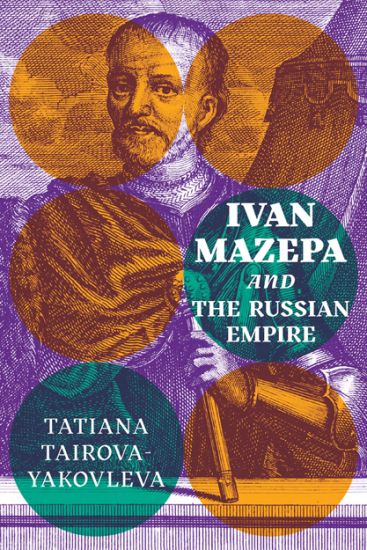
Ivan Mazepa and the Russian Empire
Tatiana Tairova-Yakovleva
McGill-Queen's University Press
2020
sidottu
Ivan Mazepa (1639-1709), hetman of the Zaporozhian Host in what is now Ukraine, is a controversial figure, famous for abandoning his allegiance to Tsar Peter I and joining Charles XII's Swedish army during the Battle of Poltava. Although he is discussed in almost every survey and major book on Russian and Ukrainian history, Ivan Mazepa and the Russian Empire is the first English-language biography of the hetman in sixty years. A translation and revision of Tatiana Tairova-Yakovleva's 2007 Russian-language book, Ivan Mazepa and the Russian Empire presents an updated perspective. This account is based on many new sources, including Mazepa's archive - thought lost for centuries before it was rediscovered by the author in 2004 - and post-Soviet Russian and Ukrainian historiography. Focusing on this fresh material, Tairova-Yakovleva delivers a more nuanced and balanced account of the polarizing figure who has been simultaneously demonized in Russia as a traitor and revered in Ukraine as the defender of independence. Chapters on economic reform, Mazepa's impact on the rise to power of Peter I, his cultural achievements, and the reasons he switched his allegiance from Peter to Charles integrate a larger array of issues and personalities than have previously been explored. Setting a standard for the next generation of historians, Ivan Mazepa and the Russian Empire reveals an original picture of the Hetmanate during a moment of critical importance for the Russian Empire and Ukraine.
Ivan Mazepa and the Russian Empire
Tatiana Tairova-Yakovleva
McGill-Queen's University Press
2020
nidottu
Ivan Mazepa (1639-1709), hetman of the Zaporozhian Host in what is now Ukraine, is a controversial figure, famous for abandoning his allegiance to Tsar Peter I and joining Charles XII's Swedish army during the Battle of Poltava. Although he is discussed in almost every survey and major book on Russian and Ukrainian history, Ivan Mazepa and the Russian Empire is the first English-language biography of the hetman in sixty years. A translation and revision of Tatiana Tairova-Yakovleva's 2007 Russian-language book, Ivan Mazepa and the Russian Empire presents an updated perspective. This account is based on many new sources, including Mazepa's archive - thought lost for centuries before it was rediscovered by the author in 2004 - and post-Soviet Russian and Ukrainian historiography. Focusing on this fresh material, Tairova-Yakovleva delivers a more nuanced and balanced account of the polarizing figure who has been simultaneously demonized in Russia as a traitor and revered in Ukraine as the defender of independence. Chapters on economic reform, Mazepa's impact on the rise to power of Peter I, his cultural achievements, and the reasons he switched his allegiance from Peter to Charles integrate a larger array of issues and personalities than have previously been explored. Setting a standard for the next generation of historians, Ivan Mazepa and the Russian Empire reveals an original picture of the Hetmanate during a moment of critical importance for the Russian Empire and Ukraine.

Ivan Morrow has spent his short life waiting for things to happen. Now something has happened. A distant ancestor from the past has entrusted him with something of great value and it has gone missing. But who stole it and how to get it back? He's grown extraordinarily over the last year since turning eleven, but his mind is stuck in a kid-sized brain. Now he must match wits with a desperate thief if he is to honour the trust placed in him by his distant relative.
Ivan Morrow has spent his short life waiting for things to happen. Now something has happened. A distant ancestor from the past has entrusted him with something of great value and it has gone missing. But who stole it and how to get it back? He's grown extraordinarily over the last year since turning eleven, but his mind is stuck in a kid-sized brain. Now he must match wits with a desperate thief if he is to honour the trust placed in him by his distant relative.
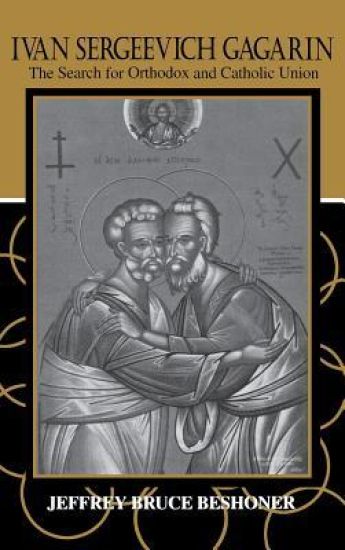
Ivan Sergeevich Gagarin analyzes questions of nationality and religious identity in nineteenth-century Russian history as reflected in the life of Jesuit priest Ivan Gagarin. A descendent of one of Russia's most ancient and politically powerful families, Father Ivan Gagarin, S.J. (1814–1882) dedicated his life to creating a union between the Orthodox and Catholic churches that would preserve the dogmatic and traditional beliefs of both. Traditional understandings of Russian identity have emanated from the perspective of the dominant Orthodox religion; this captivating study uses the unionist work of Gagarin to illumine Russia's national identity from the perspective of Roman Catholicism. Seeing his unionist proposals as necessary for the preservation of Russian stability, Gagarin found himself in frequent opposition to the Orthodox Church. While Gagarin believed that Church union would preserve Russia from the threats of communism and revolution, the Russian Orthodox Church believed that union would mean the sacrifice of religious truth, ecclesial independence and religious orthodoxy. Jeffrey Beshoner's even-handed analysis reveals that the Roman Catholic Church presented its own share of barriers to attempts at church union. Ivan Sergeevich Gagarin examines Roman Catholic attitudes of superiority vis-à-vis the Orthodox Church and argues that the nineteenth-century Roman Catholic Church simply did not possess the humility or respect for Eastern beliefs that church union required. Despite the failure of his unionist activity, Gagarin exerted important influence on such contemporary and later Roman Catholic and Russian thinkers as Pope Pius IX, Alexei Khomiakov and Vladimir Solovev. As the collapse of communism has permitted Russia to again seek its national identity in Russian Orthodoxy, Gagarin's ideas and perspectives on the relationship between national and religious identity continue to prove relevant.

Ivan Sergeevich Gagarin analyzes questions of nationality and religious identity in nineteenth-century Russian history as reflected in the life of Jesuit priest Ivan Gagarin. A descendent of one of Russia's most ancient and politically powerful families, Father Ivan Gagarin, S.J. (1814–1882) dedicated his life to creating a union between the Orthodox and Catholic churches that would preserve the dogmatic and traditional beliefs of both. Traditional understandings of Russian identity have emanated from the perspective of the dominant Orthodox religion; this captivating study uses the unionist work of Gagarin to illumine Russia's national identity from the perspective of Roman Catholicism. Seeing his unionist proposals as necessary for the preservation of Russian stability, Gagarin found himself in frequent opposition to the Orthodox Church. While Gagarin believed that Church union would preserve Russia from the threats of communism and revolution, the Russian Orthodox Church believed that union would mean the sacrifice of religious truth, ecclesial independence and religious orthodoxy. Jeffrey Beshoner's even-handed analysis reveals that the Roman Catholic Church presented its own share of barriers to attempts at church union. Ivan Sergeevich Gagarin examines Roman Catholic attitudes of superiority vis-à-vis the Orthodox Church and argues that the nineteenth-century Roman Catholic Church simply did not possess the humility or respect for Eastern beliefs that church union required. Despite the failure of his unionist activity, Gagarin exerted important influence on such contemporary and later Roman Catholic and Russian thinkers as Pope Pius IX, Alexei Khomiakov and Vladimir Solovev. As the collapse of communism has permitted Russia to again seek its national identity in Russian Orthodoxy, Gagarin's ideas and perspectives on the relationship between national and religious identity continue to prove relevant.
In the eighteen years since Ivan Illich’s death, David Cayley has been reflecting on the meaning of his friend and teacher’s life and work. Now, in Ivan Illich: An Intellectual Journey, he presents Illich’s body of thought, locating it in its own time and retrieving its relevance for ours.Ivan Illich (1926–2002) was a revolutionary figure in the Roman Catholic Church and in the wider field of cultural criticism that began to take shape in the 1960s. His advocacy of a new, de-clericalized church and his opposition to American missionary programs in Latin America, which he saw as reactionary and imperialist, brought him into conflict with the Vatican and led him to withdraw from direct service to the church in 1969. His institutional critiques of the 1970s, from Deschooling Society to Medical Nemesis, promoted what he called institutional or cultural revolution. The last twenty years of his life were occupied with developing his theory of modernity as an extension of church history. Ranging over every phase of Illich’s career and meditating on each of his books, Cayley finds Illich to be as relevant today as ever and more likely to be understood, now that the many convergent crises he foresaw are in full public view and the church that rejected him is paralyzed in its “folkloric” shell.Not a conventional biography, though attentive to how Illich lived, Cayley’s book is “continuing a conversation” with Illich that will engage anyone who is interested in theology, philosophy, history, and the Catholic Church.
In the eighteen years since Ivan Illich’s death, David Cayley has been reflecting on the meaning of his friend and teacher’s life and work. Now, in Ivan Illich: An Intellectual Journey, he presents Illich’s body of thought, locating it in its own time and retrieving its relevance for ours.Ivan Illich (1926–2002) was a revolutionary figure in the Roman Catholic Church and in the wider field of cultural criticism that began to take shape in the 1960s. His advocacy of a new, de-clericalized church and his opposition to American missionary programs in Latin America, which he saw as reactionary and imperialist, brought him into conflict with the Vatican and led him to withdraw from direct service to the church in 1969. His institutional critiques of the 1970s, from Deschooling Society to Medical Nemesis, promoted what he called institutional or cultural revolution. The last twenty years of his life were occupied with developing his theory of modernity as an extension of church history. Ranging over every phase of Illich’s career and meditating on each of his books, Cayley finds Illich to be as relevant today as ever and more likely to be understood, now that the many convergent crises he foresaw are in full public view and the church that rejected him is paralyzed in its “folkloric” shell.Not a conventional biography, though attentive to how Illich lived, Cayley’s book is “continuing a conversation” with Illich that will engage anyone who is interested in theology, philosophy, history, and the Catholic Church.
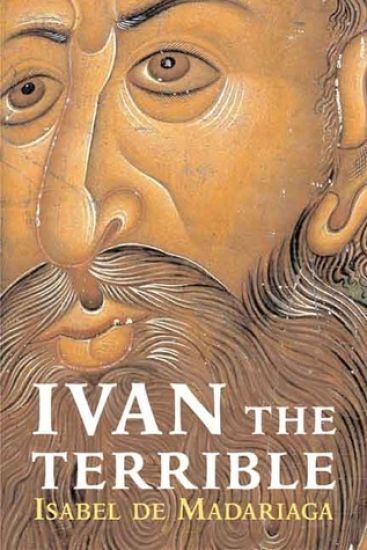
The definitive biography of Ivan the Terrible, setting the Tsar's infamous cruelty within the context of 16th-century Russia"[A] magnificent biography . . . illuminated by the wisdom gained by its author from a lifetime of learning and reflection about the place of Russia in the wider world."— Orlando Figes, New York Review of Books "Likely to become the definitive work on Ivan for some time."—Publishers Weekly, Starred Review Ivan IV, “the Terrible” (1533–1584), is one of the key figures in Russian history, yet he has remained among the most neglected. Notorious for pioneering a policy of unrestrained terror—and for killing his own son—he has been credited with establishing autocracy in Russia. This is the first attempt to write a biography of Ivan from birth to death, to study his policies, his marriages, his atrocities, and his disordered personality, and to link them as a coherent whole. Isabel de Madariaga situates Ivan within the background of Russian political developments in the sixteenth century. And, with revealing comparisons with English, Spanish, and other European courts, she sets him within the international context of his time. The biography includes a new account of the role of astrology and magic at Ivan’s court and provides fresh insights into his foreign policy. Facing up to problems of authenticity (much of Ivan’s archive was destroyed by fire in 1626) and controversies which have paralyzed western scholarship, de Madariaga seeks to present Russia as viewed from the Kremlin rather than from abroad and to comprehend the full tragedy of Ivan’s reign.