Kirjojen hintavertailu. Mukana 12 450 889 kirjaa ja 12 kauppaa.

Kirjahaku

Etsi kirjoja tekijän nimen, kirjan nimen tai ISBN:n perusteella.

1000 tulosta hakusanalla J R Hart

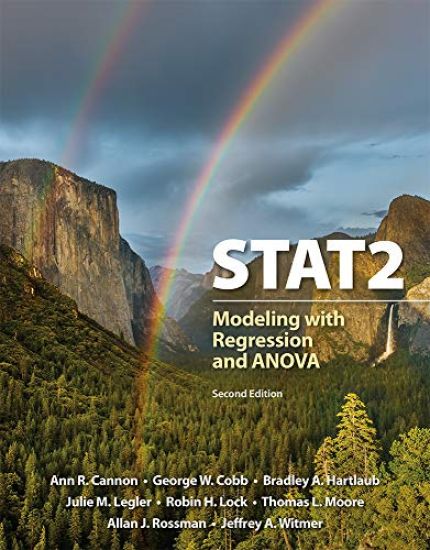
STAT2: Modeling with Regression and ANOVA

STAT2: Modeling with Regression and ANOVA

Bradley A. Hartlaub; George W. Cobb; Ann R. Cannon; Allan J. Rossman; Thomas L. Moore; Robin H. Lock; Julie M. Legler

W.H.Freeman Co Ltd
2018
sidottu
STAT2 introduces students to statistical modeling beyond what they have learned in a Stat 101 college course or an AP Statistics course. Building on basic concepts and methods learned in that course, STAT2 empowers students to analyze richer datasets that include more variables and address a broader range of research questions. Other than a working understanding of exponential and logarithmic functions, there are no prerequisites beyond successful completion of their first statistics course. To help all students make a smooth transition to this course, Chapter 0 reminds students of basic statistical terminology and also uses the familiar two-sample t-test as a way to illustrate the approach of specifying, estimating, and testing a statistical model.Using STAT2, students will: Go beyond their Stat 101 experience by learning to develop and apply models with both quantitative and categorical response variables, and with multiple explanatory variables. STAT2 Chapters are grouped into units that consider models based on the type of response and type of predictors.Discover that the practice of statistical modeling involves applying an interactive process. STAT2 employs a four-step process in all statistical modeling: Choose a form for the model, fit the model to the data, assess how well the model describes the data, and use the model to address the question of interest.Learn how to apply their developing judgment about statistical modeling. STAT2 introduces the idea of constructing statistical models at the very beginning, in a setting that students encountered in their Stat 101 course. This modeling focus continues throughout the course as students encounter new and increasingly more complicated scenarios.Analyze and draw conclusions from real data, which is crucial for preparing students to use statistical modeling in their professional lives. STAT2 incorporates real and rich data throughout the text. Using real data to address genuine research questions helps motivate students to study statistics. The richness stems not only from interesting contexts in a variety of disciplines, but also from the multivariable nature of most datasets.
Electroreceptors and Other Specialized Receptors in Lower Vertrebrates

Electroreceptors and Other Specialized Receptors in Lower Vertrebrates

T.H. Bullock; A. Fessard; R.H. Hartline; A.J. Kalmijn; P. Laurent; R.W. Murray; H. Scheich; E. Schwartz; T. Szabo

Springer-Verlag Berlin and Heidelberg GmbH Co. K
2011
nidottu
The originality of this volume is to reveal to the reader the fascination of some unfamiliar sensory organs that are sometimes ignored and often misunderstood. These receptors have only recently been identified and their functional specificity is in some cases still a matter for discussion. The four classes of sensory organs considered here differ widely from one another in many respects. One might even say that the only thing they have in common is that they belong to cold-blooded vertebrates. These classes are: 1. the directionally sensitive lateral-line mechanoreceptors of fishes and amphi­ bians (Chapter 7); 2. the pseudobranchial organs of some teleosts, equipped with pressoreceptors and at least three other types of receptors (osmo- and chemoreceptors) (Chapter 8); 3. the infrared-sensitive pit organs of some snake families (Chapter 9) ; 4. the various kinds of electroreceptors found in several marine and freshwater fish families (Chapters 2 to 6). The first three classes of receptors mentioned above thus rate only one chapter each, whereas five chapters are devoted to the electroreceptors. Electroreception has aroused enormous interest among physiologists in specialties ranging from molecular biology to animal behavior. The resulting quantity of research and discussion fully justifies this disproportion. However, it cannot be denied that the contents of the volume must appear unbalanced and heterogeneous, yet it should not be perceived as a mere juxtaposition of particular and unrelated cases.
Called to Community

Called to Community

Eberhard Arnold; Dietrich Bonhoeffer; Joan Chittister; Dorothy Day; Fyodor Dostoyevsky; Richard J. Foster; Jonathan Wilson-Hartgrove; David Janzen; Søren Kierkegaard; C. S. Lewis; Chiara Lubich; Thomas Merton; Henri J. M. Nouwen; John M. Perkins; Eugene H. Peterson; Christine D. Pohl; Howard A. Snyder; Mother Teresa; Saint Benedict; Jeremiah Barker; Amy Carmichael; Hans Denck; Andreas Ehrenpreis; Thomas R Kelly; Penelope Lawson; Juan Mateos; Kathleen Norris; Thomas E Powers; Peter Riedemann; Christopher C Smith; Ulrich Stadler

PLOUGH PUBLISHING HOUSE
2024
pokkari
Fifty-two readings on living in intentional Christian community to spark group discussion.Gold Medal Winner, 2017 Illumination Book Awards, Christian LivingSilver Medal Winner, 2017 Benjamin Franklin Award in Religion, Independent Book Publishers AssociationWhy, in an age of connectivity, are our lives more isolated and fragmented than ever? And what can be done about it? The answer lies in the hands of God’s people. Increasingly, today’s Christians want to be the church, to follow Christ together in daily life. From every corner of society, they are daring to step away from the status quo and respond to Christ’s call to share their lives more fully with one another and with others. As they take the plunge, they are discovering the rich, meaningful life that Jesus has in mind for all people, and pointing the church back to its original calling: to be a gathered, united community that demonstrates the transforming love of God.Of course, such a life together with others isn’t easy. The selections in this volume are, by and large, written by practitioners—people who have pioneered life in intentional community and have discovered in the nitty-gritty of daily life what it takes to establish, nurture, and sustain a Christian community over the long haul.Whether you have just begun thinking about communal living, are already embarking on sharing life with others, or have been part of a community for many years, the pieces in this collection will encourage, challenge, and strengthen you. The book’s fifty-two chapters can be read one a week to ignite meaningful group discussion.Contributors include: John F. Alexander, Eberhard Arnold, J. Heinrich Arnold, Johann Christoph Arnold, Alden Bass, Benedict of Nursia, Christoph Friedrich Blumhardt, Leonardo Boff, Dietrich Bonhoeffer, Joan Chittister, Stephen B. Clark, Andy Crouch, Dorothy Day, Anthony de Mello, Elizabeth Dede, Catherine de Hueck Doherty, Fyodor Dostoyevsky, Jenny Duckworth, Friedrich Foerster, Richard J. Foster, Jodi Garbison, Arthur G. Gish, Helmut Gollwitzer, Adele J Gonzalez, Stanley Hauerwas, Joseph H. Hellerman, Roy Hession, David Janzen, Rufus Jones, Emmanuel Katongole, Arthur Katz, Søren Kierkegaard, C. Norman Kraus, C.S. Lewis, Gerhard Lohfink, Ed Loring, Chiara Lubich, George MacDonald, Thomas Merton, Hal Miller, José P. Miranda, Jürgen Moltmann, Charles E. Moore, Henri J. M. Nouwen, Elizabeth O’Connor, John M. Perkins, Eugene H.Peterson, Christine D. Pohl, Chris Rice, Basilea Schlink, Howard A. Snyder, Mother Teresa, Thomas à Kempis, Elton Trueblood, and Jonathan Wilson-Hartgrove.
Pathologie der Lunge

Pathologie der Lunge

S. Blümcke; A. Burkhardt; W. Doerr; E. Fasske; J.-O. Gebbers; W. Hartung; R. Herbst; G. Könn; C. Mittermayer; K. Morgenroth; K.-M. Müller; W.-P. Oellig; F. Pfannkuch; H. Schäfer; V. Schejbal; M. Vogel

Springer-Verlag Berlin and Heidelberg GmbH Co. K
2011
nidottu
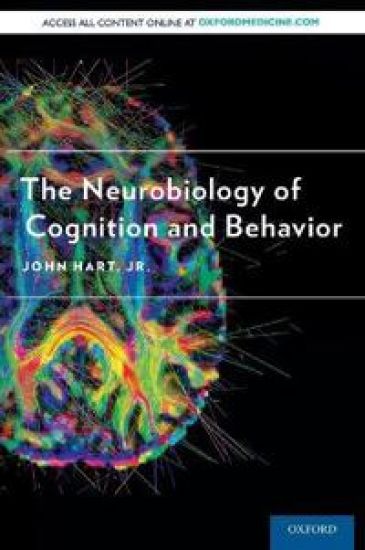
The Neurobiology of Cognition and Behavior

The Neurobiology of Cognition and Behavior

Jr Hart

Oxford University Press Inc
2016
sidottu
Neurobiology of Cognition and Behavior is one of the initial textbooks of brain mapping in the field of cognitive neuroscience. This well-researched text by a leading expert in the field provides a foundational map of the human brain for cognition and behavior. This comprehensive map of essential human thinking and emotion is based on the explosion in the field of functional neuroimaging studies (fMRI, PET) in the normally functioning human brain. The approach of this text is to confirm the association of these brain regions by verifying that damage to the activated brain area results in a consistent deficit in the cognitive/behavioral operation under investigation. The approach used to form this view of mapping brain and cognition is based on cognitive neuroscience principles of defining dissociable, fine-grained cognitive units and associating these units with brain regions encoding for these units or aspects of the units from both functional imaging and lesion studies. These cognitive-brain relationships are incorporated into clinical syndromes to account for the behavior of these patients after a lesion occurs, with the added feature of presenting patient videos demonstrating the disrupted cognitive behaviors. This comprehensive textbook provides a framework of the basic architecture of cognition in the brain with this combination of activation and lesion study confirmation of the brain-behavior associations. This basic framework is useful for those students studying the interaction of cognitive science and neuroanatomy as well as being relevant to the experienced neuroscientist researcher or clinician.
The Rules of Time

The Rules of Time

James E. Hart Jr

Createspace Independent Publishing Platform
2017
nidottu
Max Hartley always did have a problem with the speed of time. Yet he had a good life and was raised in a loving home. His younger brother was his best friend. He had a sharp mind and a beautiful wife who loved him dearly. It seemed his life was in order. But past tragedies and a desire for a secure future move him to use his intellect to develop time travel. When he travels forward to 2017 he finds the future is not what he expected. With some amusing interactions and shocking discoveries along the way, he is forced to rethink his understanding of the rules of time and to question whether he has caused more harm than good. Ultimately he is forced to decide who in his family will live and who will die.
A Monograph of the Orthoptera of North America, V1: North of Mexico

A Monograph of the Orthoptera of North America, V1: North of Mexico

James Abram Garfield Rehn; Harold J. Grant Jr; C. Willard Hart Jr

Literary Licensing, LLC
2012
sidottu
A Monograph Of The Orthoptera Of North America, V1: North Of Mexico is a comprehensive book written by James Abram Garfield Rehn. The book covers the Orthoptera species found in North America, specifically the ones located north of Mexico. The Orthoptera species are a diverse group of insects that include grasshoppers, crickets, and katydids. The book is divided into several sections, each covering a different aspect of the Orthoptera species. The first section provides an introduction to the Orthoptera species and their classification. The second section covers the morphology and anatomy of the Orthoptera species, including their wings, legs, and antennae. The third section covers the distribution and habitat of the Orthoptera species, including their geographical range and the types of environments they inhabit. The fourth section covers the behavior and ecology of the Orthoptera species, including their feeding habits and mating behavior. The fifth section provides a detailed description of each Orthoptera species found in North America north of Mexico. The descriptions include information on their physical characteristics, distribution, habitat, behavior, and ecology. Overall, A Monograph Of The Orthoptera Of North America, V1: North Of Mexico is an essential resource for anyone interested in the Orthoptera species found in North America. The book provides a comprehensive overview of these insects, including their classification, morphology, distribution, behavior, and ecology. It is a must-read for entomologists, biologists, and anyone interested in the natural world.Monographs Of The Academy Of Natural Sciences Of Philadelphia, No. 12.This scarce antiquarian book is a facsimile reprint of the old original and may contain some imperfections such as library marks and notations. Because we believe this work is culturally important, we have made it available as part of our commitment for protecting, preserving, and promoting the world's literature in affordable, high quality, modern editions, that are true to their original work.
George B. Hartzog, Jr.:

George B. Hartzog, Jr.:

Clemson University Press
2018
pokkari
This is a book about a man who may have done more to give the parks their present character than anyone in their history. . . . As Sherwood confesses, there is so much in the large Hartzog arsenal of assets that it is difficult to identify a very few attributes that made him special. However, Sherwood sees Hartzog's desire for further learning and growth as possibly his single greatest asset. While this zest for continued improvement was an important personal incentive, the crucial point is that Hartzog saw it as the means by which he could realize the full potential of his endeavors within the park service.--Lawrence R. Allen, Dean, College of Health, Education and Human Development, Clemson University
Ossian Bingley Hart, Florida's Loyalist Reconstruction Governor

Ossian Bingley Hart, Florida's Loyalist Reconstruction Governor

Canter Brown Jr

Louisiana State University Press
1997
sidottu
In this exceptional biography, Canter Brown, Jr., removes Ossian Bingley Hart (1821-1874), a Unionist, the principal founder of the Republican Party in Florida, and a Reconstruction-era governor of the state, from the shadows of history. Through an examination of Hart's life and career, Brown offers new insight into the political problems of the day, the role of Unionism in Deep South politics in particular, and enriches our understanding of the complexities of Reconstruction. Brown traces Hart's life from his privileged childhood in the newly founded port town of Jacksonville through his service as a volunteer soldier in the Second Seminole War, his education in South Carolina, and the dawn of his legal and political career on Florida's Atlantic frontier to his election as governor in 1872 and his premature death sixteen months later.Brown's multifaceted biography offers a rare glimpse at the persistence of Loyalism in the post-Civil War South and clearly illustrates the pivotal role played by both Loyalists and African Americans in southern politics of that era and how these two groups merged to resist carpetbag rule.
Applied Rocket Propulsion

Applied Rocket Propulsion

Jr. Hartfield

Wiley-Blackwell
2011
sidottu
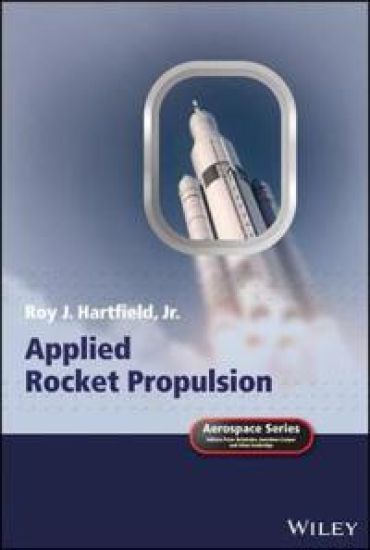
Filling the need for a comprehensive professional book at a level sufficient to enable the engineering design of a complete rocket propulsion system, Applied Rocket Propulsion provides a thorough, practical treatment of the engineering principles used in the analysis and design of rocket propulsion devices. Although the emphasis is on chemical propulsion, three chapters are devoted to the new technologies of electric propulsion. The physical principles are applied using derivations as appropriate, examples, and suggested problems; where possible, the physics of rocket propulsion are established in detail from first principles.
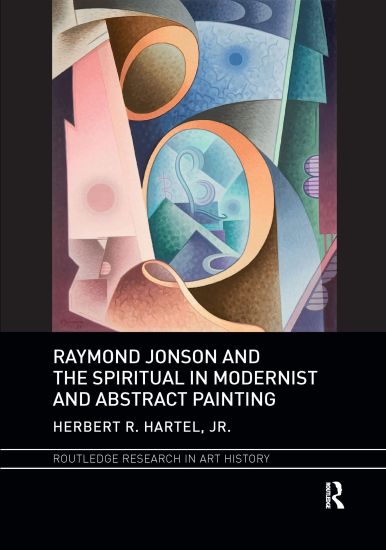
Raymond Jonson and the Spiritual in Modernist and Abstract Painting
This is the most thorough and detailed monograph on the artwork of Raymond Jonson. He is one of many artists of the first half of the twentieth-century who demonstrate the richness and diversity of an under-appreciated period in the history of American art. Visualizing the spiritual was one of the fundamental goals of early abstract painting in the years before and during World War I. Artists turned to alternative spirituality, the occult, and mysticism, believing that the pure use of line, shape, color, light and texture could convey spiritual insight. Jonson was steadfastly dedicated to this goal for most of his career and he always believed that modernist and abstract styles were the most effective and compelling means of achieving it.
Applied Rocket Propulsion

Applied Rocket Propulsion

Jr. Hartfield

John Wiley Sons Inc
2024
muu
Filling the need for a comprehensive professional book at a level sufficient to enable the engineering design of a complete rocket propulsion system, Applied Rocket Propulsion provides a thorough, practical treatment of the engineering principles used in the analysis and design of rocket propulsion devices. Although the emphasis is on chemical propulsion, three chapters are devoted to the new technologies of electric propulsion. The physical principles are applied using derivations as appropriate, examples, and suggested problems; where possible, the physics of rocket propulsion are established in detail from first principles.
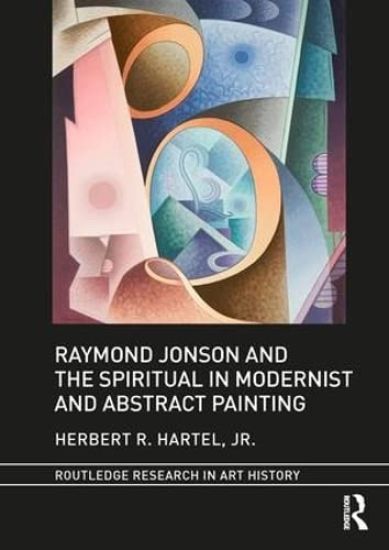
Raymond Jonson and the Spiritual in Modernist and Abstract Painting
This is the most thorough and detailed monograph on the artwork of Raymond Jonson. He is one of many artists of the first half of the twentieth-century who demonstrate the richness and diversity of an under-appreciated period in the history of American art. Visualizing the spiritual was one of the fundamental goals of early abstract painting in the years before and during World War I. Artists turned to alternative spirituality, the occult, and mysticism, believing that the pure use of line, shape, color, light and texture could convey spiritual insight. Jonson was steadfastly dedicated to this goal for most of his career and he always believed that modernist and abstract styles were the most effective and compelling means of achieving it.
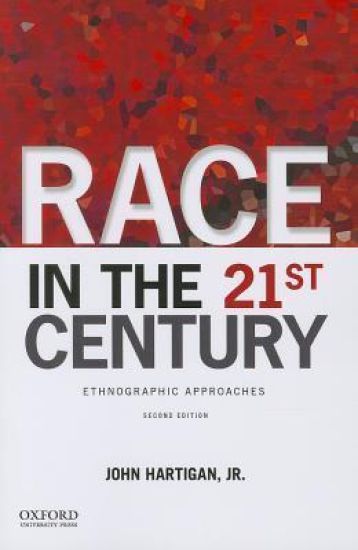
Race in the 21st Century: Ethnographic Approaches

Race in the 21st Century: Ethnographic Approaches

John Hartigan Jr

Oxford University Press
2014
nidottu
What is the state of race relations in the U.S.? Are we making progress toward ending racial discrimination and prejudice? What, exactly, does "race" mean? In Race in the 21st Century: Ethnographic Approaches, Second Edition, John Hartigan, Jr., takes an anthropological look at such questions by introducing students to the study of race through qualitative methods. In the first text to take an explicitly ethnographic approach, Hartigan summarizes and explains the current state of social science knowledge on race in the U.S., motivating students to think through essential questions about race in relation to their own lives. In contrast with many texts, Race in the 21st Century focuses not on essential differences between racial or ethnic groups, but rather on the commonalities. Hartigan concentrates on the particular contexts in which people actively engage and respond to racial meanings and identities. In this way, he encourages readers to think critically about the meaning of race. The second edition of Race in the 21st Century features a new chapter, "Postracial America," which examines contentious arguments about whether or how race still matters in the U.S. today. It engages students fully in the important question of what "postracial America" might mean or look like.
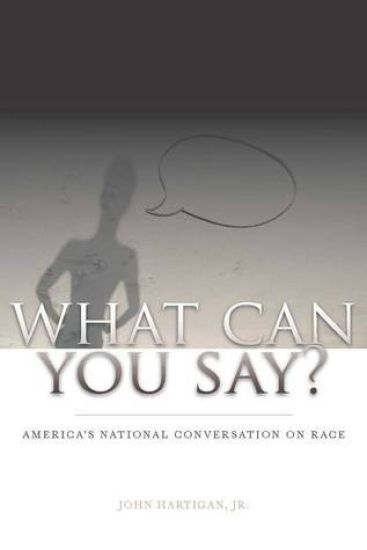
What Can You Say?

What Can You Say?

John Hartigan Jr.

Stanford University Press
2010
sidottu
We are in a transitional moment in our national conversation on race. "Despite optimistic predictions that Barack Obama's election would signal the end of race as an issue in America, the race-related news stories just keep coming. Race remains a political and polarizing issue, and the sprawling, unwieldy, and often maddening means we have developed to discuss and evaluate what counts as "racial" can be frustrating. In What Can You Say?, John Hartigan Jr. examines a watershed year of news stories, taking these events as a way to understand American culture and challenge our existing notions of what is racial—or not. The book follows race stories that have made news headlines—including Don Imus's remarks about the Rutgers women's basketball team, protests in Jena, Louisiana, and Barack Obama's presidential campaign—to trace the shifting contours of mainstream U.S. public discussions of race as they incorporate new voices, words, and images. Focused on the underlying dynamics of American culture that shape this conversation, this book aims to make us more fluent in assessing the stories we consume about race. Advancing our conversation on race hinges on recognizing and challenging the cultural conventions governing the ways we speak about and recognize race. In drawing attention to this curious cultural artifact, our national conversation on race, Hartigan ultimately offers a way to to understand race in the totality of American culture, as a constantly evolving debate. As this book demonstrates, the conversation is far from over.
Care of the Species

Care of the Species

John Hartigan Jr.

University of Minnesota Press
2017
sidottu
Across the globe, an expanding circle of care is encompassing a growing number of species through efforts targeting biodiversity, profoundly revising the line between humans and nonhumans. Care of the Species examines infrastructures of care-labs and gardens in Spain and Mexico-where plant scientists grapple with the complexities of evolution and domestication. John Hartigan Jr. uses ethnography to access the expertise of botanists and others engaged with cultivating biodiversity, providing various entry points for understanding plants in the world around us. He begins by tracing the historical emergence of race through practices of care on nonhumans, showing how this history informs current thinking about conservation. With geneticists working on maize, Hartigan deploys Foucault’s concept of care of the self to analyze how domesticated species are augmented by an afterlife of data. In the botanical gardens of Spain, Care of the Species explores seed banks, herbariums, and living collections, depicting the range of ways people interact with botanical knowledge. This culminates in Hartigan’s effort to engage plants as ethnographic subjects through a series of imaginative “interview” techniques.Care of the Species contributes to debates about the concept of species through vivid ethnography, developing a cultural perspective on evolutionary dynamics while using ethnography to theorize species. In tackling the racial dimension of efforts to go “beyond the human,” this book reveals a far greater stratum of sameness than commonly assumed.
Care of the Species

Care of the Species

John Hartigan Jr.

University of Minnesota Press
2017
nidottu
Across the globe, an expanding circle of care is encompassing a growing number of species through efforts targeting biodiversity, profoundly revising the line between humans and nonhumans. Care of the Species examines infrastructures of care-labs and gardens in Spain and Mexico-where plant scientists grapple with the complexities of evolution and domestication. John Hartigan Jr. uses ethnography to access the expertise of botanists and others engaged with cultivating biodiversity, providing various entry points for understanding plants in the world around us. He begins by tracing the historical emergence of race through practices of care on nonhumans, showing how this history informs current thinking about conservation. With geneticists working on maize, Hartigan deploys Foucault’s concept of care of the self to analyze how domesticated species are augmented by an afterlife of data. In the botanical gardens of Spain, Care of the Species explores seed banks, herbariums, and living collections, depicting the range of ways people interact with botanical knowledge. This culminates in Hartigan’s effort to engage plants as ethnographic subjects through a series of imaginative “interview” techniques.Care of the Species contributes to debates about the concept of species through vivid ethnography, developing a cultural perspective on evolutionary dynamics while using ethnography to theorize species. In tackling the racial dimension of efforts to go “beyond the human,” this book reveals a far greater stratum of sameness than commonly assumed.