Robert G Heath; Hal C Becker; Leona Bersadsky; Robert M Corrigan; Arthur W Epstein; Warren L Founds; Francisco Garcia Bengochea; Charles D Hendley; Robert Hodes; Charles Hogan; H E King; Byron E Leach; Raeburn C Llewellyn; Walter A Mickle; William H Miller; Frederick F Millsaps; Russell R Monroe; Samuel M Peacock; T Duane Price; Ernest Sachs; Florence B Strohmeyer; John J Weber; Kathleen M Young
Professor Dr.-Ing. e. h. O. Bauer; Professor Dr. Dr.-Ing. e. h. L. Beck; Ing. Georg Buzek; T. Cremer; Dr.-Ing. K. Daeves; Dr.-Ing. K. Dornhecker; Dr.-Ing. R. Durrer; Obering. M. Escher; Dipl.-Ing. G. Fiek; Professor Dipl.-Ing. G. Hellenthal; Oberbergrat J. Hornung; Ing. C. Irresberger; Professor Dipl.-Ing. U. Lohse; Professor Dr.-Ing. P. Oberhoffer; Dr.-Ing. M. Philips; Dr.-Ing. E. Schüz; Dr.-Ing. C. Schwarz; Dr.-Ing. A. Stadeler; Dr.-Ing. R. Stotz; Obering. L. Treuheit; Dipl.Ing. S. J. Waldmann; Ingenieur Fr. Wernicke
Dieser Buchtitel ist Teil des Digitalisierungsprojekts Springer Book Archives mit Publikationen, die seit den Anfängen des Verlags von 1842 erschienen sind. Der Verlag stellt mit diesem Archiv Quellen für die historische wie auch die disziplingeschichtliche Forschung zur Verfügung, die jeweils im historischen Kontext betrachtet werden müssen. Dieser Titel erschien in der Zeit vor 1945 und wird daher in seiner zeittypischen politisch-ideologischen Ausrichtung vom Verlag nicht beworben.
E. Alberts; W. Arndt; A. Beckmann; E. Besser; F. Born; A. Dresler; W. Dziobek; H. Ewest; W. Ganz; W. Hagemann; E. Hiepe; G. Jaeckel; R. Kell; H. Korte; F. Krautschneider; H. Krefft; J. Kurth; K. Lackner; K. Larché; G. Laue; E. Lax; H. Lossagk; H. Lux; G. Meyer; A. Pahl; W. Petzold
Dieser Buchtitel ist Teil des Digitalisierungsprojekts Springer Book Archives mit Publikationen, die seit den Anfängen des Verlags von 1842 erschienen sind. Der Verlag stellt mit diesem Archiv Quellen für die historische wie auch die disziplingeschichtliche Forschung zur Verfügung, die jeweils im historischen Kontext betrachtet werden müssen. Dieser Titel erschien in der Zeit vor 1945 und wird daher in seiner zeittypischen politisch-ideologischen Ausrichtung vom Verlag nicht beworben.
G. Alexander; O. Beck; C. E. Benjamins; A. Blohmke; W. Brock; G. Brühl; A. J. Cemach; R. Eschweiler; M. Goerke; J. Hegener; V. Hinsberg; L. Lederer; M. Mann; Max Meyer; Th. Nühsmann; B. Oertel; A. Scheibe; R. Schilling; E. Schlander; P. Stenger
Dieser Buchtitel ist Teil des Digitalisierungsprojekts Springer Book Archives mit Publikationen, die seit den Anfängen des Verlags von 1842 erschienen sind. Der Verlag stellt mit diesem Archiv Quellen für die historische wie auch die disziplingeschichtliche Forschung zur Verfügung, die jeweils im historischen Kontext betrachtet werden müssen. Dieser Titel erschien in der Zeit vor 1945 und wird daher in seiner zeittypischen politisch-ideologischen Ausrichtung vom Verlag nicht beworben.
M. Austgen; H.-W. Beckenkamp; H.-J. Brandt; U. Dold; H. Dürschmied; E. Dundalek; R. Felix; P. Georgi; H.-J. Herold; P. Hilgard; W. Jacob; H. O. Klein; N. Konietzko; R. Loddenkemper; W. Maaßen; E. Matsui; W. Matthiessen; H. Meents; K.-M. Müller; H. Ostertag; P. Schlimmer; D. Schmähl; R. Schober; O. H. Wegener; W. Wolfart; W. J. Zeller; Friedrich Trendelenburg
H. Altwicker; A. Bauer; Adolf Beck; H. Bohner; W. Buchmann; R. Fiedler; G. Gossrau; O. Keinert; P. Menzen; W. Moschel; E. Nachtigall; E. J. de Ridder; W. Schultze; H. Seliger; G. Siebel; P. Spitaler; R. Suchy; H. Vosskühler; W. H. O. Ziegler
Dieser Buchtitel ist Teil des Digitalisierungsprojekts Springer Book Archives mit Publikationen, die seit den Anfängen des Verlags von 1842 erschienen sind. Der Verlag stellt mit diesem Archiv Quellen für die historische wie auch die disziplingeschichtliche Forschung zur Verfügung, die jeweils im historischen Kontext betrachtet werden müssen. Dieser Titel erschien in der Zeit vor 1945 und wird daher in seiner zeittypischen politisch-ideologischen Ausrichtung vom Verlag nicht beworben.
O. Bauer; O. Vollenbruck; G. Schikorr; E. Schmid; W. Boas; P. Beck; M. Polanyi; G. Wassermann; W. Fahrenhorst; G. Siebel; W. Stenzel; J. Weerts; K. Weißenbergr; E. Goens; G. Sachs
Dieser Buchtitel ist Teil des Digitalisierungsprojekts Springer Book Archives mit Publikationen, die seit den Anfängen des Verlags von 1842 erschienen sind. Der Verlag stellt mit diesem Archiv Quellen für die historische wie auch die disziplingeschichtliche Forschung zur Verfügung, die jeweils im historischen Kontext betrachtet werden müssen. Dieser Titel erschien in der Zeit vor 1945 und wird daher in seiner zeittypischen politisch-ideologischen Ausrichtung vom Verlag nicht beworben.
M. C. Beachley; M. H. Becker; P. A. Collins; K. Doi; H. F. Faunce; F. Feldman; H. Firooznia; E. W. Fordham; H. Genant; N. B. Genieser; A. Goldman; G. B. Greenfield; H. J. Griffith; J. P. Petasnick; P. H. Pevsner; R. S. Pinto; E. W. Ramachandran; K. Ranniger; F. Schajowicz; I. Yaghmai
Six years ago the editors of the Encyclopedia of Medical Radiology selected two additional editors from the emerging generation of young radiologists to complete this unique compendium of radiology. Klaus Ranniger was one of them and he worked with enthusiasm and great energy at the challenge facing him. His editorial work was excellent and he succeeded in winning internationally acclaimed scientists to contribute to this volume. Their chapters have met the requirements and goals we set out to achieve in every aspect and to the highest degree. The majority of the authors valued Klaus Ranniger not only as a fellow scientist and doctor but also as a personal friend. In America, his adopted country, he found acknowledgement of his personal achievement and scientific research. He was highly respected and admired among specialists in the field of radiology. Klaus Ranniger, our coeditor and friend, died suddenly and unexpectedly before this volume could be published. We are honored to present this volume as his legacy. FRIEDRICH HEUCK Vorwort Die Herausgeber des Handbuches der medizinischen Radiologie nahmen vor sechs Jahren aus der nachfolgenden Generation von Radiologen zwei Mitarbeiter in ihren Kreis auf, urn dieses im wissenschaftlichen Schrifttum der Welt einmalige Sammelwerk der Radiologie aus dem Springer-Verlag zum AbschluB zu bringen. Mit groBer Tatkraft und echter Begeisterung hat Klaus RANNIGER die ihm gestellten Aufgaben tibernommen.
Dipl.-Kfm. H. Orthuber; Dr. W. Becker; Dr. E. Scheiber; Dr. G. Winkler; Dipl.-Volksw. C. Bachem; Dipl.-Volksw. I. Wolz; Prof. Dr. H. Rudolph; Dr. W. Ulrich; Dipl.-Volksw. Dr. H. B. Acker; Dipl.-Ing. H. Thiele; J. Büchner; Dipl.-Kfm. F. Fell; Prof. Dr. E. Gutenberg; Dr. Th. Heiss; Prof. Dr. W. Kalveram; Dipl.-Kfm. J. Mand; Dr. C. W. Meyer; Finanzpräsident a. D. A. A. Morsch; Dr. M. Munz; Dr. R. Pawel; Dr. M. Schönfeld
K. W. Meissner; E. Schoenberg; H. Brück; H. von Klüber; H. Rosenberg; G. Eberhard; W. Hassenstein; Bengt Strömgren; S. Rosseland; W. Grotrian; O. Laporte; K. Wurm; W. E. Bernheimer; G. Abetti; S. A. Mitchell; K. Graff; A. Kopff; Fr. Becker; W. Becker; Knut Lundmark; H. Shapley; Heber D. Curtis; B. Lindblad; K. G. Malmquist; H. Ludendorff; F. J. M. Stratton; W. Rabe
Dieser Buchtitel ist Teil des Digitalisierungsprojekts Springer Book Archives mit Publikationen, die seit den Anfängen des Verlags von 1842 erschienen sind. Der Verlag stellt mit diesem Archiv Quellen für die historische wie auch die disziplingeschichtliche Forschung zur Verfügung, die jeweils im historischen Kontext betrachtet werden müssen. Dieser Titel erschien in der Zeit vor 1945 und wird daher in seiner zeittypischen politisch-ideologischen Ausrichtung vom Verlag nicht beworben.
This is the first book on John Edward Lloyd (1861-1947), widely regarded as the founder of the modern academic study of Welsh history. Published to mark the centenary of Lloyd's most important achievement, "A History of Wales from the Earliest Times to the Edwardian Conquest" (1911), this intellectual biography reassesses Lloyd's significance by setting his work in the context of his life and of the ideas and scholarship of his time. It thus provides a case study of how the past of a small, stateless nation was reconfigured to provide a new narrative of national origins.
Letters of General J. E. B. Stuart to His Wife, 1861 is a collection of personal correspondence written by Confederate General James Ewell Brown Stuart to his wife Flora during the early months of the American Civil War. The letters provide insight into Stuart's thoughts, emotions, and experiences as he served in the Confederate Army and participated in several key battles, including the First Battle of Bull Run. Stuart's letters also offer a glimpse into the daily life of a Confederate soldier and his relationships with fellow officers and soldiers. The book is a valuable primary source for historians and Civil War enthusiasts interested in the personal experiences of Confederate soldiers and their families.This scarce antiquarian book is a facsimile reprint of the old original and may contain some imperfections such as library marks and notations. Because we believe this work is culturally important, we have made it available as part of our commitment for protecting, preserving, and promoting the world's literature in affordable, high quality, modern editions, that are true to their original work.
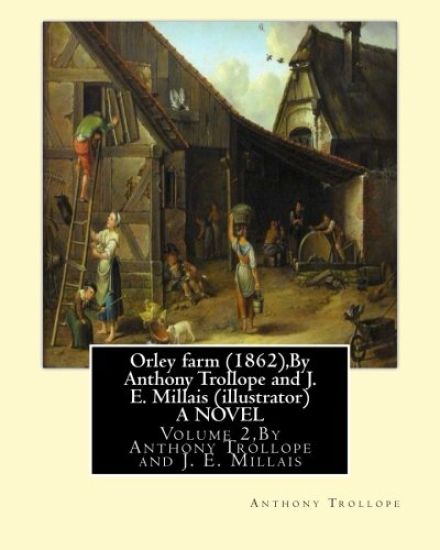
Volume 2, Sir John Everett Millais, Baronet, ( 8 June 1829 - 13 August 1896) was an English painter and illustrator. Orley Farm is a novel written in the realist mode by Anthony Trollope (1815-82), and illustrated by the Pre-Raphaelite artist John Everett Millais (1829-96). It was first published in monthly shilling parts by the London publisher Chapman and Hall. Although this novel appeared to have undersold (possibly because the shilling part was being overshadowed by magazines, such as The Cornhill, that offered a variety of stories and poems in each issue), Orley Farm became Trollope's personal favourite.George Orwell said the book contained "one of the most brilliant descriptions of a lawsuit in English fiction."When Joseph Mason of Groby Park, Yorkshire, died, he left his estate to his family. A codicil to his will, however, left Orley Farm (near London) to his much younger second wife and infant son. The will and the codicil were in her handwriting, and there were three witnesses, one of whom was no longer alive. A bitterly fought court case confirmed the codicil. Twenty years pass. Lady Mason lives at Orley Farm with her adult son, Lucius. Samuel Dockwrath, a tenant, is asked to leave by Lucius, who wants to try new intensive farming methods. Aggrieved, and knowing of the original case (John Kenneby, one of the codicil witnesses, had been an unsuccessful suitor of his wife Miriam Usbech), Dockwrath investigates and finds a second deed signed by the same witnesses on the same date, though they can remember signing only one. He travels to Groby Park in Yorkshire, where Joseph Mason the younger lives with his comically parsimonious wife, and persuades Mason to have Lady Mason prosecuted for forgery. The prosecution fails, but Lady Mason later confesses privately that she committed the forgery, and is prompted by conscience to give up the estate. There are various subplots. The main one deals with a slowly unfolding romance between Felix Graham (a young and relatively poor barrister without family) and Madeline Staveley, daughter of Judge Stavely of Noningsby. Graham has a long-standing engagement to the penniless Mary Snow, whom he supports and educates while she is being "moulded" to be his wife.Between the Staveleys at Alston and Orley Farm at Hamworth lies the Cleve, where Sir Peregrine Orme lives with his daughter-in-law, Mrs. Orme, and grandson, Peregrine. Sir Peregrine falls in love with Lady Mason and is briefly engaged to her, but she calls off the match when she realises the seriousness of the court case. Meanwhile, Mr. Furnival, another barrister, befriends Lady Mason, arousing the jealousy of his wife. His daughter, Sophia, has a brief relationship with Augustus Stavely and a brief engagement to Lucius Mason. Eventually Furnival and his wife are reconciled, and Sophia's engagement is dropped. Sophia is portrayed as an intelligent woman who writes comically skilful letters. Anthony Trollope ( 24 April 1815 - 6 December 1882) was one of the most successful, prolific and respected English novelists of the Victorian era. Among his best-loved works is a series of novels collectively known as the Chronicles of Barsetshire, which revolves around the imaginary county of Barsetshire. He also wrote perceptive novels on political, social, and gender issues, and on other topical matters.Trollope's literary reputation dipped somewhat during the last years of his life, but he regained the esteem of critics by the mid-twentieth century.Thomas Anthony Trollope, Anthony's father, was a barrister. Though a clever and well-educated man and a Fellow of New College, Oxford, he failed at the bar due to his bad temper. In addition, his ventures into farming proved unprofitable, and he lost an expected inheritance when an elderly childless uncle remarried and had children....ir John Everett Millais, 1st Baronet, ( 8 June 1829 - 13 August 1896) was an English painter and illustrato
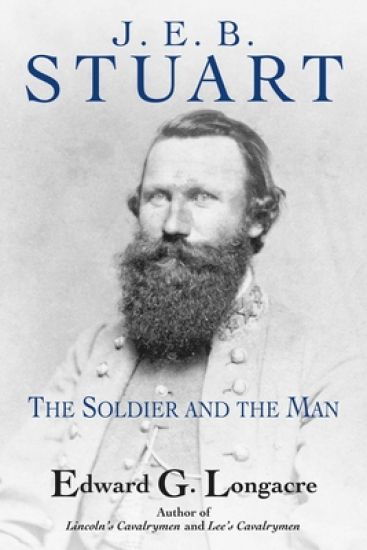
Fifteen years have passed since the publication of the last biography of Jeb Stuart. Several appeared during the last century lauding his contributions to Confederate fortunes in the Eastern Theater. Each follows a familiar tradition established by hero-worshipping subordinates portraying its subject as a model of chivalric conduct with a romantic’s outlook on life and a sense of fair dealing and goodwill, even toward his enemy. J. E. B. Stuart: The Soldier and the Man, by award-winning author Edward Longacre, is the first balanced, detailed, and thoroughly scrutinized study of the life and service of the Civil War’s most famous cavalryman. Long known to scholars and history buffs alike as “The Beau Sabreur of the Confederacy,” James Ewell Brown Stuart of Virginia was possessed of many gifts, personally and professionally, and led the Army of Northern Virginia’s cavalry to the all-but-complete satisfaction of his superiors. Stuart, insisted Robert E. Lee, “never brought me a piece of false information.” Being human, Stuart also under-performed. On occasion, he underestimated his opponents, took unnecessary risks with his habitually understrength command, failed to properly discipline and motivate his troopers, and was prone to errors both strategic and tactical. These flaws were evident during the Gettysburg Campaign, when his wayward route to the battlefield deprived Lee of the ability to safely negotiate his path toward a climactic confrontation with the Union Army of the Potomac. Because of his outsized wartime reputation—one embellished in the century-and-a-half since—most of Stuart’s errors have passed virtually unnoticed or, when addressed, have been excused or explained away in some fashion. Longacre’s study is based on hundreds of published works, archival sources, and newspapers. He probes not only Stuart’s military career but elements of his character and personality that invite investigation. Even the man’s fiercest partisans admitted that he was vain and inordinately sensitive to criticism, with a curious streak of immaturity—at times the hard-edged veteran, at other times a devotee of the pageantry of war, given to affectations such as ostrich-plumed hats, golden spurs, and the headquarters musicians who accompanied him on the march. Ever motivated by appeals to vanity, he curried the patronage of powerful men and responded readily to the attentions of attractive women even though by 1861, he was a long-married man. Personal flaws and limitations aside, Stuart was popular with his officers and men, beloved by members of his staff, and considered by the people of his state and region the beau ideal of Confederate soldiery. The distinction endures today. Longacre’s J. E. B. Stuart is an attempt to determine its validity.