

Kirjahaku
Etsi kirjoja tekijän nimen, kirjan nimen tai ISBN:n perusteella.
1000 tulosta hakusanalla J. E. Foster

Handbook for the Physiological Laboratory
E Klein; J Burdon-Sanderson; Michael Foster
Outlook Verlag
2023
sidottu
Reprint of the original, first published in 1873.

Handbook for the Physiological Laboratory
E. Klein; J. Burdon-Sanderson; Michael Foster
Outlook Verlag
2023
nidottu

Surgical Anatomy
John E. Skandalakis; Gene L. Colborn; Roger S Foster; Thomas A Weidman; Lee J. Skandalakis; Panajiotis N. Skandalakis
Broken Hill Publishers Ltd
2005
sidottu
Brief facts of embryogenesis are included in this book because embryology leads the student to a more thorough understanding of human anatomy. Applied, surgically oriented anatomy emphasizing both surgical applications and ways to avoid anatomic complications have been included. Because minimally invasive and robotic surgery is definitely the surgery of today and tomorrow, the modern surgeon must now know this other type of anatomy, the ""non-touch, non-see"" anatomy. In other words, the surgeon must know anatomy very thoroughly indeed.

Handbook for the Physiological Laboratory
E. Klein; J. Burdon-Sanderson; Michael Foster
Antigonos Verlag
2025
sidottu
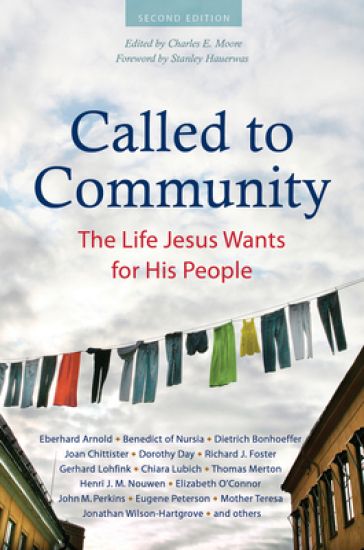
Called to Community
Eberhard Arnold; Dietrich Bonhoeffer; Joan Chittister; Dorothy Day; Fyodor Dostoyevsky; Richard J. Foster; Jonathan Wilson-Hartgrove; David Janzen; Søren Kierkegaard; C. S. Lewis; Chiara Lubich; Thomas Merton; Henri J. M. Nouwen; John M. Perkins; Eugene H. Peterson; Christine D. Pohl; Howard A. Snyder; Mother Teresa; Saint Benedict; Jeremiah Barker; Amy Carmichael; Hans Denck; Andreas Ehrenpreis; Thomas R Kelly; Penelope Lawson; Juan Mateos; Kathleen Norris; Thomas E Powers; Peter Riedemann; Christopher C Smith; Ulrich Stadler
PLOUGH PUBLISHING HOUSE
2024
pokkari
Fifty-two readings on living in intentional Christian community to spark group discussion.Gold Medal Winner, 2017 Illumination Book Awards, Christian LivingSilver Medal Winner, 2017 Benjamin Franklin Award in Religion, Independent Book Publishers AssociationWhy, in an age of connectivity, are our lives more isolated and fragmented than ever? And what can be done about it? The answer lies in the hands of God’s people. Increasingly, today’s Christians want to be the church, to follow Christ together in daily life. From every corner of society, they are daring to step away from the status quo and respond to Christ’s call to share their lives more fully with one another and with others. As they take the plunge, they are discovering the rich, meaningful life that Jesus has in mind for all people, and pointing the church back to its original calling: to be a gathered, united community that demonstrates the transforming love of God.Of course, such a life together with others isn’t easy. The selections in this volume are, by and large, written by practitioners—people who have pioneered life in intentional community and have discovered in the nitty-gritty of daily life what it takes to establish, nurture, and sustain a Christian community over the long haul.Whether you have just begun thinking about communal living, are already embarking on sharing life with others, or have been part of a community for many years, the pieces in this collection will encourage, challenge, and strengthen you. The book’s fifty-two chapters can be read one a week to ignite meaningful group discussion.Contributors include: John F. Alexander, Eberhard Arnold, J. Heinrich Arnold, Johann Christoph Arnold, Alden Bass, Benedict of Nursia, Christoph Friedrich Blumhardt, Leonardo Boff, Dietrich Bonhoeffer, Joan Chittister, Stephen B. Clark, Andy Crouch, Dorothy Day, Anthony de Mello, Elizabeth Dede, Catherine de Hueck Doherty, Fyodor Dostoyevsky, Jenny Duckworth, Friedrich Foerster, Richard J. Foster, Jodi Garbison, Arthur G. Gish, Helmut Gollwitzer, Adele J Gonzalez, Stanley Hauerwas, Joseph H. Hellerman, Roy Hession, David Janzen, Rufus Jones, Emmanuel Katongole, Arthur Katz, Søren Kierkegaard, C. Norman Kraus, C.S. Lewis, Gerhard Lohfink, Ed Loring, Chiara Lubich, George MacDonald, Thomas Merton, Hal Miller, José P. Miranda, Jürgen Moltmann, Charles E. Moore, Henri J. M. Nouwen, Elizabeth O’Connor, John M. Perkins, Eugene H.Peterson, Christine D. Pohl, Chris Rice, Basilea Schlink, Howard A. Snyder, Mother Teresa, Thomas à Kempis, Elton Trueblood, and Jonathan Wilson-Hartgrove.
Newton Forster ... with Illustrations by E. J. Sullivan, and an Introduction by David Hannay.
Frederick Marryat; David Sullivan Hannay
British Library, Historical Print Editions
2011
pokkari
This chronology provides a concise and accurate outline of Forster's personal, literary and intellectual life from year to year in a series of crisply written diary entries. While the main focus is on his career as a writer of fiction, most of which falls between 1901 and 1924, the chronicle format also sheds new light on the extent and nature of Forster's political and public commitments during his middle years and into an active old age. Travel, friendships and wide reading are also documented to achieve a coherent picture of a full life. Drawing on numerous unpublished sources, including widely scattered letters and the Forster archive at King's College, Cambridge, this chronology makes available a wealth of new information about Forster the man and writer.

This chronology provides a concise and accurate outline of Forster's personal, literary and intellectual life from year to year in a series of crisply written diary entries. While the main focus is on his career as a writer of fiction, most of which falls between 1901 and 1924, the chronicle format also sheds new light on the extent and nature of Forster's political and public commitments during his middle years and into an active old age. Travel, friendships and wide reading are also documented to achieve a coherent picture of a full life. Drawing on numerous unpublished sources, including widely scattered letters and the Forster archive at King's College, Cambridge, this chronology makes available a wealth of new information about Forster the man and writer.
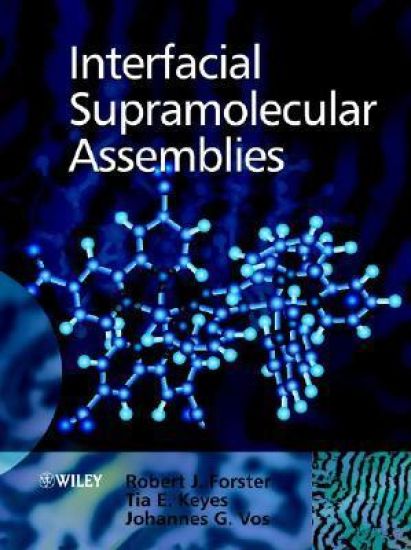
Interfacial Supramolecular Assemblies
Johannes G. Vos; Robert J. Forster; Tia E. Keyes
John Wiley Sons Inc
2003
sidottu
The field of molecular electronics ranges from well-defined and well-understood phenomena such as non-linear optical responses, to the tantalizing and conceptually difficult areas of computing and information storage at the molecular level. Supramolecular assemblies, constructed using single electro- or photoactive molecules as building blocks, offer a striking way to create materials whose organized architecture makes them suitable for developing molecular electronic devices. To achieve this objective, one must not only be able to direct the fabrication of the assembly and characterize it fully, it is also important to be able to address the nanoscopic structure, i.e., to connect the everyday macroscopic and nanoscopic worlds. The best approach to realizing this key objective is to use solid surfaces as platforms. This book describes the properties of supramolecular assemblies that are constructed on solid platforms but where the properties of the support play a very significant role in the overall properties of the system, i.e., its distinct functions can no longer be assigned to the molecular components and the platform on which it is assembled. In a novel, highly integrated manner, this book describes: *Fabrication and characterization of interfacial supramolecular assemblies *Properties and functions of suitable platforms *Issues of electronic and photonic addressability *Modes of communication and devices such as molecular wires *Optoelectronic gates *Chemosensors developed with this innovat ive approach This book will be of interest to researchers, final year undergraduates and postgraduates in the areas of supramolecular chemistry, photophysics, electrochemistry and functional materials.

This is the first book on John Edward Lloyd (1861-1947), widely regarded as the founder of the modern academic study of Welsh history. Published to mark the centenary of Lloyd's most important achievement, "A History of Wales from the Earliest Times to the Edwardian Conquest" (1911), this intellectual biography reassesses Lloyd's significance by setting his work in the context of his life and of the ideas and scholarship of his time. It thus provides a case study of how the past of a small, stateless nation was reconfigured to provide a new narrative of national origins.
Letters of General J. E. B. Stuart to His Wife, 1861
J. E. B. Stuart; Bingham Duncan; Thomas H. English
Literary Licensing, LLC
2011
sidottu
Letters of General J. E. B. Stuart to His Wife, 1861 is a collection of personal correspondence written by Confederate General James Ewell Brown Stuart to his wife Flora during the early months of the American Civil War. The letters provide insight into Stuart's thoughts, emotions, and experiences as he served in the Confederate Army and participated in several key battles, including the First Battle of Bull Run. Stuart's letters also offer a glimpse into the daily life of a Confederate soldier and his relationships with fellow officers and soldiers. The book is a valuable primary source for historians and Civil War enthusiasts interested in the personal experiences of Confederate soldiers and their families.This scarce antiquarian book is a facsimile reprint of the old original and may contain some imperfections such as library marks and notations. Because we believe this work is culturally important, we have made it available as part of our commitment for protecting, preserving, and promoting the world's literature in affordable, high quality, modern editions, that are true to their original work.
Letters of General J. E. B. Stuart to His Wife, 1861
J. E. B. Stuart; Bingham Duncan; Thomas H. English
Literary Licensing, LLC
2011
nidottu
The Civil War Reminiscences of J. E. Robuck: My Own Personal Experience and Observation as a Soldier in the Confederate Army During the Civil War 1861
J. E. Robuck
Createspace Independent Publishing Platform
2012
nidottu

Orley farm (1862), By by Anthony Trollope and J. E. Millais (illustrator) A NOVEL: complete volume 1, and 2 by Anthony Trollope and John Everett Milla
J. E. Millais; Anthony Trollope
Createspace Independent Publishing Platform
2016
nidottu
Orley farm (1862), By Anthony Trollope and J. E. Millais (illustrator) A NOVEL: Volume 2, Sir John Everett Millais, Baronet, ( 8 June 1829 - 13 August
J. E. Millais; Anthony Trollope
Createspace Independent Publishing Platform
2016
nidottu
Volume 2, Sir John Everett Millais, Baronet, ( 8 June 1829 - 13 August 1896) was an English painter and illustrator. Orley Farm is a novel written in the realist mode by Anthony Trollope (1815-82), and illustrated by the Pre-Raphaelite artist John Everett Millais (1829-96). It was first published in monthly shilling parts by the London publisher Chapman and Hall. Although this novel appeared to have undersold (possibly because the shilling part was being overshadowed by magazines, such as The Cornhill, that offered a variety of stories and poems in each issue), Orley Farm became Trollope's personal favourite.George Orwell said the book contained "one of the most brilliant descriptions of a lawsuit in English fiction."When Joseph Mason of Groby Park, Yorkshire, died, he left his estate to his family. A codicil to his will, however, left Orley Farm (near London) to his much younger second wife and infant son. The will and the codicil were in her handwriting, and there were three witnesses, one of whom was no longer alive. A bitterly fought court case confirmed the codicil. Twenty years pass. Lady Mason lives at Orley Farm with her adult son, Lucius. Samuel Dockwrath, a tenant, is asked to leave by Lucius, who wants to try new intensive farming methods. Aggrieved, and knowing of the original case (John Kenneby, one of the codicil witnesses, had been an unsuccessful suitor of his wife Miriam Usbech), Dockwrath investigates and finds a second deed signed by the same witnesses on the same date, though they can remember signing only one. He travels to Groby Park in Yorkshire, where Joseph Mason the younger lives with his comically parsimonious wife, and persuades Mason to have Lady Mason prosecuted for forgery. The prosecution fails, but Lady Mason later confesses privately that she committed the forgery, and is prompted by conscience to give up the estate. There are various subplots. The main one deals with a slowly unfolding romance between Felix Graham (a young and relatively poor barrister without family) and Madeline Staveley, daughter of Judge Stavely of Noningsby. Graham has a long-standing engagement to the penniless Mary Snow, whom he supports and educates while she is being "moulded" to be his wife.Between the Staveleys at Alston and Orley Farm at Hamworth lies the Cleve, where Sir Peregrine Orme lives with his daughter-in-law, Mrs. Orme, and grandson, Peregrine. Sir Peregrine falls in love with Lady Mason and is briefly engaged to her, but she calls off the match when she realises the seriousness of the court case. Meanwhile, Mr. Furnival, another barrister, befriends Lady Mason, arousing the jealousy of his wife. His daughter, Sophia, has a brief relationship with Augustus Stavely and a brief engagement to Lucius Mason. Eventually Furnival and his wife are reconciled, and Sophia's engagement is dropped. Sophia is portrayed as an intelligent woman who writes comically skilful letters. Anthony Trollope ( 24 April 1815 - 6 December 1882) was one of the most successful, prolific and respected English novelists of the Victorian era. Among his best-loved works is a series of novels collectively known as the Chronicles of Barsetshire, which revolves around the imaginary county of Barsetshire. He also wrote perceptive novels on political, social, and gender issues, and on other topical matters.Trollope's literary reputation dipped somewhat during the last years of his life, but he regained the esteem of critics by the mid-twentieth century.Thomas Anthony Trollope, Anthony's father, was a barrister. Though a clever and well-educated man and a Fellow of New College, Oxford, he failed at the bar due to his bad temper. In addition, his ventures into farming proved unprofitable, and he lost an expected inheritance when an elderly childless uncle remarried and had children....ir John Everett Millais, 1st Baronet, ( 8 June 1829 - 13 August 1896) was an English painter and illustrato
Fifteen years have passed since the publication of the last biography of Jeb Stuart. Several appeared during the last century lauding his contributions to Confederate fortunes in the Eastern Theater. Each follows a familiar tradition established by hero-worshipping subordinates portraying its subject as a model of chivalric conduct with a romantic’s outlook on life and a sense of fair dealing and goodwill, even toward his enemy. J. E. B. Stuart: The Soldier and the Man, by award-winning author Edward Longacre, is the first balanced, detailed, and thoroughly scrutinized study of the life and service of the Civil War’s most famous cavalryman. Long known to scholars and history buffs alike as “The Beau Sabreur of the Confederacy,” James Ewell Brown Stuart of Virginia was possessed of many gifts, personally and professionally, and led the Army of Northern Virginia’s cavalry to the all-but-complete satisfaction of his superiors. Stuart, insisted Robert E. Lee, “never brought me a piece of false information.” Being human, Stuart also under-performed. On occasion, he underestimated his opponents, took unnecessary risks with his habitually understrength command, failed to properly discipline and motivate his troopers, and was prone to errors both strategic and tactical. These flaws were evident during the Gettysburg Campaign, when his wayward route to the battlefield deprived Lee of the ability to safely negotiate his path toward a climactic confrontation with the Union Army of the Potomac. Because of his outsized wartime reputation—one embellished in the century-and-a-half since—most of Stuart’s errors have passed virtually unnoticed or, when addressed, have been excused or explained away in some fashion. Longacre’s study is based on hundreds of published works, archival sources, and newspapers. He probes not only Stuart’s military career but elements of his character and personality that invite investigation. Even the man’s fiercest partisans admitted that he was vain and inordinately sensitive to criticism, with a curious streak of immaturity—at times the hard-edged veteran, at other times a devotee of the pageantry of war, given to affectations such as ostrich-plumed hats, golden spurs, and the headquarters musicians who accompanied him on the march. Ever motivated by appeals to vanity, he curried the patronage of powerful men and responded readily to the attentions of attractive women even though by 1861, he was a long-married man. Personal flaws and limitations aside, Stuart was popular with his officers and men, beloved by members of his staff, and considered by the people of his state and region the beau ideal of Confederate soldiery. The distinction endures today. Longacre’s J. E. B. Stuart is an attempt to determine its validity.
J. E. Bode: Erläuterung Der Sternkunde Und Der Dazu Gehörigen Wissenschaften. Teil 1
J E Bode
De Gruyter
1809
sidottu