

Kirjahaku
Etsi kirjoja tekijän nimen, kirjan nimen tai ISBN:n perusteella.
1000 tulosta hakusanalla J. Gerald Janzen
Gerald Marlowe's Wife. a Novel.
J Calder Ayrton
British Library, Historical Print Editions
2011
pokkari
Gerald Marlowe's Wife. a Novel.
J Calder Ayrton
British Library, Historical Print Editions
2011
pokkari

Gerald Marlowe's Wife. a Novel.
J Calder Ayrton
British Library, Historical Print Editions
2011
pokkari

That damned man is back. This is not good.She isn't ready for her late husband's best friend now.Retired physician Rhea Masterson is finally finding her footing again after losing her husband of thirty-five years.Life is good again-her sons have all married and are making her the grandchildren she adores. She's got things to keep her busy. Rhea likes being busy. She gets things done that way.Rhea is happy now.Until her husband's best friend, retired general and diplomat Gerald Talley, moves is overly rigid rear end in right next door...For some reason he thinks it's his job to wrangle Rhea now. Well, that's just not going to happen. Now she has to convince a man used to handling warring nations that she doesn't need him to handle her...


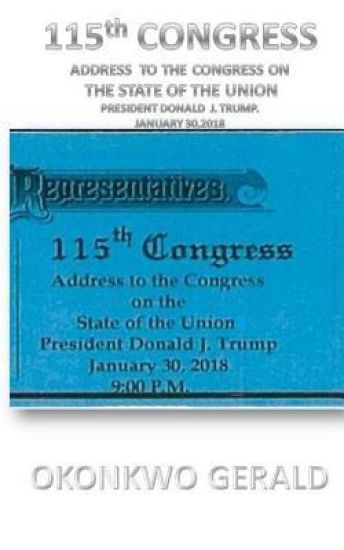
115th CONGRESS ADDRESS TO THE CONGRESS ON THE STATE OF THE UNION: Donald J. Trump's State of the Union Address Issued on: January 30, 2018
Okonkwo Gerald
Createspace Independent Publishing Platform
2018
nidottu
115th CONGRESS ADDRESS TO THE CONGRESS ON THE STATE OF THE UNION BY PRESIDENT DONALD J. TRUMP ON JANUARY 30,2018


Chronologie détaillée et révisée des éponymes amphoriques rhodiens de 270 à 108 av. J.-C. environ
Gérald Finkielsztejn
BAR Publishing
2001
nidottu
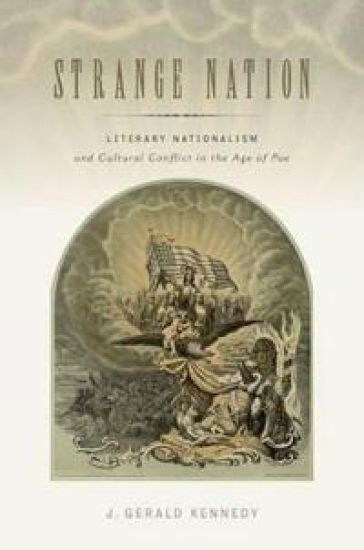
After the War of 1812, Americans belatedly realized that they lacked national identity. The subsequent campaign to articulate nationality transformed every facet of culture from architecture to painting, and in the realm of letters, literary jingoism embroiled American authors in the heated politics of nationalism. The age demanded stirring images of U.S. virtue, often achieved by contriving myths and obscuring brutalities. Between these sanitized narratives of the nation and U.S. social reality lay a grotesque discontinuity: vehement conflicts over slavery, Indian removal, immigration, and territorial expansion divided the country. Authors such as Washington Irving, James Fenimore Cooper, Catharine M. Sedgwick, William Gilmore Simms, Nathaniel Hawthorne, and Lydia Maria Child wrestled uneasily with the imperative to revise history to produce national fable. Counter-narratives by fugitive slaves, Native Americans, and defiant women subverted literary nationalism by exposing the plight of the unfree and dispossessed. And with them all, Edgar Allan Poe openly mocked literary nationalism and deplored the celebration of "stupid" books appealing to provincial self-congratulation. More than any other author, he personifies the contrary, alien perspective that discerns the weird operations at work behind the facade of American nation-building.
After the War of 1812, Americans belatedly realized that they lacked national identity. The subsequent campaign to articulate nationality transformed every facet of culture from architecture to painting, and in the realm of letters, literary jingoism embroiled American authors in the heated politics of nationalism. The age demanded stirring images of U.S. virtue, often achieved by contriving myths and obscuring brutalities. Between these sanitized narratives of the nation and U.S. social reality lay a grotesque discontinuity: vehement conflicts over slavery, Indian removal, immigration, and territorial expansion divided the country. Authors such as Washington Irving, James Fenimore Cooper, Catharine M. Sedgwick, William Gilmore Simms, Nathaniel Hawthorne, and Lydia Maria Child wrestled uneasily with the imperative to revise history to produce national fable. Counter-narratives by fugitive slaves, Native Americans, and defiant women subverted literary nationalism by exposing the plight of the unfree and dispossessed. And with them all, Edgar Allan Poe openly mocked literary nationalism and deplored the celebration of "stupid" books appealing to provincial self-congratulation. More than any other author, he personifies the contrary, alien perspective that discerns the weird operations at work behind the facade of American nation-building.
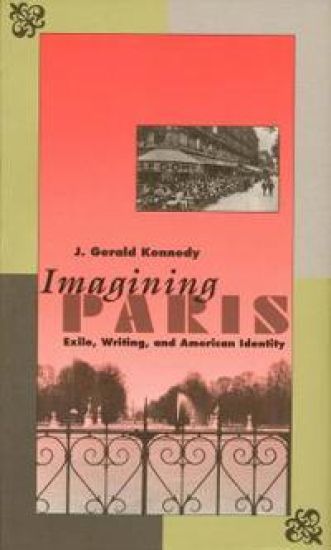
Between 1900 and 1940, Paris was the capital of high modernism and the center of artistic experimentation—Paris was "where the twentieth century was," claimed Gertrude Stein. In this book, J. Gerald Kennedy explores how living in Paris shaped the careers and literary works of five expatriate Americans: Gertrude Stein, Ernest Hemingway, Henry Miller, F. Scott Fitzgerald, and Djuna Barnes. Kennedy shows that the writings of these authors reveal their various struggles to accommodate themselves to a complex, foreign scene, to construct an expatriate self, or to understand the contradictions of American identity. He treats these figures and their narratives as instances of the profound effect of place on writing and on the formation of the self.According to Kennedy, Stein's Paris, France presents an abstraction, a series of random and discontinuous images refracted into a theory of the French way of life. Her self- portrait in The Autobiography of Alice B. Toklas, however, hinges on a contrast between the outside world of galleries, studios, and exhibitions and her inner domain at 27, rue de Fleurus. Hemingway's conflict with Paris, says Kennedy, betrays both an attraction to its danger and a disgust with its profligacy, as seen in the ambivalent imagery of The Sun Also Rises. Miller's Paris emerges in his Letters to Emil and Tropic of Cancer as a tormenting world of alleyways, sewers, and flophouses that nevertheless becomes a site of deliverance where Miller discovers himself as a literary subject. The nocturnal, unreal Paris of Fitzgerald's Tender Is the Night and Barnes's Nightwood reflects the disorientation of modernism, which parallel and intensify the estrangement of exile.

A Gentle Zephyr - A Mighty Wind: Silhouettes of Life in the Spirit
J. Gerald Harris
Free Church Press
2010
nidottu