Kirjojen hintavertailu. Mukana 11 244 527 kirjaa ja 12 kauppaa.

Kirjahaku

Etsi kirjoja tekijän nimen, kirjan nimen tai ISBN:n perusteella.

1000 tulosta hakusanalla J. M.

J. M. Coetzee in Context and Theory

J. M. Coetzee in Context and Theory

BLOOMSBURY PUBLISHING PLC
2009
sidottu
This work draws on a wide range of theoretical ideas and approaches to illuminate Coetzee's texts including: deconstruction and the 'school of singularity', ethics and power, gender studies, queer theory, issues surrounding the body and animal rights.Nobel Laureate and the first author to win the Booker Prize twice, J.M. Coetzee is perhaps the world's leading living novelist writing in English. Including an international roster of world leading critics and novelists, and drawing on new research, this innovative book analyses the whole range of Coetzee's work, from his most recent novels through his memoirs and critical writing. It offers a range of perspectives on his relationship with the historical, political, cultural and social context of South Africa. It also contextualises Coetzee's work in relation to his literary influences, colonial and post-colonial history, the Holocaust and colonial genocides, the 'politics' and meaning of the Nobel prize in South Africa and Coetzee's very public move from South Africa to Australia. Including a major unpublished essay by leading South African novelist Andre Brink, this book offers the most up-to-date study of Coetzee's work currently available.
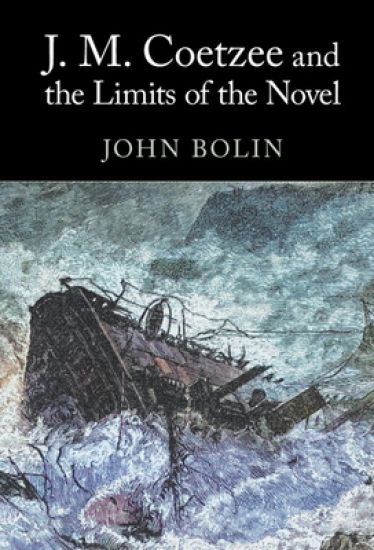
J. M. Coetzee and the Limits of the Novel

J. M. Coetzee and the Limits of the Novel

John Bolin

Cambridge University Press
2023
sidottu
J. M. Coetzee is widely recognized as one of the most important writers working in English. As a South African (now Australian) novelist composing his best-known works in the latter third of the twentieth century, Coetzee has understandably often been read through the lenses of postcolonial theory and post-war ethics. Yet his reception is entering a new phase bolstered by thousands of pages of new and unpublished empirical evidence housed at the J. M. Coetzee archive at The Harry Ransom Center (University of Texas, Austin). This material provokes a re-reading of Coetzee's project even as it uncovers keys to his process of formal experimentation and compositional evolution up to and including Disgrace (1999). Following Coetzee's false starts, his confrontation of narrative impasses, and his shifting deployment of source materials, J. M. Coetzee and the Limits of the Novel provides a new series of detailed snapshots of one of the world's most celebrated authors.
Historia elemental del Continente Americano desde su descubrimiento hasta su independencia; para uso de las escuelas. Por J. M. G[utierrez].
Title: Historia elemental del Continente Americano desde su descubrimiento hasta su independencia; para uso de las escuelas ... Por J. M. G utierrez?]. Publisher: British Library, Historical Print Editions The British Library is the national library of the United Kingdom. It is one of the world's largest research libraries holding over 150 million items in all known languages and formats: books, journals, newspapers, sound recordings, patents, maps, stamps, prints and much more. Its collections include around 14 million books, along with substantial additional collections of manuscripts and historical items dating back as far as 300 BC. The HISTORY OF COLONIAL NORTH AMERICA collection includes books from the British Library digitised by Microsoft. This collection refers to the European settlements in North America through independence, with emphasis on the history of the thirteen colonies of Britain. Attention is paid to the histories of Jamestown and the early colonial interactions with Native Americans. The contextual framework of this collection highlights 16th century English, Scottish, French, Spanish, and Dutch expansion. ++++ The below data was compiled from various identification fields in the bibliographic record of this title. This data is provided as an additional tool in helping to insure edition identification: ++++ British Library G., J M.; 1877. 8 . 9771.bb.3. This work has been selected by scholars as being culturally important, and is part of the knowledge base of civilization as we know it. This work was reproduced from the original artifact, and remains as true to the original work as possible. Therefore, you will see the original copyright references, library stamps (as most of these works have been housed in our most important libraries around the world), and other notations in the work. This work is in the public domain in the United States of America, and possibly other nations. Within the United States, you may freely copy and distribute this work, as no entity (individual or corporate) has a copyright on the body of the work. As a reproduction of a historical artifact, this work may contain missing or blurred pages, poor pictures, errant marks, etc. Scholars believe, and we concur, that this work is important enough to be preserved, reproduced, and made generally available to the public. We appreciate your support of the preservation process, and thank you for being an important part of keeping this knowledge alive and relevant.
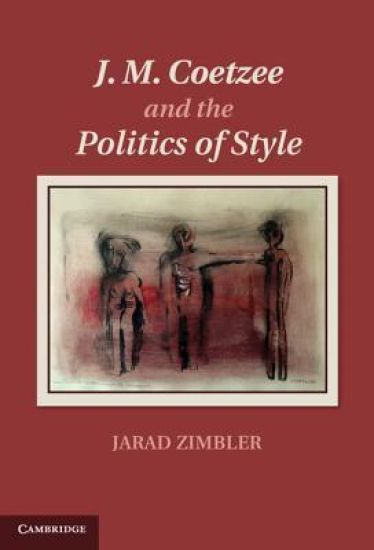
J. M. Coetzee and the Politics of Style

J. M. Coetzee and the Politics of Style

Jarad Zimbler

Cambridge University Press
2014
sidottu
J. M. Coetzee's early novels confronted readers with a brute reality stripped of human relation and a prose repeatedly described as spare, stark, intense and lyrical. In this book, Jarad Zimbler explores the emergence of a style forged in Coetzee's engagement with the complexities of South African culture and politics. Tracking the development of this style across Coetzee's first eight novels, from Dusklands to Disgrace, Zimbler compares Coetzee's writing with that of South African authors such as Gordimer, Brink and La Guma, whilst re-examining the nature of Coetzee's indebtedness to modernism and postmodernism. In each case, he follows the threads of Coetzee's own writings on stylistics and rhetoric in order to fix on those techniques of language and narrative used to activate a 'politics of style'. In so doing, Zimbler challenges long-held beliefs about Coetzee's oeuvre, and about the ways in which contemporary literatures of the world are to be read and understood.
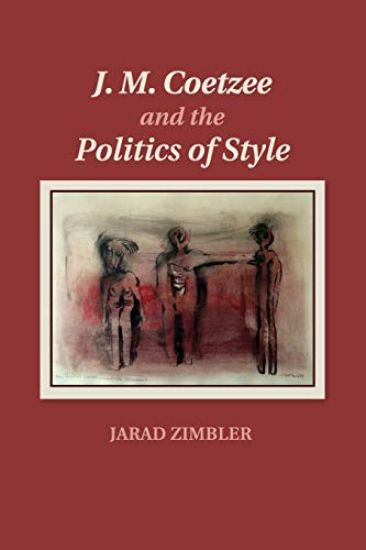
J. M. Coetzee and the Politics of Style

J. M. Coetzee and the Politics of Style

Jarad Zimbler

Cambridge University Press
2016
pokkari
J. M. Coetzee's early novels confronted readers with a brute reality stripped of human relation and a prose repeatedly described as spare, stark, intense and lyrical. In this book, Jarad Zimbler explores the emergence of a style forged in Coetzee's engagement with the complexities of South African culture and politics. Tracking the development of this style across Coetzee's first eight novels, from Dusklands to Disgrace, Zimbler compares Coetzee's writing with that of South African authors such as Gordimer, Brink and La Guma, whilst re-examining the nature of Coetzee's indebtedness to modernism and postmodernism. In each case, he follows the threads of Coetzee's own writings on stylistics and rhetoric in order to fix on those techniques of language and narrative used to activate a 'politics of style'. In so doing, Zimbler challenges long-held beliefs about Coetzee's oeuvre, and about the ways in which contemporary literatures of the world are to be read and understood.
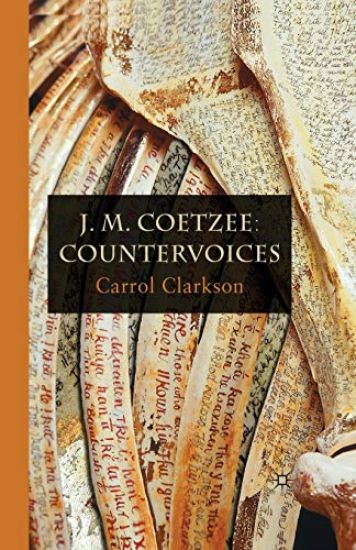
J. M. Coetzee: Countervoices

J. M. Coetzee: Countervoices

Carrol Clarkson

Palgrave Macmillan
2009
nidottu
Clarkson pays sustained attention to the dynamic interaction between Coetzee's fiction and his critical writing, exploring the Nobel prize-winner's participation in, and contribution to, contemporary literary-philosophical debates. The book engages with the most recent literary and philosophical responses to Coetzee's work.
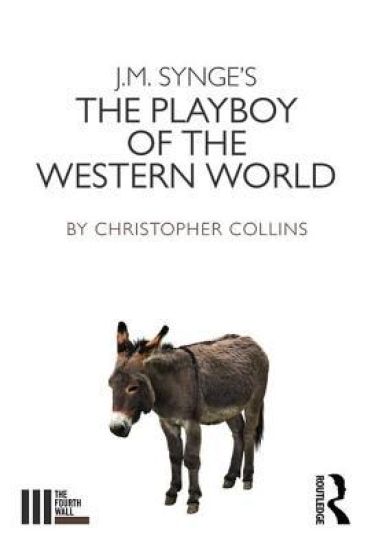
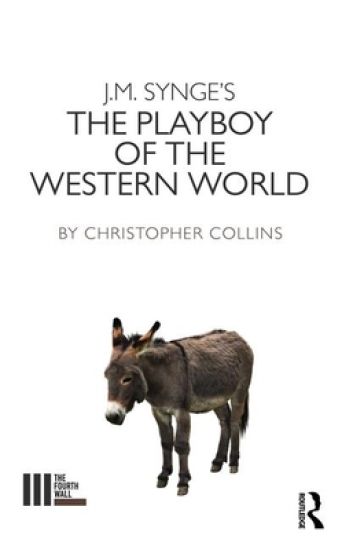
J. M. Synge's The Playboy of the Western World
‘I’m thinking this night wasn’t I a foolish fellow not to kill my father in years gone by.’ – Christy MahonOn the first night of J. M. Synge’s The Playboy of the Western World (1907) the audience began protesting in the theatre; by the third night the protests had spilled onto the streets of Dublin. How did one play provoke this? Christopher Collins addresses The Playboy ’s satirical treatment of illusion and realism in light of Ireland’s struggle for independence, as well as Synge’s struggle for artistic expression. By exploring Synge’s unpublished diaries, drafts and notebooks, he seeks to understand how and why the play came to be.This volume invites the reader behind the scenes of this inflammatory play and its first performances, to understand how and why Synge risked everything in the name of art.
J. M. Synge's The Playboy of the Western World
I'm thinking this night wasn't I a foolish fellow not to kill my father in years gone by.' – Christy MahonOn the first night of J. M. Synge's The Playboy of the Western World (1907) the audience began protesting in the theatre; by the third night the protests had spilled onto the streets of Dublin. How did one play provoke this? Christopher Collins addresses The Playboy 's satirical treatment of illusion and realism in light of Ireland's struggle for independence, as well as Synge's struggle for artistic expression. By exploring Synge's unpublished diaries, drafts and notebooks, he seeks to understand how and why the play came to be.This volume invites the reader behind the scenes of this inflammatory play and its first performances, to understand how and why Synge risked everything in the name of art.
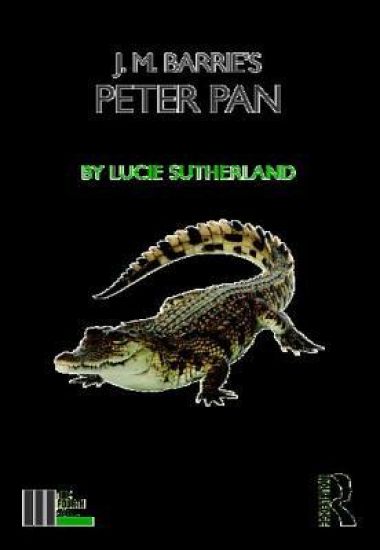
J. M. Barrie's Peter Pan

J. M. Barrie's Peter Pan

Lucie Sutherland

Routledge
2018
nidottu
‘Do you believe in fairies? Say quick that you believe!’ – Peter PanPeter Pan is a narrative many of us believe we know well, and yet the J.M. Barrie play that premiered on a West End stage in December 1904 is not the depiction of Peter, Wendy, Hook, and Never Land that most people have experienced. It was the critical and commercial success of this particular play which propelled the notoriety and appeal of the story, and without the success of that first production, Peter Pan would not be such a familiar part of our mainstream culture. Lucie Sutherland examines how, and why, this play became so popular, why the trans-Atlantic collaboration of Barrie and Charles Frohman was vital to the success of the 1904 production, and how key versions in England and America have created an iconic narrative that remains popular today. This book charts the ‘awfully big adventure’ of creating Peter Pan, as well as the many entertaining, enthralling, and often extraordinary ways the play has been adapted ever since.
J. M. Coetzee: Countervoices

J. M. Coetzee: Countervoices

Carrol Clarkson

Palgrave Macmillan
2009
nidottu
Clarkson pays sustained attention to the dynamic interaction between Coetzee's fiction and his critical writing, exploring the Nobel prize-winner's participation in, and contribution to, contemporary literary-philosophical debates. The book engages with the most recent literary and philosophical responses to Coetzee's work.
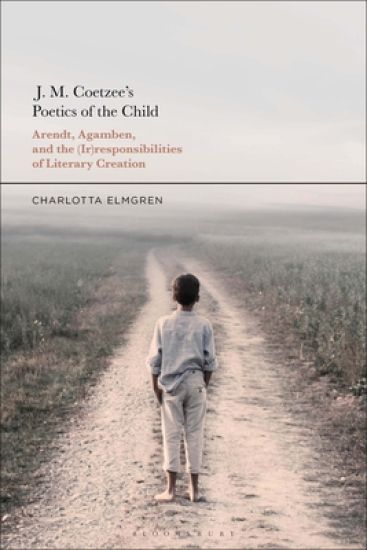
J. M. Coetzee's Poetics of the Child

J. M. Coetzee's Poetics of the Child

Charlotta Elmgren

Bloomsbury Academic
2020
sidottu
Tracing how central tensions in J.M. Coetzee’s fiction converge in and are made visible by the child figure, this book establishes the centrality of the child to Coetzee’s poetics. Through readings of novels from Dusklands to The Schooldays of Jesus, Charlotta Elmgren shows how Coetzee’s writing stages the constant interplay between irresponsibility and responsibility—to the self, the other, and the world. In articulating this poetics of (ir)responsibility, Elmgren offers the first sustained engagement with the intersections between Coetzee’s work and the philosophical thought of Giorgio Agamben. With reference also to Hannah Arendt’s thinking on natality, education, and amor mundi, Elmgren demonstrates the inextricable links in Coetzee’s writing between freedom, play, and serious attention to the world. The book identifies five central dynamics of Coetzee’s poetics: the child as a figure of truth-telling and authenticity; the ethics of the not-so-other child; the child, new beginnings and care for the world; childish behaviour as perpetual study; and the redemptive potential of infancy. Offering a fresh contribution to the field of literary childhood studies, Elmgren shows the critical possibilities in thinking about—and with—childlike openness and childish experimentation when approaching the writing and reading of the work of J.M. Coetzee and beyond.
J. M. Coetzee's Poetics of the Child

J. M. Coetzee's Poetics of the Child

Charlotta Elmgren

BLOOMSBURY PUBLISHING PLC
2022
nidottu
Tracing how central tensions in J.M. Coetzee’s fiction converge in and are made visible by the child figure, this book establishes the centrality of the child to Coetzee’s poetics. Through readings of novels from Dusklands to The Schooldays of Jesus, Charlotta Elmgren shows how Coetzee’s writing stages the constant interplay between irresponsibility and responsibility—to the self, the other, and the world. In articulating this poetics of (ir)responsibility, Elmgren offers the first sustained engagement with the intersections between Coetzee’s work and the philosophical thought of Giorgio Agamben. With reference also to Hannah Arendt’s thinking on natality, education, and amor mundi, Elmgren demonstrates the inextricable links in Coetzee’s writing between freedom, play, and serious attention to the world. The book identifies five central dynamics of Coetzee’s poetics: the child as a figure of truth-telling and authenticity; the ethics of the not-so-other child; the child, new beginnings and care for the world; childish behaviour as perpetual study; and the redemptive potential of infancy. Offering a fresh contribution to the field of literary childhood studies, Elmgren shows the critical possibilities in thinking about—and with—childlike openness and childish experimentation when approaching the writing and reading of the work of J.M. Coetzee and beyond.
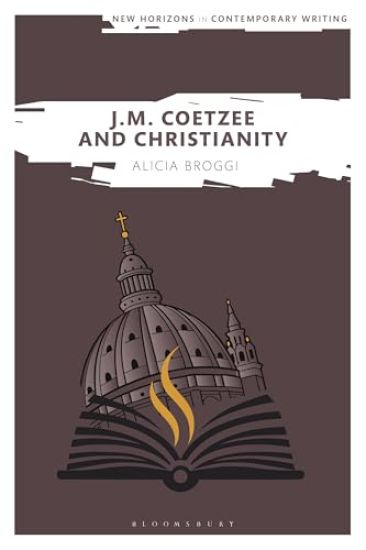
J. M. Coetzee and Christianity

J. M. Coetzee and Christianity

Alicia Broggi

BLOOMSBURY PUBLISHING PLC
2026
sidottu
This book explores the nexus between religion and literature in J.M. Coetzee’s writings, as they relate to his readings of key Christian thinkers and ideas. In the process, it examines Coetzee’s extensive efforts at revising and reimagining a variety of Christian legacies across his full corpus.Inspired by Coetzee's more overt, recent engagement with Christianity, this book focuses on tracing the prior subterranean developments across his early and middle works. It provides the most comprehensive study to date of his rewriting of Christian mores and rhetoric from eighteenth-century English novels; his frequent revisiting of the Christian author Fyodor Dostoevsky; and his pervasive re-imagining of traditional Christian subjects such as grace, redemption, and Jesus.Informed by original archival material, this book illuminates Coetzee’s writing process, especially from Dusklands to the Jesus trilogy. It provides a sustained exploration of the contexts from which his abundance of Christian allusions and concepts were drawn, how they change in his hands, and how they effect changes in the “new” contexts of his innovative novels.