Kirjojen hintavertailu. Mukana 11 244 527 kirjaa ja 12 kauppaa.

Kirjahaku

Etsi kirjoja tekijän nimen, kirjan nimen tai ISBN:n perusteella.

1000 tulosta hakusanalla J. M. Coetzee

J. M. Coetzee's Politics of Life and Late Modernism in the Contemporary Novel
Surveying the full breadth of J. M. Coetzee's career as both academic and novelist, this book argues for the necessity of rethinking his profound indebtedness to literary modernism in terms of a politics of life. Isolating a particular strain of late modernism, epitomised by Kafka and Beckett, Farrant claims that Coetzee's writings consistently demonstrate an agonistic engagement with the concept of life that involves an entanglement of politics and ethics, which supersedes the singular theoretical frameworks often applied to Coetzee, such as postcolonialism, posthumanism and animal studies. Running throughout his engagement with questions of modernity and colonialism, storytelling and life writing, human and non-human life, religion and post-Enlightenment subjectivity, Coetzee's politics of life yield a new literary cosmopolitanism for the twenty-first century; a powerful commentary on our interrelatedness that emphasises finitude and contingency as fundamental to the way we live together.

J. M. Coetzee's Politics of Life and Late Modernism in the Contemporary Novel
Surveying the full breadth of J. M. Coetzee's career as both academic and novelist, this book argues for the necessity of rethinking his profound indebtedness to literary modernism in terms of a politics of life. Isolating a particular strain of late modernism, epitomised by Kafka and Beckett, Farrant claims that Coetzee's writings consistently demonstrate an agonistic engagement with the concept of life that involves an entanglement of politics and ethics, which supersedes the singular theoretical frameworks often applied to Coetzee, such as postcolonialism, posthumanism and animal studies. Running throughout his engagement with questions of modernity and colonialism, storytelling and life writing, human and non-human life, religion and post-Enlightenment subjectivity, Coetzee's politics of life yield a new literary cosmopolitanism for the twenty-first century; a powerful commentary on our interrelatedness that emphasises finitude and contingency as fundamental to the way we live together.
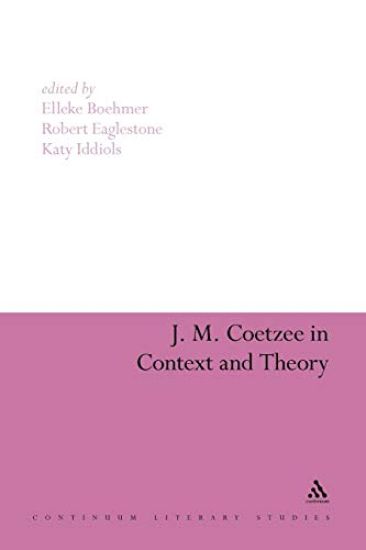
J. M. Coetzee in Context and Theory

J. M. Coetzee in Context and Theory

Continuum Publishing Corporation
2011
nidottu
Nobel Laureate and the first author to win the Booker Prize twice, J.M. Coetzee is perhaps the world's leading living novelist writing in English. Including an international roster of world leading critics and novelists, and drawing on new research, this innovative book analyses the whole range of Coetzee's work, from his most recent novels through his memoirs and critical writing. It offers a range of perspectives on his relationship with the historical, political, cultural and social context of South Africa. It also contextualises Coetzee's work in relation to his literary influences, colonial and post-colonial history, the Holocaust and colonial genocides, the 'politics' and meaning of the Nobel prize in South Africa and Coetzee's very public move from South Africa to Australia. Including a major unpublished essay by leading South African novelist Andre Brink, this book offers the most up-to-date study of Coetzee's work currently available.
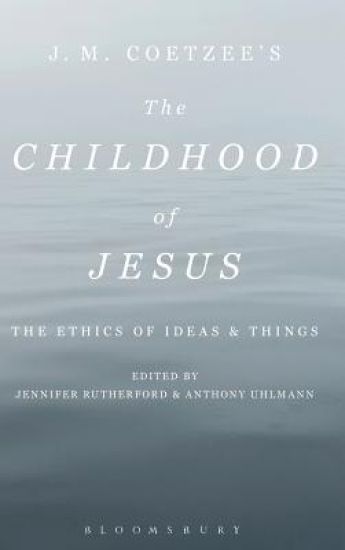
J. M. Coetzee’s The Childhood of Jesus
Since the controversy and acclaim that surrounded the publication of Disgrace (1999), the awarding of the Nobel Prize for literature and the publication of Elizabeth Costello: Eight Lessons (both in 2003), J. M. Coetzee’s status has begun to steadily rise to the point where he has now outgrown the specialized domain of South African literature. Today he is recognized more simply as one of the most important writers in the English language from the late 20th and early 21st century. Coetzee’s productivity and invention has not slowed with old age. The Childhood of Jesus, published in 2013, like Elizabeth Costello, was met with a puzzled reception, as critics struggled to come to terms with its odd setting and structure, its seemingly flat tone, and the strange affectless interactions of its characters. Most puzzling was the central character, David, linked by the title to an idea of Jesus. J.M. Coetzee’s The Childhood of Jesus: The Ethics of Ideas and Things is at the forefront of an exciting process of critical engagement with this novel, which has begun to uncover its rich dialogue with philosophy, theology, mathematics, politics, and questions of meaning.
J. M. Coetzee’s The Childhood of Jesus
Since the controversy and acclaim that surrounded the publication of Disgrace (1999), the awarding of the Nobel Prize for literature and the publication of Elizabeth Costello: Eight Lessons (both in 2003), J. M. Coetzee’s status has begun to steadily rise to the point where he has now outgrown the specialized domain of South African literature. Today he is recognized more simply as one of the most important writers in the English language from the late 20th and early 21st century. Coetzee’s productivity and invention has not slowed with old age. The Childhood of Jesus, published in 2013, like Elizabeth Costello, was met with a puzzled reception, as critics struggled to come to terms with its odd setting and structure, its seemingly flat tone, and the strange affectless interactions of its characters. Most puzzling was the central character, David, linked by the title to an idea of Jesus. J.M. Coetzee’s The Childhood of Jesus: The Ethics of Ideas and Things is at the forefront of an exciting process of critical engagement with this novel, which has begun to uncover its rich dialogue with philosophy, theology, mathematics, politics, and questions of meaning.
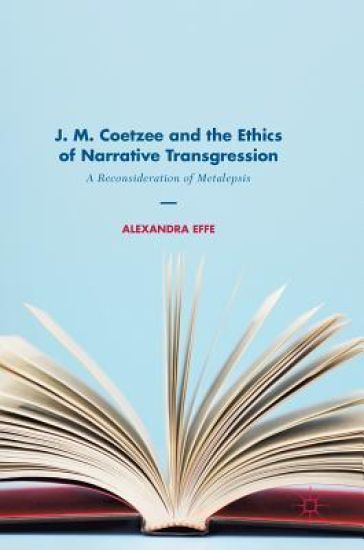
J. M. Coetzee and the Ethics of Narrative Transgression

J. M. Coetzee and the Ethics of Narrative Transgression

Alexandra Effe

Springer International Publishing AG
2017
sidottu
This book is about the metanarrative and metafictional elements of J. M. Coetzee’s novels. It draws together authorship, readership, ethics, and formal analysis into one overarching argument about how narratives work the boundary between art and life. On the basis of Coetzee’s writing, it reconsiders the concept of metalepsis, challenges common understandings of self-reflexive discourse, and invites us to rethink our practice as critics and readers.This study analyzes Coetzee’s novels in three chapters organized thematically around the author’s relation with character, reader, and self. Author and character are discussed on the basis of Foe, Slow Man, and Coetzee’s Nobel lecture, 'He and His Man'. Stories featuring the character Elizabeth Costello, or the figuration Elizabeth Curren, serve to elaborate the relation of author and reader. The study ends on a reading of Summertime, Diary of a Bad Year, and Dusklands as Coetzee’s engagement with autobiographical writing, analyzing the relation of author and self. It will appeal to readers with an interest in literary and narrative theory as much as to Coetzee scholars and advanced students.
J. M. Coetzee and the Ethics of Narrative Transgression

J. M. Coetzee and the Ethics of Narrative Transgression

Alexandra Effe

Springer International Publishing AG
2018
nidottu
This book is about the metanarrative and metafictional elements of J. M. Coetzee’s novels. It draws together authorship, readership, ethics, and formal analysis into one overarching argument about how narratives work the boundary between art and life. On the basis of Coetzee’s writing, it reconsiders the concept of metalepsis, challenges common understandings of self-reflexive discourse, and invites us to rethink our practice as critics and readers.This study analyzes Coetzee’s novels in three chapters organized thematically around the author’s relation with character, reader, and self. Author and character are discussed on the basis of Foe, Slow Man, and Coetzee’s Nobel lecture, 'He and His Man'. Stories featuring the character Elizabeth Costello, or the figuration Elizabeth Curren, serve to elaborate the relation of author and reader. The study ends on a reading of Summertime, Diary of a Bad Year, and Dusklands as Coetzee’s engagement with autobiographical writing, analyzing the relation of author and self. It will appeal to readers with an interest in literary and narrative theory as much as to Coetzee scholars and advanced students.
J.M. Coetzee & the Life of Writing

J.M. Coetzee & the Life of Writing

David Attwell

Oxford University Press
2015
sidottu
J.M. Coetzee is one of the world's most intriguing authors. Compelling, razor-sharp, erudite: the adjectives pile up but the heart of the fiction remains elusive. Now, in J.M. Coetzee and the Life of Writing, David Attwell explores the extraordinary creative processes behind Coetzee's novels from Dusklands to The Childhood of Jesus. Using Coetzee's manuscripts, notebooks, and research papers--recently deposited at the Harry Ransom Center of the University of Texas at Austin--Attwell produces a fascinating story. He shows convincingly that Coetzee's work is strongly autobiographical, the memoirs being continuous with the fictions, and that his writing proceeds with never-ending self-reflection. Having worked closely with him on Doubling the Point: Essays and Interviews and given early access to Coetzee's archive, David Attwell is an engaging, authoritative source. J. M. Coetzee and the Life of Writing is a fresh, fascinating take on one of the most important and opaque literary figures of our time. This moving account will change the way Coetzee is read, by teachers, critics, and general readers.
J.M. Coetzee and Neoliberal Culture

J.M. Coetzee and Neoliberal Culture

Andrew Gibson

Oxford University Press
2022
sidottu
This book presents J. M. Coetzee's work as a complex, nuanced counterblast to contemporary, global, neoliberal economics and its societies. Not surprisingly, given his many years in South Africa and Australia, Coetzee writes from a `global-Southern' perspective. Drawing on a wealth of literature, philosophy, and theory, the book reads Coetzee's writings as a discreet, oblique but devastating engagement with neoliberal presumptions. It identifies and focuses on various key features of neoliberal culture: its obsession with self-enrichment, mastery, growth; its belief in plenitude, endless resources; its hubris and obsession with (self)-promotion; its desire for ease and easiness, `well-being', euphoria; its fetishization of managerial reason and the culture of security; its unrelenting positivity, its belief in illusory goods and trivial progressivisms. By contrast, Coetzee's writings explore the virtues of irony and self-reduction. He commits himself to difficulty, discomfort, patient and austere, if bleak, inquiry, rigorous questioning, and radical doubt. Destitution and failure come to look like a serious, dignified form of life and thought. The very tones of Coetzee's books run counter to those of our neoliberal democracies. They point in a different direction to an age that has gone astray.
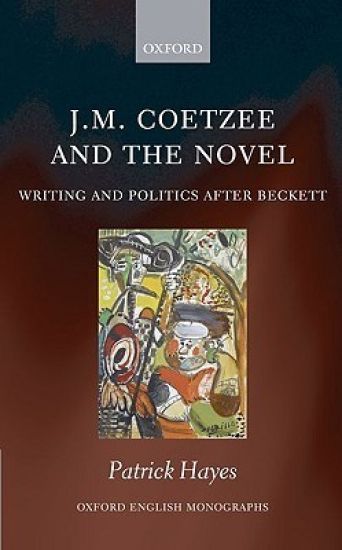
J.M. Coetzee and the Novel

J.M. Coetzee and the Novel

Patrick Hayes

Oxford University Press
2010
sidottu
'Anti-illusionism is, I suspect, only a marking of time, a phase of recuperation, in the history of the novel. The question is, what next?' (J.M. Coetzee) Patrick Hayes argues that the significance of Coetzees fiction lies in the acuity with which it both explores and develops the tradition of the novelranging from Cervantes, Defoe, and Richardson to Dostoevsky, Kafka, and Beckettas part of a sustained attempt to rethink the relationship between writing and politics. For Coetzee, questions about the future of the novel are closely related to what it means to write after Beckett, and J. M. Coetzee and the Novel examines the ways in which his fiction discerningly assimilates the techniques of literary modernism to engage with some of the most troubling aspects of late twentieth-century cultural and political life. While Coetzee is rightly known as an intensely serious writer, Hayes shows that the true seriousness of his writing is intimately bound up with comedyor, to use the word Coetzee borrows from Joyce, the jocoserious. Opening up a range of new approaches to this major contemporary author, J. M. Coetzee and the Novel argues that it is only by paying especially close attention to the experience of reading Coetzees finely-nuanced prose that his distinctive impact on longstanding questions about identity, community, and the nature of political modernity can be appreciated.
J.M. Coetzee: Fictions of the Real
J.M. Coetzee has new things to say about this relation between the ‘real’ and ‘fictions of the real’, and while much has already been written about him, these questions need to be more fully explored. The contributions to this volume are drawn together by the idea of the hinge between the world (whether understood in ontological, bio-ethical, personal and interpersonal, or socio-political terms) and fictional representations of it (whether understood in epistemological, ficto-biographical, formal, or stylistic terms). In this collection, the question of understanding itself — how we understand or imagine our place in the world — is shown to be central to our conception of that world. That is, rather than beginning with forms developed in socio-political understandings, Coetzee’s works ask us to consider what role fiction might play in relation to politics, in relation to history, in relation to ethics and our understanding of human agency and responsibility. Coetzee has a profound interest in the methods through which we make sense of the contemporary world and our place in it, and his approach appeals to readers of fiction, critics and philosophers alike. The central problems he deals with in his fiction are of the kind that confront people everywhere and so involve a "translatability" that allow the works to maintain relevance across cultures. Added to this, though, his fiction makes us question the nature of understanding itself. This book was originally published as a special issue of Textual Practice.
J.M. Coetzee

J.M. Coetzee

David Attwell

University of California Press
1993
pokkari
David Attwell defends the literary and political integrity of South African novelist J.M. Coetzee by arguing that Coetzee has absorbed the textual turn of postmodern culture while still addressing the ethical tensions of the South African crisis. As a form of "situational metafiction," Coetzee's writing reconstructs and critiques some of the key discourses in the history of colonialism and apartheid from the eighteenth century to the present. While self-conscious about fiction-making, it takes seriously the condition of the society in which it is produced. Attwell begins by describing the intellectual and political contexts surrounding Coetzee's fiction and then provides a developmental analysis of his six novels, drawing on Coetzee's other writings in stylistics, literary criticism, translation, political journalism and popular culture. Elegantly written, Attwell's analysis deals with both Coetzee's subversion of the dominant culture around him and his ability to see the complexities of giving voice to the anguish of South Africa.
J.M. Coetzee and the Paradox of Postcolonial Authorship

J.M. Coetzee and the Paradox of Postcolonial Authorship

Jane Poyner

Ashgate Publishing Limited
2009
sidottu
In her analysis of the South African novelist J. M. Coetzee's literary and intellectual career, Jane Poyner illuminates the author's abiding preoccupation with what Poyner calls the "paradox of postcolonial authorship". Writers of conscience or conscience-stricken writers of the kind Coetzee portrays, whilst striving symbolically to bring the stories of the marginal and the oppressed to light, always risk reimposing the very authority they seek to challenge. From Dusklands to Diary of a Bad Year, Poyner traces how Coetzee rehearses and revises his understanding of the ethics of intellectualism in parallel with the emergence of the "new South Africa". She contends that Coetzee's modernist aesthetics facilitate a more exacting critique of the problems that encumber postcolonial authorship, including the authority it necessarily engenders. Poyner is attentive to the ways Coetzee's writing addresses the writer's proper role with respect to the changing ethical demands of contemporary political life. Theoretically sophisticated and accessible, her book is a major contribution to our understanding of the Nobel Laureate and to postcolonial studies.
J.M. Coetzee's Austerities

J.M. Coetzee's Austerities

Ashgate Publishing Limited
2010
sidottu
Representing a wide range of critical and theoretical perspectives, this volume examines J.M. Coetzee's novels from Dusklands to Diary of a Bad Year. The choice of essays reflects three broad goals: aligning the South African dimension of Coetzee's writing with his "late modernist" aesthetic; exploring the relationship between Coetzee's novels and his essays on linguistics; and paying particular attention to his more recent fictional experiments. These objectives are realized in essays focusing on, among other matters, the function of names and etymology in Coetzee's fiction, the vexed relationship between art and politics in apartheid South Africa, the importance of film in Coetzee's literary sensibility, Coetzee's reworkings of Defoe, the paradoxes inherent in confessional narratives, ethics and the controversial politics of reading Disgrace, intertextuality and the fictional self-consciousness of Slow Man. Through its pronounced emphasis on the novelist's later work, the collection points towards a narrato-political and linguistic reassessment of the Coetzee canon.
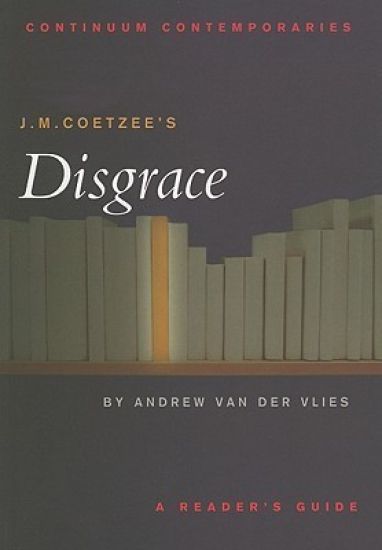
J.M. Coetzee's Disgrace

J.M. Coetzee's Disgrace

Andrew van der Vlies

Continuum International Publishing Group Ltd.
2010
nidottu
This book presents a clearly written introduction to the novel's themes and form, inspired by the author's practical experience of several years of teaching the novel at university level in Britain, as well as his background as a South African-born and educated academic. One of the most widely read novels by a South African-born writer or 'about' South Africa, Nobel Laureate J.M. Coetzee's (second) Booker Prize-winning novel, "Disgrace" (1999), is a firm favourite with reading groups and a fixture on many university-level courses on postcolonial or international literatures in English. Sometimes regarded as offering a bleak picture of post-apartheid South Africa, "Disgrace" has also been read as an ultimately hopeful novel about renunciation and redemption. This introduction offers an indispensable guide to the historical contexts and critical ideas necessary for an informed and rewarding engagement with one of the most significant novels of the last quarter century. Offering an overview of the author's career, informed discussion of the novel's setting and references, this guide considers such issues as the representation of race, gender, the land, and animals, and its concern with language, power, music, confession, and allegory. It provides a discussion of the novel's critical and popular reception, a comprehensive guide to further reading, and questions for discussion.
J.M. Coetzee's Austerities

J.M. Coetzee's Austerities

TAYLOR FRANCIS LTD
2024
nidottu
Representing a wide range of critical and theoretical perspectives, this volume examines J.M. Coetzee's novels from Dusklands to Diary of a Bad Year. The choice of essays reflects three broad goals: aligning the South African dimension of Coetzee's writing with his "late modernist" aesthetic; exploring the relationship between Coetzee's novels and his essays on linguistics; and paying particular attention to his more recent fictional experiments. These objectives are realized in essays focusing on, among other matters, the function of names and etymology in Coetzee's fiction, the vexed relationship between art and politics in apartheid South Africa, the importance of film in Coetzee's literary sensibility, Coetzee's reworkings of Defoe, the paradoxes inherent in confessional narratives, ethics and the controversial politics of reading Disgrace, intertextuality and the fictional self-consciousness of Slow Man. Through its pronounced emphasis on the novelist's later work, the collection points towards a narrato-political and linguistic reassessment of the Coetzee canon.
J.M. Coetzee`s Disgrace and Racism in Post-Apartheid South Africa
Disgrace by JM Coetzee Book Analysis, Summary, Themes, Essay Questions, and MoreIntroduction to the Book'JM Coetzee s Disgrace and Racism in Post-Apartheid South Africa' is a short, comprehensive, and critical study of 'Disgrace', a novel by J. M. Coetzee, which won him the Booker Prize. For students seeking comprehensive study aids, look no further than this ultimate study guide It offers an array of useful features, such as detailed chapter-by-chapter summaries, character lists with descriptions, post-colonial analysis of the novel, explanations of all important themes, motifs, and symbols, important questions, and over 10 academic essays. Whether you're trying to ace an exam or gain a deeper understanding of the material, this study guide has got you covered. While the subject of racism in post-apartheid South Africa, as explored by Coetzee in "Disgrace," deserves its own separate study, there is a dearth of such material available to graduate and undergraduate students. That's why the author wrote "JM Coetzee s Disgrace and Racism in Post-Apartheid South Africa," a well-researched and comprehensive study of the novel. It is hoped that this book will be of great help to students studying J.M. Coetzee's "Disgrace." The novel itself is rife with examples of "double-blind racism," where both blacks and whites are victimized and act as perpetrators of violence. To find the answers to questions about this complex topic, dive into the book and explore it for yourself. About the AuthorShafqat Mushtaq holds masters in English Literature from the University of Kashmir. He is the author of Blossoms from Elsewhere, Defy Odds and Be Unstoppable, and Modernism in TS Eliot s The Wasteland, and is published frequently in leading English dailies of Kashmir.
J.M. Coetzee and the Limits of Cosmopolitanism

J.M. Coetzee and the Limits of Cosmopolitanism

K. Hallemeier

Palgrave Macmillan
2013
sidottu
Drawing on postcolonial and gender studies, as well as affect theory, the book interrogates cosmopolitan philosophies. Through analysis of J.M. Coetzee's later fiction, Hallemeier invites the re-imagining of cosmopolitanism, particularly as it is performed through the reading of literature.
J.M. Coetzee: Fictions of the Real
J.M. Coetzee has new things to say about this relation between the ‘real’ and ‘fictions of the real’, and while much has already been written about him, these questions need to be more fully explored. The contributions to this volume are drawn together by the idea of the hinge between the world (whether understood in ontological, bio-ethical, personal and interpersonal, or socio-political terms) and fictional representations of it (whether understood in epistemological, ficto-biographical, formal, or stylistic terms). In this collection, the question of understanding itself — how we understand or imagine our place in the world — is shown to be central to our conception of that world. That is, rather than beginning with forms developed in socio-political understandings, Coetzee’s works ask us to consider what role fiction might play in relation to politics, in relation to history, in relation to ethics and our understanding of human agency and responsibility. Coetzee has a profound interest in the methods through which we make sense of the contemporary world and our place in it, and his approach appeals to readers of fiction, critics and philosophers alike. The central problems he deals with in his fiction are of the kind that confront people everywhere and so involve a "translatability" that allow the works to maintain relevance across cultures. Added to this, though, his fiction makes us question the nature of understanding itself. This book was originally published as a special issue of Textual Practice.